
Gwyddoniaeth Ymchwil Tystiolaeth: modelu'r gaeaf 2025 i 2026 - Part 8: primary care (GP consultations and vaccines)
Mae'r papur hwn yn darparu senarios wedi'u modelu ar gyfer y ffliw a niwmonia, COVID-19 a feirws syncytiol anadlol (RSV) ar gyfer tymor y gaeaf sydd i ddod.
Ar y dudalen hon
Top line summary
Adults and children had fewer GP consultations for acute respiratory infections (ARI) in winter 2024 to 2025 than in 2023 to 2024.
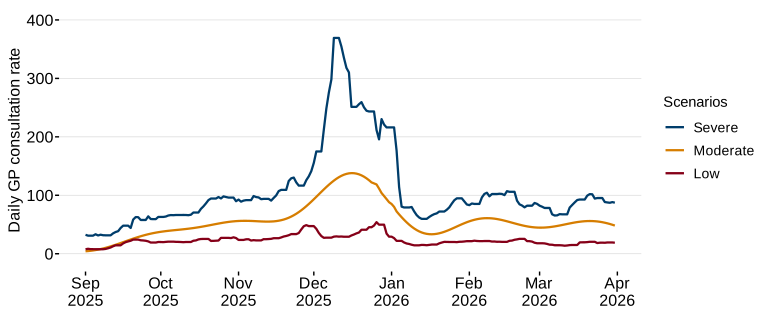
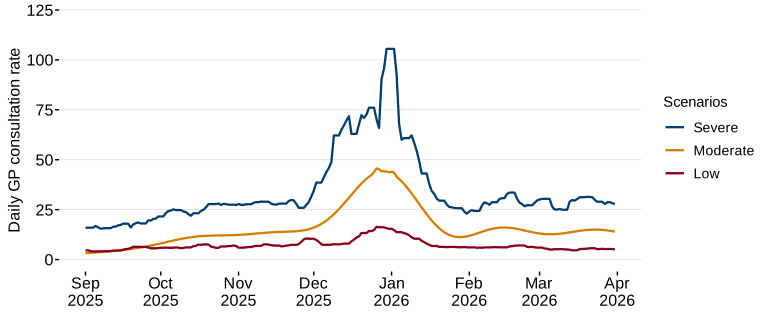
Modelling scenarios suggest that during December to early January in the 2025 to 2026 winter period, GP consultation rates for acute respiratory infection (ARI) in Wales are expected to peak at 54 to 369 consultations per day among children and 16 to 106 consultations per day among adults.
Influenza vaccine uptake is on a decline in adults aged 65 and above and in individuals aged 6-64 years at risk. Both groups did not meet their target uptake rates in the winter of 2024 to 2025.
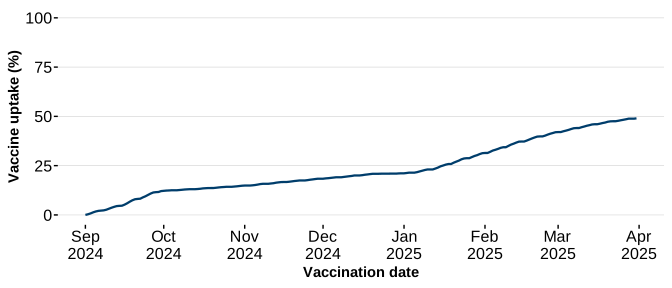
RSV vaccination program started in September 2024 in Wales. The uptake levels reached 40% in pregnant women who have delivered and 49% amongst adults aged 75 to 79 by the end of March 2025.
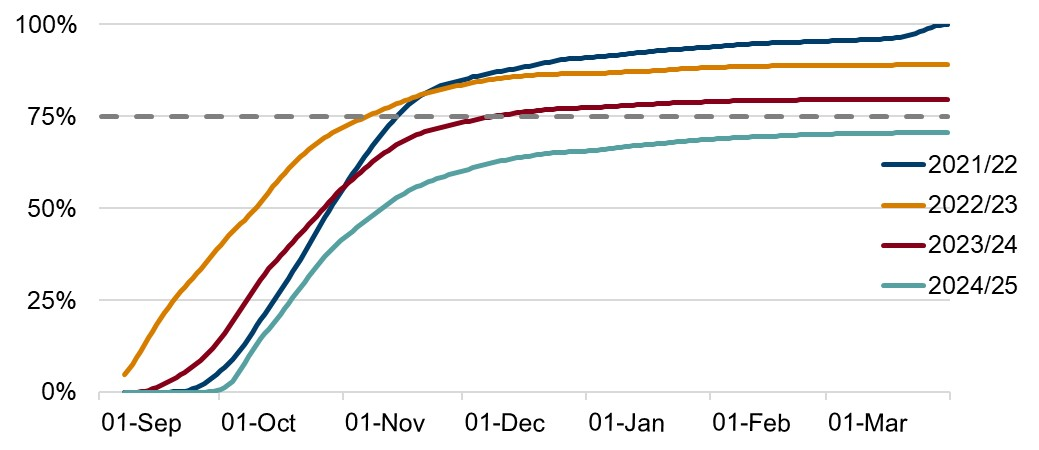
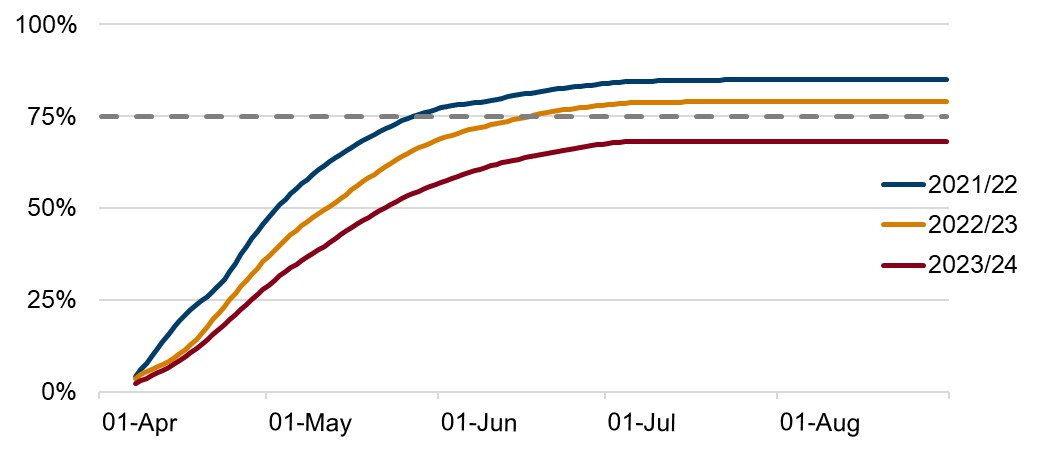
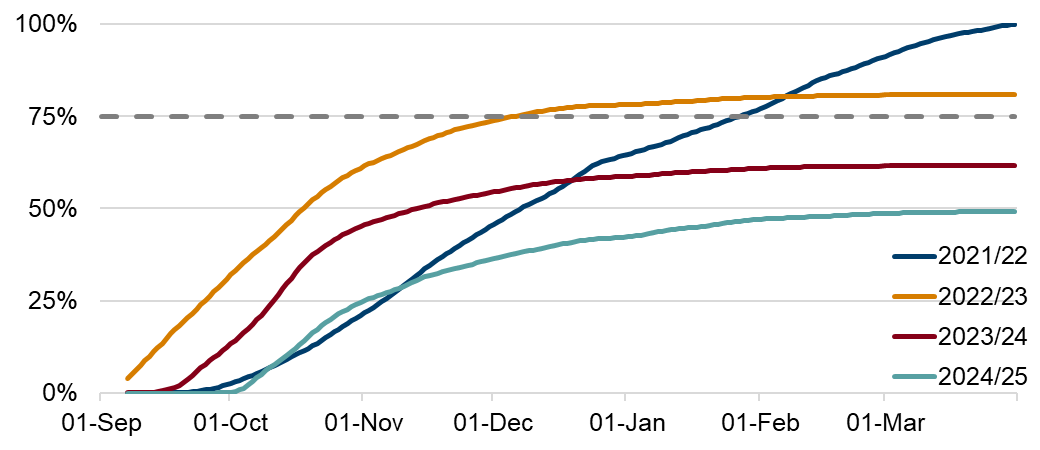
The COVID-19 vaccine uptake rates for adults aged 75 and above and for immunocompromised individuals, has decreased for each vaccine programme rollout (for Autumn and Spring Booster Programmes) for the past 3 years.
The COVID-19 Vaccine uptake among individuals aged 75+ and the immunocompromised has declined each year since 2021 to 2022:
- Autumn Booster (age 75 and over): Dropped from ~100% in 2021 to 2022 to 71% by March 2025.
- Spring Booster (age 75 and over): Fell from ~85% in 2021 to 2022 to 68% by March 2025.
- Autumn Booster (Immunocompromised): Declined from ~100% in 2021 to 2022 to 49% by March 2025.
- Spring Booster (Immunocompromised): Reduced from ~61% in 2021 to 2022 to 42% by March 2025.
GP ARI consultation rate
Acute respiratory infection (ARI) refers to a sudden onset of one or more respiratory symptoms, where clinical judgement determines the illness is caused by a viral infection such as COVID-19, flu, or RSV. GP consultations data related to acute respiratory infections are derived from the GP Sentinel Surveillance of Infections Scheme in Wales. This program monitors a subset of GP practices within Wales. The diagnosis relies on syndromic evaluation of patients, without conducting specific pathological tests for confirmation. Therefore, it is likely that GP consultations might over or underestimate the incidence of infectious diseases. To standardise the data, consultation rates are normalised by the practice population, resulting in consultations per 100,000 population. The rates were examined across two age categories: children (ages 0 to 14) and adults (15 years and above).
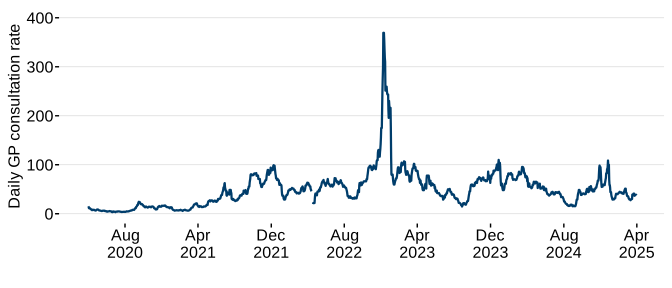
Figure 25: 7 day rolling average of daily ARI GP consultation rate in children (ages 0 to 14), between April 2020 and March 2025
Source: Public Health Wales
[Note 1]: Consultation rate between 15 April 2022 and 18 April 2022 is not available. Stepped values have been imputed for those days, stepping from the 14 April 2022 average to the 19 April 2022 average.
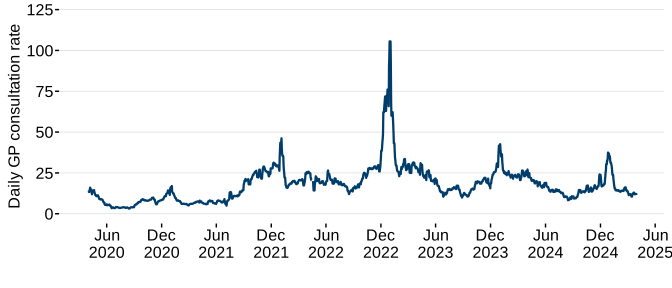
In the 2024 to 2025 winter, both adults and children had fewer GP consultations due to ARI compared to the 2023 to 2024 winter. The daily average GP consultation rate for children was higher than that for adults, with 47 consultations per 100,000 population for children compared to 17 consultations per 100,000 for adults.
Children’s rates peaked at 369, 110, and 109 GP consultations per 100,000 population during the winters of 2022 to 2023, 2023 to 2024, and 2024 to 2025, respectively while adult rates peaked at 106,43, and 37 during the same time period. The children’s peak GP consultation rate in 2022 to 2023 occurred in early December, while the peaks in 2023 to 2024 and 2024 to 2025 happened in the last week of December.
To create scenarios for GP consultation rates, the following statistical techniques were used:
Table 7: Names of GP consultation rate scenarios and the statistical models applied
| Scenario Name | Technique |
|---|---|
| Low | SARIMA |
| Moderate | Prophet |
| Severe | Repeat of 2022 to 2023 data |
Figure 26: Daily ARI GP consultation rate scenarios in children, winter 2025 to 2026
Source: SRE calculations
The Severe, Moderate, and Low scenarios for GP consultation rates in children are estimated to reach maximum values of 369, 138, and 54 consultations per 100,000 population on December 9 to 11 December, December 17, and December 26, respectively.
Figure 27: 7 day rolling average of daily ARI GP consultation rate in ages 15 years and above, between April 2020 and March 2025 [Note 1]
Source: Public Health Wales
[Note 1]: Consultation rate between 15 April 2022 and 18 April 2022 is not available. Stepped values have been imputed for those days, stepping from the 14 April 2022 average to the 19 April 2022 average.
Figure 28: Daily ARI GP consultation rate scenarios in adults, winter 2025 to 2026
Source: SRE calculations
The projected peak of GP consultation rates for adults under the severe, moderate, and low scenarios are 106, 46, and 16 consultations per 100,000 population, occurring on 30 December 2025 to 2 January 2026, 27 December and 26 December, respectively.
These peaks are estimated to occur on or around the bank holidays at Christmas time and New Year. Potential closures in GP surgeries may put additional pressure on out of hours services, minor injuries services, and emergency departments.
Influenza vaccine
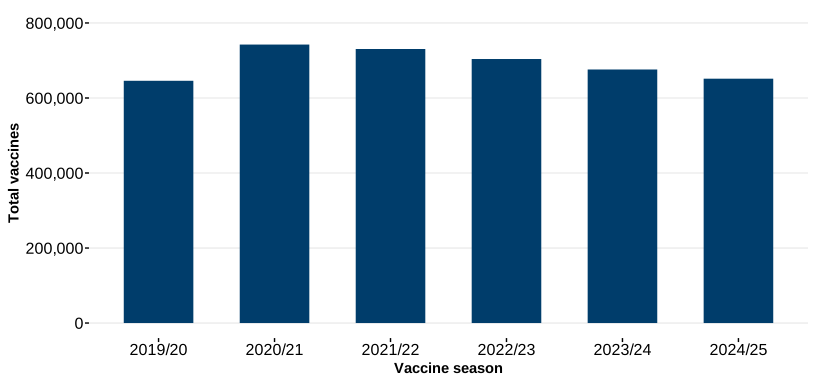
A total of 651,455 flu vaccines were administered to all eligible groups which includes adults aged 65 and older, as well as individuals aged 6 months to 64 years at risk for the 2024 to 2025 winter season. This is approximately 20,000 fewer doses compared to the previous year (2023 to 2024) and 50,000 fewer than the year before that (2022 to 2023).
Figure 29: Total number of flu vaccines administered between 2019 to 2020 and 2024 to 2025, all eligibility groups.
Source: Public Health Wales
Table 8: Total number of flu vaccines administered between 2019 to 2020 and 2024 to 2025, all eligibility groups
| Vaccine Season | Total vaccines |
|---|---|
| 2019 to 2020 | 642,284 |
| 2020 to 2021 | 742,085 |
| 2021 to 2022 | 726,641 |
| 2022 to 2023 | 701,966 |
| 2023 to 2024 | 670,633 |
| 2024 to 2025 | 651,455 |
Source: Public Health Wales
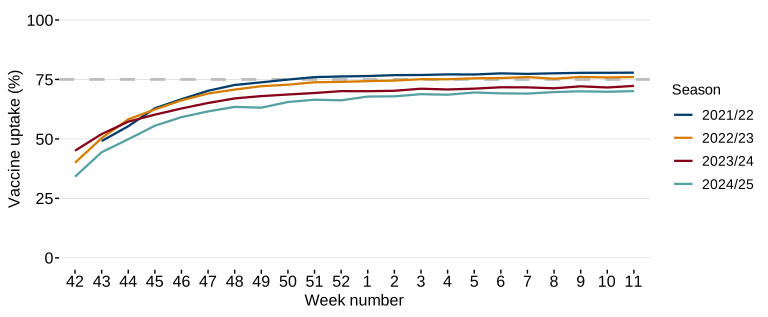
Figure 30: Weekly cumulative influenza vaccine uptake (%) in adults aged 65 and above administered between 2021 to 2022 and 2024 to 2025 in Wales, by season (winter). [Note 1]
Source: Public Health Wales
[Note 1]: the horizontal grey dashed line indicates the vaccine uptake target for adults aged 65 and above.
The vaccination data was obtained from Public Health Wales goes up to the last week of March 2025. Vaccination data are aggregated by GP practice; however, not all practices submit data on a daily basis. To determine weekly uptake figures, we used the maximum value in the denominator (number of eligible individuals) for each week and the corresponding numerator (number of vaccinated individuals) to ensure most data available are captured, rather than relying solely on fluctuating numbers of daily submissions. The maximum vaccine uptake rates in the season are then reported. Please note that these figures may not align with those published by PHW who have access to more recent datasets.
The World Health Assembly resolution sets a target of 75% influenza vaccination coverage for older adults and people with chronic conditions. During the winters of 2021 to 2022 and 2022 to 2023, the vaccine uptake in adults aged 65 years and above met the 75% uptake target for flu vaccines. However, in 2023 to 2024 and 2024 to 2025, the uptake fell below the target, reaching a maximum of 72.3% and 70.1% respectively. All health boards did not meet the uptake target in the 2024 to 25 winter:
- Aneurin Bevan achieved a vaccine uptake of 73.5%
- Betsi Cadwaladr reached 73.2%
- Cardiff & Vale reached 70.1%
- Cwm Taf Morgannwg reached 69.2%
- Powys reached 69.5%
- Swansea reached a maximum of 69.8%
- Hywel Dda showed the lowest uptake among all health boards with 65.2%
Comparing these results to England, the flu vaccine uptake among adults aged 65 and above in England has declined from 82.3% during the 2021 to 2022 winter to 74.9% in the 2024 to 2525 winter. Notably, this marks the first time since the 2020 to 2021 winter that adults aged 65 and over did not meet the WHO target of 75%. Scotland data suggests a vaccine uptake of 74.1% in the winter 2024 to 2025 which falls just below the target as well (also lower than the vaccine uptake levels of 79.8% observed in Scotland in the 2023 to 2024 winter).
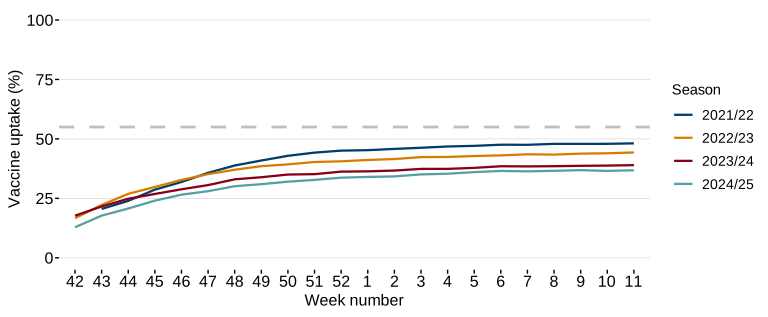
Figure 31: Weekly cumulative influenza vaccine uptake (%) in individuals aged 6m to 64 at risk administered between 2021 to 2022 and 2024 to 2025, by season (winter)
Source: Public Health Wales
[Note 1]: the horizontal grey dashed line indicates the vaccine uptake target for individuals aged 6m to 64 at risk
The target for influenza vaccine uptake in individuals aged 6 to 64 years at risk was set at 55%. From 2021 to 2022 to 2024 to 2025, this target was not met at a Wales level or at the local health board level. The vaccine uptake levels in individuals aged 6 to 64 years at risk decreased from 48.1% in 2021 to 2022 to 36.8% in 2024 to 2025. The percentage-point drop for the under 65 years who are at-risk in England was similar, from 52.9% in winter 2021 to 2022 to 40.0% in winter 2024 to 2025.
RSV vaccine
RSV vaccination in the UK was introduced for women who are at least 28 weeks pregnant, to protect their infants, and to adults aged 75 to 79 years of age, using the Abrysvo® RSV vaccine (Pfizer Limited). Scotland began RSV vaccine rollout from 12 August 2024 and Wales, England and Northern Ireland in September 2024.
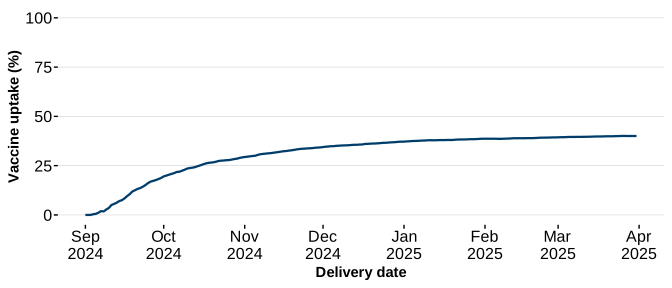
As of 31st March 2025, 5,646 doses of RSV vaccines were administered to pregnant women that have delivered, and 75,790 doses were administered to adults aged 75 to 79. This translates to vaccine uptake levels of 40% in pregnant women who have delivered and 49% amongst adults aged 75 to 79.
Figure 32: Daily cumulative RSV vaccine uptake (%) administered in pregnant women in 2024 to 2025 winter
Source: Public Health Wales
In England, the vaccination programme commenced in September 2024 and achieved cumulative coverage rates of 46.7% by December and 60.3% by March 2025 among adults aged 75 to 79. The RSV vaccination programme for older adults and pregnant women in Scotland commenced in August 2024. By early September, uptake in the older adult population reached 52.4% eligible vaccinated by 9 September 2024, and by 27 November 2024, it was 68.6%. As of 11 May 2025, 203,997 older adults in Scotland received an RSV vaccine with uptake rate of 70.6%, and 16,449 pregnant women who turned 28 weeks from 1 August 2024 received an RSV vaccine, with uptake rate of 49.6% over the entirety of the programme. Vaccine uptake rates in Wales are comparatively lower across both groups.
Figure 33: Daily cumulative RSV vaccine uptake (%) administered in adults aged 75 to 79 in 2024 to 2025
COVID-19
There have been a number of COVID-19 vaccine programmes in Wales rolled out since December 2020. Usually, there are 2 vaccine programmes a year; an autumn booster (typically starting September or October time) and a spring booster (typically starting around April time). For our analysis, we assumed for each year, the Autumn Booster programme ran from 1 September to 31 March, and the Spring Booster programme from 1 April to 31 August. We also assumed that the eligible populations were individuals aged 75 and above and immunocompromised individuals.
Table 9: Total number of COVID-19 vaccines administered between 2021 to 2022 and 2024 to 2025, all eligibility groups [Note 1]
| Vaccine year | Total vaccines | Autumn campaign | Spring campaign |
|---|---|---|---|
| 2021 to 2022 | 782,034 | 463,024 | 319,010 |
| 2022 to 2023 | 660,362 | 362,074 | 298,288 |
| 2023 to 2024 | 587,725 | 322,040 | 265,685 |
| 2024 to 2025 | 360,184 | 286,904 | 73,280 |
[Note 1]: The ‘vaccine year’ runs from 1 September one year to 31 August the following year.
To estimate the cumulative percentage uptake each season as shown in the following charts (Figures 34 to 37), the number of individuals vaccinated with a booster vaccine each day was calculated for each vaccine season (for the Autumn Booster Programme and for the Spring Booster Programme) initially. The cumulative number of individuals vaccinated throughout each vaccine season was calculated each day and divided by the eligible population[footnote1]. Finally, a 7-day rolling average of the cumulative percentages were calculated (Therefore, the first 6 days in each season were ignored). Due to start and end dates varying in earlier campaigns, there were occasions where the vaccine uptake slightly exceeded 100%. When this occurred, the vaccine uptake was capped at 100%.
Figure 34: Daily cumulative COVID-19 vaccine uptake for the predominant (booster) dose only (7-day rolling average %) administered in individuals aged 75 and above, September to March, 2021 to 2022 to 2024 to 2025 [Note 1].
Source: Public Health Wales
[Note 1]: 29th February 2024 removed for convenience of display. The horizontal grey dashed line indicates the vaccine uptake target (75%). The dates 25 March 2022 to 31 March 2022 were capped at 100% for the booster dose for this chart.
The percentage of individuals aged 75 and above who were vaccinated each year as part of the Autumn Booster programme has decreased each autumn since the vaccine rollout began from around 100% at the end of the 2021 to 2022 Autumn Booster Programme (31 March 2022) to 71% by the end of the 2024 to 2025 Autumn Booster Programme rollout (31 March 2025).
Although very few booster doses were administered before 23rd September in Autumn 2021 to 2022, the rate of vaccine uptake was quicker and continued increasing for longer compared with subsequent years which plateaued earlier on in the Autumn Booster programme and at lower levels.
Figure 35: Daily cumulative COVID-19 vaccine uptake for the predominant (booster) dose only (7-day rolling average %) administered in individuals aged 75 and above, April to August, 2020 to 2021 to 2024 to 2025 [Note 1].
Source: Public Health Wales
[Note 1]: Incomplete (early) data for 2025 not shown. The horizontal grey dashed line indicates the vaccine uptake target (75%).
The percentage of individuals aged 75 and above who were vaccinated each year as part of the Spring Booster programme has decreased each spring since 2021 to 2022 from around 85% at the end of the 2021 to 2022 Spring Booster Programme (31 August 2022) to 68% by the end of the 2023 to 2024 Spring Booster Programme rollout (31 August 2024).
Figure 36: Daily cumulative COVID-19 vaccine uptake for the predominant (booster) dose only (7-day rolling average %), September to March, 2021 to 2022 to 2024 to 2025 [Note 1]
Source: Public Health Wales
29th February 2024 removed for convenience of display. The horizontal grey dashed line indicates the vaccine uptake target (75%). The dates 28 March 2022 to 31 March 2022 were capped at 100% for the booster dose for this chart.
The percentage of immunocompromised individuals who were vaccinated each year as part of the Autumn Booster programme has decreased each autumn since the vaccine rollout began from around 100% at the end of the 2021 to 2022 Autumn Booster Programme (31 March 2022) to 49% by the end of the 2024 to 2025 Autumn Booster Programme rollout (31 March 2025).
The rate of vaccine uptake was slower in Autumn 2021 to 2022 compared with subsequent years, but the vaccine uptake rate continued increasing for longer.
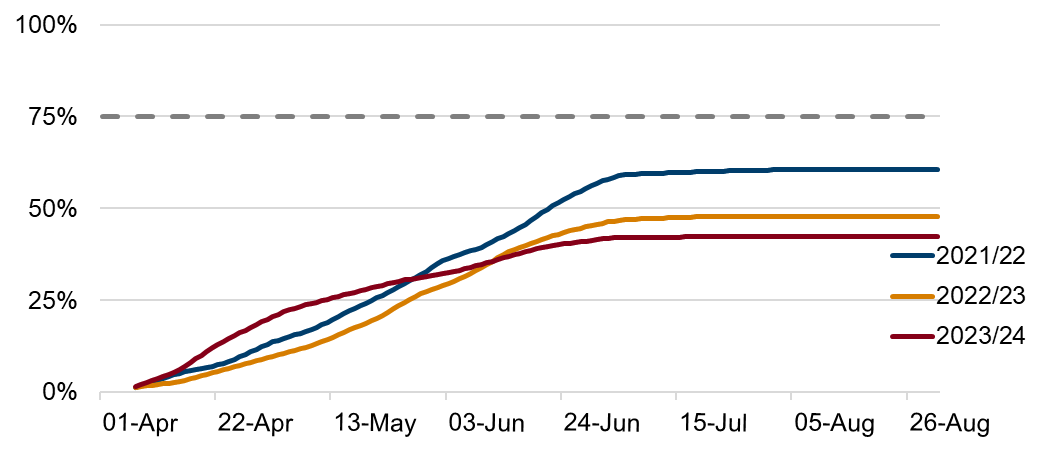
Figure 37: Daily cumulative COVID-19 vaccine uptake for the predominant (booster) dose only (7-day rolling average %) administered in immunocompromised individuals, April to August, 2020 to 2021 to 2024 to 2025 [Note 1].
Source: Public Health Wales
[Note 1]: Incomplete (early) data for 2025 not shown. The horizontal grey dashed line indicates the vaccine uptake target (75%).
The percentage of immunocompromised individuals who were vaccinated each year as part of the Spring Booster programme has decreased each spring since 2021 to 2022 from around 61% at the end of the 2021 to 2022 Spring Booster Programme (31 August 2022) to 42% by the end of the 2023 to 2024 Spring Booster Programme (31 August 2024).
After an initial fast uptake, the rate of vaccine uptake was slower in the most recent Spring (2023 to 2024) compared with previous years.
Footnotes
[1] The ONS population mid-year estimates were used to calculate the population aged 75 years and over. The estimated number of immunocompromised eligible individuals for the whole period covered (2021 to 2022 to 2024 to 2025) was taken from the Wales COVID-19 Vaccination Programme report from PHW dated 22 April 2025.