
Cyllidebau Rhaglenni Gwariant y GIG: Ebrill 2023 i Fawrth 2024
Gwariant y GIG fesul rhaglen ofal dyrannu ar sail y cyflwr meddygol (ICD10) y mae'r gwariant yn ymwneud ag ef ar gyfer Ebrill 2023 i Fawrth 2024. Saesneg yn unig
Ar y dudalen hon
We want your feedback
We are seeking user feedback on whether the data included in this statistical release should continue being published as Official Statistics, or if it could be published as more timely financial information. It will be included in a forthcoming wider Welsh Government consultation on statistics, and we welcome any feedback to stats.healthinfo@gov.wales.
Introduction
This release presents data on NHS expenditure by local health boards and NHS Trusts categorised by programme of care, in the financial year. Data is provided by NHS Performance and Improvement and is based on financial returns from each NHS organisation.
This release only deals with financial years, for example, April 2023 to March 2024. These will be displayed as 2023-24.
Programmes of care (or programme budget categories) are defined by International Classification of Diseases Version 10 codes (ICD 10) (World Health Organization). The purpose of presenting data in this context is to show NHS expenditure that related to patients’ health conditions, rather than the expenditure of the health care provider.
Some expenditure is allocated to programmes of care using estimation methods and a small amount of expenditure is not allocated to a programme of care. The percentage of estimated allocations and unallocated expenditure has increased over the last five years which limits the robustness of time series analysis. Furthermore, year-on-year changes may be due to changes in allocation methodology and not actual changes in spending priorities.
Expenditure data are presented at current prices and make no adjustment for inflation.
Main points
Total expenditure for all programme of care categories was £9.9 billion or £3,125 per head of population in 2023-24.
Total expenditure increased by nearly £671 million (or 7.3%) in 2023-24 compared to 2022-23 and increased by £4.1 billion (or 70.6%) over the last ten years.
Total expenditure has increased each year since comparable data was first collected in 2009-10. The annual increase between 2022-23 and 2023-24 was the second highest on record, behind the 14.6% increase between 2019-20 and 2020-21 which was in response to the COVID-19 pandemic.
The largest single programme of care category (excluding Other) was Mental Health accounting for £1.1 billion (or 11.4%) of total expenditure in 2023-24, an increase of £108 million (or 10.6%) from 2022-23. This has been the largest clinical programme of care category each year since 2009-10.
Expenditure increased in 20 of the 23 programme of care categories over the year, with the largest increase (14.4%) in the Skin conditions category.
79.8% of total NHS expenditure was in secondary care, an annual increase of 0.5 percentage points; 18.2% was in primary care, an annual decrease of 0.3 percentage points.
NHS expenditure over time
Figure 1: total NHS expenditure by local health boards and NHS Trusts, 2014-15 to 2023-24 (£ billion) [Note 1]
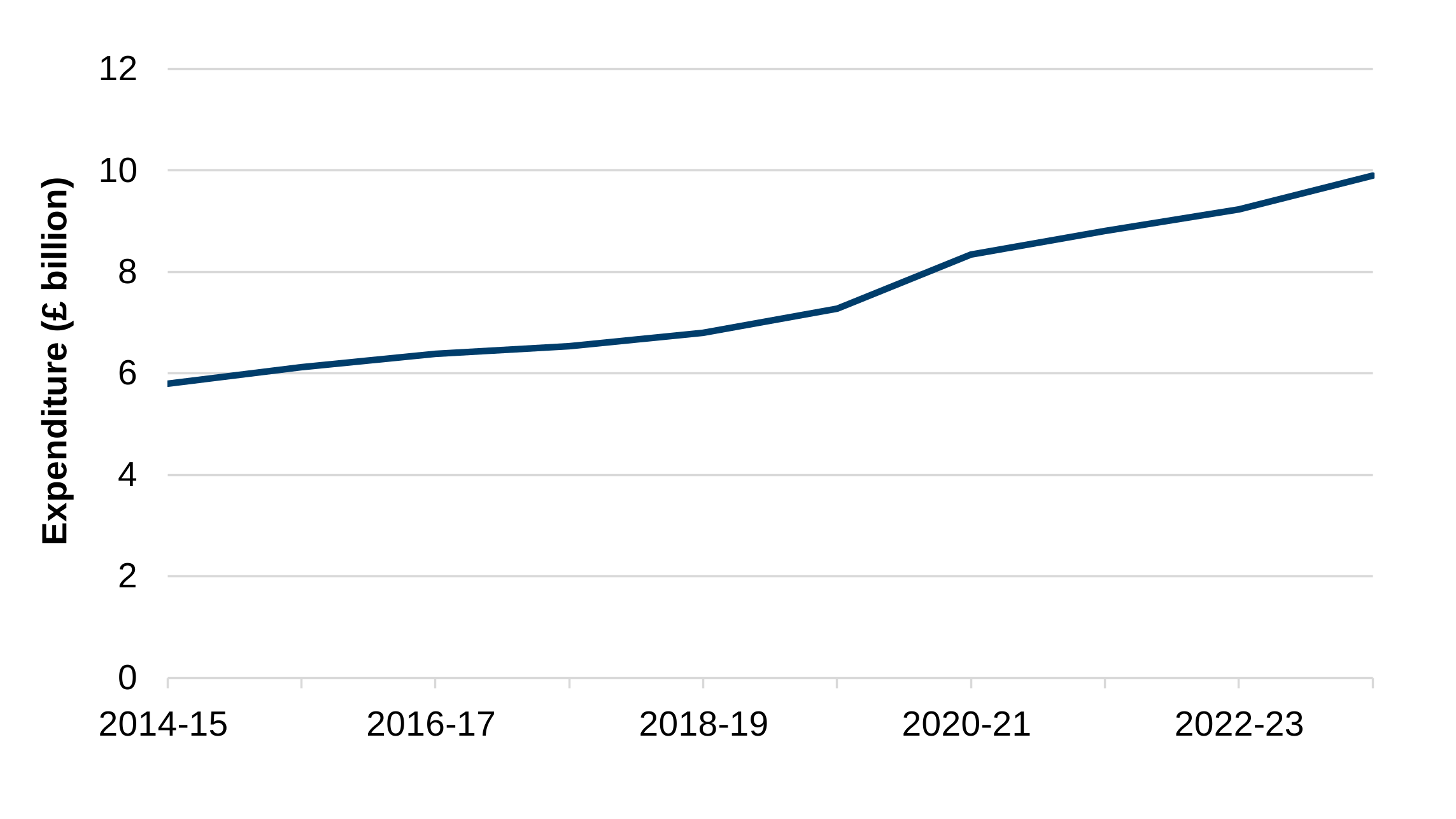
Description of figure 1: line chart showing that total expenditure has increased over the last 10 years, with a sharper increase between 2019-20 and 2020-21, when expenditure increased in response to the COVID-19 pandemic.
Source: Programme Budgeting (WCR13) submission, NHS Performance and Improvement
NHS expenditure by programme budget category, organisation and commissioner on StatsWales
[Note 1] Total NHS expenditure excluding expenditure from Health Education Improvement Wales and Digital Health and Care Wales.
Total expenditure for all programme of care categories was £9.9 billion, a 7.3% annual increase.
Expenditure has increased in each year since comparable data was first collected in 2009-10 and over the last ten years, expenditure increased by 70.6%.
The annual increases in expenditure have typically been larger in the years since the height of the pandemic (2021-22 onwards) compared to the annual increases in the years prior to the pandemic (before 2019-20).
Apart from the Other category, the programme of care category with the largest monetary increase in the last ten years was Mental Health which increased by nearly £461 million (69.5%) and accounted for 11.3% of the total increase in expenditure.
The categories with the next largest monetary increases were Cancers and Tumours (£379 million and 92.5%) and Trauma and Injuries (£369 million and 88.6%).
Expenditure on Infectious Diseases increased substantially between 2019-20 and 2020-21 (£373 million or 306.6%) in response to the COVID-19 pandemic but has decreased in each year since. It is the category that has seen the largest percentage increase in the last ten years with expenditure in 2023-24 nearly three times what it was in 2014-15.
Expenditure on Healthy Individuals (including screening), which was also greatly impacted by COVID-19 specific activity, increased by nearly two and a half times over the last ten years, the second largest increase of any programme of care.
Expenditure by programmes of care 2023-24
Figure 2: NHS expenditure by programme of care, 2023-24 (£ million)
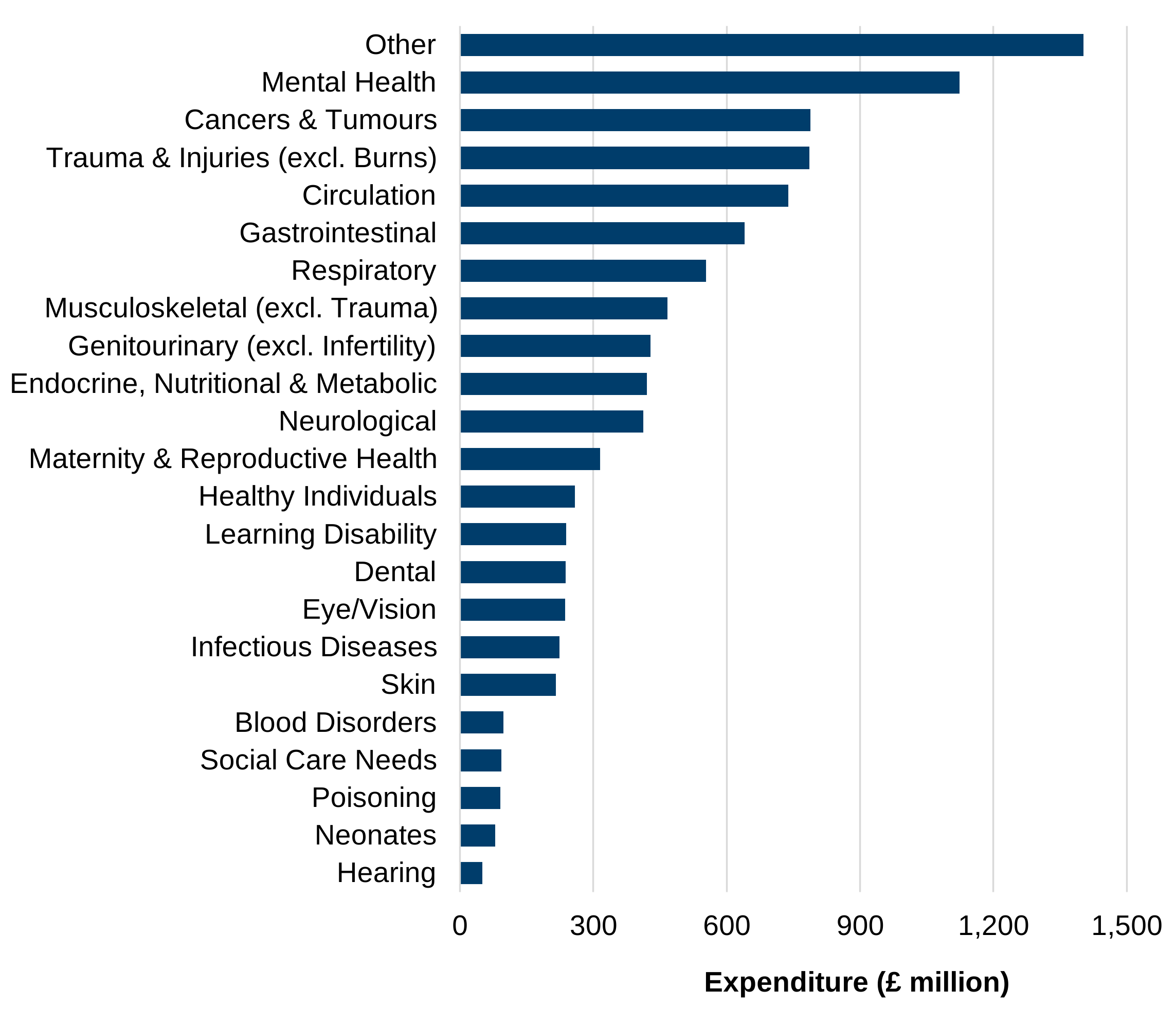
Description of figure 2: bar chart showing that expenditure varied widely by programme of care, with the expenditure in the largest category (excluding Other) Mental Health more than twenty times larger than the smallest category, Hearing conditions.
Source: Programme Budgeting (WCR13) submission, NHS Performance and Improvement
NHS expenditure by programme budget category, organisation and commissioner on StatsWales
In 2023-24, the category with the largest expenditure (excluding Other) was Mental Health which accounted for 11.4% (£1,124 million) of all expenditure. Nearly half of the spend on the Mental Health was allocated to the General Mental Illness subcategory, while over a quarter was allocated to Elderly Mental Illness and a tenth to Child and Adolescent Mental Health. The Mental Health category has had the largest proportion of all NHS expenditure (excluding Other) since 2009-10, when comparable data was first collected.
Other expenditure
Not all healthcare activity can be classified to a specific programme of care category and is grouped into the Other category. Examples of expenditure that fall into this category include: most general practice activity; Open Access which includes expenditure on secondary care diagnostic support services including pathology and radiology; and Continuing Care which includes funding for care packages delivered at the homes of patients with long-term and often complex needs.
Other has accounted for the largest amount of expenditure in each year since comparable data was collected in 2009-10. In 2023-24, expenditure allocated to the Other category was £1.4 billion, or 14.2% of total expenditure.
The largest subgroup within the Other category was expenditure on General Medical Services which accounted for £574 million, or 40.9% of all Other category expenditure. The £574 million expenditure in the Other category accounts for 94.1% of total Primary Care General Medical Services expenditure.
Further information on expenditure included in the Other category is available in the quality report.
Annual change in NHS expenditure (2022-23 to 2023-24)
Overall, expenditure in 2023-24 was significantly less impacted by COVID-19 related initiatives than in the previous four years.
Figure 3: annual percentage change in NHS expenditure by programme of care, 2022-23 to 2023-24
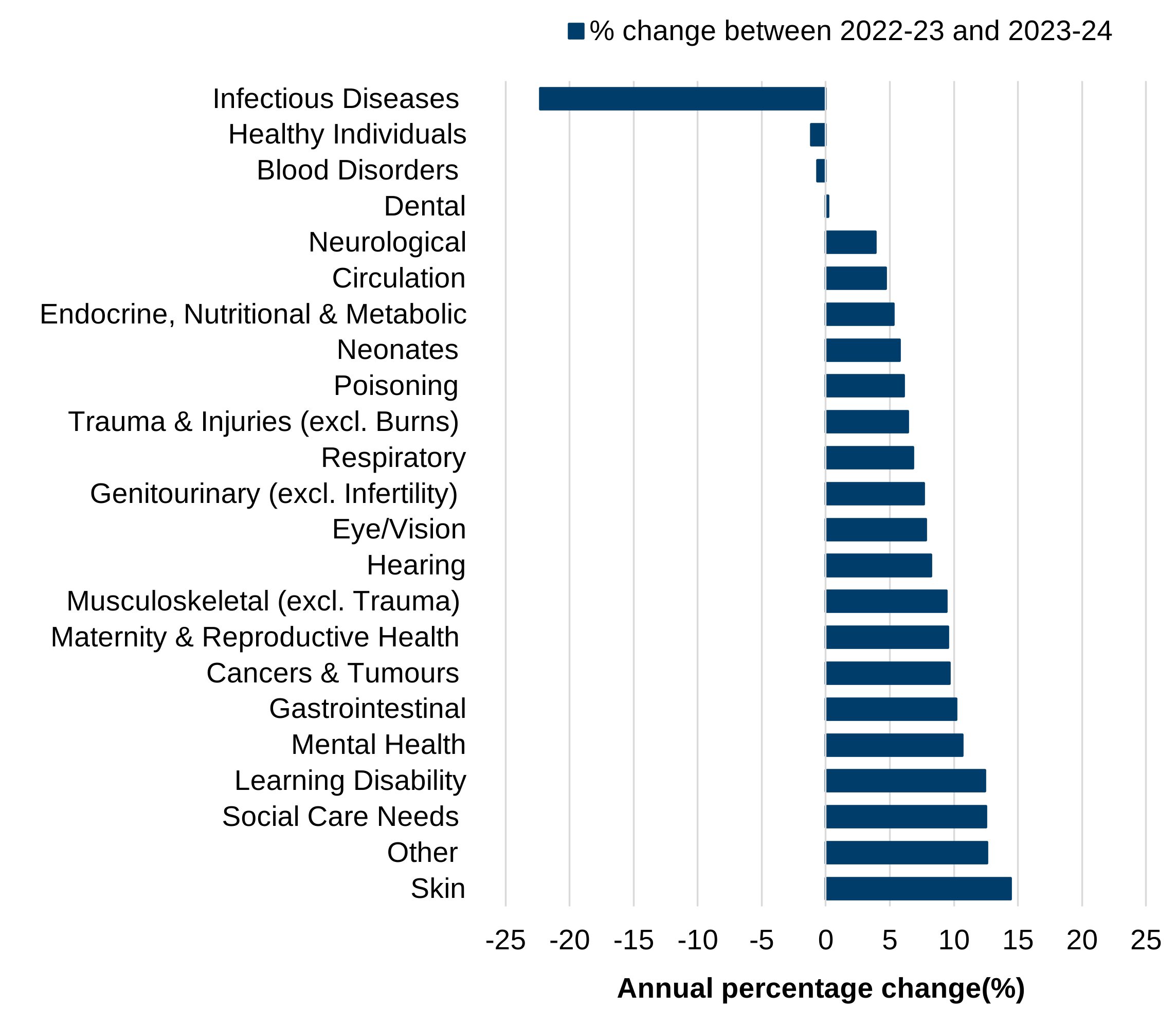
Description of figure 3: bar chart showing annual expenditure increased in 20 of the 23 programmes of care. The annual changes ranged from an increase of 14.4% for Skin conditions to a decrease of 22.3% in Infectious Diseases.
Source: Programme Budgeting (WCR13) submission, NHS Performance and Improvement
NHS expenditure by programme budget category, organisation and commissioner on StatsWales
In 2023-24, Mental Health expenditure increased by £108 million (or 10.6%) from 2022-23, the largest monetary increase from any category. This was followed by a £69 million increase in expenditure on Cancers and Tumours, and a £59 million increase in Gastrointestinal conditions. Expenditure on each of these programmes has grown in every year since the pandemic.
The largest annual percentage increase was in Skin conditions (14.4%), followed by Social Care Needs (12.5%) and Learning Disability (12.4%).
Annual expenditure for Infectious Diseases decreased by £64 million (or 22.3%), but expenditure for this category was £102 million (or 83.5%) higher than in 2019-20, the last year largely unaffected by the COVID-19 pandemic.
Annual expenditure also decreased for Healthy Individuals by 1.2% and Blood Disorders by 0.7%.
Expenditure by service level
NHS expenditure can be analysed by programme of care and the level at which it is provided. Local health boards commission service providers in primary care (such as GPs and dentists), who are generally the first point of contact for non-emergency services. Secondary care services are usually carried out in hospital settings, often following a referral from primary care or an emergency department. Total expenditure includes a small amount of other care expenditure which cannot be classified to primary or secondary care, for example, payments to Public Health Wales and charities.
Figure 4: NHS expenditure by service level, 2014-15 to 2023-24
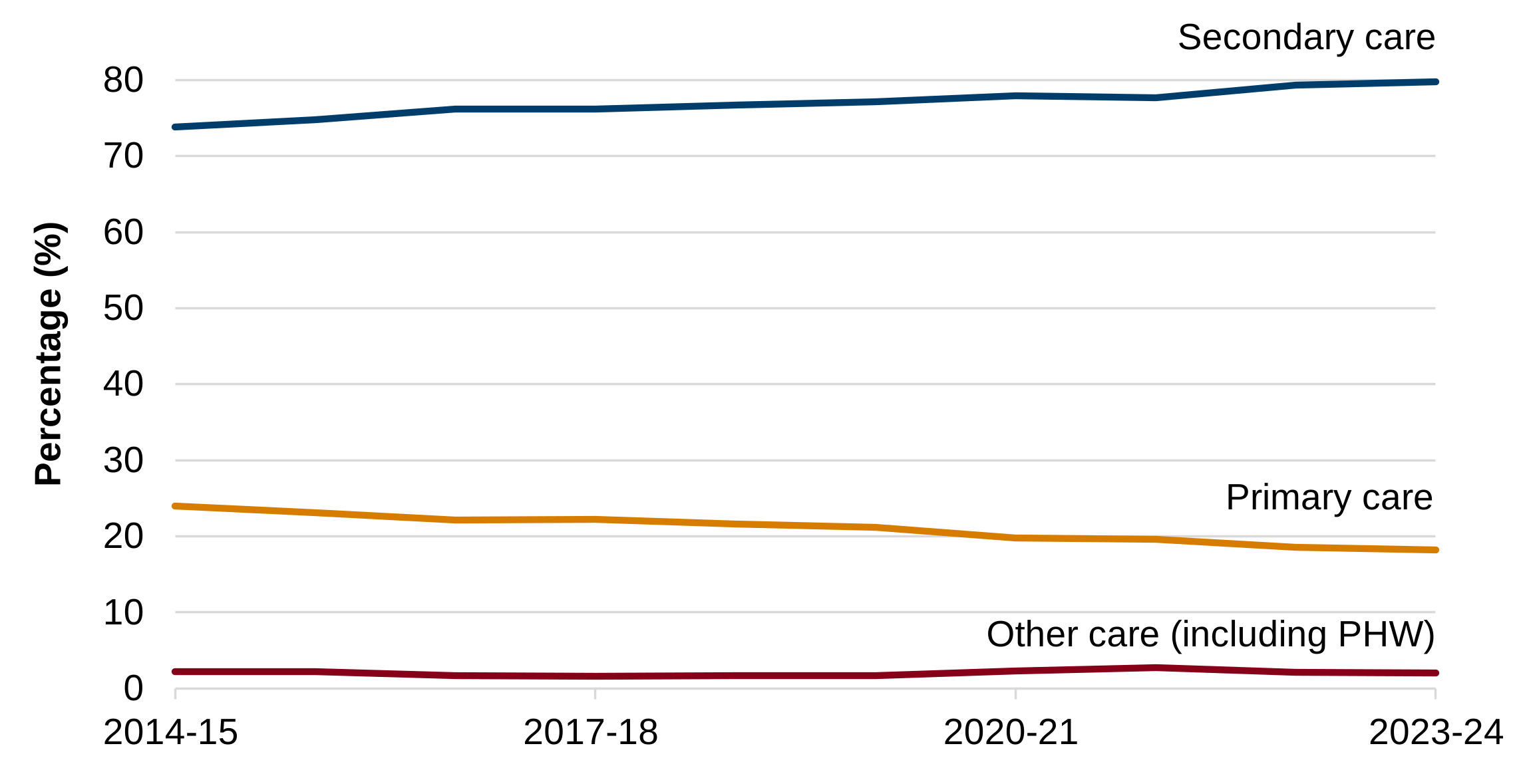
Description of figure 4: line chart showing that the proportion of NHS expenditure in secondary care has increased over the last decade and accounted for four-fifths of NHS expenditure in 2023-24. In contrast the proportion of expenditure in primary care has been on a downward trend over the same period.
Source: Programme Budgeting (WCR13) submission, NHS Performance and Improvement
NHS expenditure by programme budget category, organisation and commissioner on StatsWales
In 2023-24, 79.8% of total NHS expenditure was in secondary care, an increase of 0.5 percentage points from last year and a 6.0 percentage point increase from ten years ago.
The largest proportion of secondary care expenditure was allocated to Mental Health (13.4%), followed by Trauma and Injuries (9.8%) and Cancers and Tumours (9.6%). These proportions have been broadly stable since 2009-10.
18.2% of total NHS expenditure was in primary care, a decrease of 0.3 percentage points from last year and a 5.8 percentage point decrease from ten years ago.
Close to a third (32.8%) of primary care expenditure was allocated to Other (nearly all to the Other General Medical Services subcategory), while the specific clinical categories with the largest primary care expenditure were Endocrine, Nutritional and Metabolic (13.0%) and Dental (10.1%). These proportions have been broadly stable since 2009-10.
Expenditure for Other care has remained at about 2.0% of the total since 2010-11. Over two-thirds (68.8%) of the Other care spend related to Other Public Health Wales (PHW) functions.
Expenditure by local health board
Expenditure by local health board includes all NHS commissioned health care for Welsh residents. This includes expenditure on services provided by NHS providers outside of Wales and on private health care services, that had been commissioned by the NHS.
In 2023-24, expenditure ranged from £435 million in Powys to £2.2 billion in Betsi Cadwaladr. Similarly to the national picture, more expenditure was made on Mental Health than any other programme of care (excluding Other) for all local health boards.
Compared to 2022-23, expenditure increased in all local health boards, ranging from 4.8% in Cardiff and Vale to 8.9% in Hywel Dda.
Figure 5: NHS expenditure per head of population by local health board, 2023-24
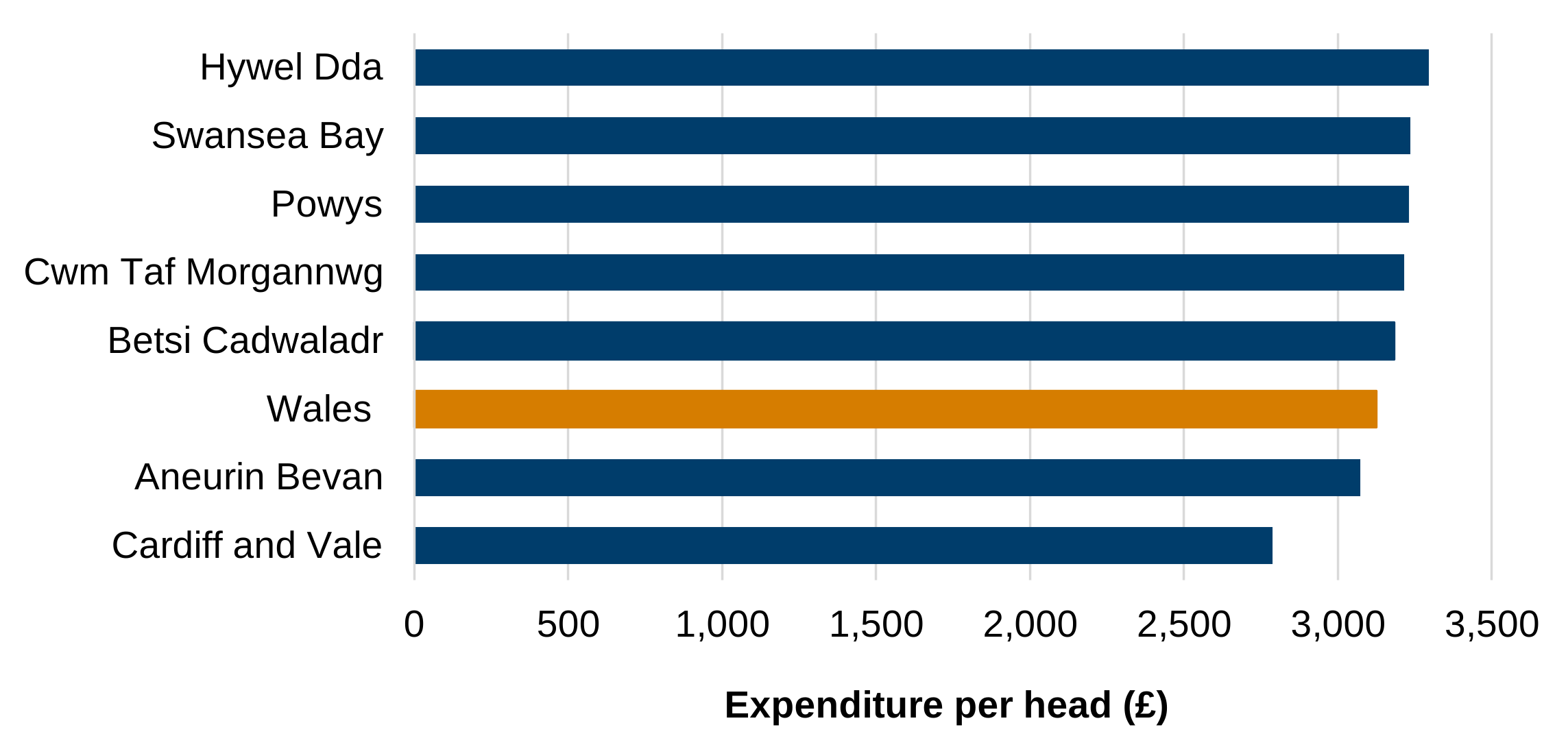
Description of figure 5: bar chart showing that expenditure per head of population for Wales was £3,125 and ranged between £2,789 per head in Cardiff and Vale to £3,296 per head in Hywel Dda in 2023-24.
Source: Programme Budgeting (WCR13) submission, NHS Wales Performance and Improvement, and Mid-Year Population Estimates, Office for National Statistics
NHS expenditure by programme budget category, organisation and commissioner on StatsWales
Total NHS expenditure per head increased by 6.1% in Wales, compared to the previous year. There were increases in all health boards, ranging from 3.0% in Cardiff and Vale to 8.1% in Hywel Dda.
Quality and methodology information
The allocation of expenditure to programme of care is reliant on clinical activities being coded accurately. In recent years, there has been an increase in clinical activity that has not been coded, which impacts the quality of programme of care expenditure data. To somewhat mitigate for this issue, an estimation method is used to allocate funding to programmes of care, and in 2023-24, 5.4% of total expenditure to programmes was based on estimations, and 2.6% of expenditure was unallocated.
The allocation of expenditure to programmes of care categories for secondary care is based on clinical coding applied to Admitted Patient Care activities at a patient level, whilst for primary care expenditure on drugs and services such as dental and opticians are allocated directly to programmes, but the majority is unallocated to specific clinical categories.
| Percentages | 2020-21 | 2021-22 | 2022-23 | 2023-24 |
|---|---|---|---|---|
| % of total expenditure estimated | 0.7% | 1.2% | 3.8% | 5.4% |
| % of total expenditure unallocated | 1.7% | 2.4% | 1.8% | 2.6% |
Table 1 shows that that an increasing amount of total NHS expenditure has been allocated to a programme of care using an estimation method, in addition to an increasing amount of total expenditure that could not be allocated to any programme of care.
To calculate the expenditure per head of population, the closest Office for National Statistics (ONS) Mid-Year Population Estimates available at the time of publication were used. The mid-year estimates for 2023 were used as a denominator for 2023-24 expenditure.
Further information is available in the quality report.
Statement of compliance with the Code of Practice for Statistics
Our statistical practice is regulated by the Office for Statistics Regulation (OSR). OSR sets the standards of trustworthiness, quality and value in the Code of Practice for Statistics that all producers of official statistics should adhere to.
All of our statistics are produced and published in accordance with a number of statements and protocols to enhance trustworthiness, quality and value. These are set out in the Welsh Government’s Statement of Compliance.
These official statistics demonstrate the standards expected around trustworthiness, quality and public value in the following ways.
Trustworthiness
Data is collected and collated annually by the NHS Executive based on individual programme budgeting returns from local health boards and provided to Welsh Government for publication.
The published figures are compiled by professional analysts using the latest available data and applying methods using their professional judgement and analytical skillset.
These statistics are pre-announced on the Statistics and Research area of the Welsh Government website. Access to the data during processing is restricted to those involved in the production of the statistics, quality assurance and for operational purposes. Pre-release access is restricted to eligible recipients in line with the Code of Practice (UK Statistics Authority).
Quality
Our statistics are produced to high professional standards and are produced free from any political interference.
Data is collected by the NHS Executive who undertakes validation of the initial data submission. Further quality assurance of the data is undertaken alongside Welsh Government and queries referred to local health boards prior to publication.
The statistical release is approved by senior statisticians before publication. Data is published in line with statement on confidentiality and data access each quarter.
To help users to interpret the data and understand where any limitations may be; these are described more clearly in the Quality Report.
Value
The purpose of the statistical release is to present NHS expenditure by programme of care based on the medical condition the expenditure relates to, focussing on patient care, rather than the provider of care.
Statistics are published annually with typically a twelve-month lag between the reference period of the latest reporting year and publication. The statistics are published with brief analysis and commentary, in addition to open data format tables which are published on StatsWales.
You are welcome to contact us directly with any comments about how we meet these standards. Alternatively, you can contact OSR by emailing regulation@statistics.gov.uk or via the OSR website.
Well-being of Future Generations Act (WFG)
The Well-being of Future Generations Act 2015 is about improving the social, economic, environmental and cultural wellbeing of Wales. The Act puts in place seven wellbeing goals for Wales. These are for a more equal, prosperous, resilient, healthier and globally responsible Wales, with cohesive communities and a vibrant culture and thriving Welsh language. Under section (10)(1) of the Act, the Welsh Ministers must (a) publish indicators (“national indicators”) that must be applied for the purpose of measuring progress towards the achievement of the wellbeing goals, and (b) lay a copy of the national indicators before Senedd Cymru. Under section 10(8) of the Well-being of Future Generations Act, where the Welsh Ministers revise the national indicators, they must as soon as reasonably practicable (a) publish the indicators as revised and (b) lay a copy of them before the Senedd. These national indicators were laid before the Senedd in 2021. The indicators laid on 14 December 2021 replace the set laid on 16 March 2016.
Information on the indicators, along with narratives for each of the wellbeing goals and associated technical information is available in the Wellbeing of Wales report.
Further information on the Well-being of Future Generations (Wales) Act 2015.
The statistics included in this release could also provide supporting narrative to the national indicators and be used by public services boards in relation to their local wellbeing assessments and local wellbeing plans.