
Oedolion sy'n derbyn gofal a chymorth: 1 Ebrill 2023 i 31 Mawrth 2024 (ystadegau swyddogol mewn datblygiad)
Gwybodaeth am nodweddion a phriodoleddau oedolion sy’n derbyn gofal a chymorth ar gyfer 1 Ebrill 2023 i 31 Mawrth 2024. Saesneg yn unig.
Ar y dudalen hon
Introduction
This is a new release based on a new data collection, the Adults receiving care and support (ARCS) census, submitted by local authorities. As such statistics in this release are considered official statistics in development (Office for Statistics Regulation (OSR)). For example, we have identified data quality issues that we expect to improve in future years. Broadly, these relate to missing data and inconsistencies in the way data is reported.
These statistics provide analysis of characteristics and attributes of adults (aged 18 and over) receiving care and support, i.e. who had a care and support plan, at any point during the reporting year 1 April 2023 to 31 March 2024 (2023-24). More detailed information is also provided for those adults receiving care and support on the 31 March census date.
To have a care and support plan, adults will have had an assessment of their care and support needs which concluded that the adult has eligible needs that can only be met through the provision of a care and support plan. Part 4 Code of Practice (Meeting Needs) under the Social Services and Well-being (Wales) Act 2014 provides information on the duties of a local authority in meeting needs for care and support.
Main points
During 2023-24 around
- 60,180 adults were receiving care and support and had a care and support plan at any point during the year. Equivalent to around 2.4 adults for every 100.
- Where known, almost a third (31.9% or 18,261) of the total number of adults receiving care and support were recorded as having the latest continuous period of care and support having started during the year.
- 3.2% (1,931) of adults receiving care and support had safeguarding enquiries where it was determined additional action was required to protect the adult from or risk of abuse or neglect resulting in a care and support protection plan.
- 14,495 adults receiving care and support at any point during the year had their care and support plan closed and did not have a care and support plan on 31 March 2024. Of which, over half (51.6%) had their plan closed because they had died and almost a third (31.5%) because the service had completed.
As at 31 March 2024 around
- 45,685 adults were receiving care and support and had a care and support plan. Equivalent to around 1.8 adults for every 100. This is lower than those during the year as some plans had closed prior to the 31 March census date.
- The proportion of adults receiving care and support increased with age; with over half (55.9%) being aged 75 and over.
- 59.0% of adults receiving care and support were female and 41.0% were male.
- Almost double the proportion of adults receiving care and support had a disability compared to the general population.
- Where known, over two-thirds (69.2%) of adults receiving care and support were living in their own home.
- Over a third (36.9%) of adults receiving care and support were receiving domiciliary care.
- Over a quarter (27.7%) of adults receiving care and support had a carer who is known to the local authority.
- Where known, 5.1% of adults receiving care and support had caring responsibilities.
During the year
60,180 adults receiving care and support had a care and support plan at any point during the year 1 April 2023 to 31 March 2024. Equivalent to 2.4 adults per 100.
The number with a care and support plan is an indicator of the level of care and support needs that local authorities are required to meet and gives a high-level overview of social services demand.
Adults receiving care and support during the year by age group and gender, on StatsWales.
Date continuous period of care began
The date latest continuous period of care began refers to when the current care and support plan began. Some will be new to receiving care and support whilst for others this date may be in the past. The collection of this date is intended to give an indication of in-year demand for local authorities and new needs of adults requiring care and support.
Figure 1: adults receiving care and support during the year by date latest continuous period of care and support began, 2023-24 [Note 1], [Note 2]
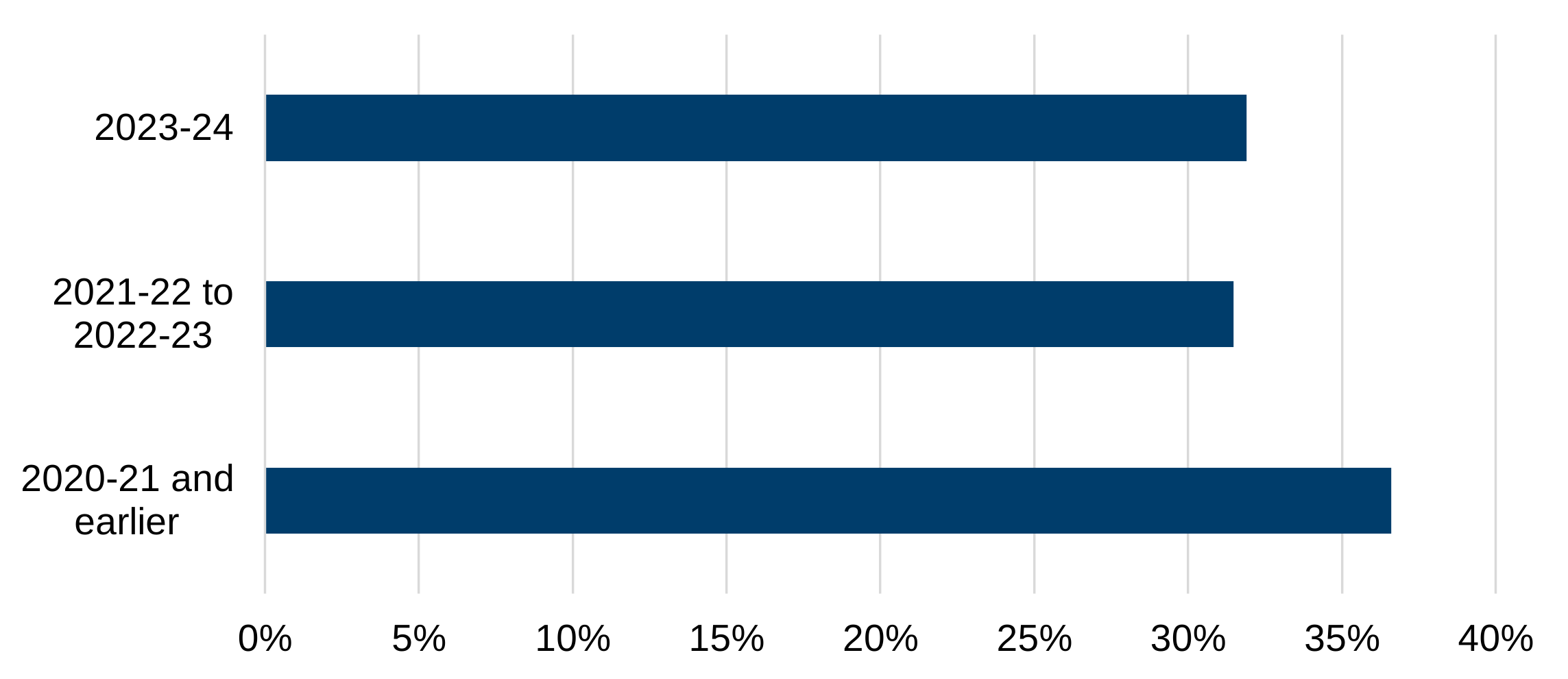
Description of Figure 1: bar chart showing that nearly a third (31.9%) of adults who had a care and support plan during the year had their latest continuous period of care and support begin during the reporting year 2023-24.
Source: Adults receiving care and support census, Welsh Government
[Note 1] 2,947 (4.9%) adults were missing the date latest continuous period of care began. All were from Flintshire.
[Note 2] The date latest continuous period of care began for some adults was before the adult turned 18 years old. However, it is expected that if an adult moved from children to adult services that the date of transfer is used.
Where provided, nearly a third (31.9%) of adults had their latest continuous period of care start during the year. A further 31.5% had their latest continuous period of care start during the previous two years (2021-22 or 2022-23) whilst the latest continuous period of care began in 2020-21 or earlier for 36.6% of adults.
Safeguarding
3.2% (1,931) of adults receiving care and support at any point had safeguarding enquiries in the collection year where it was determined additional action was required to protect the adult from or risk of abuse or neglect, resulting in a care and support protection plan. Enquires cover a range of activity to decide whether the person is or is not an adult at risk and, what action should be taken and by whom.
Figure 2: adults who had safeguarding enquiries during the year which resulted in a care and support protection plan by category of safeguarding, 2023-24 [Note 1]
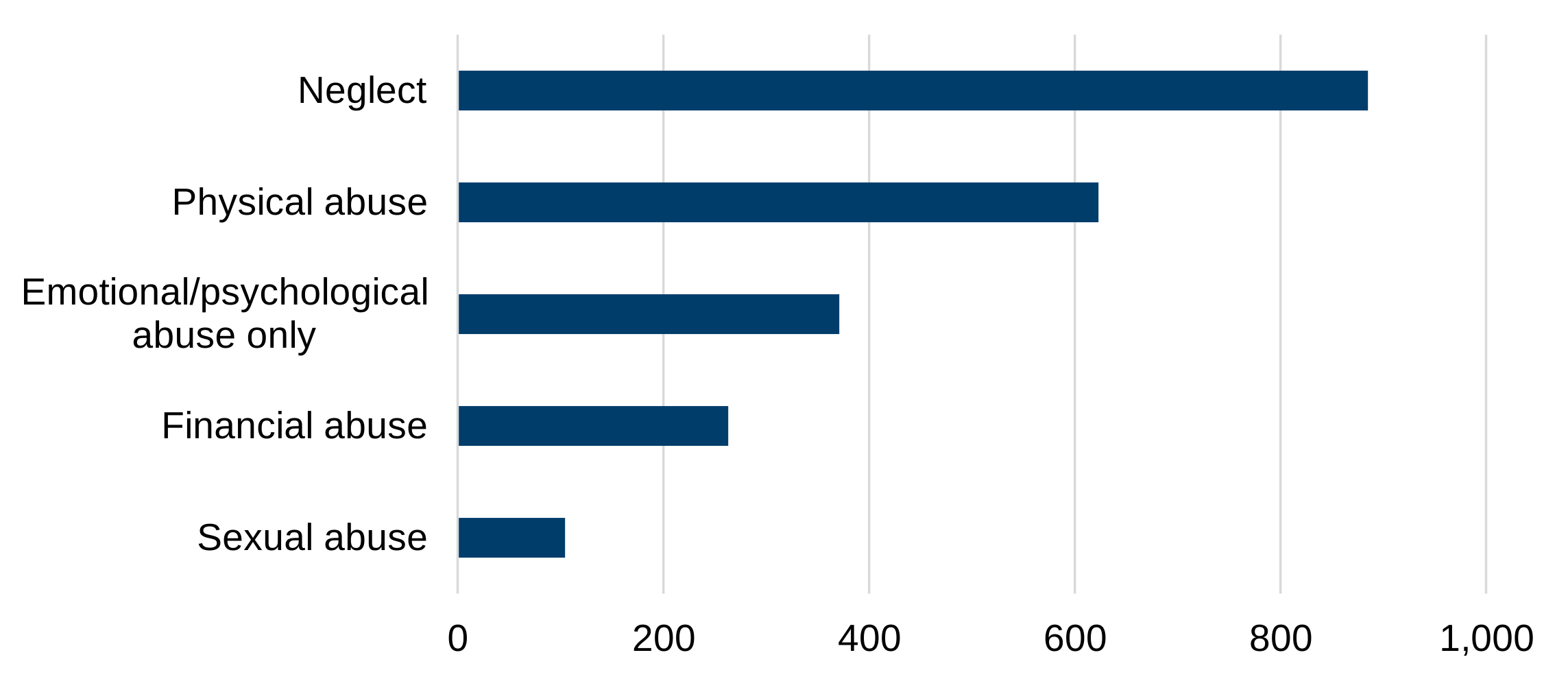
Description of Figure 2: bar chart showing that the most likely recorded category of safeguarding for adults who had enquiries resulting in a care and support protection plan during the year was neglect.
Source: Adults receiving care and support census, Welsh Government
[Note 1] More than one category of concern may apply. Emotional/psychological abuse is considered to always occur if other types of abuse occur and is only recorded here if it occurs in isolation without other types of abuse or neglect.
Neglect was most recorded as the primary concern at the point additional action was identified and was recorded for nearly half (45.8%) of adults who had enquiries resulting in a care and support protection plan during the year. Physical abuse was recorded for nearly a third (32.3%) who had enquiries resulting in a care and support protection plan during the year.
Care and support plans closed
14,495 adults who had care and support during the year had their care and support plan closed during the year and did not have a plan on 31 March 2024.
Figure 3: reasons for closure of care and support plans during the year, 2023-24 [Note 1]
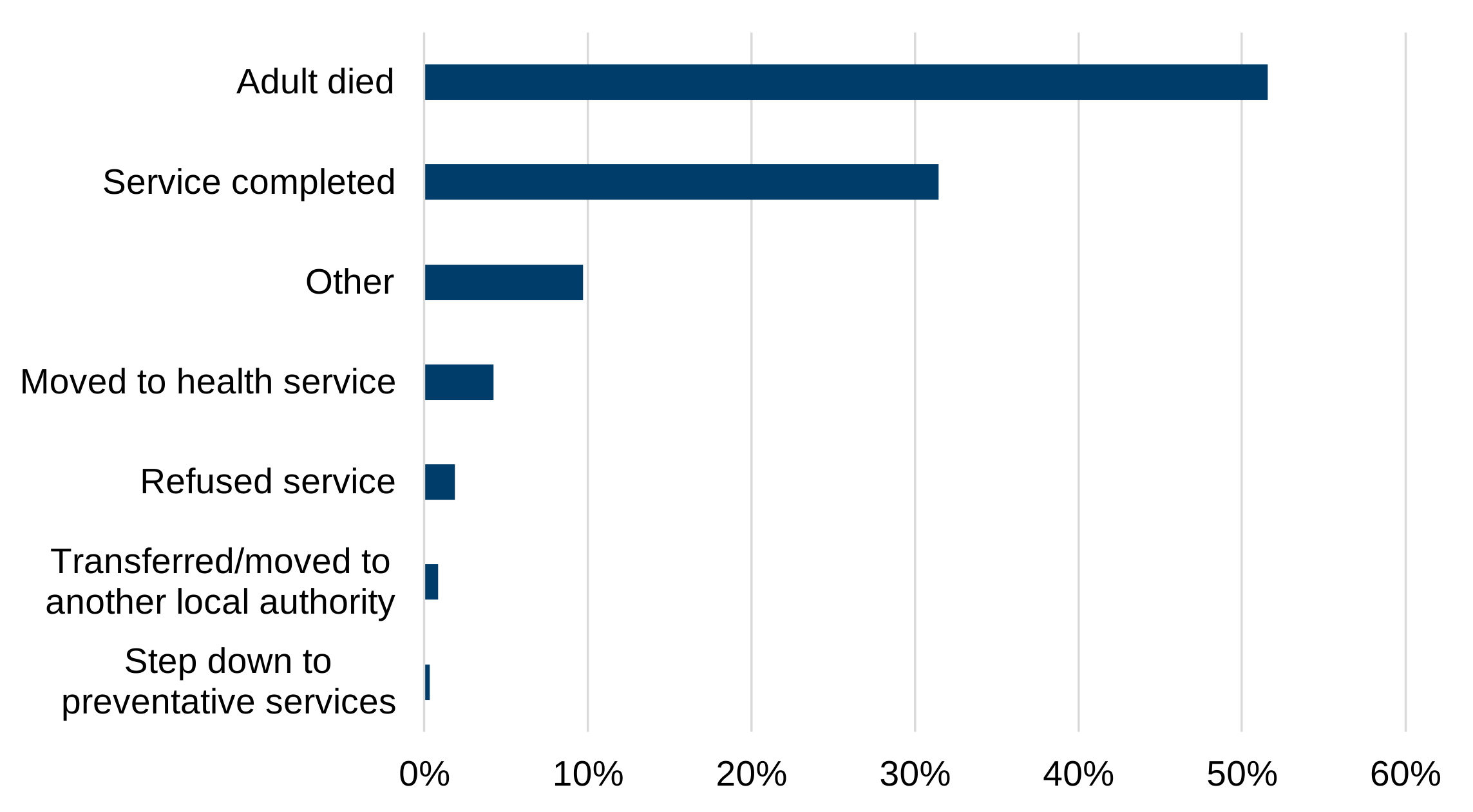
Description of Figure 3: bar chart showing the most likely recorded reason for closure of care and support plans during the year was because the adult had died.
Source: Adults receiving care and support census, Welsh Government
[Note 1] Examples of reasons included in the “Other” category were where adults started paying for their own care and support (self-funding) after a period or where they were admitted to hospital.
Of those adults who did not have a care and support plan on 31 March 2024, over half (51.6%) had their plan closed because they had died. Almost a third (31.5%) had their care and support plan closed because the service had completed.
As at 31 March
45,685 adults had a care and support plan on 31 March 2024. Equivalent to 1.8 adults per 100. This is lower than those during the year as some plans that were open during the year had closed prior to the 31 March census date.
Data as at the census date is shown to provide a picture at a point in time and further insight of characteristics of those receiving care and support which is not captured in the during the year data.
Characteristics of adults receiving care and support
Age
Figure 4: adults receiving care and support by age, 31 March 2024
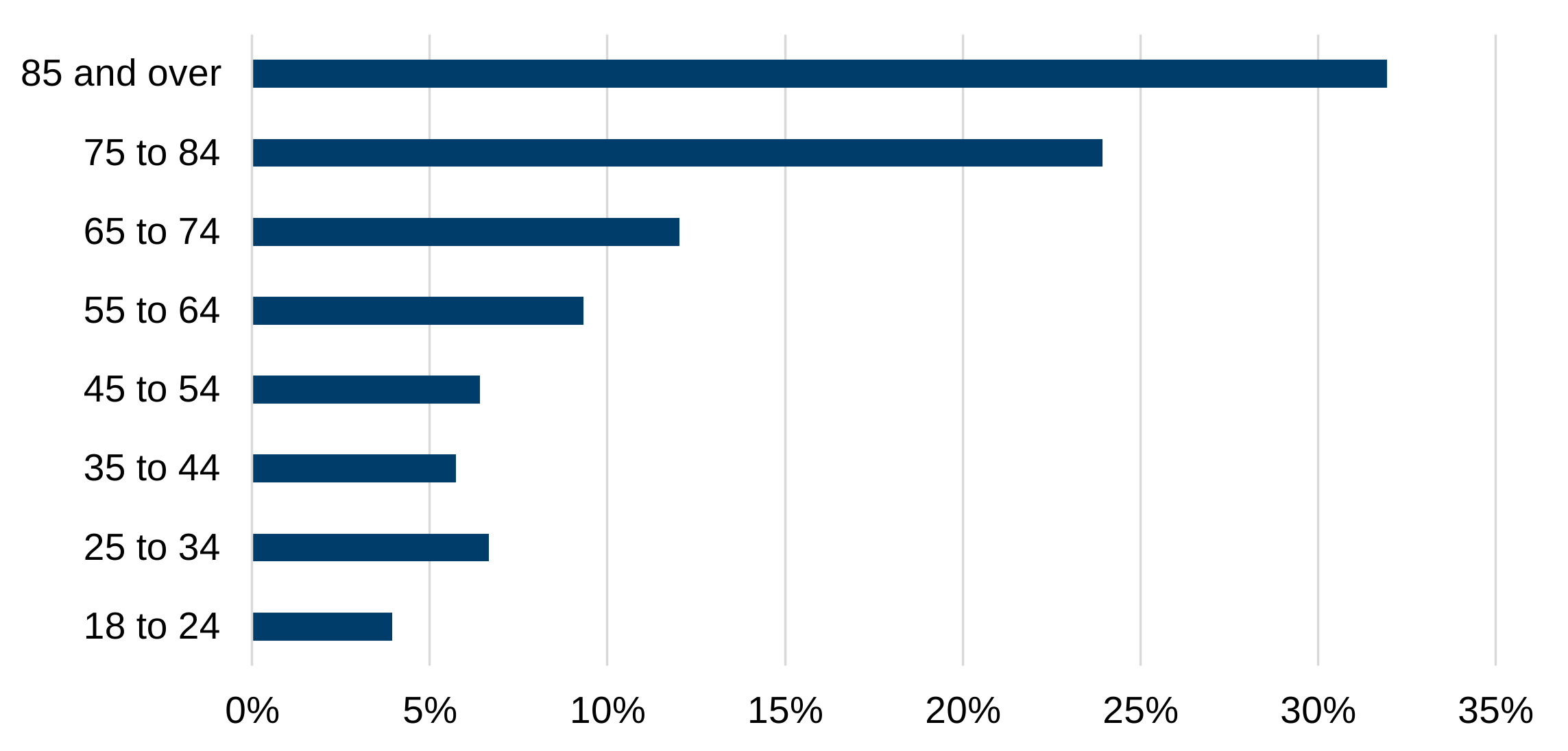
Description of Figure 4: bar chart showing the proportion of adults receiving care and support increased with age.
Source: Adults receiving care and support census, Welsh Government
Over half (55.9%) of adults receiving care and support on 31 March 2024 were aged 75 and over despite those in this age group accounting for only 13.0% of the general adult population. Whilst a much smaller proportion of adults with a care and support plan were aged 34 and under (10.6%) compared to the general population (25.9%).
A higher proportion of adults receiving care and support in younger age groups were male; this proportion decreased with age. Whilst a higher proportion of older adults receiving care and support were female.
Gender
Figure 5: adults receiving care and support by gender, 31 March 2024
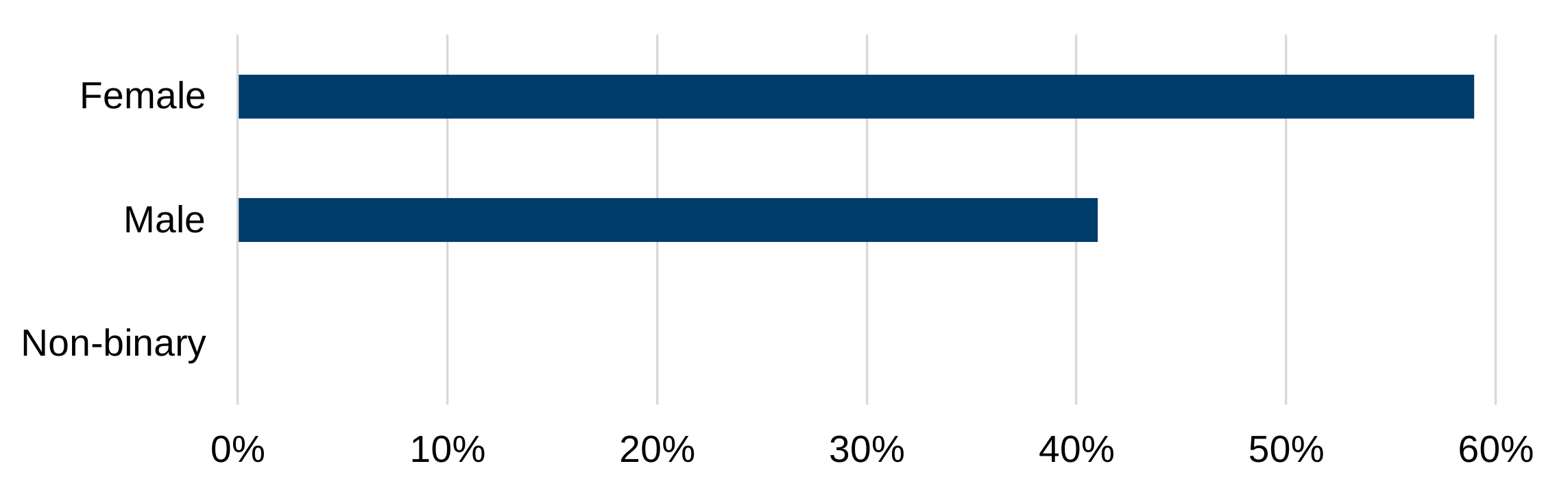
Description of Figure 5: bar chart showing more adults receiving care and support were female than male.
Source: Adults receiving care and support census, Welsh Government
59.0% of adults receiving care and support were female and 41.0% were male on 31 March 2024. Adults with gender recorded as non-binary accounted for less than 0.1% of adults receiving care and support.
Disability
Figure 6: adults receiving care and support with a disability by type of impairment, 31 March 2024 [Note 1]
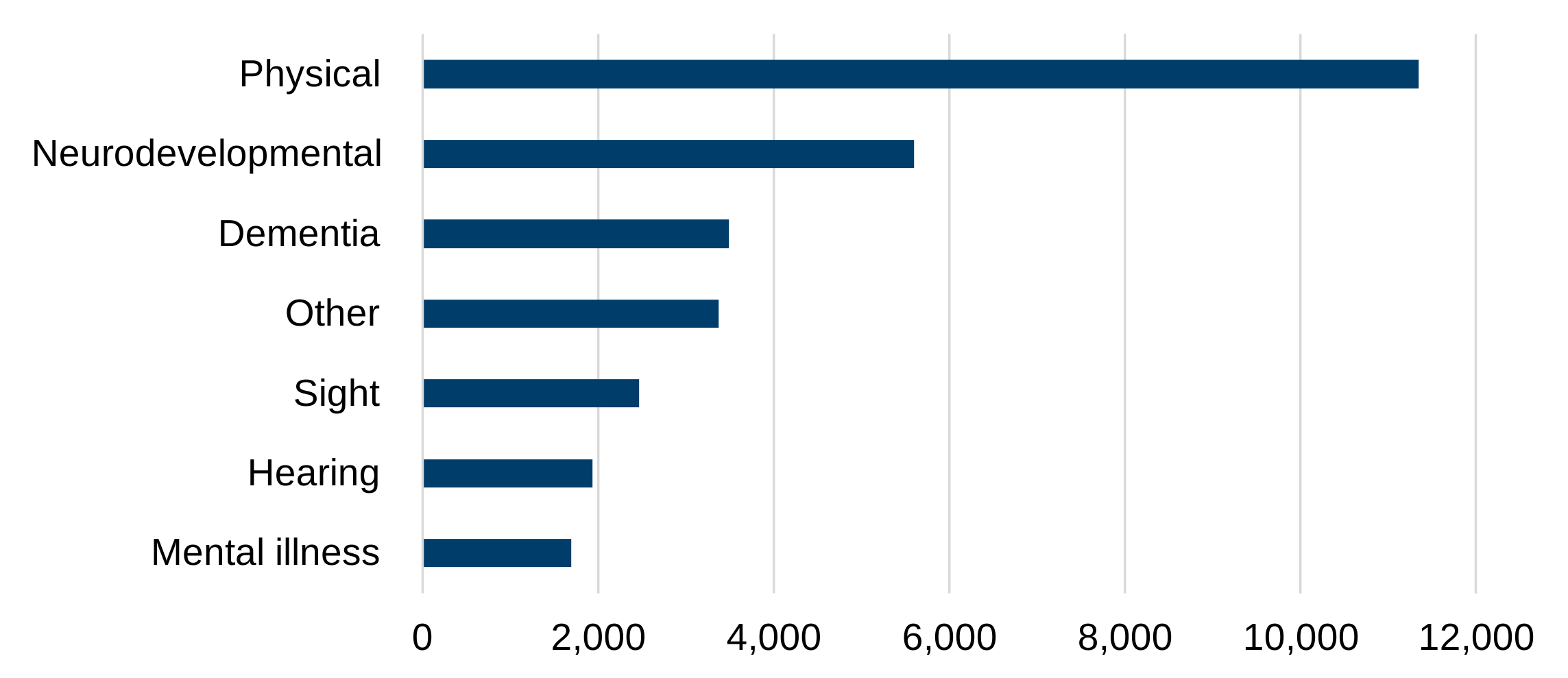
Description of Figure 6: bar chart showing physical impairment was the most likely recorded impairment by adults receiving care and support with a disability.
Source: Adults receiving care and support census, Welsh Government
[Note 1] “Other” includes adults who had a disability but did not have any of the specified impairments listed.
Nearly half (49.3%) of adults receiving care and support on 31 March 2024 were recorded as having a disability (in line with the Equality Act 2010 definition). This is almost double the proportion of adults reported as being disabled in the general population from the 2021 Census (25.1%).
Nearly three-quarters (74.4%) of adults with a disability were recorded as having only one type of impairment. 19.9% of adults were recorded as having two types of impairments whilst the remaining 5.7% of adults were recorded as having three of more types of impairments listed in the data collection guidance.
The most recorded category of impairment was a physical impairment which was reported by half (50.4%) of adults with a disability, and double that of the next most common impairment. A quarter (24.9%) were recorded as having a neurodevelopmental condition, whilst 15.5% were recorded as having dementia.
The proportion of adults receiving care and support with a disability decreased with age and a higher proportion of males had a disability (51.7%) compared to females (47.6%).
Ethnicity
The majority (97.7%) of adults receiving care and support on 31 March 2024 with known ethnicity were White. This is higher than the proportion of adults with White ethnic group in the general population from the 2021 Census (94.7%).
The proportion adults receiving care and support who were Asian, Asian British or Asian Welsh was lower than the general population (0.8% compared to 2.7%), as was the proportion who were of Mixed or multiple ethnic groups (0.5% compared to 1.1%).
The proportion of adults who were Black, Black British, Black Welsh, Caribbean or African, or from Other ethnic groups, were more similar to that seen in the wider population.
The proportion of adults receiving care and support who were White increased with age. A higher proportion of adults receiving care and support who were White were recorded as having a disability than those from any other ethnicity.
Ethnicity was unknown for 16.3% (or 7,425) of adults.
Preferred language
85.6% of adults receiving care and support on 31 March 2024 were recorded as having English as their preferred language; this is the language the adult prefers to use to communicate with others. 5.0% of adults had a preferred language of Welsh. 1.2% of adults had other specified preferred languages whilst 8.1% had either another preferred language which was not listed, or the information was unknown or not able to be communicated.
Residence
Residence captures the type of accommodation the adult was in.
Figure 7: adults receiving care and support by residence, 31 March 2024
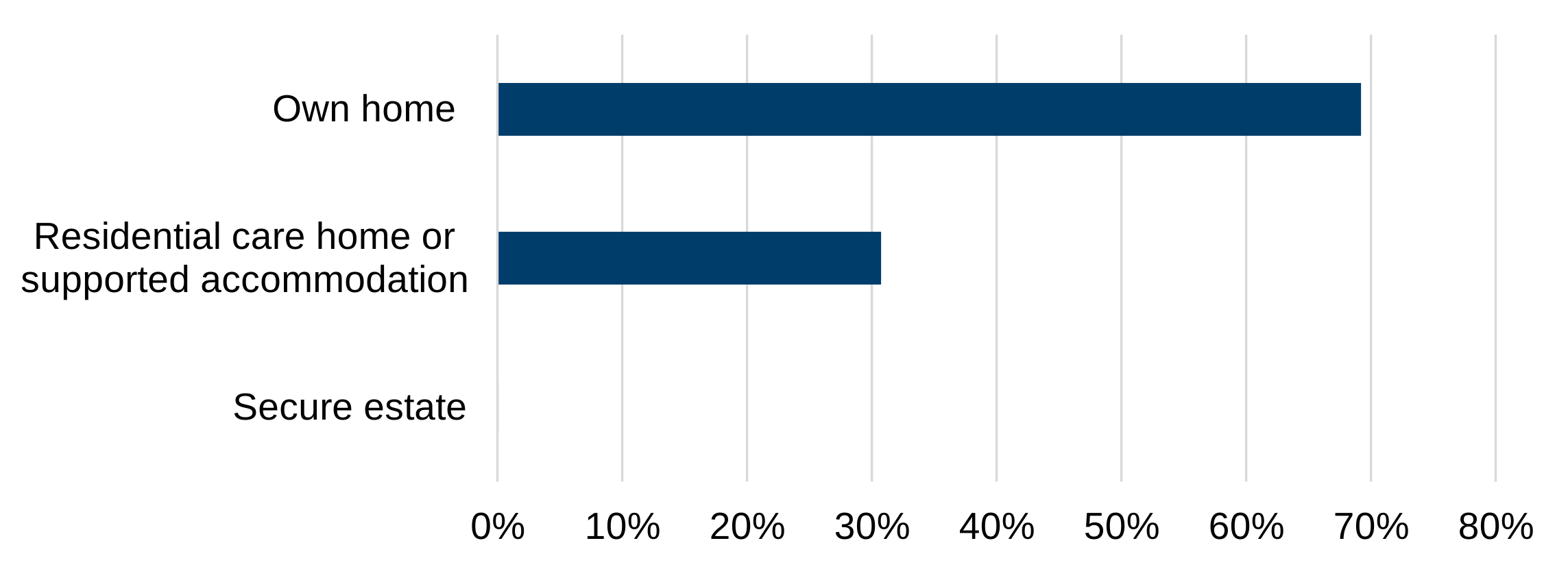
Description of Figure 7: bar chart showing most adults receiving care and support were living in their own home.
Source: Adults receiving care and support census, Welsh Government
Where known, over two-thirds (69.2%) of adults receiving care and support on 31 March 2024 resided in their own home (i.e. resided in the community). This includes where the adult was on a short-term placement or respite care in a residential care home or supported accommodation but would typically reside at home. An adult was also considered to be living in their own home if they were not living in a residential care home or supported accommodation on a long-term placement, or were not being held in the secure estate for a term of more than three months.
Over half (52.1%) of those adults living in their own home were receiving domiciliary care. These are practical services that assist the person to function as independently as possible and/or continue to live in their home (and does not include reablement services that takes place in a person’s own home).
30.7% of adults were living in a residential care home or supported accommodation on a long-term placement. Over three-quarters (82.6%) of those were receiving care home services (with or without nursing).
0.1% of adults were being held in the secure estate for a term of more than three months.
Types of care and support
The types of care and support provided should be recorded and part of an adult’s ongoing record of care and support.
Of all adults receiving care and support on 31 March 2024 with a type of care and support recorded, over three-quarters (80.5%) were receiving only one type of service. 16.5% of adults were receiving two types of services, and 3.0% were receiving three of more types of services.
Figure 8: adults receiving care and support by type of care and support received, 31 March 2024 [Note 1]
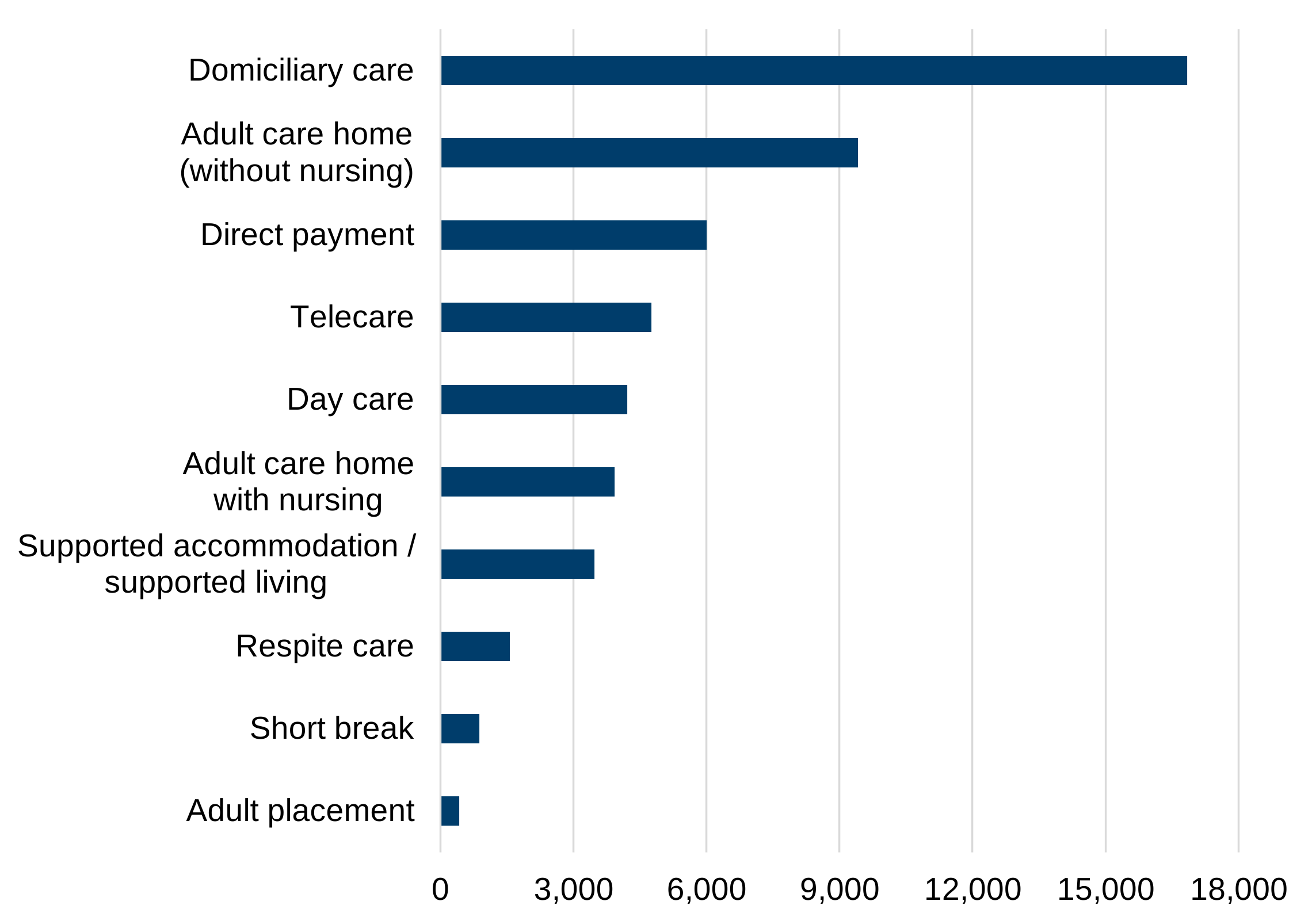
Description of Figure 8: bar chart showing the most recorded type of care and support by adults receiving care and support was domiciliary care.
Source: Adults receiving care and support census, Welsh Government
[Note 1] An adult may be provided with more than one type of care and support.
Of all adults with a type of care and support recorded, 40.2% were receiving domiciliary care and nearly a third (31.8%) were receiving adult care home service provision (with or without nursing). 14.3% of adults were receiving a direct payment; these are monetary payments made by local authorities directly to adults for the purchase of care and support services.
3,788 (8.3%) adults were not recorded as receiving any of the types of care and support listed in the data collection guidance. These may be waiting for a service to start or may be receiving care and support not currently listed.
Note that preventative services do not require the provision of a care and support plan and which services are considered preventive are determined locally.
Current safeguarding
1.9% of adults receiving care and support on 31 March 2024 also had an active care and support protection plan where the local authority considered it necessary to protect an adult from or risk of abuse or neglect.
Figure 9: adults receiving care and support with a care and support protection plan by age, 31 March 2024
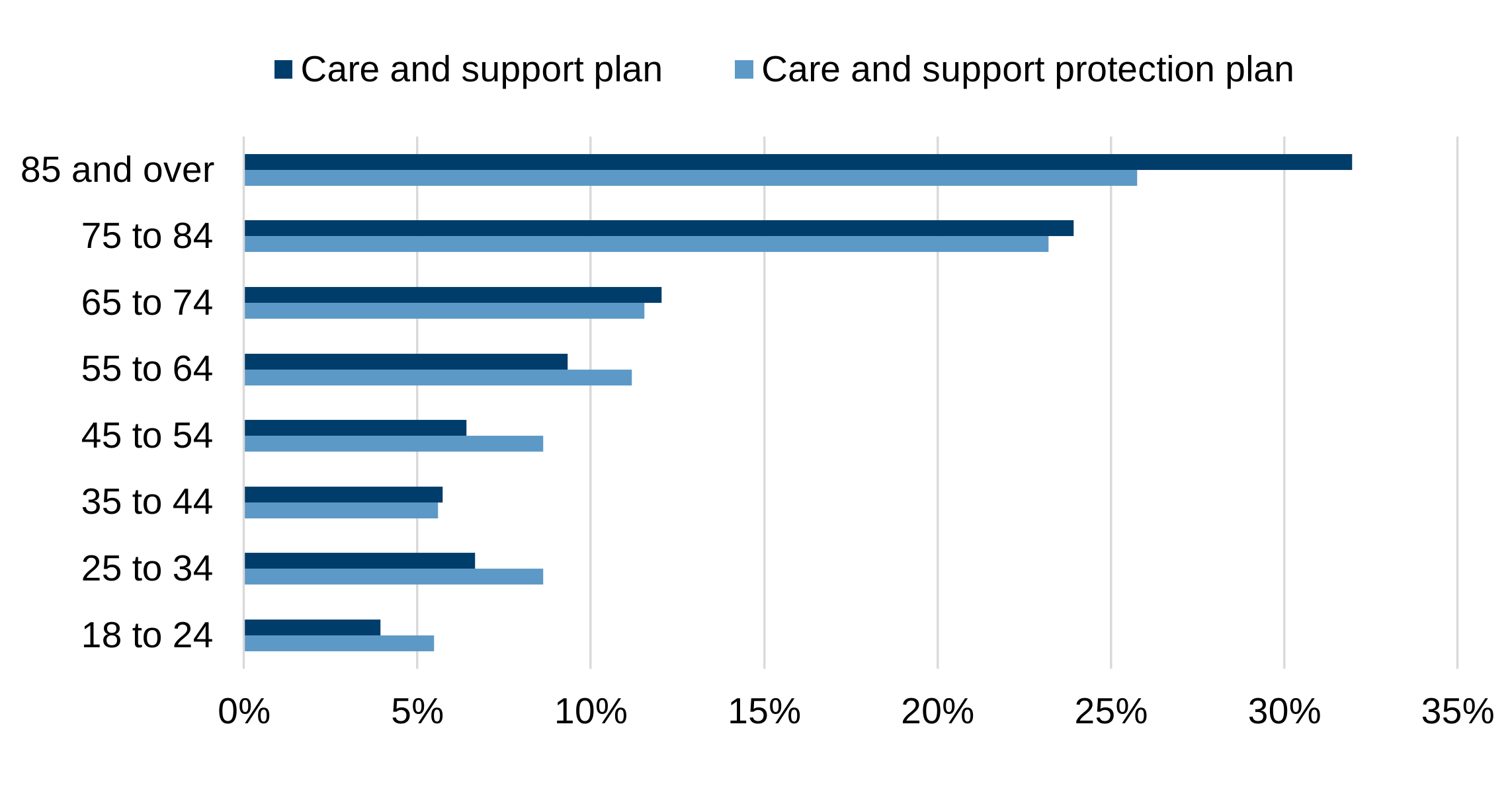
Description of Figure 9: bar chart showing that when compared to all adults with a care and support plan, a higher proportion of adults with a care and support protection plan were from younger age groups.
Source: Adults receiving care and support census, Welsh Government
Has a known carer
27.7% of adults receiving care and support on 31 March 2024 had at least one known carer (where the carer is known to the local authority). This is an undercount of all adults with a carer as it only counts those known to the local authority.
Figure 10: adults receiving care and support with a known carer by age, 31 March 2024
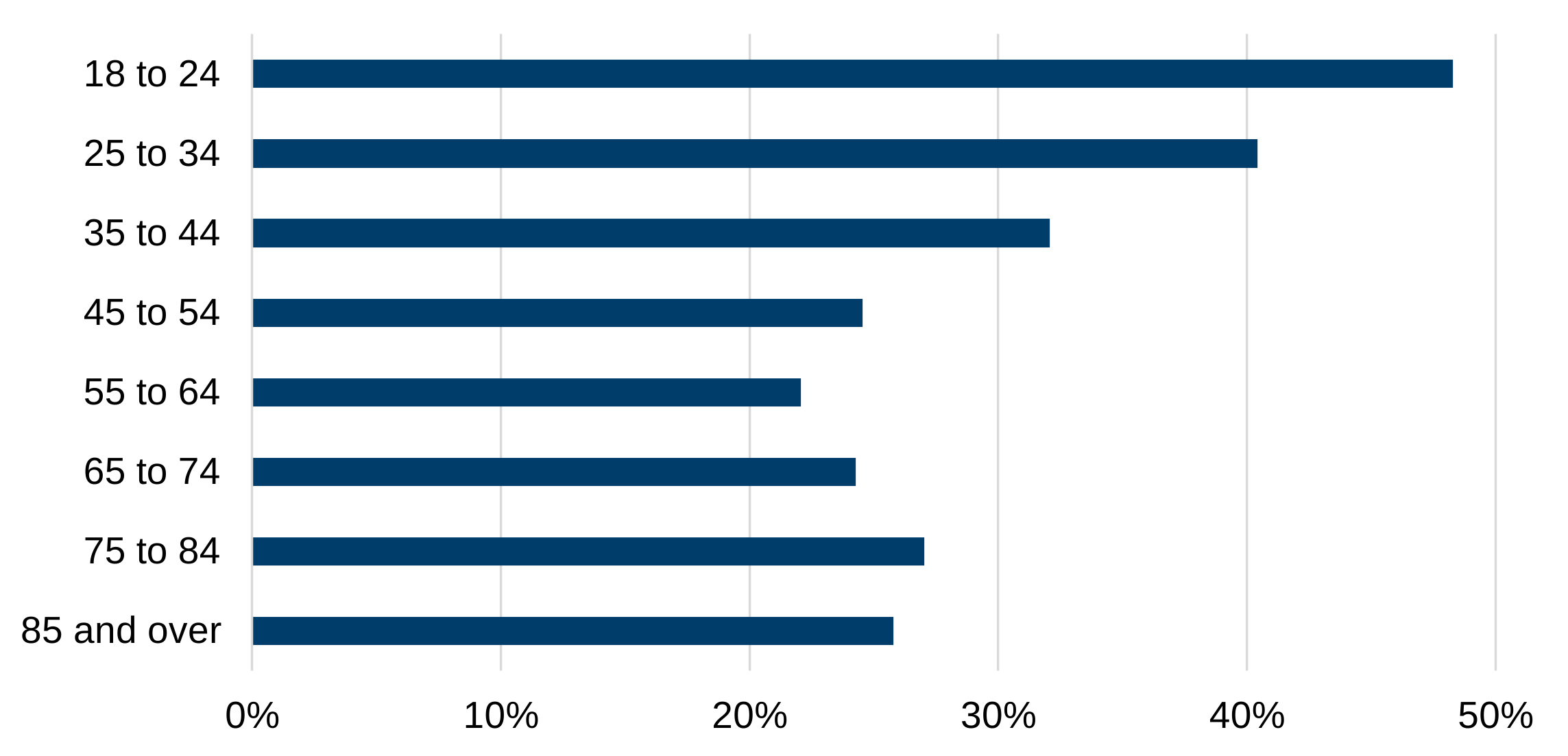
Description of Figure 10: bar chart showing that a higher proportion of younger adults receiving care and support were recorded as having a carer compared to older adults.
Source: Adults receiving care and support census, Welsh Government
The proportion of adults receiving care and support with a carer known to the local authority generally decreased with age. Nearly half (48.3%) of adults in the 18 to 24 years old age group had a carer.
The proportion of adults receiving care and support who had a carer was higher for males (29.1%) than females (26.7%).
A lower proportion of adults who were White were recorded as having a carer compared to adults from other ethnic groups.
Caring responsibilities
5.1% of adults receiving care and support also had known caring responsibilities where they provided or intended to provide care for an adult or disabled child. Of which 60.1% had caring responsibilities and were known to also be receiving ongoing support as a carer.
The proportion of adults with caring responsibilities was fairly similar across all age groups but the highest proportion was for adults in the age group 55 to 64 years old at 6.4%.
Caring responsibilities was unknown for 16.5% (or 7,556) of adults.
Quality and methodology information
Data is sourced from the first year of collection of the Adults receiving care and support census. The collection captures adults with a care and support plan as detailed in the Social Services and Well-being (Wales) Act 2014 (UK legislation). The data collection guidance document provides explanations of the data items and response categories captured within the data collection.
Adult at risk
An adult at risk is defined under Section 126 of the Social Services and Well-being (Wales) Act 2014 (UK legislation).
Disability
The Welsh Government accepts the social definition of disability, in which it is recognised that people with impairments are disabled by barriers that commonly exist in society. However, data has been collected based on the Equality Act 2010 which uses the medical definition of disability.
Population estimates
The rate of adults receiving care and support per 100 population aged 18 and over has been calculated based on the 2023 mid-year estimates provided by ONS.
Quality statement
These figures report on adults with a care and support plan at any point during the reporting year 2023-24, with more analysis on those with a care and support plan on 31 March 2024.
The number of adults receiving care and support with a care and support plan on 31 March 2024 does not match with AD/012a the number of adults with a care and support plan from the Social Services Performance and Improvement Framework dataset due to some local authorities including different populations.
Extensive quality assurance was undertaken with local authorities. Not all local authorities provided complete returns.
Date of latest continuous period of care was missing for all adults from Flintshire (4.9% of Wales total).
Less than 1.0% of adults refused to provide information on preferred language.
Residence information was missing for less than 1.0% of adults.
Caring responsibilities information was missing for 16.5% of adults.
Percentages in this release have been calculated based on those adults where known information was provided and are rounded to the nearest one decimal place. Where information is not available, this is clearly indicated on StatsWales.
Statistical designation
These statistics are published as official statistics in development. The underpinning data collection process is newly created and continues to be embedded across all local authorities.
Statement of compliance with the Code of Practice for Statistics
Our statistical practice is regulated by the Office for Statistics Regulation (OSR). OSR sets the standards of trustworthiness, quality and value in the Code of Practice for Statistics that all producers of official statistics should adhere to.
All of our statistics are produced and published in accordance with a number of statements and protocols to enhance trustworthiness, quality and value. These are set out in the Welsh Government’s Statement of Compliance.
These official statistics demonstrate the standards expected around trustworthiness, quality and public value in the following ways.
Trustworthiness
Data was returned from all 22 local authorities on Excel spreadsheets via Objective Connect, a web-based tool to securely share and receive files. Data collection is based on detailed guidance.
The published figures are compiled by professional analysts using the latest available data and applying methods using their professional judgement and analytical skillset.
These statistics are pre-announced on the Statistics and Research area of the Welsh Government website. Access to the data during processing is restricted to those involved in the production of the statistics, quality assurance and for operational purposes. Pre-release access is restricted to eligible recipients in line with the Code of Practice (UK Statistics Authority).
Quality
Our statistics are produced to high professional standards and are produced free from any political interference.
Validation checks are performed by Welsh Government statisticians and queries referred to local authorities where necessary.
The statistical release is approved by senior statisticians before publication. Data is published in line with statement on confidentiality and data access each year.
Value
The purpose of the statistical release is to inform users about the number and characteristics of adults receiving care and support, i.e. with a care and support plan, from local authorities in Wales. This information is published alongside other data on Social Services activity to give a more complete picture of adults receiving care and support and the activity of Adults’ Social Services.
There is a 21-month lag between the reference period of the statistics and publication. The statistics are published with Wales level analysis and commentary, in addition to open data format tables with local authority level analysis which are published on StatsWales.
You are welcome to contact us directly with any comments about how we meet these standards. Alternatively, you can contact OSR by emailing regulation@statistics.gov.uk or via the OSR website.
Well-being of Future Generations Act (WFG)
The Well-being of Future Generations Act 2015 is about improving the social, economic, environmental and cultural wellbeing of Wales. The Act puts in place seven wellbeing goals for Wales. These are for a more equal, prosperous, resilient, healthier and globally responsible Wales, with cohesive communities and a vibrant culture and thriving Welsh language. Under section (10)(1) of the Act, the Welsh Ministers must (a) publish indicators (“national indicators”) that must be applied for the purpose of measuring progress towards the achievement of the wellbeing goals, and (b) lay a copy of the national indicators before Senedd Cymru. Under section 10(8) of the Well-being of Future Generations Act, where the Welsh Ministers revise the national indicators, they must as soon as reasonably practicable (a) publish the indicators as revised and (b) lay a copy of them before the Senedd. These national indicators were laid before the Senedd in 2021. The indicators laid on 14 December 2021 replace the set laid on 16 March 2016.
Information on the indicators, along with narratives for each of the wellbeing goals and associated technical information is available in the Wellbeing of Wales report.
Further information on the Well-being of Future Generations (Wales) Act 2015.
The statistics included in this release could also provide supporting narrative to the national indicators and be used by public services boards in relation to their local wellbeing assessments and local wellbeing plans.
Manylion cyswllt
Ystadegau Gwasanaethau Cymdeithasol
E-bost: YstadegauGwasCymdeithasol@llyw.cymru
Cyfryngau: 0300 025 8099
SFR 107/2025