
Stoc tai landlordiaid cymdeithasol a rhent: ar 31 Mawrth 2025
Nifer o unedau tai sydd yn berchen neu’n rhannol berchen ac yn cael eu rheoli gan holl landlordiaid cymdeithasol ar 31 Mawrth 2025. Saesneg yn unig.
Ar y dudalen hon
Introduction
This release is based on information collected annually from all Welsh social landlords.
Information is presented on the amount and type of stock in Wales owned or partly owned by all Welsh social landlords as at 31 March 2025 including social housing and other types of housing. It also provides information on the average weekly rents for all self-contained social housing units as set at 1 April 2025 for the following financial year, 1 April 2025 to 31 March 2026.
Social landlord housing stock are housing units (including bedsits and bed spaces) owned or partly owned and managed by the 11 stock-retaining local authorities and by all Welsh registered social landlords (RSLs). This includes both social housing and other types of housing.
Historical data for this collection can be found on the StatsWales website.
Main points
Stock
There continued to be a slight increase (1%) in social housing stock in Wales with 244,263 social housing units (including bedsits and bed spaces) at 31 March 2025, compared with 241,669 in the previous year.
Figure 1: social housing stock for Welsh social landlords, as at 31 March 2025
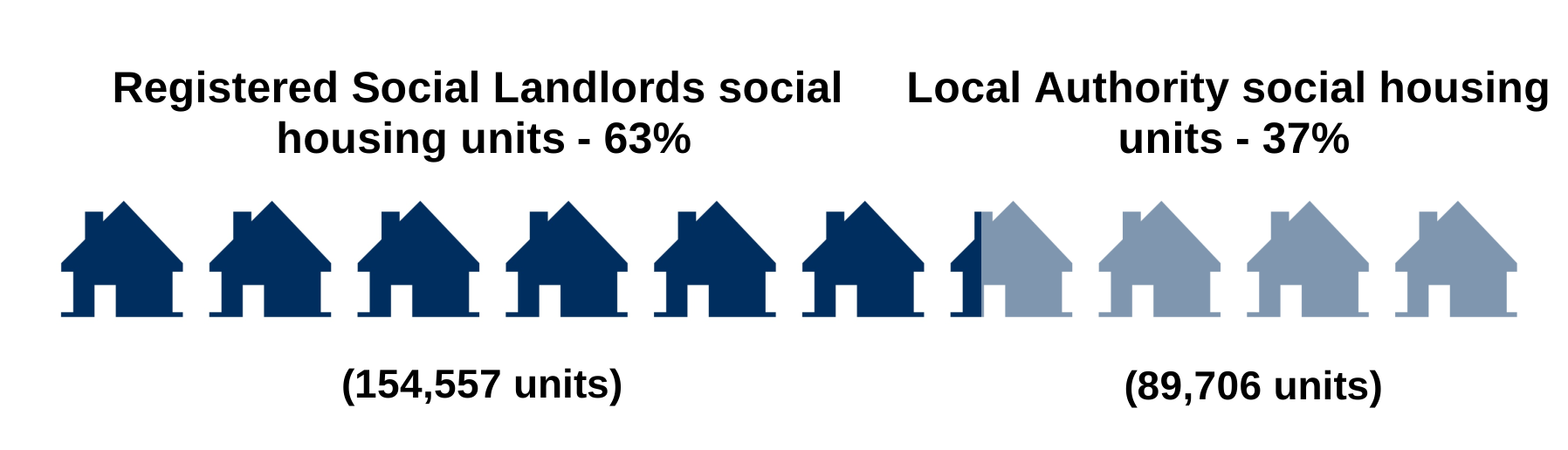
Description of figure 1: a pictogram showing that 63% of all social landlord housing stock was registered social landlord housing units, with the remaining 37% being local authority social housing units.
Source: Annual social landlord stock returns
Total social landlord housing stock (StatsWales)
At 31 March 2025, there were a further 17,757 other types of housing units owned or partly owned and managed by social landlords in Wales, of which 97% were owned or managed by RSLs.
Rents
The average rent set by local authorities as at 1 April 2025 for 2025 to 2026 for all self-contained social housing (general needs, sheltered, other supported and extra care) was £115.78 per week. This is an increase of 3% compared to 2024 to 2025. The corresponding average rent set by RSLs for 2025 to 2026 was £119.40 per week. This was also an increase of 3% compared to 2024 to 2025.
Average weekly rent levels for RSLs have been consistently higher than local authorities. In 2025 to 2026, RSL average weekly rent was higher by £3.62, the largest average weekly rent price gap seen since 2014-15.
Housing stock makeup varies between local authorities in Wales. The mix of housing within a local authority may impact on the average weekly rent levels for all self-contained social housing. For example, the average weekly rent is likely to be higher in an area with a higher proportion of 4 bed properties.
Background
This release analyses data on all social landlord housing stock which include the following:
Housing at social rents
This includes self-contained general needs (including self-contained bedsits) and self-contained sheltered housing let by social landlords at social rent under the Welsh Government Rent and Service Charge Standard. This is an agreed rental system which sets a maximum rent threshold for social landlords.
Other social housing
This includes self-contained other supported housing, self-contained extra care housing and non-self-contained bed sits and hostel bed spaces. These are not subject to the Welsh Government Rent and Service Charge Standard.
Other housing units
Non-social housing units owned or managed by Welsh social landlords including shared ownership, flexible tenure for the elderly, intermediate rents, housing let at market rents, Homebuy and other investment housing.
Excluded from this release
Housing units in Wales owned by English RSLs. In March 2025 English RSLs owned 209 units of stock in Wales.
Figure 2: categories of social landlord housing stock
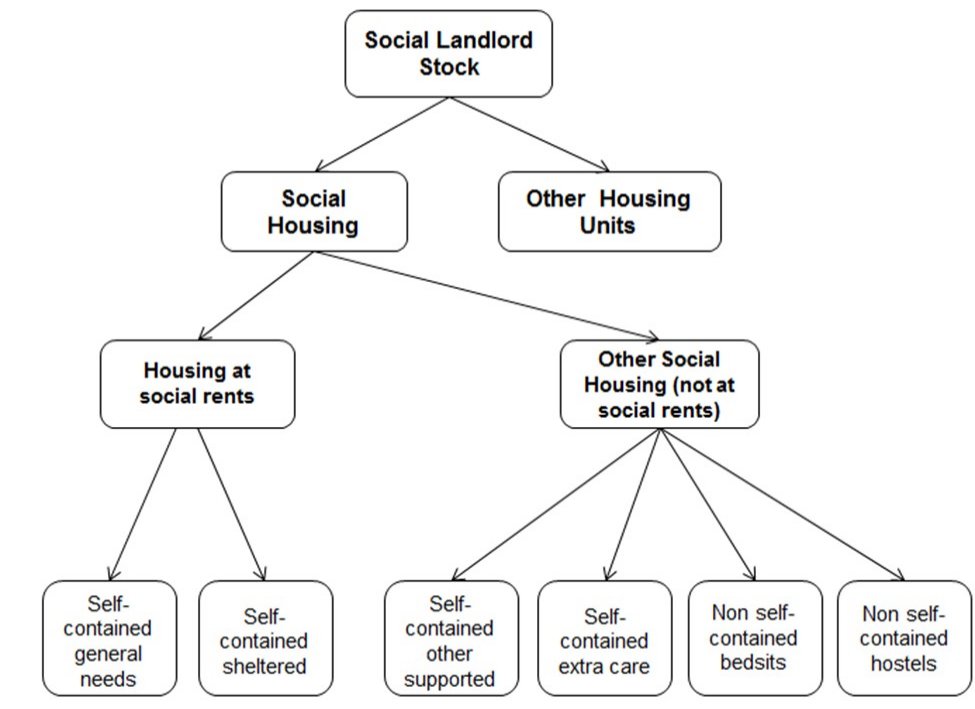
Description of figure 2: a diagram showing that social landlord stock is split into social housing and other housing units. Social housing is then split further into housing at social rents and other social housing (not at social rents), each containing various accommodation types.
Source: Welsh Government
Further information can be found in the quality report.
Social housing stock
At 31 March 2025 there were 244,263 social housing units in Wales. Of these, 95% (231,281) were self-contained general need or sheltered housing units which were rented from Welsh social landlords at social rents (as regulated by the Welsh Government Rent and Service Charge Standard). The remaining 5% (12,982) were social housing units not covered by the Welsh Government Rent and Service Charge Standard but still classed as social housing.
RSLs owned 63% (154,557 units) of all social housing units at 31 March 2025 and the 11 stock retaining authorities owned the remaining 37% (89,706 units).
Figure 3: percentage of all social housing units by type, as at 31 March 2025
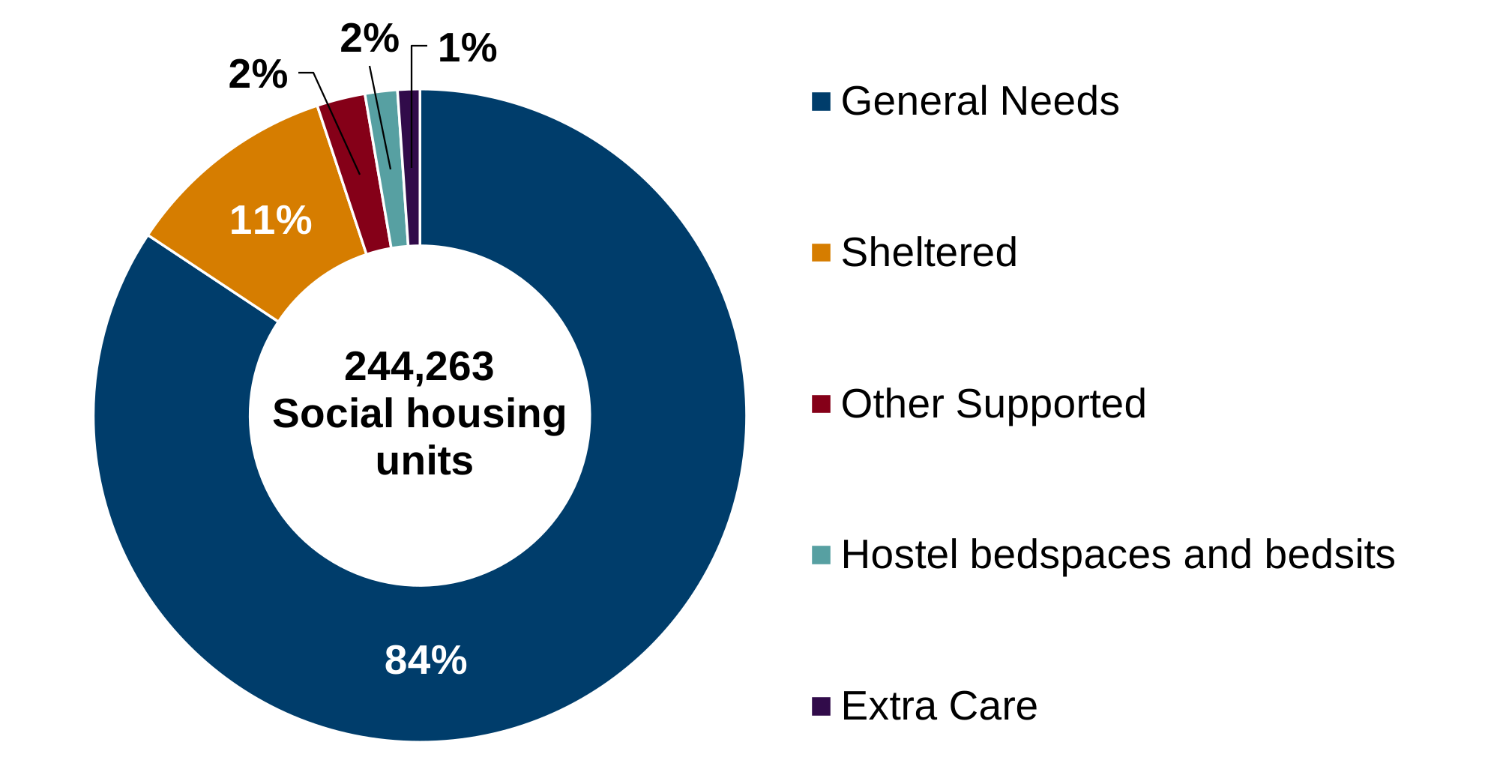
Description of figure 3: a doughnut chart showing on 31 March 2025 that 84% of all social housing units in Wales were general needs accommodation, followed by sheltered housing with 11%.
Source: annual social landlord stock returns
Total social landlord housing stock (StatsWales)
Figure 4: social housing units for Welsh social landlords, as at 31 March each year [Note 1] [Note 2]
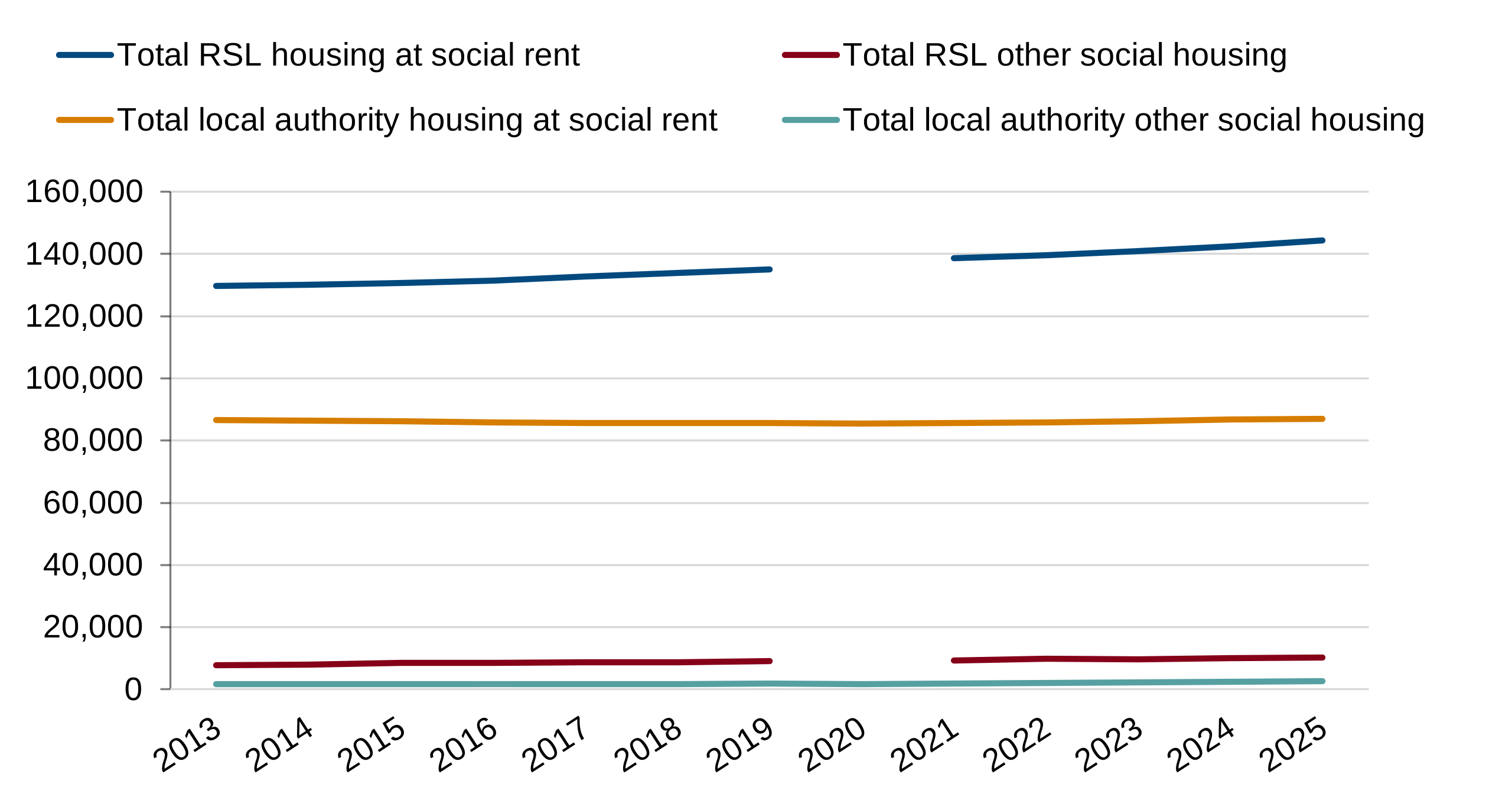
Description of figure 4: a line chart showing that the total number of RSL social housing units has increased each year since 2012-13, with the total RSL other social housing remaining fairly constant. Local authority housing at social rents have remained fairly constant over the same period, with LA other social housing units making up a very small proportion.
Source: annual social landlord stock returns
Total social landlord housing stock (StatsWales)
[Note 1] Due to COVID-19, data for RSLs were not collected in 2019-20.
[Note 2] Data prior to 2013-14 is not included due to changes in the data collection. From 2013-14 onwards the collection consisted of one form for both RSLs and local authorities. Changes were also made to the data items collected, in line with the consultation proposals.
Housing at social rents
The bulk of housing units at social rents continued to be self-contained general needs accommodation (including self-contained bedsits), which is not designated for any specific users, and accounted for 89% (205,492 of all the 231,281 housing at social rents at 31 March 2025.
The remaining 11% (25,789) were self-contained sheltered housing units (including self-contained bedsits) for those with specific needs due to age, disability or other vulnerability. The same percentage split seen on 31 March 2024.
Local authorities had a slightly higher percentage of self-contained sheltered housing units within their stock compared to registered social landlords (RSLs), accounting for 12% (compared to 10% of RSL stock) of all their social rented stock at 31 March 2025.
Other social housing
At 31 March 2025 there were 12,982 other social housing units across Wales which were not covered by the Welsh Government Rent and Service Charge Standard. RSLs continued to hold the majority of these units, accounting for 79% (10,269 units).
At 31 March 2025, the majority (66%) of other social housing units were self-contained, where the accommodation is occupied by a household with exclusive use of bath/shower and inside WC and some cooking facilities. The remaining 34% (4,475 units) were non-self-contained units, comprising bedsits (575 units) and hostel bed spaces (3,900 units).
69% of the self-contained units were ‘other supported’ housing (5,832 units). These housing units formed 81% of the local authorities’ other social housing stock, which was much higher than that for RSLs (35%). The numbers of self-contained ‘other supported’ housing units increased by 7% between 2024 to 2025 (from 5,430 to 5,832).
The remaining 31% of self-contained units (2,675 units) were extra care housing units which offer a higher level of care than ‘sheltered housing’. The services offered vary between schemes but can include the provision of meals, help with domestic tasks and other personal care. At 31 March 2025, all of the self-contained extra care housing units were owned and managed by RSLs.
The numbers of non-self-contained hostel bed spaces decreased slightly in 2025 to 3,900 units (down from 4,205 units in 2024).
There were over twice as many non-self-contained bedsits in March 2025 than in March 2024 (575 units compared with 216). The majority of these units (521 units, 91%) were owned by RSLs.
Figure 5: rate of all social housing units per 100 households, as at 31 March 2025 [Note 1]
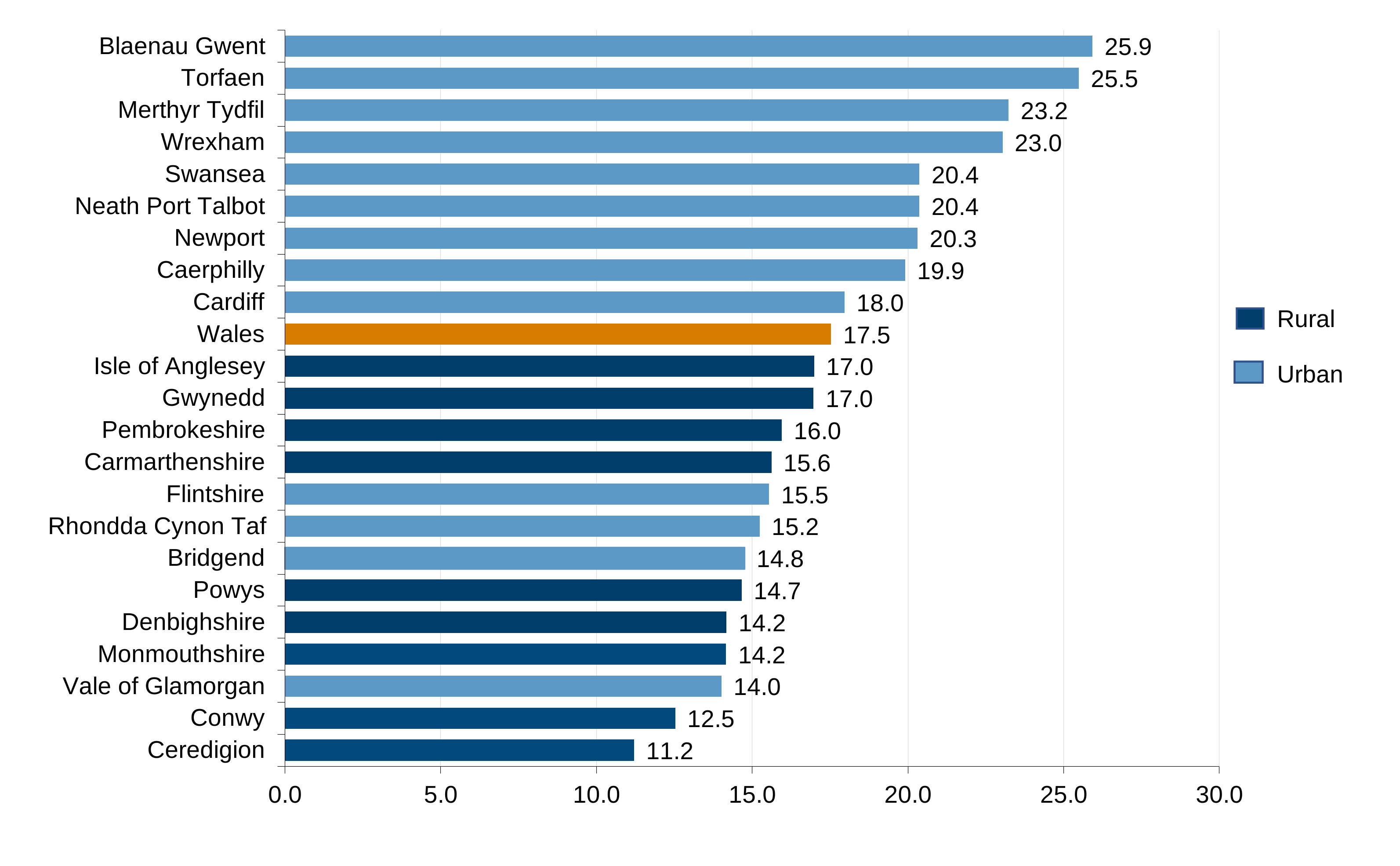
Description of figure 5: a bar chart showing that the majority of urban local authorities have higher rates of social housing units per 100 households than rural local authorities. 9 local authorities have a higher rate than the Wales average.
Source: annual social landlord stock returns
Total social landlord housing stock (StatsWales)
[Note 1] Mid-2024 Household estimates for Wales produced by the Welsh Government are used in this release to calculate the rate of social housing units per 100 households. These estimates are available from the 2022-based household projections by local authority, household type, year and variant (StatsWales).
The authorities with the highest rates of all social housing (housing at social rent and other social housing) per 100 households were Blaenau Gwent and Torfaen (at 25.9 and 25.5 respectively). Ceredigion had the lowest at 11.2, followed by Conwy at 12.5.
The rate of all social housing units per 100 households continued to be higher in urban than in rural authorities, particularly some of the south Wales valley authorities including Torfaen, Blaenau Gwent and Merthyr Tydfil, whilst all nine rural authorities continued to record rates below the Wales average of 17.5 units per 100 households.
Figure 6: social housing stock for Welsh social landlords by local authority area, as at 31 March 2025 [Note 1]
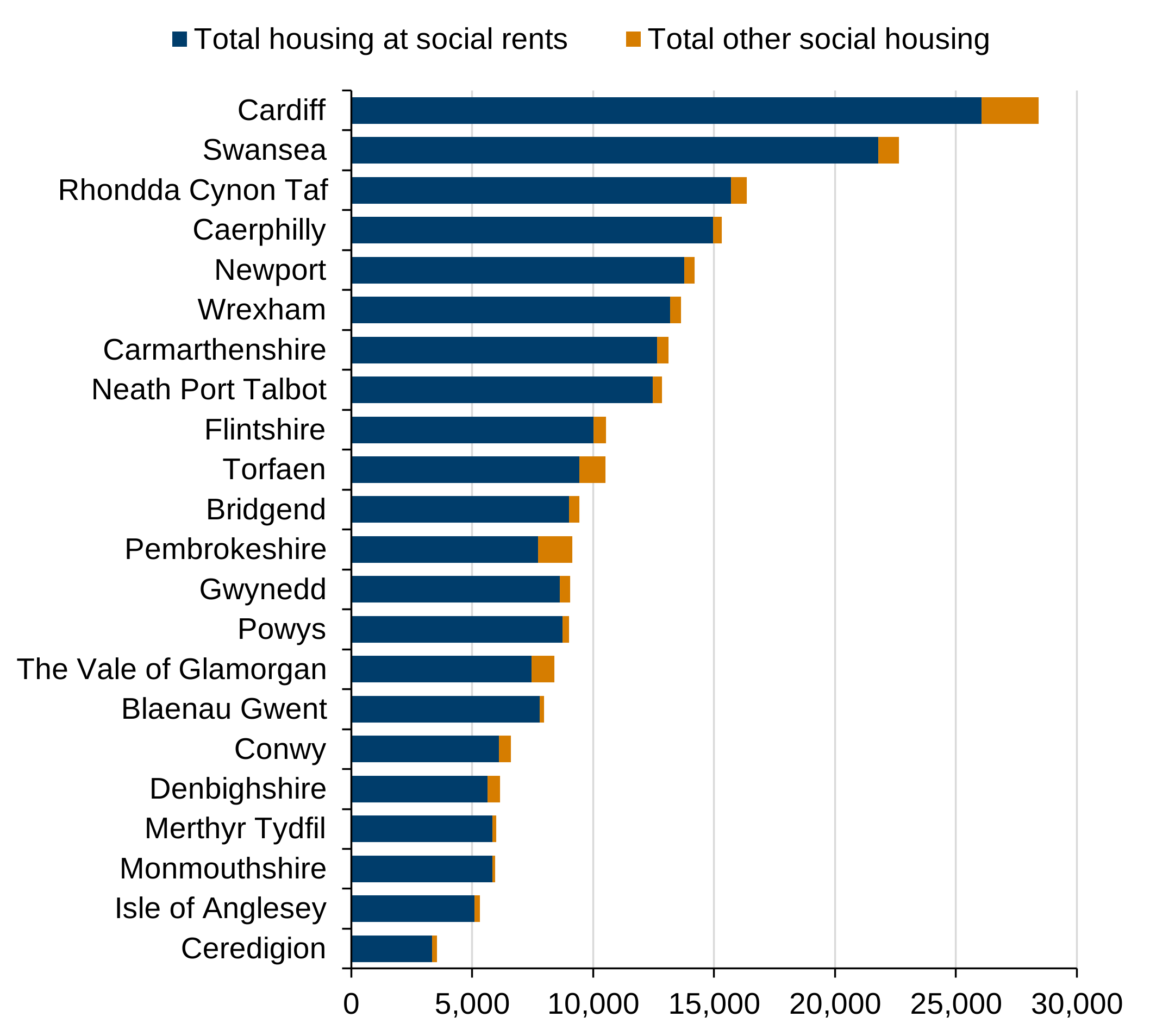
Description of figure 6: a table showing the breakdown of housing at social rents and other social housing in each local authority.
Source: annual social landlord stock returns
Total social landlord housing stock (StatsWales)
[Note 1] Includes self-contained general needs, sheltered, other supported and extra care housing, non-self-contained bedsits and non-self-contained hostels.
Housing at social rents by local authority area
At both a Wales and individual local authority level, the majority (between 70% and 98%) of all housing at social rent was self-contained general needs accommodation, with 12 local authorities having more than 90% in general needs accommodation. Torfaen had the highest percentage at 98%.
The percentage of all housing at social rents that was self-contained sheltered housing varied between 2% and 30% at a local authority level. For Flintshire, and Denbighshire this type of accommodation accounted for a quarter or more of all housings at social rents (30% and 28% respectively).
Other social housing by local authority area
At a local authority level, Swansea recorded the highest number of non-self-contained bedsits (123 units), followed by Newport (106 units), whilst none were recorded in 6 of the 22 local authorities.
The numbers and proportions of self-contained ‘other supported’ housing and self-contained extra care housing varied considerably by local authority. The proportion of self-contained ‘other supported’ housing ranged from 89% in Torfaen to just 14% in Powys. The proportion of self-contained extra care housing ranged from 51% in Isle of Anglesey and Ceredigion to 4% in the Vale of Glamorgan.
Cardiff and Swansea continued to record the highest numbers of non-self-contained hostel bed spaces at 1,027 (up from 869) and 297 (down from 335) units respectively.
Other housing stock owned or managed by social landlords
At 31 March 2025, there were 17,757 housing units owned or partly owned and managed by social landlords which were not classed as social housing. This is an increase of 5% (920 units) compared to 31 March 2024 and of these, 97% were owned or partly owned and managed by RSLs.
At a Wales level, at 31 March 2025, 31% (5,535 units) of these 17,757 other housing units owned or managed by social landlords, were housing units let at intermediate rents. Furthermore, 27% of other housing units (4,735 units) were let at market rent.
16% (2,782 units) of all other social housing units were Homebuy, which comprises housing where the social landlord has provided a loan to a previous tenant to purchase the housing unit outright; although the former landlord holds no equity stake in the stock, finance has been provided and remains outstanding.
Other investment housing units accounted for 14% (2,442 units) and a further 12% (2,174 units) were shared ownership housing.
Only 89 (under 1%) were flexible tenure housing units for the elderly across Wales at 31 March 2025, an increase from 11 at March 2024.
Figure 7: percentage of all other housing units by type, as at 31 March 2025 [Note 1]
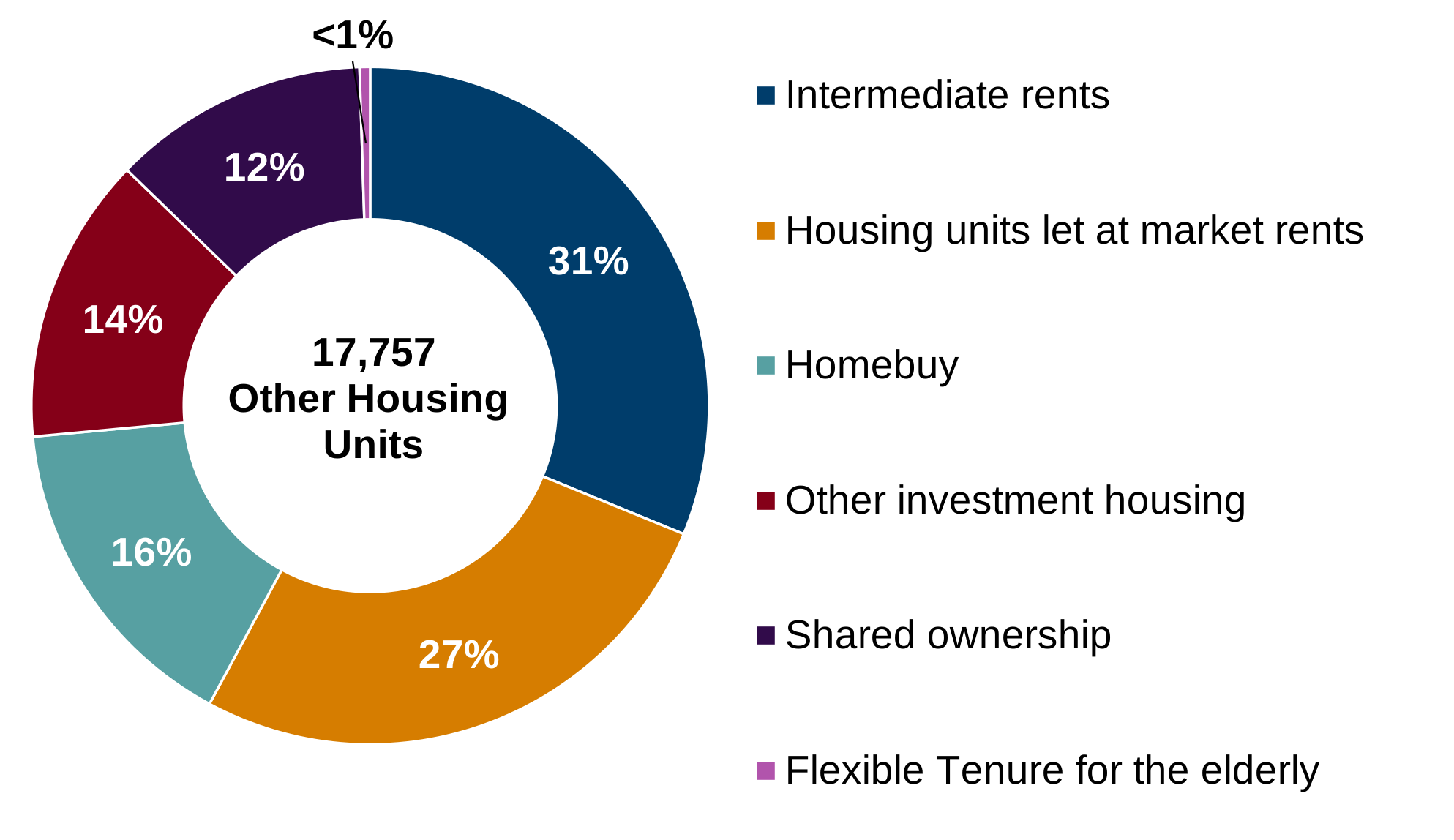
Description of figure 7: a doughnut chart showing the breakdown of all other housing units. Over half of all these units are made up of intermediate rent and properties at market rents.
Source: annual social landlord stock returns
Total social landlord housing stock (StatsWales)
[Note 1] Due to rounding, some figures may not add up to 100%.
At 31 March 2025, social landlord owned housing units let at market rent levels continued to be largely concentrated in just three authorities. Just under a third were recorded in Ceredigion (1,493 units) and Swansea (1,403 units) and a quarter in Gwynedd (1,166 units). These units are predominantly student accommodation owned by one registered social landlord. 4 local authorities (Isle of Anglesey, Caerphilly, Carmarthenshire and Rhondda Cynon Taff) had no social landlord owned housing units let at market rent.
At 31 March 2025, 46%of the intermediate rented housing units were shared across 4 local authorities: 17% were in Cardiff (948 units), a further 11% (632 units) were recorded in Pembrokeshire, 10% (535 units) in Swansea and 8% (454 units) in Newport.
Newport and Cardiff recorded the highest proportion of Homebuy housing units in Wales at 10% each (286 and 269 units respectively), followed by Caerphilly at 9% (257 units). 5 LAs recorded 1% or less.
Newport, Cardiff and Caerphilly local authorities continued to hold the highest proportion of shared ownership housing units in Wales with 24%, 18% and 9% respectively.
Over half of the other investment housing units in Wales were mainly concentrated in just three local authorities with 30% (740 units) recorded in Cardiff, 13% (367 units) in Torfaen and 12% (293 units) in The Vale of Glamorgan. Pembrokeshire had no recorded other investment housing units.
Between March 2024 and March 2025, the number of flexible tenures for the elderly increased dramatically (from 11 to 89 units) and is more in line with the figure from March 2023 (91). The majority of flexible tenures for the elderly were concentrated in two local authorities with 49% (44 units) in Flintshire and 40% (36 units) in Conwy. The remaining 9 units were in Cardiff (7), Swansea and Newport (both with 1).
Social housing rents
This release only presents information on the average weekly rents charged for self-contained social housing units. Self-contained housing units cover accommodation which is occupied by a household with exclusive use of bath/shower, inside WC and some cooking facilities.
Rental information for all non-self-contained social housing units (including bedsits and hostel bed spaces) has been excluded from the analysis but is available on the StatsWales website: housing.
Further information can be found in the quality report.
Rents for all self-contained social housing units
The 2025 to 2026 average weekly rents set (at 1 April 2025) for all the 89,201 self-contained social housing units owned and managed by local authorities was £115.78. This was 3% lower than £119.40 average weekly rent set for the 150,587 self-contained social housing units owned and managed by RSLs.
RSL average weekly rent levels have consistently been higher than local authority average weekly rent levels for a number of years, mainly due to historic differences in rent setting policies. From April 2015 onwards, however, the same rent setting policy has applied to both RSLs and local authorities. It is also noticeable that RSLs tend to have a higher percentage of 4 and 5-bedroom units than local authorities and these inevitably attract a higher average weekly rent.
Figure 8: average weekly rents (£s) of all self-contained social housing units owned and managed by Welsh social landlords, between 2003 to 2004 and 2025 to 2026 [Note 1] [Note 2] [Note 3]
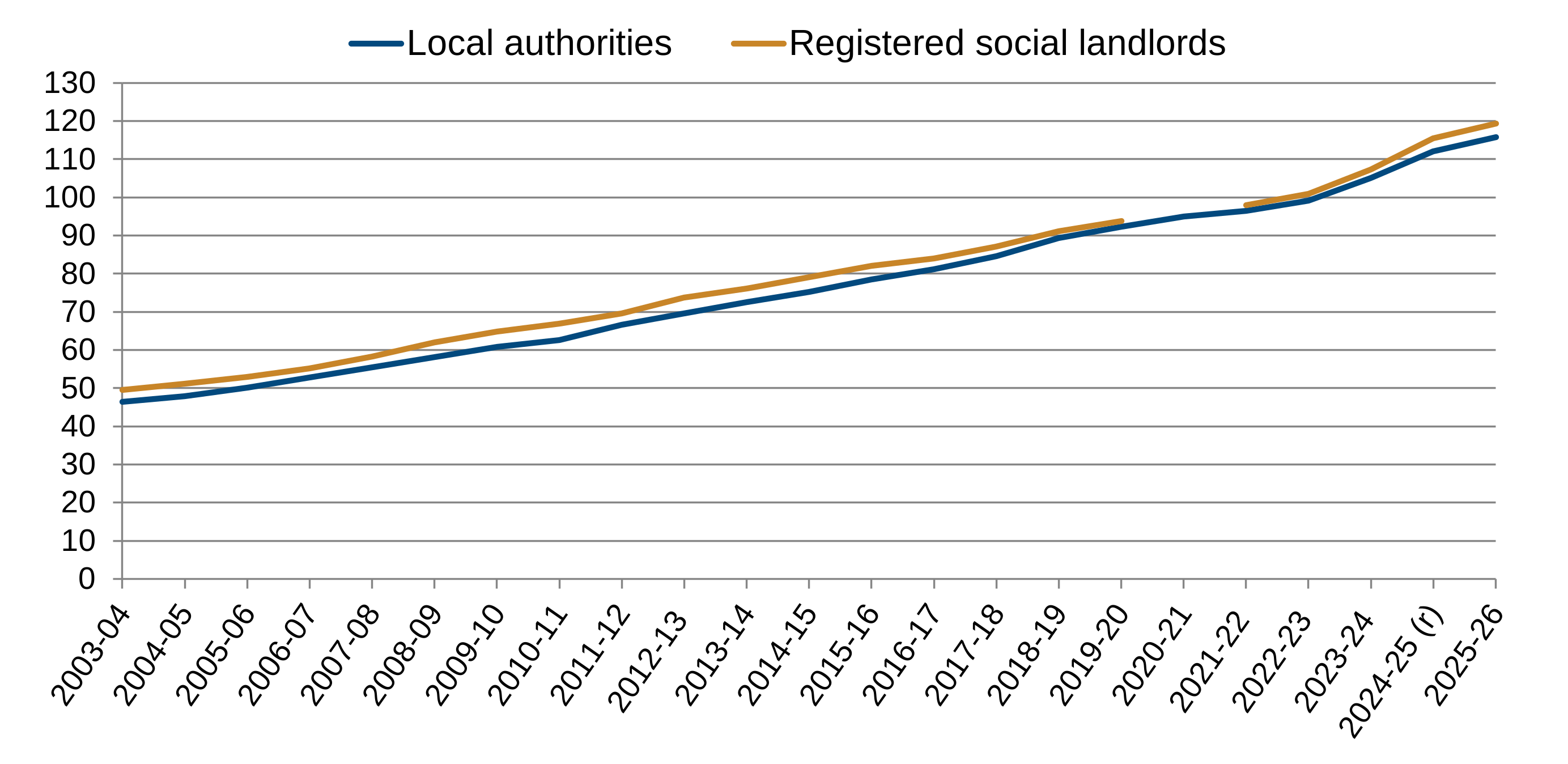
Description of figure 8: a line graph showing that for all self-contained social housing units, the average weekly rent price for both local authorities and registered social landlords has increased each year between 2003 to 2004 and 2025 to 2026. Registered social landlords’ average weekly rents has consistently remained higher than local authorities.
Source: Annual social landlord stock returns
Social landlord average weekly rents (StatsWales)
[Note 1] Includes self-contained general needs, sheltered, other supported and extra care housing. Excludes all non-self-contained social housing units, non-self-contained bedsits and non-self-contained hostels. Excludes all non-social housing units.
[Note 2] The rents relate to the position at 1 April before the financial year commences.
[Note 3] No RSL data collected for 2020-21 due to COVID-19
(r) Data for 2024-25 has been revised since previously published, due to revisions from one RSL. See the quality and methodology information section for more detail.
Local authority rents set for 2025 to 2026 for all self-contained social housing averaged £115.78 per week, which is an increase of 3% on 2024 to 2025. This compares with the 7% increase seen between 2023 to 2024 and 2024 to 2025.
RSL rents set for 2025 to 2026 for all self-contained social housing averaged £119.40 per week, which is an increase of 3% on 2024 to 2025. This compares with an 8% increase in RSL rents between 2023 to 2024 and 2024 to 2025.
The average weekly rent for RSL self-contained social housing units for 2025 to 2026 was £3.62 higher than for local authority self-contained social housing units. This gap was slightly more than the difference of £3.35 in 2024 to 2025.
Rents charged for self-contained extra care housing may be substantially higher, on average, than those charged for self-contained general needs, sheltered and ‘other supported’ housing, depending on the type of extra care scheme and type of services provided. The services offered vary between schemes, but meals, help with domestic tasks and some personal care are often provided for extra care housing.
Figure 9: average weekly rents (£’s) of all Welsh social landlord self-contained social housing units for 2025 to 2026, by type of housing [Note 1] [Note 2]
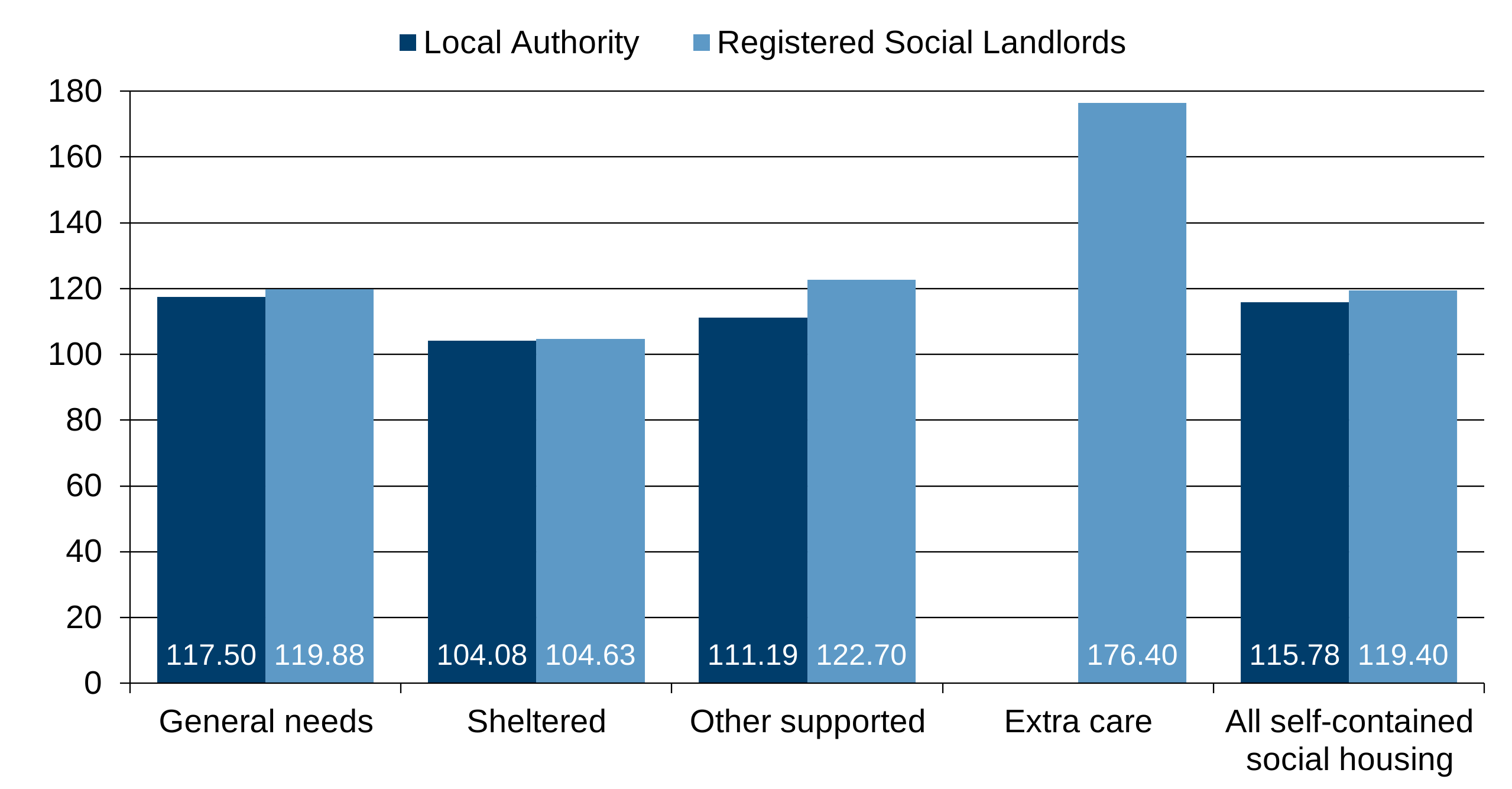
Description of figure 9: a bar chart showing the average weekly rent comparison of local authority and registered social landlord self-contained social housing units. Registered social landlord extra care units were considerably higher than any other housing type.
Source: annual social landlord stock returns
Social landlord average weekly rents (StatsWales)
[Note 1] Includes self-contained general needs, sheltered, other supported and extra care housing. Excludes all non-self-contained social housing units, non self-contained bedsits and non-self-contained hostels. Excludes all non-social housing units.
[Note 2] Rents are set at 1 April 2025 for the 2025 to 2026 financial year.
Average weekly rents for local authority self-contained units are generally lower than for RSL units of the same type, particularly for other supported housing. Whilst the difference between RSL and local authority average weekly rents for all self-contained social housing is £3.62 per week, for general needs it is £2.38, other supported housing is £11.51 and self-contained sheltered housing £0.55 per week.
The mix of housing types differs between the local authorities and RSLs and this may impact on the average weekly rent levels for all self-contained social housing.
Data on average weekly rents of stock at social rents by accommodation and provider type, broken down by local authority, is available on the StatsWales website.
Average social housing rents for 2025 to 2026 varied considerably depending on the provider, housing type and local authority area.
The RSL weekly rents for all self-contained social housing units for 2025 to 2026 were lowest in the valley authorities of Blaenau Gwent (£105.45 per week) and Merthyr Tydfil (£111.27 per week). Rents continued to be highest in Flintshire (£129.65 per week), Cardiff (£129.21 per week) and Vale of Glamorgan (£128.00 per week).
For the 11 local authorities that still retain stock, the average local authority weekly rents for all self-contained social housing units for 2025 to 2026 continued to be lowest in Pembrokeshire at £104.54 per week and highest in Cardiff at £130.16 per week.
The gap between local authority and RSL rent levels for all self-contained social housing units was greatest in Flintshire, with average RSL rents of £13.97 per week more than those charged by the local authority. For Swansea, Powys and Cardiff, the local authority average rent per week was greater than that for the RSLs with differences of £2.23, £1.64 and £0.95 respectively.
While RSL rents continued to be generally higher than local authority rents across all housing types there were some exceptions. For self-contained general needs the local authority rents were higher than the RSL rents in Powys (£6.62 per week), Cardiff (£1.49 per week) and Swansea (£0.48 per week). For self-contained sheltered housing the local authority rents were higher than the RSL rents in 4 local authorities: Powys (£6.33 per week), Swansea (£5.94 per week), Denbighshire (2.96 per week), and The Vale of Glamorgan (£0.96 per week).
Self-contained: extra care housing
The 2025 to 2026 average weekly RSL rent charged for self-contained extra care housing across Wales is £176.40, which is up on the £172.52 charged in 2024 to 2025, and substantially higher than the RSL average weekly rents for other types of the self-contained social housing units. Extra care rents varied considerably across the individual authorities, probably due to differences in the extra care schemes and in the levels of service and care provided. The highest RSL extra care rents for 2025 to 2026 continued to be recorded in Merthyr Tydfil at £267.68 per week and the lowest continued to be recorded in Monmouthshire at £105.10 per week.
Self-contained: general needs housing
This analysis includes self-contained general needs units only (including self-contained bedsits which are included with one-bedroom flats).
Following the implementation of the target rent bands in the Rent and Service Charge Standard 2020 to 2025 there was an overall reduction in the difference between local authority and RSL average weekly rents however, in recent years the gap has begun to increase.
The Welsh Government Rent and Service Charge Standard 2020-2025 was extended by a further year to include April 2025 to 2026. Following engagement which included a public consultation, a new Rent Standard was published on 29 September 2025. This ten-year Rent Standard will apply from 1 April 2026. Further information can be found in the quality report.
The average rents set by RSLs at 1 April 2025 for all self-contained general needs housing during 2025 to 2026 was £119.88 per week, which was £2.38 per week more than that charged by local authorities.
The gap between the lowest and highest amount of rent charged for the various housing units for 2025 to 2026 continued to be greater for RSLs than for local authorities. Whilst rents for local authorities ranged from £99.57 per week (for a 1 bedroom flat) to £150.937 per week (for a 5 (or more) bedroom house or bungalow), RSL rents ranged from £97.13 per week (for a 1 bedroom house or bungalow) to £180.80 per week (for 5 (or more) bedroom house or bungalow).
Across different housing types, the largest price difference between the local authorities and RSLs was seen in houses and bungalows with 5 (or more) bedrooms. On average, RSL tenants were charged £29.87 per week more than local authority tenants for these types of housing. As there are a relatively small number of larger housing units, the average rents may be more susceptible to particularly high or low rents. The smallest price difference was seen in 1-bedroom flats where, on average, RSL tenants were charged £2.44 less per week.
As in previous years, local authorities also charged higher weekly rents than RSLs for large flats (4 bedrooms). For 2025 to 2026, the local authority average rent for these types of flats were £10.91 per week higher than the RSL rents. There were however only 15 local authority 4 bedroom flats across Wales at 31 March 2025. Of these, 13 were located in Cardiff where rents are generally higher than in other local authorities, one was on the Isle of Anglesey and one was located in Flintshire.
Further breakdowns of rent by bedroom size can be found on the StatsWales website.
Glossary
Bedsits
A bedsit is accommodation with combined living and sleeping areas, for example a studio apartment. Depending on access to a bath/shower, inside WC and kitchen facilities, it is then classed as either:
- self-contained bedsits have exclusive use of bath/shower, inside WC and some kitchen facilities. Typically there may be several self-contained bedsits in a single larger property
- non self-contained bedsits are those contained in a single larger property and which lack exclusive use of bath/shower or WC or some kitchen facilities
Bedspaces
See ‘Hostel bedspaces’.
Dwelling
As defined in the 2021 Census, a dwelling is a unit of accommodation that may be empty or being lived in, for example houses or flats. They are usually made up of one household, but those with more than one household are shared and called a “shared dwelling”.
If a dwelling has no usual residents living in them, for example they are empty after being sold, these are called “unoccupied dwellings” but may be used by short-term residents or visitors on Census Day, 21 March 2021, for example holiday homes.
Extra care
‘Extra care sheltered housing’ or ‘assisted living housing’ offers more support to residents than other retirement housing but allows them to retain more independence than moving to a care home. Residents still live in self-contained flats, but meals may be provided‚ either in the flat or a shared dining room and access to on-site care and support tailored to their individual needs.
Flexible tenure for the elderly
Includes specific housing schemes developed in the 1990s to provide flexible tenure options for older people in housing schemes designed specifically for their needs.
General needs
Self-contained units that are not reserved for specific client groups. Housing units that are adapted for use for people with disabilities are included where no additional services or support are provided as part of the terms of occupancy.
HomeBuy
HomeBuy supports households by providing an equity loan to assist purchasing an existing property. It helps people who are not otherwise able to purchase a home that meets their needs. Aspiring buyers will normally need to contribute 70% (minimum of 50%) of the purchase price of a home (existing dwellings).
Hostel bedspaces
These are individual spaces or beds within a hostel.
Hostels
A hostel is a building that:
- provides domestic accommodation which is not in separate and self-contained premises
- provides board or facilities for preparing food adequate to the needs of those people, or both board and facilities
- is managed or owned by a social landlord
- is funded wholly or in part by a government department or agency or local authority and operated other than on a commercial basis
- is managed by a voluntary organisation or charity and provides care, support or supervision with a view to helping the residents become rehabilitated or resettled within the community
- is not a care home, an independent hospital or an Abbeyfield Home
The legal definition of a hostel is in regulation 2(1) of the Housing Benefit Regulations 2006.
Intermediate rented
These are housing units where the rents are above those of housing at social rents housing but below market housing rents.
Non-self-contained units
A non-self-contained unit is accommodation occupied by a household that lacks exclusive use of bath/shower or WC or some cooking facilities. These usually take the form of bedsit, shared housing, hostel or hostel type accommodation. Each bed space is therefore normally considered a non-self-contained unit.
Other investment housing
Any other housing not already included in housing let at market rents. This should only include residential properties.
Other housing units
Other housing units should include any other type of housing which is not social rented or other social housing. This may include student accommodation owned and managed by social landlords.
Housing let at market rents
These are other housing units which are let at market rents.
Rents
The average weekly rent is the average of the standard rent chargeable, before deduction for rent allowances and also excludes service charges or other charges for amenities (e.g., central heating, hot water supply or laundries) and water rates.
Rents are based on a 52-week year. If rent free weeks are given the total amount payable is divided by 52. Housing units of unusual size are assigned to the closest available category. Maisonettes are categorised as flats.
Self-contained units
A self-contained unit is accommodation occupied by a household with exclusive use of bath/shower and inside WC and some cooking facilities.
Shared ownership - Wales
Shared Ownership - Wales is a part-buy, part-rent scheme introduced in February 2018. It is aimed at aspiring buyers who have some deposit but are unable to obtain the level of mortgage to purchase the home outright. Aspiring buyers can purchase an initial share of 25% to 75% of the value of new-build homes, which are available for this scheme from participating housing associations.
Sheltered housing
Designed specifically for older people, commonly built in developments of about 20 to 40 self-contained flats or bungalows. There is almost always an alarm system linked to a 24-hour communication centre which can summon help in an emergency.
Supported housing
There are many different types of supported accommodation to meet the needs of a wide range of people. Residents may have extra needs due to disability, their age or other reasons. The accommodation may have been specially adapted or designed to meet particular physical needs or it may provide extra support with wardens or other staff to help residents live independently
Quality and methodology information
Detailed information on data quality and methodology can be found in the quality report.
Revisions
Revised data is marked with an (r) in the statistical release.
One RSL made a minor revision to their data for average weekly rents in 2024-2025. The impact of the change is small – at a Wales level, the average rent for RSL dwellings was revised from £115.24 to £115.42 for 2024-25.
Official statistics status
All official statistics should show the standards of the Code of Practice for Statistics (UK Statistics Authority).
These are accredited official statistics. They were independently reviewed by the Office for Statistics Regulation (OSR) in July 2012. They comply with the standards of trustworthiness, quality and value in the Code of Practice for Statistics.
It is Welsh Government’s responsibility to maintain compliance with the standards expected of accreditation. If we become concerned about whether these statistics are still meeting the appropriate standards, we will discuss any concerns with OSR promptly. Accreditation can be cancelled or suspended at any point when the highest standards are not maintained, and reinstated when standards are restored.
Accredited official statistics are called National Statistics in the Statistics and Registration Service Act 2007.
Statement of compliance with the Code of Practice for Statistics
Our statistical practice is regulated by the OSR. OSR sets the standards of trustworthiness, quality and value in the Code of Practice for Statistics that all producers of official statistics should adhere to.
All of our statistics are produced and published in accordance with a number of statements and protocols to enhance trustworthiness, quality and value. These are set out in the Welsh Government’s Statement of Compliance.
These official statistics demonstrate the standards expected around trustworthiness, quality and public value in the following ways.
Trustworthiness
The data is collected directly from local authorities and registered social landlords (RSLs) that hold housing stock in Wales.
Quality
The published figures provided are compiled by professional analysts using the latest available data and applying methods using their professional judgement and analytical skillset. Statistics published by Welsh Government adhere to the Statistical Quality Management Strategy which supplements the Quality pillar of the Code of Practice for Statistics (UK Statistics Authority) and the European Statistical System principles of quality for statistical outputs.
Data is collected by Welsh Government directly from local authorities and RSLs. Local authorities and RSLs complete data collection forms based on data stored on their respective IT systems and return the completed forms to Welsh Government via its secure web data transfer system.
Validation checks are performed by Welsh Government statisticians and queries referred to local authorities where necessary. The statistical release is then drafted, signed off by senior statisticians and published in line with the statement on confidentiality and data access which is informed by the trustworthiness pillar contained in the Code of Practice for Statistics (UK Statistics Authority).
Value
The purpose of the statistical release is to provide evidence for policy development and is used in informing Ministerial advice and decision making in the wider policy context. Furthermore, the statistical release provides social landlords in Wales with relevant data to inform their rent setting policies. It also provides the wider public with information about social housing stock and the rents being charged across Wales.
You are welcome to contact us directly with any comments about how we meet these standards. Alternatively, you can contact OSR by emailing regulation@statistics.gov.uk or via the OSR website.
Well-being of Future Generations Act (WFG)
The Well-being of Future Generations Act 2015 is about improving the social, economic, environmental and cultural wellbeing of Wales. The Act puts in place seven wellbeing goals for Wales. These are for a more equal, prosperous, resilient, healthier and globally responsible Wales, with cohesive communities and a vibrant culture and thriving Welsh language. Under section (10)(1) of the Act, the Welsh Ministers must (a) publish indicators (“national indicators”) that must be applied for the purpose of measuring progress towards the achievement of the wellbeing goals, and (b) lay a copy of the national indicators before Senedd Cymru. Under section 10(8) of the Well-being of Future Generations Act, where the Welsh Ministers revise the national indicators, they must as soon as reasonably practicable (a) publish the indicators as revised and (b) lay a copy of them before the Senedd. These national indicators were laid before the Senedd in 2021. The indicators laid on 14 December 2021 replace the set laid on 16 March 2016.
Information on the indicators, along with narratives for each of the wellbeing goals and associated technical information is available in the Wellbeing of Wales report.
Further information on the Well-being of Future Generations (Wales) Act 2015.
The statistics included in this release could also provide supporting narrative to the national indicators and be used by public services boards in relation to their local wellbeing assessments and local wellbeing plans.
Manylion cyswllt
Ystadegau Tai
E-bost: ystadegau.tai@llyw.cymru
Cyfryngau: 0300 025 8099
SDR: 117/2025