Digartrefedd: Ebrill i Medi 2025
Nifer yr aelwydydd mewn llety dros dro neu sy'n gwneud cais am gymorth tai ar gyfer Ebrill i Medi 2025. Saesneg yn unig.
Ar y dudalen hon
Introduction
This release provides information on households applying to local authorities for housing assistance and local housing authorities’ activities under the Housing (Wales) Act 2014 (UK legislation). This includes the prevention and relief of homelessness as well as the number of homeless households in temporary accommodation. It is possible for a single household to have up to three separate outcomes depending on the results of the duty owed under the Act. For a more detailed breakdown of the legislative process, please visit our Homelessness: April 2024 to March 2025 release.
Disclosure control has been applied to the figures in this release and to accompanying data on StatsWales. All percentages quoted in this report were calculated using the unrounded data. Please see the quality report for more detail.
Main points
- During April to September 2025, there were a total of 13,050 applications for assistance which resulted in a Section 62 assessment being carried out.
- 207 of these were ineligible households, with a further 2,568 being eligible, but not homeless or threatened with homelessness.
- 6,426 households were in temporary accommodation on 30 September 2025.
The data may be subject to fluctuations and seasonal factors such as holidays and weather. These statistics are not seasonally adjusted. Data is sometimes revised at the end of the financial year and therefore the data should be treated with caution.
Households threatened with homelessness
Figure 1: outcomes of households threatened with homelessness (Section 66), April to September 2025 [Note 1]
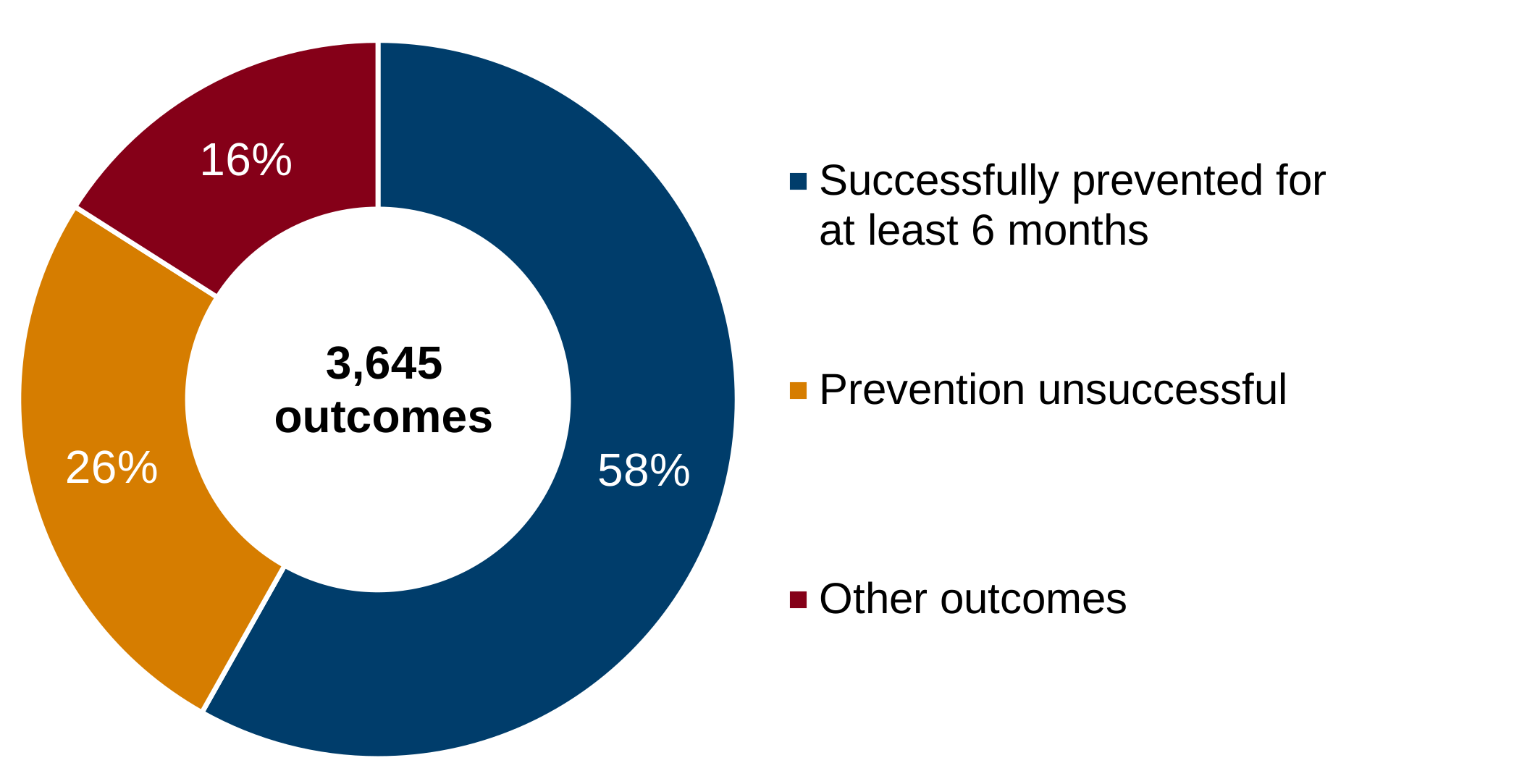
Description of figure 1: a donut chart showing the proportion of different outcomes for households threatened with homelessness (Section 66) between April and September 2025.
Source: Welsh Government
Households for which assistance has been provided by outcome and household type (StatsWales)
[Note 1] Homelessness prevention is where a local authority takes positive action to provide housing assistance to someone who the authority considers is threatened with homelessness within 56 days.
Between April and September 2025, 3,645 outcomes were recorded for households threatened with homelessness within 56 days. This is 10% fewer than the 4,029 recorded in the same period of 2024 and 21% fewer than the 4,590 in 2023.
Single person households accounted for 1,917 outcomes (53%) which is lower than in both 2024 (2,067) and 2023 (2,199), but represents a higher proportion than in both those years (51% and 48% respectively).
Homelessness was successfully prevented for at least 6 months in 58% of outcomes, however, a further 26% were unsuccessful. The remaining 16% were recorded as other outcomes. These proportions are similar to those reported in both 2024 and 2023. Other outcomes can include assistance being refused, non co-operation, applications being withdrawn (either by the applicant or due to loss of contact) and other reasons.
Homeless households owed a duty to help to secure accommodation
Figure 2: outcomes of homeless households owed a duty to help to secure accommodation (Section 73), April to September 2024 [Note 1] [Note 2]
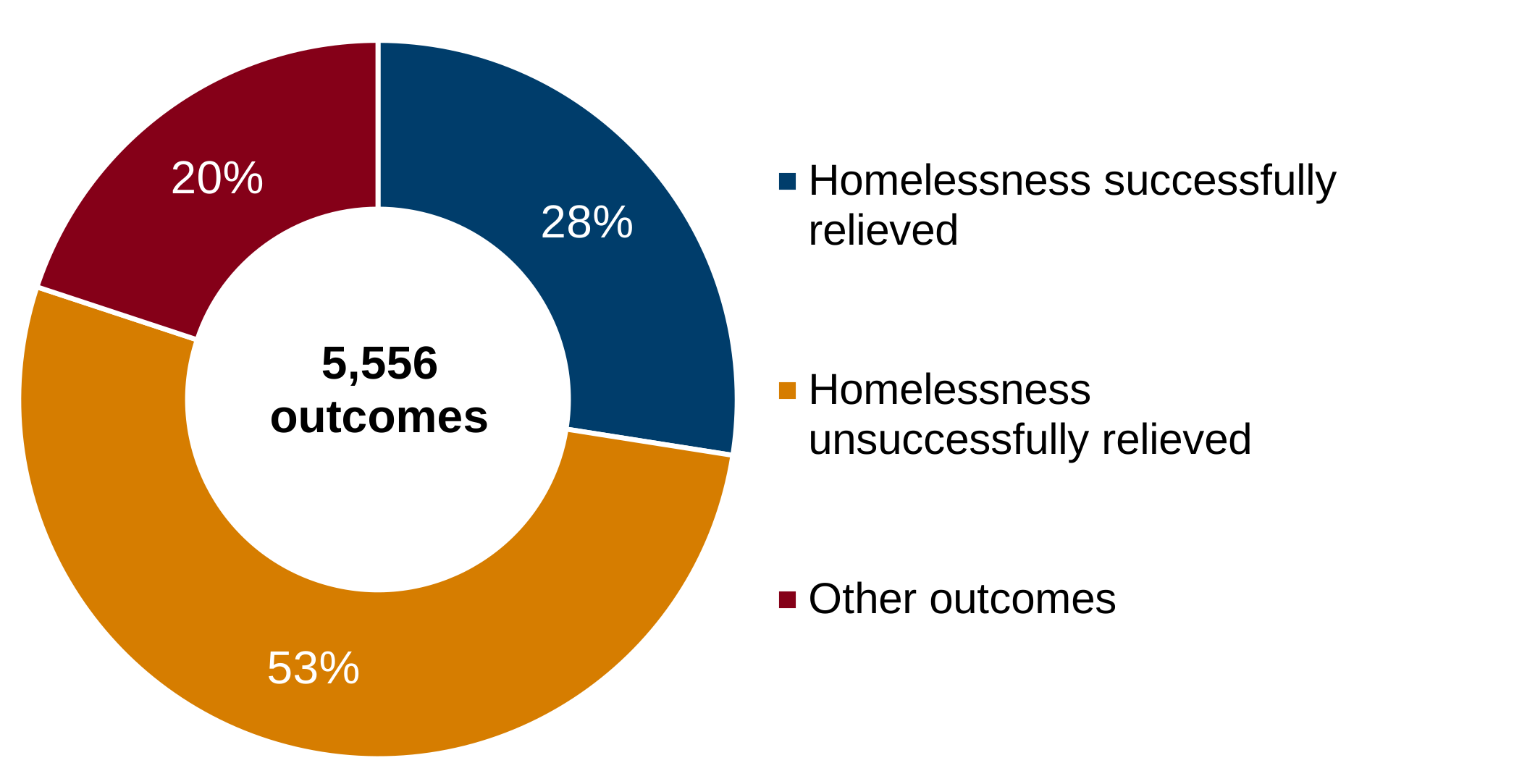
Description of figure 2: a donut chart showing the proportion of different outcomes for households owed a duty to help to secure accommodation (Section 73) between April and September 2025.
Source: Welsh Government
Households for which assistance has been provided by outcome and household type (StatsWales)
[Note 1] Following notification that an applicant is homeless, the local authority will be under a duty (Section 73) to take reasonable steps to help to secure accommodation.
[Note 2] Due to rounding, percentage total does not equal 100
Between April and September 2025, 5,556 outcomes were recorded for households who were homeless and owed a duty to help to secure accommodation. This is 14% fewer than the 6,477 recorded in 2024 and 15% fewer than the 6,525 recorded in 2023. Single person households accounted for 4,056 (73%), representing a slightly higher proportion than in both 2024 (72%) and 2023 (69%).
28% of outcomes were recorded as successfully relieved. A further 53% were unsuccessfully relieved, while the remaining 20% had other outcomes. This breakdown is a similar to that reported in both 2024 and 2023.
Households unintentionally homeless and in priority need
Figure 3: outcomes for households unintentionally homeless and in priority need (Section 75), April to September 2025 [Note 1]
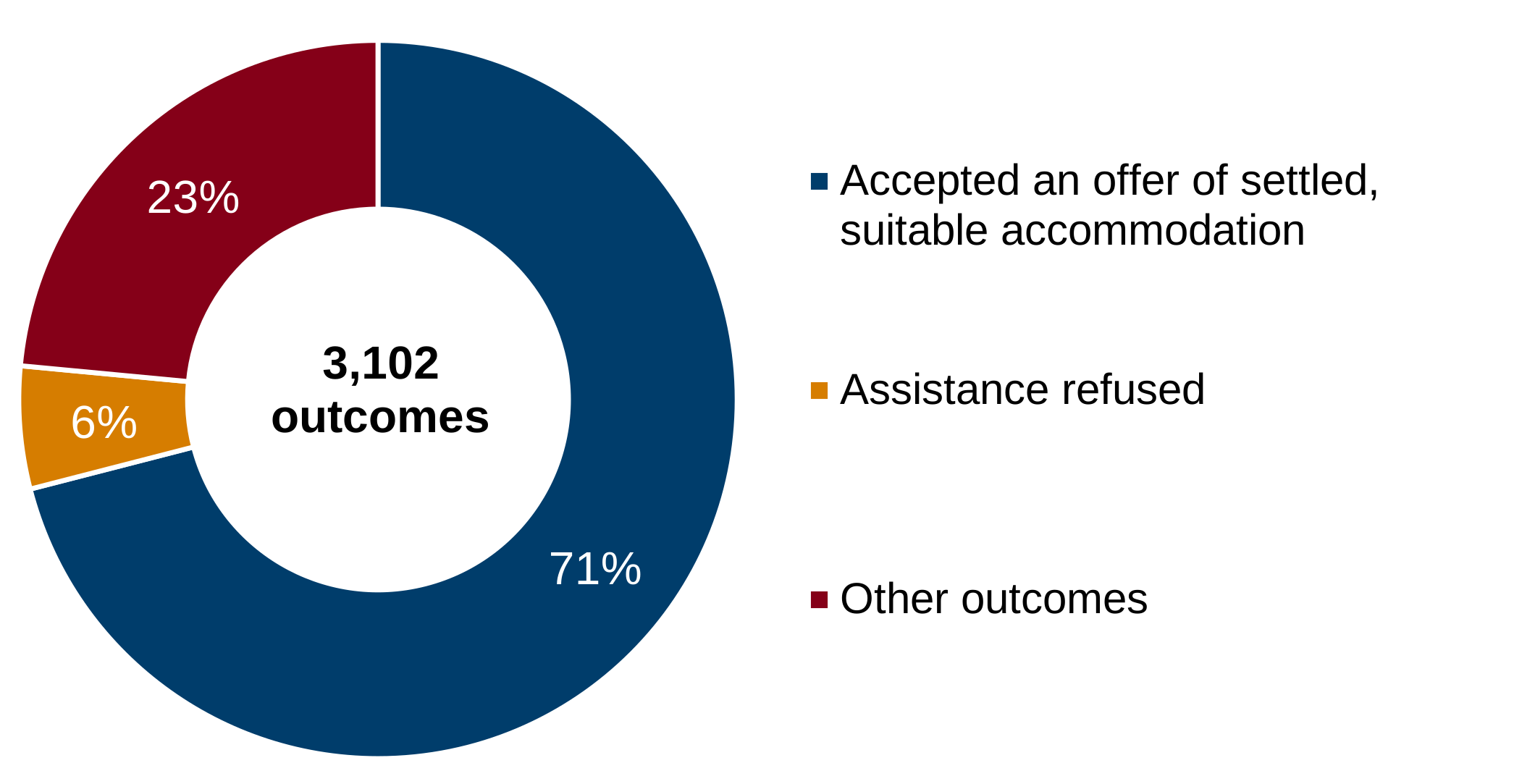
Description of figure 3: a donut chart showing the proportion of different outcomes for households that were unintentionally homeless and in priority need (Section 75) between April and September 2025.
Source: Welsh Government
Households for which assistance has been provided by outcome and household type (StatsWales)
[Note 1] If the household is homeless, has a priority need and is unintentionally homeless, the local authority will be under a duty to secure suitable accommodation.
Between April and September 2025, 3,102 outcomes were recorded for households who were unintentionally homeless and in priority need. This is 5% fewer than the same period in 2024 but 12% more than in 2023. Single person households accounted for 2,112 (68%), representing a slightly higher proportion than in both 2024 (64%) and 2023 (63%).
71% of outcomes were recorded as accepted an offer of settled suitable accommodation, a higher percentage than in the same period in 2024 (69%) and 2023 (67%). A further 23% were other outcomes and 6% were refused assistance.
Households in temporary accommodation
Figure 4: total number of households in temporary accommodation on 30 September, from 2015 to 2025 [Note 1]
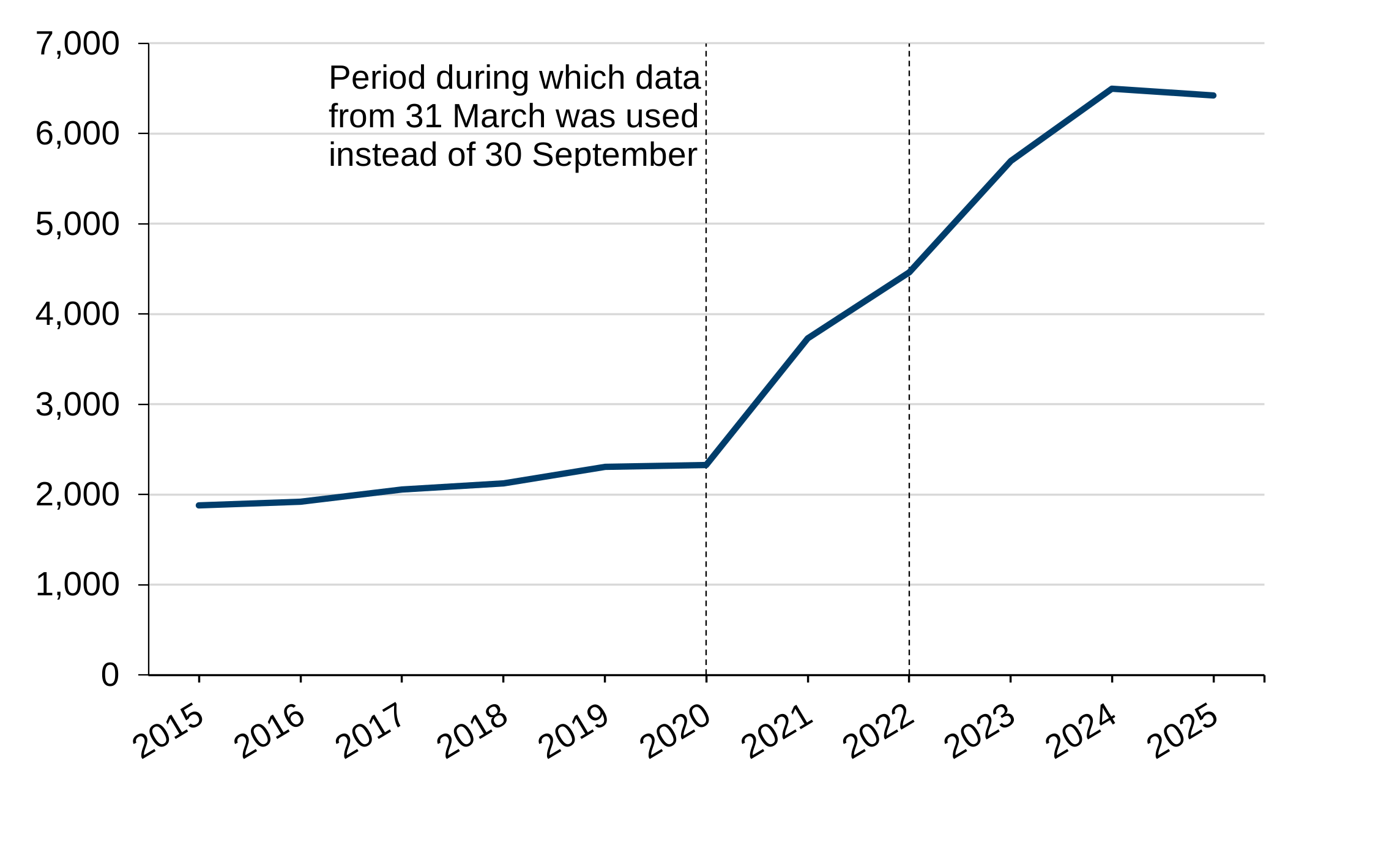
Description of figure 4: a line graph displaying the total number of households in temporary accommodation in Wales on 30 September for each year, from 2015 to 2025.
[Note 1] Due to the coronavirus (COVID-19) pandemic, data wasn’t collected for 30 September in 2020, 2021 or 2022, and instead March 31 data has been used for the corresponding years of this chart.
On 30 September 2025, 6,426 households were living in temporary accommodation, the second highest figure recorded on 30 September since the legislation was introduced in 2015. Of these, 1,425 were families with children. 35% of households in temporary accommodation were in bed and breakfast accommodation, followed by 24% in public sector accommodation and 19% in private sector accommodation.
Of the 2,265 households in bed and breakfast accommodation, 162 were families with children. The highest number and proportion of families with children were in social housing stock, where 723 of the 1,515 households accommodated had children.
At the start of the coronavirus (COVID-19) pandemic in March 2020, the Welsh Government put in place an emergency homelessness response. This response involved additional funding, together with both statutory and non-statutory guidance to ensure that no-one was left without accommodation, together with the support they need, to stay safe during the pandemic.
This ‘no-one left out’ approach resulted in greater numbers of people being supported in temporary accommodation. In 2022, the Welsh Government introduced legislation to add an eleventh priority need category for those who are ‘street homeless’ to ensure no-one in Wales is forced to sleep rough. This ensured the continuation of the ‘no-one left out’ approach. It is likely that the differences seen in the types of provision used for temporary accommodation are a result of these changes to services as well as an overall increase in demand for homelessness services.
For further information please see the Ending homelessness in Wales action plan.
Quality and methodology information
This release provides summary information on statutory homelessness, which does not include persons sleeping rough.
Detailed information on data quality and methodology can be found in the Homelessness quality report.
Since August 2020, official monthly statistics relating to persons placed into temporary accommodation and rough sleepers has been collected from local authorities. This information replaced the weekly gathering of intelligence collected during the initial stages of the Coronavirus (COVID-19) pandemic (from April 2020).
It is important to note the following differences between this statutory data collection and our monthly publications on homelessness accommodation provision and rough sleeping, and why the data from the publications shouldn’t be compared:
- Our collections on statutory homelessness capture data on the number of households, not individuals. This data relates to homelessness as defined by the Housing (Wales) Act 2014 (UK legislation).
- The monthly information relates to the number of individuals experiencing homelessness and being supported by local authorities into emergency accommodation or suitable long-term accommodation, as well as the estimates of persons sleeping rough.
Official statistics status
All official statistics should show the standards of the Code of Practice for Statistics (UK Statistics Authority).
These are accredited official statistics. They were independently reviewed by the Office for Statistics Regulation in March 2019. They comply with the standards of trustworthiness, quality and value in the Code of Practice for Statistics.
It is Welsh Government’s responsibility to maintain compliance with the standards expected of accreditation. If we become concerned about whether these statistics are still meeting the appropriate standards, we will discuss any concerns with OSR promptly. Accreditation can be cancelled or suspended at any point when the highest standards are not maintained, and reinstated when standards are restored.
Accredited official statistics are called National Statistics in the Statistics and Registration Service Act 2007.
Statement of compliance with the Code of Practice for Statistics
Our statistical practice is regulated by the Office for Statistics Regulation (OSR). OSR sets the standards of trustworthiness, quality and value in the Code of Practice for Statistics that all producers of official statistics should adhere to.
All of our statistics are produced and published in accordance with a number of statements and protocols to enhance trustworthiness, quality and value. These are set out in the Welsh Government’s Statement of Compliance.
These accredited official statistics (OSR) demonstrate the standards expected around trustworthiness, quality and public value in the following ways.
Trustworthiness
The data is collected directly from local authorities, from departments that are directly involved with those being assessed for homelessness and applying for temporary accommodation.
Quality
The published figures provided are compiled by professional analysts using the latest available data and applying methods using their professional judgement and analytical skillset. Statistics published by Welsh Government adhere to the Statistical Quality Management Strategy which supplements the Quality pillar of the Code of Practice for Statistics (UK Statistics Authority) and the European Statistical System principles of quality for statistical outputs.
Data for the Welsh Government Statutory Homelessness Collection is collected by Welsh Government directly from local authorities. Local authorities complete data collection forms based on data stored on their respective IT systems and return the completed forms to Welsh Government via its secure web data transfer system.
Validation checks are performed by Welsh Government statisticians and queries referred to local authorities where necessary. The statistical release is then drafted, signed off by senior statisticians and published in line with the statement on confidentiality and data access which is informed by the trustworthiness pillar contained in the Code of Practice for Statistics (UK Statistics Authority).
Value
The purpose of the statistical release is to provide evidence for policy development and to inform the wider public about statutory homelessness across Wales. This statistical release also supports the Welsh Government’s long-term plan for homelessness: Homelessness Strategy.
They will be used to obtain timely and accurate information relating to homelessness prevention and relief, to complement the monthly homelessness accommodation provision and rough sleeping headline, which will be used in informing Ministerial advice and decision making in the wider policy context.
You are welcome to contact us directly with any comments about how we meet these standards. Alternatively, you can contact OSR by emailing regulation@statistics.gov.uk or via the OSR website.
Well-being of Future Generations Act (WFG)
The Well-being of Future Generations Act 2015 is about improving the social, economic, environmental and cultural wellbeing of Wales. The Act puts in place seven wellbeing goals for Wales. These are for a more equal, prosperous, resilient, healthier and globally responsible Wales, with cohesive communities and a vibrant culture and thriving Welsh language. Under section (10)(1) of the Act, the Welsh Ministers must (a) publish indicators (“national indicators”) that must be applied for the purpose of measuring progress towards the achievement of the wellbeing goals, and (b) lay a copy of the national indicators before Senedd Cymru. Under section 10(8) of the Well-being of Future Generations Act, where the Welsh Ministers revise the national indicators, they must as soon as reasonably practicable (a) publish the indicators as revised and (b) lay a copy of them before the Senedd. These national indicators were laid before the Senedd in 2021. The indicators laid on 14 December 2021 replace the set laid on 16 March 2016.
Information on the indicators, along with narratives for each of the wellbeing goals and associated technical information is available in the Wellbeing of Wales report.
Further information on the Well-being of Future Generations (Wales) Act 2015.
The statistics included in this release includes one of the national indicators namely indicator 34 ‘Number of households successfully prevented from becoming homeless, per 10,000 households’.