
Peryglon tai: Ebrill 2024 i Fawrth 2025
Gwybodaeth am gyflwr eiddo preswyl a aseswyd gan awdurdodau lleol o dan y System Mesur Iechyd a Diogelwch ar gyfer Tai (HHSRS) rhwng Ebrill 2024 i Fawrth 2025. Saesneg yn unig.
Ar y dudalen hon
Introduction
The HHSRS was introduced in 2006 to evaluate potential risks to the health and safety of an occupant from any deficiencies identified in a dwelling. This release presents information on dwellings in which HHSRS assessments were carried out between April 2024 and March 2025 (not all residential dwellings). Headline information about the HHSRS across all residential dwellings is available for 2017 to 2018 in the Welsh Housing Condition Survey headline results.
This release previously presented information on houses in multiple occupation (HMOs) at 31 March of each year. This information is now presented separately in Houses in multiple occupation (HMO) licensing.
All information presented in this release has been collected in the annual Hazards and Licences returns from local authorities. More details about the data presented in this release can be found in the Housing hazards and HMO licensing quality report.
Main points
- In 2024 to 2025, 4,431 HHSRS assessments were carried out, 8% fewer than the previous year.
- Of those 4,431 assessments, 2,030 (46%) were carried out in HMOs.
- Category 1 hazards were found in 31% of assessments (1,394 assessments).
- The most common Category 1 hazard found in HMOs and non-HMOs was ‘excess cold’.
- Action by local authorities resulted in the resolution of 951 Category 1 hazards.
Assessments
The HHSRS is a risk-based evaluation tool which helps local authorities identify and protect against potential risks and hazards to health and safety. It is used to determine whether residential premises are safe to live in. Whilst it covers all residential premises, it is more commonly used to assess standards in private sector housing.
The HHSRS assesses 29 types of housing hazard and provides a rating for each one. Hazards which score highly on the scale (and pose the greatest risk) are referred to as Category 1 hazards. If a dwelling is found to contain a Category 1 hazard, the local authority has a duty to take appropriate enforcement action. Hazards which score lower on the scale (and pose a lesser risk) are referred to as Category 2 hazards. When a Category 2 hazard is identified, the local authority may take enforcement action. Local authorities base all enforcement decisions, in respect of residential premises, on HHSRS assessments. Any dwelling found to contain a Category 1 Hazard would automatically ‘fail’ the updated Welsh Housing Quality Standard (WHQS) 2023.
HHSRS assessments may be carried out for a number of reasons, including when an HMO is licensed, or when a complaint about a property is received from the occupier or a neighbour.
The Fitness for human habitation (FFHH) Regulations were introduced in December 2022 under Section 91 of the Renting Homes (Wales) Act 2016 (UK legislation). The FFHH Regulations aim to ensure landlords maintain dwellings to prevent them becoming unfit for human habitation. Please note that whether or not a dwelling is found to contain a hazard under the HHSRS does not pre-determine whether it is unfit for human habitation under the FFHH Regulations. For example, while a slight variation of floor surface may be considered a hazard under the HHSRS, it would be highly unlikely on its own to result in a determination that the dwelling is unfit for human habitation.
In 2024 to 2025, the highest number of assessments were carried out in Cardiff and Swansea (1,070 and 554 assessments respectively).On the other hand, fewer than 100 assessments were carried out in 10 of 22 local authorities (Isle of Anglesey, Blaenau Gwent, Bridgend, Carmarthenshire, Flintshire, Merthyr Tydfil, Monmouthshire, Torfaen, Wrexham and Vale of Glamorgan).
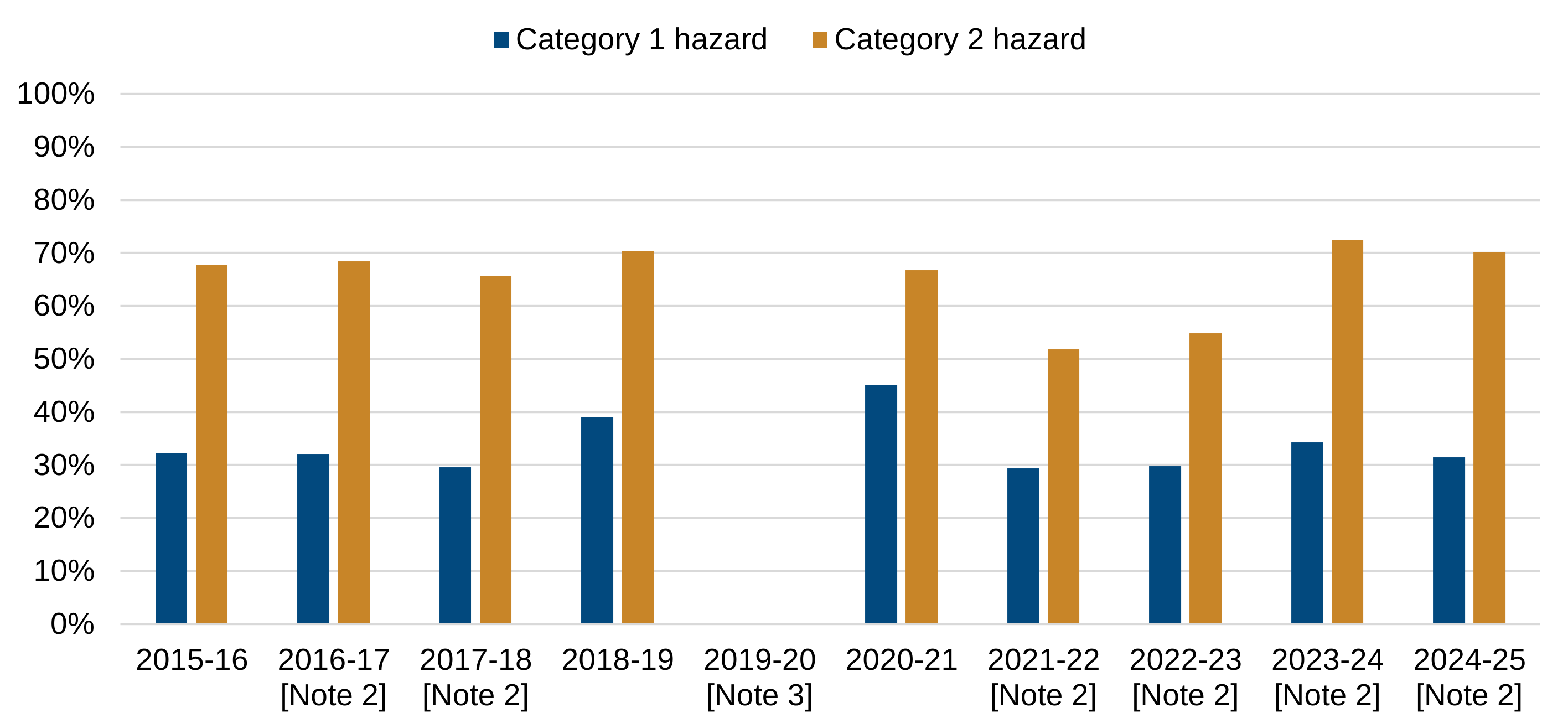
Figure 1: percentage of all assessments found to contain at least one Category 1 or Category 2 hazard, between 2015 to 2016 and 2024 to 2025 [Note 1]
Description of figure 1: described in text below.
[Note 1] Assessments may contain both Category 1 and Category 2 hazards.
[Note 2] Includes estimated figures for some local authorities, please see the accuracy section of the quality report for further details.
[Note 3] Data not collected for 2019 to 2020 due to the impact of the COVID-19 pandemic.
Between 2015 to 2016 and 2018 to 2019, the percentage of assessments found to contain a Category 1 hazard fluctuated between 30% and 39%. Over the same period, the percentage of assessments found to contain a Category 2 hazard fluctuated between 66% and 70%. In 2020 to 2021, the percentage of assessments found to contain Category 1 hazards increased to 45%, whilst 67% contained Category 2 hazards. This was in part due to the impact of the pandemic on local authority operations. During 2021 to 2022 and 2023 to 2024, the proportion of assessments found to contain a Category 1 hazard returned to pre-pandemic levels (between 30% and 34%), while the proportion of assessments found to contain a Category 2 hazard initially fell below pre-pandemic levels (between 52% and 55%) but rose substantially to 73% in 2023-24 more in line with pre-pandemic levels.
In 2024 to 2025, 32% of assessments were found to contain a Category 1 hazard, a decrease on the previous year (34%). Compared to the previous year, the percentage of assessments found to contain a Category 2 hazard fell slightly from 73% to 70%.
At a local authority level, the proportion of assessments found to contain either a Category 1 or Category 2 hazard was lowest in Wrexham. Of the 10 assessments carried out in Wrexham, 40% were found to contain a Category 1 hazard and 100% a Category 2 hazard. The Vale of Glamorgan reported the highest proportion of assessments found to contain a Category 1 hazard (with 69% of the 16 assessments found to contain a Category 1 hazard), while Cardiff reported the highest proportion of assessments containing a Category 2 hazard (with 99% of 1,070 assessments found to contain a Category 2 hazard) [Note 8].
[Note 8] Excluding Wrexham where all 10 assessments were found to contain a Category 2 hazard.
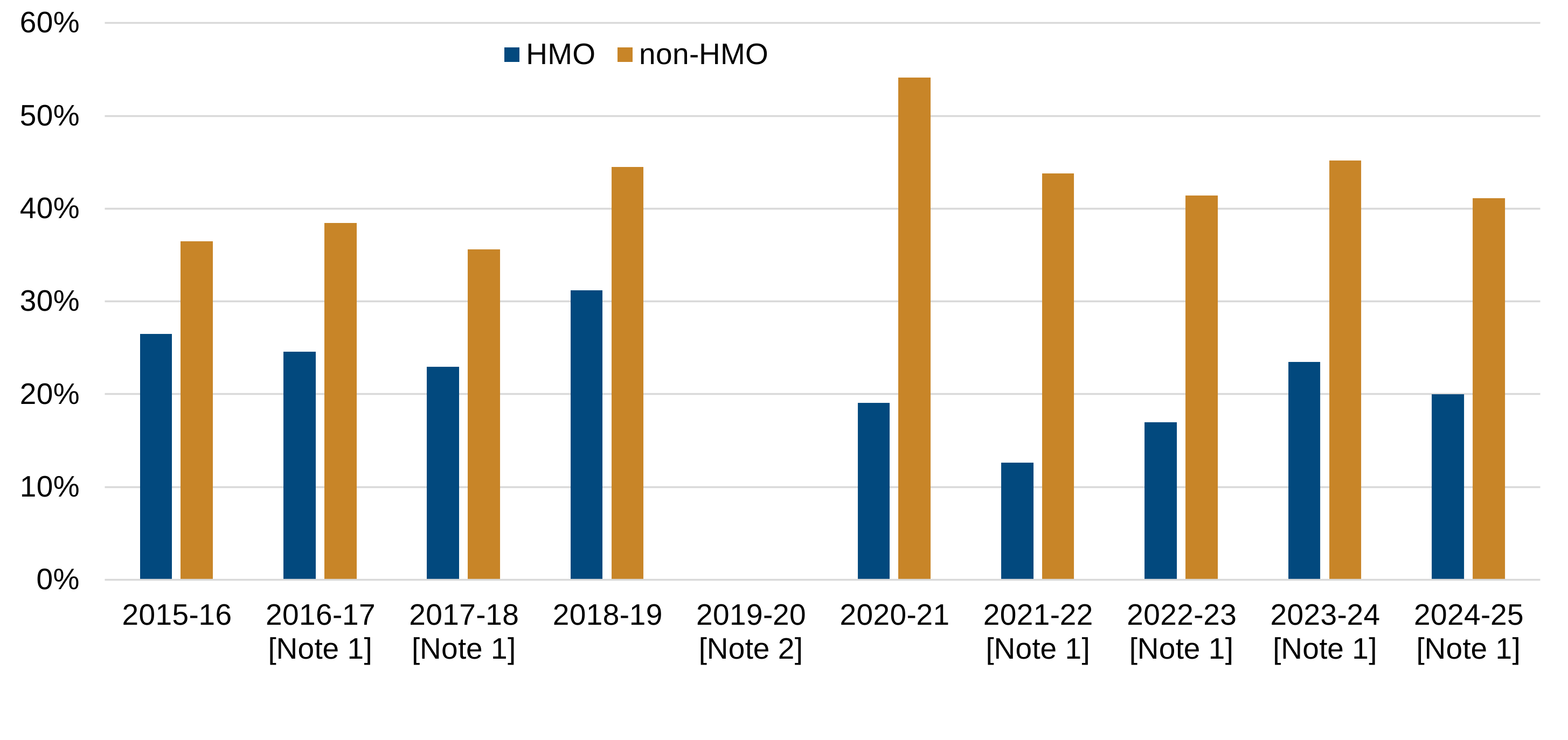
Figure 2: percentage of assessments found to contain at least one Category 1 hazard by dwelling type, between 2015 to 2016 and 2024 to 2025
Description of figure 2: described in text below.
[Note 1] Includes estimated figures for some local authorities, please see the accuracy section of the quality report for further details.
[Note 2] Data not collected for 2019 to 2020 due to the impact of the COVID-19 pandemic.
Since the introduction of the HHSRS in 2006, a greater proportion of non-HMO assessments have been found to contain Category 1 hazards. In 2020-21, the disparity between HMO and non-HMO assessments grew, perhaps in part due to the pandemic, with public health measures making it more difficult to undertake assessments in HMOs.
In 2024 to 2025, there were slightly fewer assessments carried out in HMOs compared to non-HMOS (of the 4,431 assessments, 46% we carried out in HMOs and 54% in non-HMOs). Between 2023 to 2024 and 2024 to 2025 the percentage of HMO assessments that contained a Category 1 hazard decreased from 23% to 20%, while the percentage of non-HMO assessments found to contain a Category 1 hazard decreased from 45% to 41%.
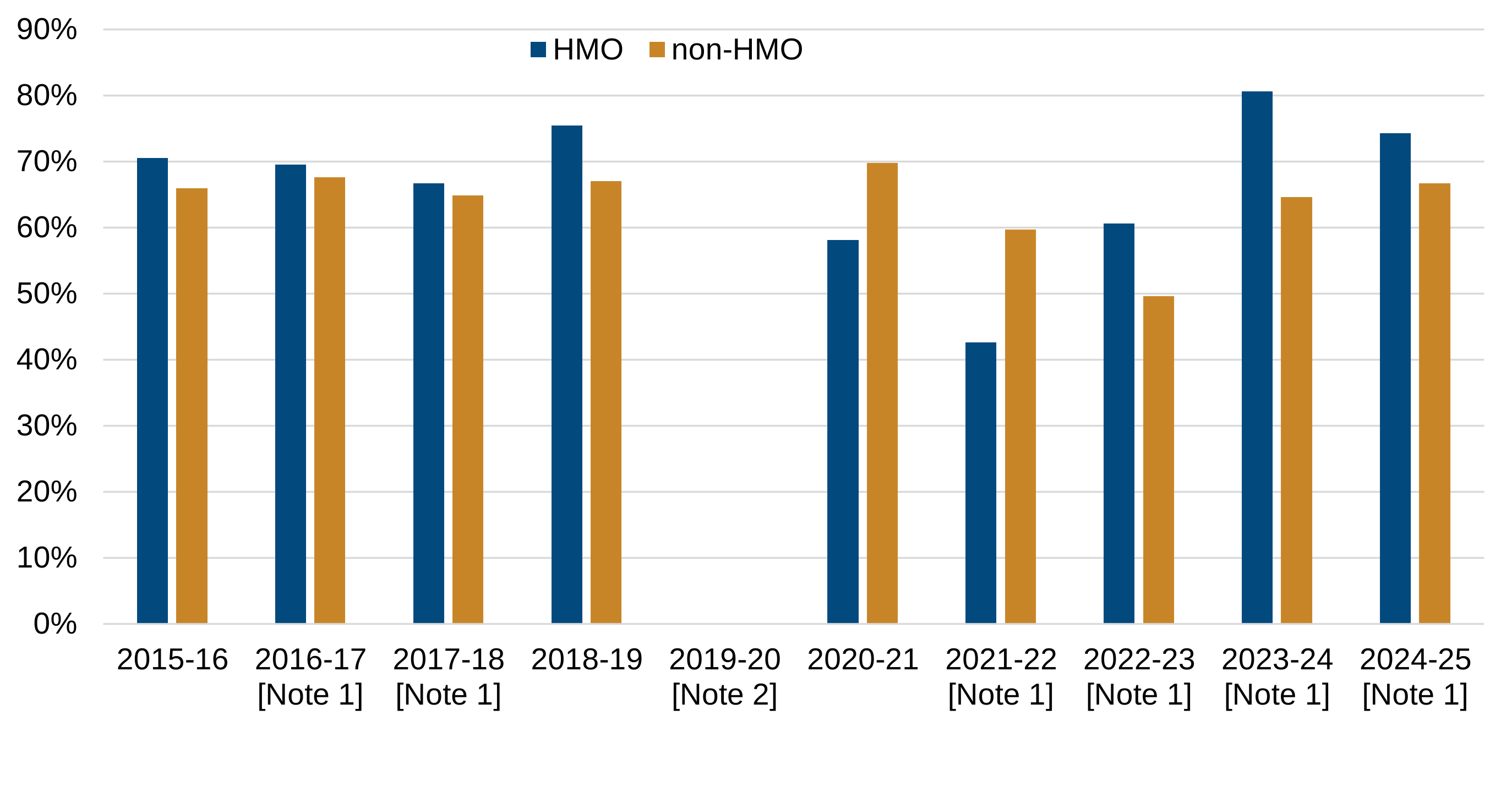
Figure 3: percentage of assessments found to contain at least one Category 2 hazard by dwelling type, between 2015 to 2016 and 2024 to 2025
Description of figure 3: described in text below.
[Note 1] Includes estimated figures for some local authorities, please see the accuracy section of the quality report for further details.
[Note 2] Data not collected for 2019 to 2020 due to the impact of the COVID-19 pandemic.
Between 2015 to 2016 and 2018 to 2019, a higher percentage of Category 2 hazards were found in HMO assessments (in 2018 to 2019, 75% of HMO assessments were found to contain a Category 2 hazard compared to 67% of non-HMO assessments). In 2020 to 2021 and 2021 to 2022, this trend was reversed, with a higher percentage of Category 2 hazards found in non-HMOs. In 2024 to 2025 74% of HMO assessments contained a Category 2 hazard, a decrease from the 81% seen in 2023 to 2024. Non-HMO assessments with a Category 2 hazard saw an increase from 65% to 67%.
Hazards found in HMOs
HMOs cover a wide range of housing types in the private rented sector. They are often occupied by younger, lower-income single people and some vulnerable/disadvantaged groups.
Figure 4: number of Category 1 hazards found in HMO assessments by hazard type, 2024 to 2025 [Note 1], [Note 2]
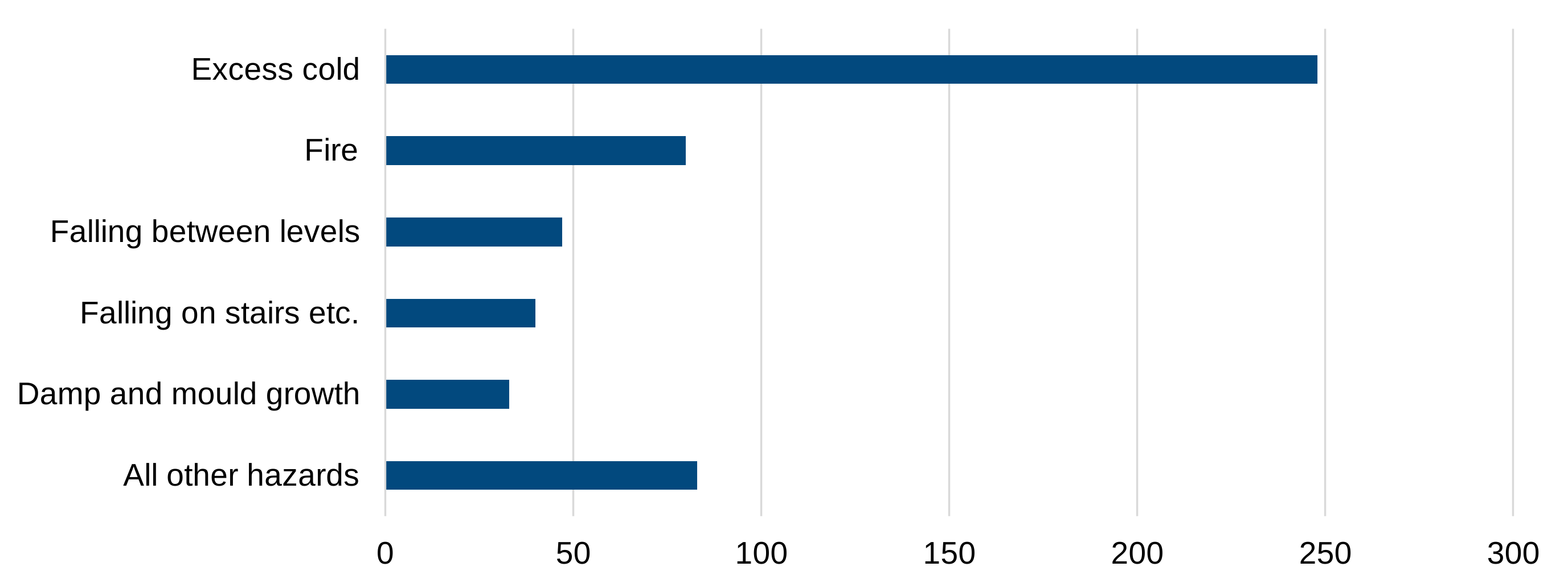
Description of figure 4: horizontal bar chart showing the most commonly found hazard was 'excess cold', followed by 'fire' and ‘falling between levels’.
[Note 1] Includes estimated figures for Neath Port Talbot.
[Note 2] Assessments may contain more than one type of Category 1 hazard.
Since 2012 to 2013, ‘excess cold’ has been the most common Category 1 hazard found in HMOs. In 2024 to 2025, ‘excess cold’ accounted for 248 of Category 1 hazards found in this type of dwelling (47%).
Figure 5: number of Category 2 hazards found in HMO assessments by hazard type, 2024 to 2025 [Note 1], [Note 2]
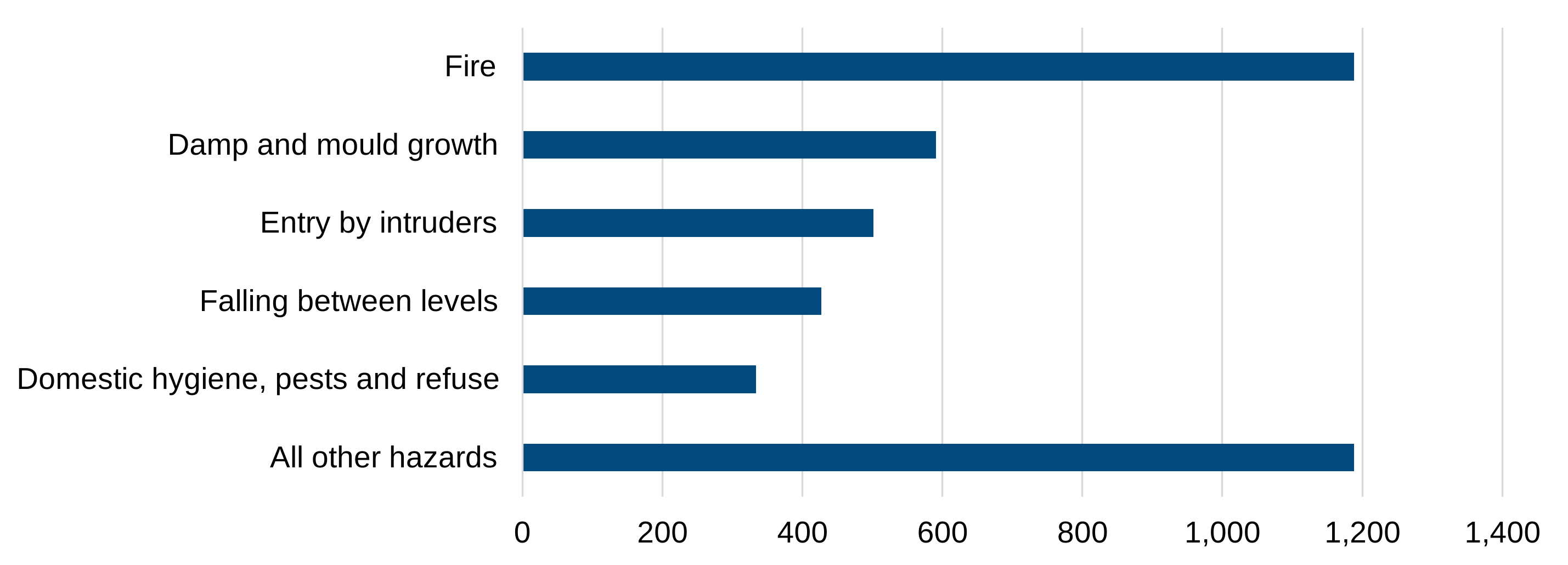
Description of figure 5: horizontal bar chart showing the most commonly found hazard was 'fire', followed by 'damp and mould growth' and 'entry by intruders'.
[Note 1] Includes estimated figures for Neath Port Talbot.
[Note 2] Assessments may contain more than one type of Category 2 hazard.
Since 2008 to 2009, the most common Category 2 hazard found in HMO assessments has been ‘fire’. In 2024 to 2025 ‘fire’ accounted for 1,188 (28%) of Category 2 hazards found in HMO dwellings in the most recent year.
Hazards found in non-HMOs
Single household dwellings are known as non-HMOS.
Figure 6: number of Category 1 hazards found in non-HMO assessments by hazard type, 2024 to 2025 [Note 1], [Note 2]
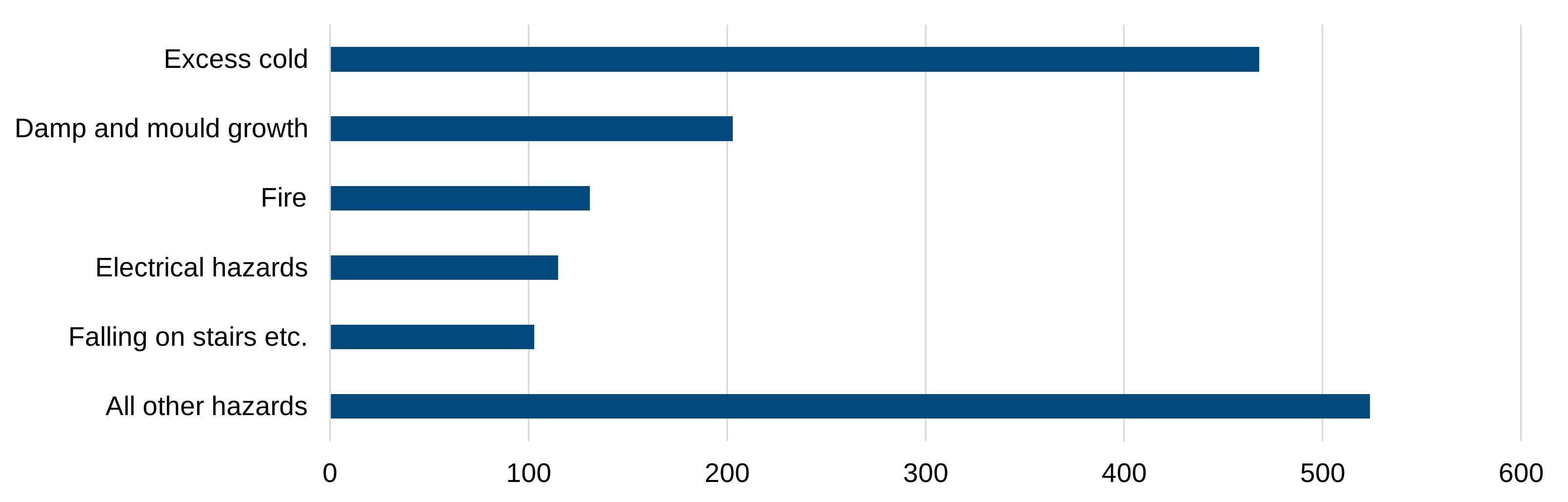
Description of figure 6: horizontal bar chart showing the most commonly found hazard was 'excess cold', followed by 'damp and mould growth' and 'fire'.
[Note 1] Includes estimated figures for Neath Port Talbot.
[Note 2] Assessments may contain more than one type of Category 1 hazard.
In 2024 to 2025, the most common Category 1 hazard found in non-HMO assessments was ‘excess cold’. ‘Excess cold’ accounted for 468 Category 1 hazards found in non-HMO dwellings (30%).
Figure 7: number of Category 2 hazards found in non-HMO assessments by hazard type, 2024 to 2025 [Note 1], [Note 2]
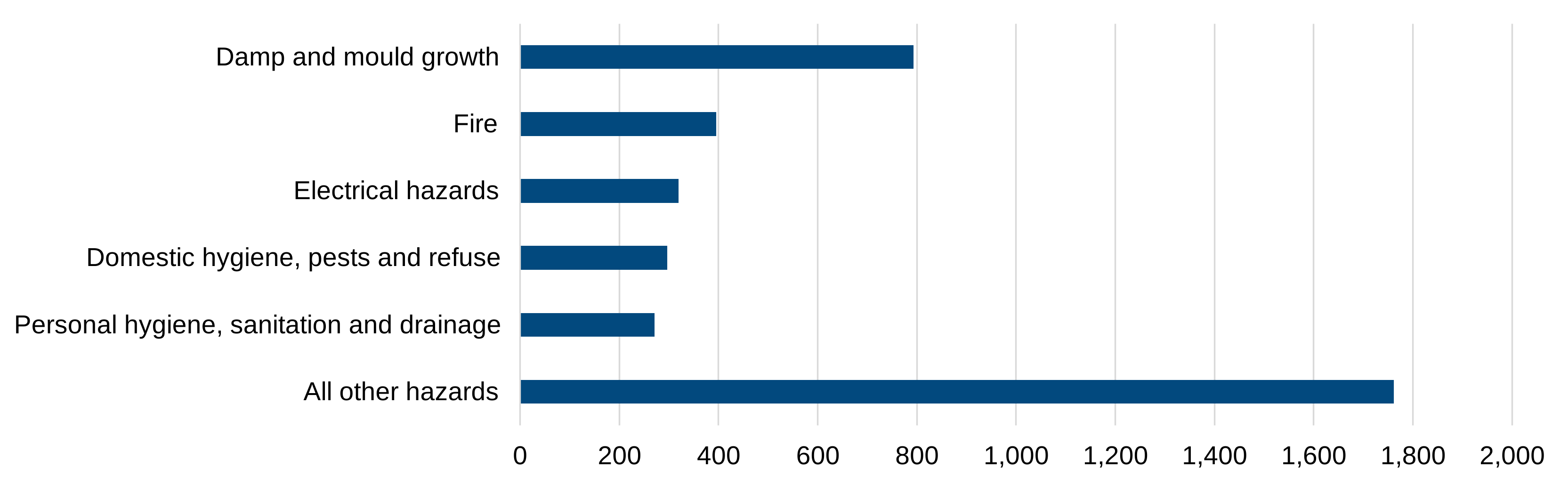
Description of figure 7: horizontal bar chart showing the most commonly found hazard was 'damp and mould growth', followed by 'fire' and 'electrical hazards'.
[Note 1] Includes estimated figures for Neath Port Talbot.
[Note 2] Assessments may contain more than one type of Category 2 hazard.
Since 2008 to 2009, the most common Category 2 hazard found in non-HMO assessments has been ‘damp and mould growth’. In 2024 to 2025, damp and mould growth’ accounted for 793 Category 2 hazards in this type of dwelling (21%).
Enforcement action
Local authorities can implement a range of actions when they identify a hazard, including serving a hazard awareness notice or an improvement notice requiring work to remove or reduce the hazard, making a prohibition order to restrict the use of all or part of the dwelling or taking action themselves where they consider that the hazard needs to be dealt with as an emergency. The enforcement action taken may not always result in the resolution of a hazard.
Figure 8: number of Category 1 hazards resolved by dwelling type, between 2015 to 2016 and 2024 to 2025
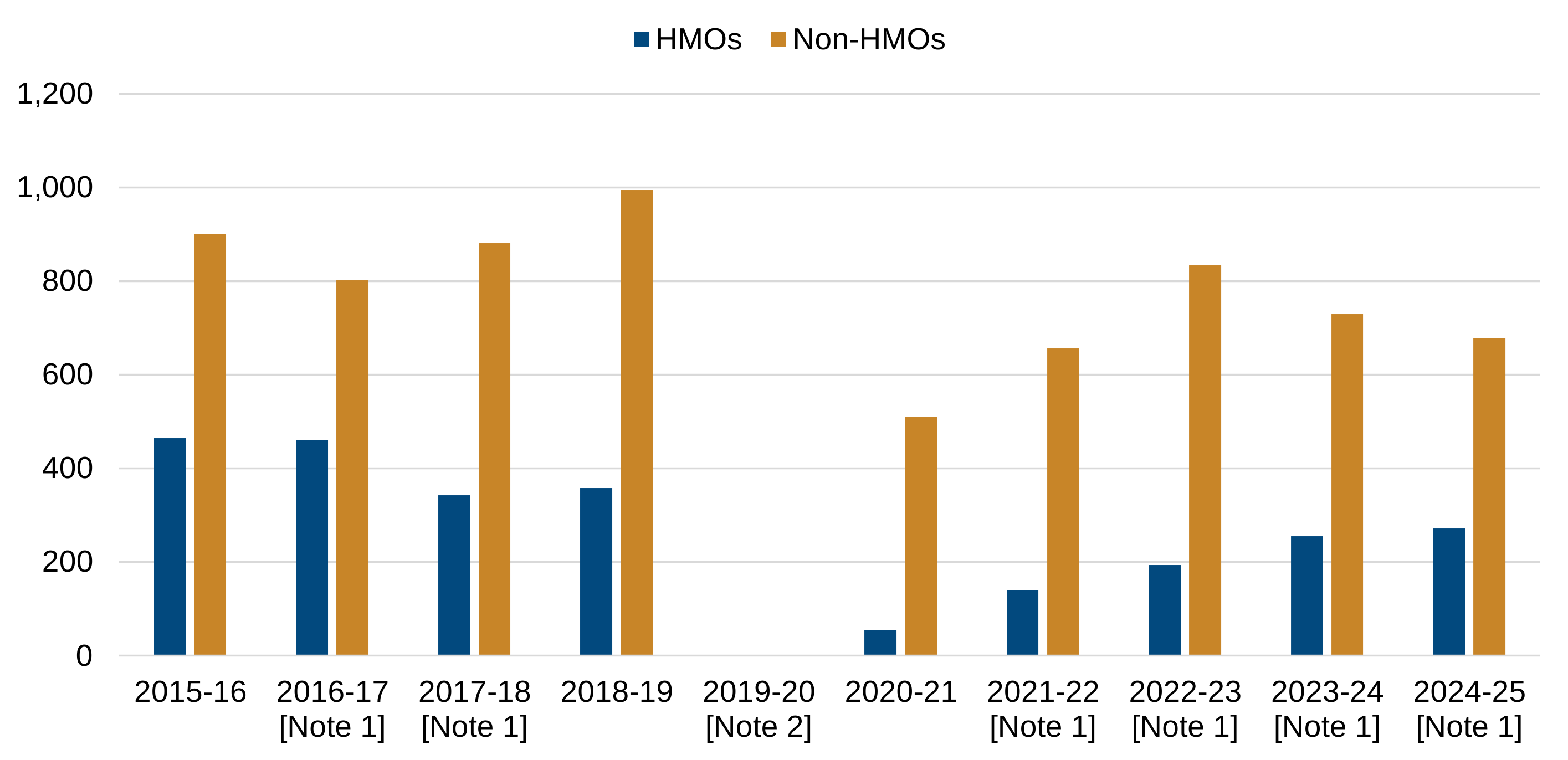
Description of figure 8: described in text below.
[Note 1] Includes estimated figures for some local authorities, please see the accuracy section of the quality report for further details.
[Note 2] Data not collected for 2019-20 due to the impact of the COVID-19 pandemic.
Between 2015 to 2016 and 2018 to 2019, the number of Category 1 hazards resolved in HMOs decreased from 465 to 358. Over the same period, the number of Category 1 hazards resolved in non-HMOs fluctuated between 802 and 994. From 2020 to 2021 a lower number of Category 1 hazards were resolved, likely due to the impact of the coronavirus pandemic on local authority operations.
In 2024 to 2025 action by local authorities resulted in the resolution of 951 Category 1 hazards. This was a small decrease compared with the previous year (when 985 Category 1 hazards were resolved). The majority of resolutions occurred in non-HMOS (71%). This is to be expected, given that most Category 1 hazards are found in non-HMOs (in 2024 to 2025, 71% of assessments found to contain a Category 1 hazard were non-HMOs assessments).
It is important to note that the assessment of some hazards may have been carried out in previous financial years. Some assessments may also identify more than one Category 1 hazard. For these reasons, it is not possible to determine the proportion of Category 1 hazards that have been resolved in a given year.
Quality and methodology information
Official Statistics status
All official statistics should show the standards of the Code of Practice for Statistics (UK Statistics Authority).
These are accredited official statistics, published by the Welsh Government. They were independently reviewed by the Office for Statistics Regulation (OSR) in November 2012. They comply with the standards of trustworthiness, quality and value in the Code of Practice for Statistics.
It is Welsh Government’s responsibility to maintain compliance with the standards expected of accreditation. If we become concerned about whether these statistics are still meeting the appropriate standards, we will discuss any concerns with OSR promptly. Accreditation can be cancelled or suspended at any point when the highest standards are not maintained, and reinstated when standards are restored.
Accredited official statistics are called National Statistics in the Statistics and Registration Service Act 2007.
Statement of compliance with the Code of Practice for Statistics
Our statistical practice is regulated by the OSR. OSR sets the standards of trustworthiness, quality and value in the Code of Practice for Statistics that all producers of official statistics should adhere to.
All of our statistics are produced and published in accordance with a number of statements and protocols to enhance trustworthiness, quality and value. These are set out in the Welsh Government’s Statement of Compliance.
These accredited official statistics (OSR) demonstrate the standards expected around trustworthiness, quality and public value in the following ways.
Trustworthiness
We have made these statistics available in a timely manner to meet user needs. We have followed relevant protocols for releasing these statistics, ensuring that circulation before publication has been restricted to eligible recipients only.
Quality
We have made the limitations of this data clear to users (for example, highlighting where estimated figures are used and revisions due to resubmission of corrected data returns).
Value
We have made every effort to ensure these statistics are accessible to users, using clear and succinct language (for example, we have expanded commentary to include more policy and operational context, and separated Housing hazards, Houses in multiple occupation (HMO) licensing and Demolitions publications to improve accessibility and usability of data).
We welcome any feedback on how we can improve the value of these statistics.
You are welcome to contact us directly with any comments about how we meet these standards. Alternatively, you can contact OSR by emailing regulation@statistics.gov.uk or via the OSR website.
Well-being of Future Generations Act (WFG)
The Well-being of Future Generations Act 2015 is about improving the social, economic, environmental and cultural wellbeing of Wales. The Act puts in place seven wellbeing goals for Wales. These are for a more equal, prosperous, resilient, healthier and globally responsible Wales, with cohesive communities and a vibrant culture and thriving Welsh language. Under section (10)(1) of the Act, the Welsh Ministers must (a) publish indicators (“national indicators”) that must be applied for the purpose of measuring progress towards the achievement of the wellbeing goals, and (b) lay a copy of the national indicators before Senedd Cymru. Under section 10(8) of the Well-being of Future Generations Act, where the Welsh Ministers revise the national indicators, they must as soon as reasonably practicable (a) publish the indicators as revised and (b) lay a copy of them before the Senedd. These national indicators were laid before the Senedd in 2021. The indicators laid on 14 December 2021 replace the set laid on 16 March 2016.
Information on the indicators, along with narratives for each of the wellbeing goals and associated technical information is available in the Wellbeing of Wales report.
This release includes contextual information relevant to the indicator 31 ‘Percentage of dwellings which are free from hazards’, which was referenced in the Well-being report in the previous link.
Further information on the Well-being of Future Generations (Wales) Act 2015.
The statistics included in this release could also provide supporting narrative to the national indicators and be used by public services boards in relation to their local wellbeing assessments and local wellbeing plans.
