
Pobl ifanc (16 oed a hŷn) yn rhoi'r gorau i gael gofal: Ebrill 2024 i Fawrth 2025
Gwybodaeth ychwanegol am bobl ifanc 16 oed a hŷn sy'n rhoi'r gorau i gael gofal gan awdurdodau lleol yn ystod y flwyddyn Ebrill 2024 i Fawrth 2025. Saesneg yn unig.
Ar y dudalen hon
Introduction
This report presents additional information on young people aged 16 and over who ceased to be looked after during the year and were not looked after on 31 March.
Section 74 of the Social Services and Well-being (Wales) Act (UK legislation) states that a child (a person aged under 18) who is looked after by a local authority is a child who is in its care. Or it is a child who is provided with accommodation by the authority in the exercise of any functions which are social services functions, apart from functions under Section 15, Part 4, or section 109, 114 or 115. Accommodation must be provided for a continuous period of more than 24 hours.
Data are taken from the annual children looked after census, which is collected from local authorities. New data are based on the year 1 April 2024 to 31 March 2025, presented as 2024 to 2025. Revisions to previously published data are noted throughout this report.
Main points
During 2024 to 2025
- 873 young people aged 16 and over ceased to be looked after during the year and were not looked after on 31 March 2025.
- 37% ceased to be looked after due to moving into an independent living arrangement with or without formalised advice or support.
- 94% were deemed to be in suitable accommodation at the point of ceasing to be looked after.
- 96% of eligible young people had been appointed a personal adviser.
- 94% of eligible young people had a pathway plan.
Number of young people (aged 16 and over) ceasing to be looked after
Typically, children cease to be looked after on the day before their 18th birthday. Some young people may need to be accommodated by the local authority up to their 21st birthday if they are being looked after in a community home which is suitable for children aged 16 and over. In practice, these are few and tend to be young people with severe physical or mental disabilities.
The 'Children looked after by local authorities: April 2023 to March 2024' report noted that the increase in the number of young people aged 16 and over ceasing to be looked after during that year was likely to be impacted by a reporting clarification. However, while the clarification resulted in additional data being provided on young people aged 16 and over ceasing to be looked after, it did not affect the overall number reported, and so comparisons to previous years are valid.
Figure 1: young people aged 16 and over ceasing to be looked after during the year, 2016 to 2025 [Note 1]
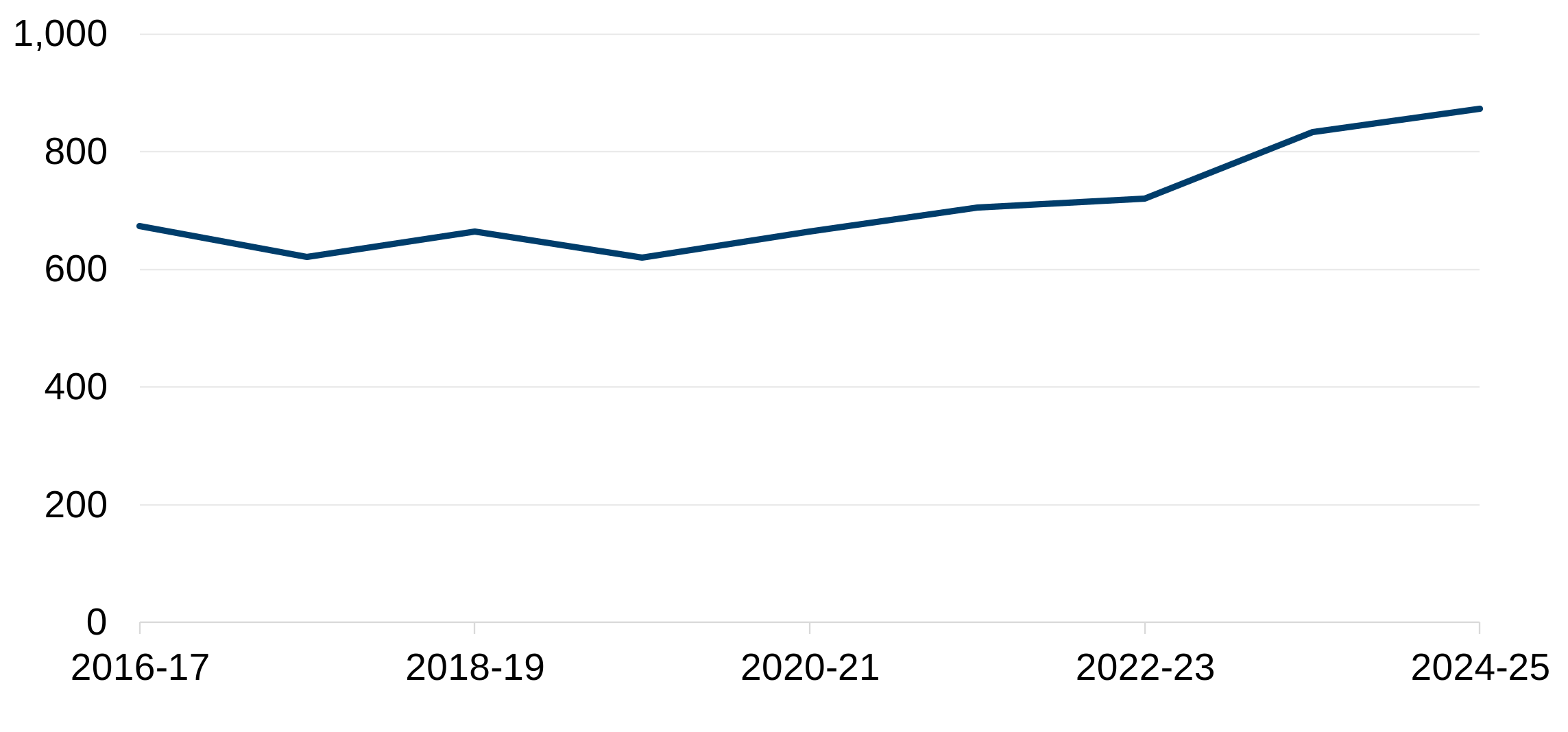
Description of figure 1: a line chart showing the number of young people aged 16 and over ceasing to be looked after has increased since 2016 to 2017.
Source: Children looked after census, Welsh Government
[Note 1] Excludes:
- children looked after exclusively under a series of short breaks
- children who died
- where care was taken over by another local authority in the UK
Where a child had multiple periods of care during the year, only the last period of ceasing care is counted.
873 young people aged 16 and over ceased to be looked after during 2024 to 2025 and were not looked after on 31 March 2025. While the overall number of children of all ages ceasing to be looked after decreased compared with the previous year, the number and proportion aged 16 and over increased. The number of children starting to be looked after aged 16 and over also decreased compared with the previous year.
Nearly two-thirds (66%) of young people aged 16 and over who ceased to be looked after during 2024 to 2025 were male.
Nearly a quarter (24%) of young people aged 16 and over who ceased to be looked after during 2024 to 2025 were unaccompanied asylum-seeking children. Nearly all were voluntarily accommodated.
Over half (56%) of young people aged 16 and over who ceased to be looked after during 2024 to 2025 were looked after under care orders, and over a third (35%) were in foster care placements at the point of leaving care.
Reason for ceasing to be looked after
Figure 2: young people aged 16 and over ceasing to be looked after during the year, by reason, 2016 to 2025 [Note 1] [Note 2]
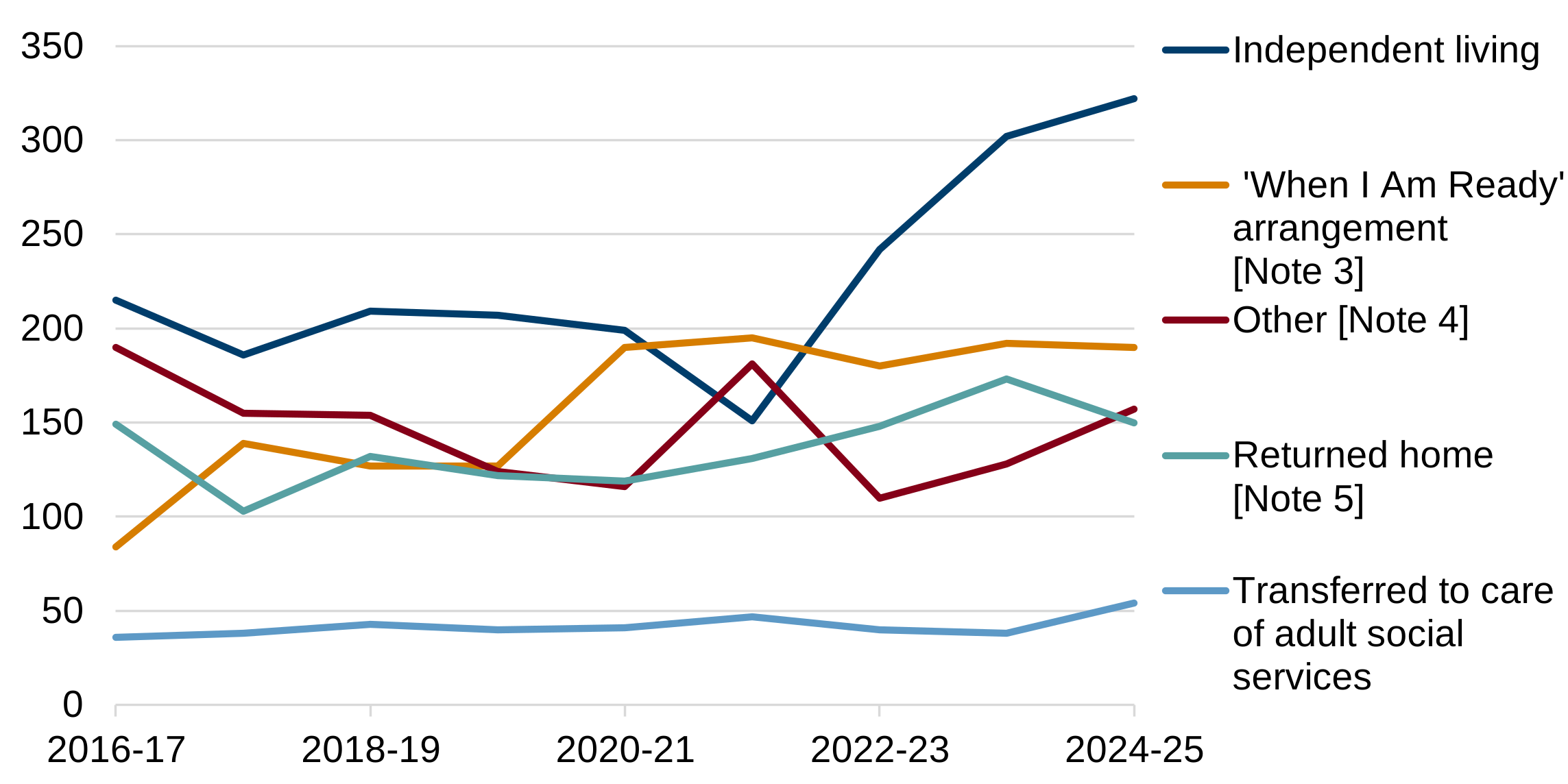
Description of figure 2: a line chart showing the number of young people ceasing to be looked after due to moving into independent living has increased greatly since 2021 to 2022. This is the most common reason why a young person ceased to be looked after.
Source: Children looked after census, Welsh Government
[Note 1] Excludes:
- children looked after exclusively under a series of short breaks
- children who died
- where care was taken over by another local authority in the UK
Where a child had multiple periods of care during the year, only the latest period is counted.
[Note 2] Minor revisions have been made to previously published data.
[Note 3] A young person turning 18 years old may continue living with their former foster parent(s) in a ‘When I am Ready’ arrangement.
[Note 4] Includes:
- adopted
- sentenced to custody
- other reason not listed
[Note 5] Returned home to live with parents, relatives or other person with parental responsibility. Includes special guardianship orders made to former foster carers or carers other than former foster carers.
Over a third (37%) of young people who ceased to be looked after moved into independent living arrangements during 2024 to 2025. This includes supportive accommodation and accommodation providing no formalised support. This proportion has increased in recent years.
A little under a quarter (22%) of young people turned 18 years old and entered into a ‘When I Am Ready’ arrangement. While the number of young people entering ‘When I Am Ready’ arrangements has remained fairly stable, the proportion has decreased from 29% in 2020 to 2021.
The proportion of young people who ceased to be looked after and returned home to live with parents, relatives, or other person with parental responsibility has been fairly stable, and was 17% during 2024 to 2025. 6% of young people transferred to the care of adult social services, which has also been stable since 2016 to 2017.
Accommodation at the point of ceasing to be looked after
Figure 3: young people aged 16 and over ceasing to be looked after during the year, by type of suitable accommodation at date of ceasing care, 2016 to 2025 [Note 1] [Note 2]
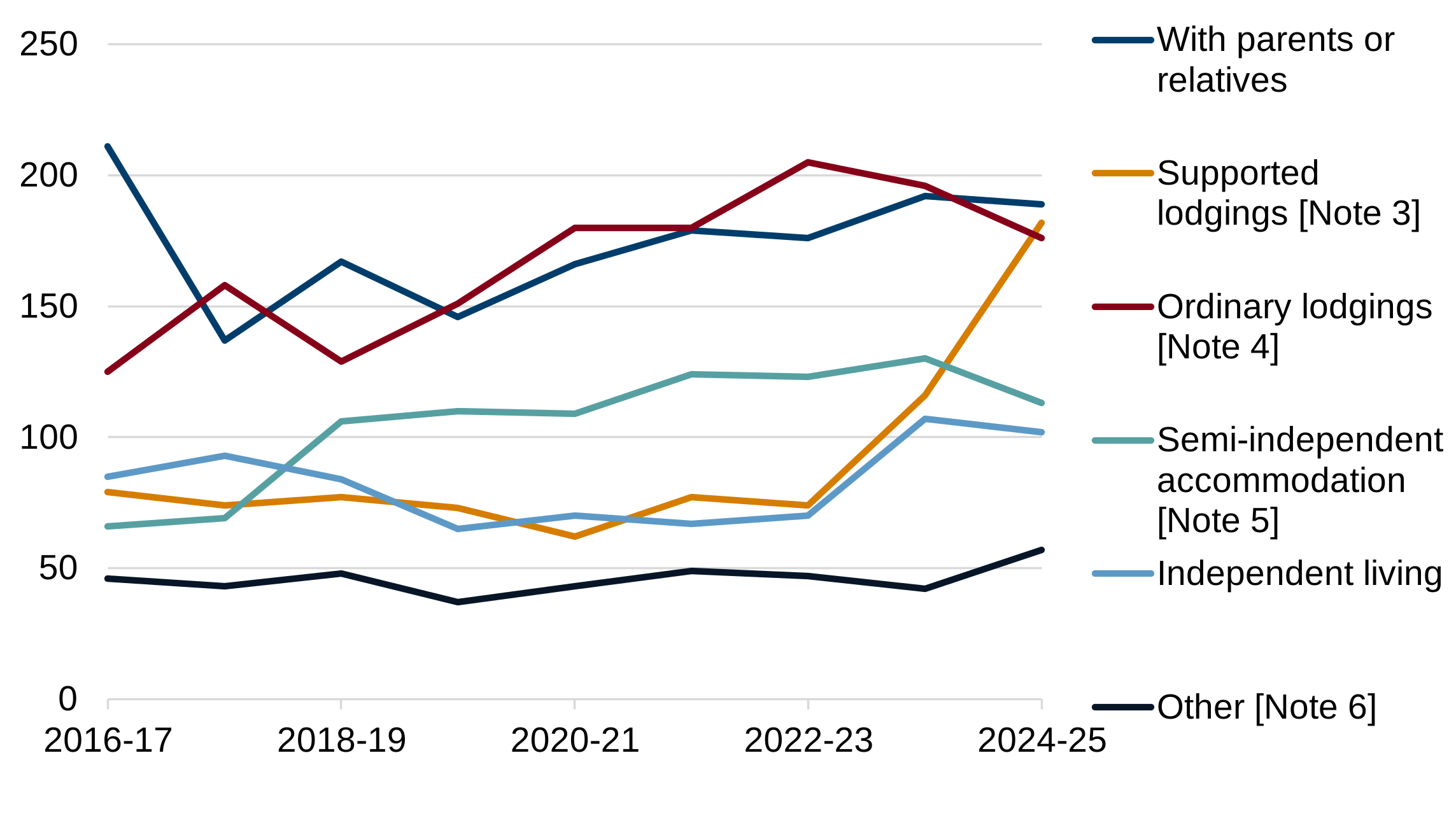
Description of figure 3: a line chart showing the number of young people ceasing to be looked after by type of suitable accommodation has fluctuated. Slightly more young people were living with parents or relatives at the date of ceasing care during 2024 to 2025 than in supported lodgings or ordinary lodgings.
Source: Children looked after census, Welsh Government
[Note 1] Excludes:
- children looked after exclusively under a series of short breaks
- children who died
- where care was taken over by another local authority in the UK
Where a child had multiple periods of care during the year, only the latest period is counted.
[Note 2] Minor revisions have been made to previously published data.
[Note 3] Where supervisory staff or advice workers are available to provide formal advice or support.
[Note 4] Without formal support.
[Note 5] Includes:
- semi-independent
- transitional accommodation
- self-contained accommodation with specialist personal assistance support
- self-contained accommodation with floating support
[Note 6] Includes residential or nursing care such as:
- an NHS establishment
- foyers and similar supported accommodation
- other suitable accommodation
Of the 873 young people aged 16 and over who ceased to be looked after during 2024 to 2025 and were not looked after on 31 March 2025, 819 (94%) were in suitable accommodation at the date they ceased to be looked after. Accommodation is regarded as suitable if it provides safe, secure and affordable provision for young people. The proportion of young people in suitable accommodation was the same as the previous year, but lower than the high of 97% in 2022 to 2023.
23% of young people in suitable accommodation were living with parents or relatives at the date of ceasing to be looked after; 22% were in supported lodgings and 21% were in ordinary lodgings without formal support. 14% of young people were in semi-independent accommodation, 12% were in independent living and a further 7% in other suitable accommodation.
The number and proportion of young people ceasing to be looked after by type of suitable accommodation has fluctuated since 2016 to 2017. The proportion in supported lodging has increased from 10% in 2020 to 2021, to 22% in 2024 to 2025. The proportions with parents or relatives, in ordinary lodgings and in semi-independent accommodation have generally decreased during this time.
Accommodation is considered to be unsuitable if it clearly exposes the young person to risk of harm or social exclusion. The proportion of young people in unsuitable accommodation had decreased each year since 2016 to 2017, and was 3% in 2022 to 2023. However, there was an increase in 2023 to 2024 and the proportion remained the same in 2024 to 2025, at 6%.
Young people in unsuitable accommodation were less likely to be eligible for, and less likely to have a personal adviser and a pathway plan, compared with young people in suitable accommodation at the date of ceasing to be looked after.
Personal advisers and pathway plans
Information on the appointment of a personal adviser and provision of a pathway plan is collected for eligible young people. For example, young people aged 16 and over who are category 2, 3 or 4 young people (as defined under Section 104 of the Social Services and Well-being (Wales) Act (UK legislation)).
96% of eligible young people aged 16 and over ceasing to be looked after during 2024 to 2025 had been appointed a personal adviser. A personal adviser provides support and guidance to young people leaving care, helping them develop the skills to live independently. They help care leavers make decisions about the future by supporting them to implement and review their pathway plan.
94% of eligible young people aged 16 and over ceasing to be looked after during 2024 to 2025 had a pathway plan. A pathway plan states the support needs of young people leaving care. It details the young person’s wishes about education, health and financial support.
The majority (95%) of eligible young people with a personal adviser and pathway plan were in suitable accommodation at the point of ceasing to be looked after. Eligible young people without either a personal adviser or a pathway plan (or neither) were less likely to be in suitable accommodation.
Quality and methodology information
From 2016 to 2017, individual-level data in relation to children looked after have been collected through the Children Looked After Census. Data on children looked after was previously collected through SSDA903 and associated returns.
The collection adheres closely to the definition of children looked after provided in law as detailed in the Social Services and Well-being (Wales) Act 2014. In a small number of instances where there is scope for confusion, guidance on how to interpret the term 'looked after' for statistical purposes is given. This is to achieve consistency in data so that there is comparability between local authorities' figures. The data collection guidance document also provides detailed explanations of the legal, placement and other response categories captured within the data collection.
The reporting clarification for 2023 to 2024 resulted in additional data being provided on young people aged 16 and over ceasing to be looked after. It did not affect the overall number reported, and comparisons with previous years are valid. Care leaver data were returned for all young people aged 16 and over who ceased to be looked after during 2024 to 2025.
Revisions
Minor revisions can be made as part of processing the latest year’s data. Revisions made to previous years’ data have been agreed by local authorities and are highlighted in notes. This mostly affects more recent years. However, as these numbers are small, this may not affect data published on StatsWales due to rounding and suppression being applied.
Statistical designation
These statistics are published as official statistics.
Percentages in this release have been calculated based on children where known information was provided and are rounded to the nearest per cent. Where information is not available, this is clearly indicated on StatsWales.
Extensive quality assurance was undertaken with local authorities.
Detailed information on quality can be found in the children looked after quality report.
Statement of compliance with the Code of Practice for Statistics
Our statistical practice is regulated by the Office for Statistics Regulation (OSR). OSR sets the standards of trustworthiness, quality and value in the Code of Practice for Statistics that all producers of official statistics should adhere to.
All of our statistics are produced and published in accordance with a number of statements and protocols to enhance trustworthiness, quality and value. These are set out in the Welsh Government’s Statement of Compliance.
These official statistics demonstrate the standards expected around trustworthiness, quality and public value in the following ways.
Trustworthiness
Data are returned annually from all 22 local authorities on Excel spreadsheets via Objective Connect, a web-based tool to securely share and receive files. Data collection is based on detailed guidance.
The published figures are compiled by professional analysts, using the latest available data and applying methods, using their professional judgement and analytical skillset.
These statistics are pre-announced on the Statistics and Research area of the Welsh Government website. Access to the data during processing is restricted to people involved in the production of the statistics, quality assurance and for operational purposes. Pre-release access is restricted to eligible recipients in line with the Code of Practice (UK Statistics Authority).
Quality
Our statistics are produced to high professional standards and are produced free from any political interference.
Validation checks are performed by Welsh Government statisticians and queries referred to local authorities where necessary.
The statistical release is approved by senior statisticians before publication. Data are published in line with statement on confidentiality and data access each year.
Value
The purpose of the statistical release is to inform users about the number and characteristics of children looked after by local authorities in Wales. This information is published alongside other data on children receiving care and support and social services activity to give a more complete picture of children receiving care and support and the activity of Children’s Social Services.
There is a sixteen-month lag between the reference period of the latest statistics and publication. The statistics are published annually with Wales-level analysis and commentary, in addition to open data format tables with local authority level analysis which are published on StatsWales.
You are welcome to contact us directly with any comments about how we meet these standards. Alternatively, you can contact OSR by emailing regulation@statistics.gov.uk or via the OSR website.
Well-being of Future Generations Act (WFG)
The Well-being of Future Generations Act 2015 is about improving the social, economic, environmental and cultural wellbeing of Wales. The Act puts in place 7 wellbeing goals for Wales. These are for a more equal, prosperous, resilient, healthier and globally responsible Wales, with cohesive communities and a vibrant culture and thriving Welsh language. Under section (10)(1) of the Act, the Welsh Ministers must (a) publish indicators (“national indicators”) that must be applied for the purpose of measuring progress towards the achievement of the wellbeing goals, and (b) lay a copy of the national indicators before Senedd Cymru. Under section 10(8) of the Well-being of Future Generations Act, where the Welsh Ministers revise the national indicators, they must as soon as reasonably practicable (a) publish the indicators as revised and (b) lay a copy of them before the Senedd. These national indicators were laid before the Senedd in 2021. The indicators laid on 14 December 2021 replace the set laid on 16 March 2016.
Information on the indicators, along with narratives for each of the wellbeing goals and associated technical information is available in the Wellbeing of Wales report.
Further information on the Well-being of Future Generations (Wales) Act 2015.
The statistics included in this release could also provide supporting narrative to the national indicators and be used by public services boards in relation to their local wellbeing assessments and local wellbeing plans.