
Gwasanaethau fferyllol cyffredinol: Ebrill 2024 i Fawrth 2025
Data ar fferyllfeydd, presgripsiynau a roddwyd a gwasanaethau fferyllol a gynigir ar gyfer Ebrill 2024 i Fawrth 2025. Saesneg yn unig.
Ar y dudalen hon
Introduction
This annual release presents statistics on community pharmacy activity in Wales, with all new statistics referring to the financial year April 2024 to March 2025 unless otherwise stated.
While dispensing prescription items remains a pharmacy’s primary role, they offer a range of additional patient services including the national Clinical Community Pharmacy Service (CCPS). This enables the public to access treatment for many common ailments, emergency medicines, and some forms of emergency and regular contraception at nearly all community pharmacies.
Pharmacies submit claims for payment for providing these services to NHS Wales Shared Services Partnership (Primary Care Services). The statistics in this release are based on information collected through those claim submissions. Further information is available in the quality report.
Main points
- There were 690 active community pharmacies on 31 March 2025, one more than on the same date in the previous year, but a decrease of 26 over the last decade.
- A record high number of items were dispensed (80.2 million items), an annual increase of 1.3%, and an 8.5% increase over the decade.
- A record high number of common ailments consultations took place (just over 462,000), an annual increase of more than a third, and just over six times higher than five years ago.
- Included as part of common ailments, there were just over 53,000 ‘sore throat test and treat’ consultations which resulted in the administering of just over 41,000 point of care tests.
- A record high number of emergency medicines consultations were provided, (121,000), an annual increase of 19.1% and more than five times as many as there were five years ago.
- There were almost 33,000 contraception consultations, maintaining the broadly stable long-term trend.
- Outside of the priority CCPS services, the number of discharge medicines reviews continued to increase with close to 20,900 reviews performed in the year, an increase of 14.3% from the previous year and an increase of 80.1% from five years ago.
Pharmacies
Community pharmacies are those commonly found on high streets, in supermarkets or within general practices. Pharmacies are privately owned but operate in contract with local health boards to provide NHS primary care services.
Independent pharmacies include those operating with five or fewer different locations; multiple/chain pharmacies include those operating from six or more different locations.
Figure 1: number of pharmacies by type on 31 March each year, 2015 to 2025
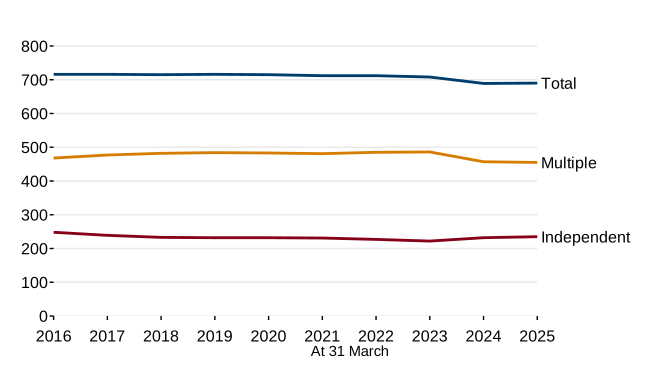
Description of figure 1: line chart showing the total number of pharmacies has been on a marginal downward trend over the last five years. While the split between pharmacy types has been broadly consistent over the majority of the last decade, the number of independent pharmacies has increased and number of multiple pharmacies has decreased over the last two years.
Source: Pharmacy Services C20 return, NHS Wales Shared Services Partnership
Community pharmacies by local health board on StatsWales
On 31 March 2025, there were 690 community pharmacies, one (or 0.1%) more than on 31 March 2024 but 26 (or 3.6%) fewer than on 31 March 2016.
Of these, 455 were multiple (chain) pharmacies, 0.4% fewer than on 31 March 2024 and 2.8% fewer than on 31 March 2016.
235 were independent pharmacies, 1.3% higher than on 31 March 2024, but 5.2% lower than on 31 March 2016.
Prescription items dispensed
The primary care prescriptions statistical release is the main source for prescriptions statistics. It provides detailed analysis of items prescribed by all primary care contractors that were subsequently dispensed in the community. It includes statistics on items independently prescribed by pharmacists working in community pharmacies and by pharmacists who work in general practices.
Considering the dispensing activity of community pharmacies only, 80.2 million prescription items were dispensed (StatsWales). This is a 1.3% increase from the previous year and an 8.5% increase over the decade.
The average (mean) number of items prescribed per community pharmacy each year has increased steadily from 103,000 to 116,000 over the decade.
These statistics exclude items dispensed by dispensing doctors and personally administered items prescribed and administered by a member of the general practice (which are included in the primary care prescriptions statistics).
Clinical Community Pharmacy Service (CCPS)
A Wales-wide Clinical Community Pharmacy Service was implemented in April 2022 that enables accredited pharmacies to provide a consistent range of services.
For the whole financial year between April 2024 and March 2025, the CCPS included common ailment services (including sore throat test and treat), emergency medicines supply, and contraception services.
From 1 September 2024, the provision of seasonal flu vaccinations was removed from the CCPS and commissioned separately as a Directed National Clinical Service. 659 out of 690 pharmacies (95.5%) provided flu vaccinations during the year.
Detailed statistics on this are published by Public Health Wales.
On 31 March 2024, 689 (or 99.9% of) community pharmacies were accredited to provide CCPS.
Figure 2: clinical community pharmacy service (CCPS) consultations, by service, between financial year 2015 to 2016 and financial year 2024 to 2025 [Note 1]
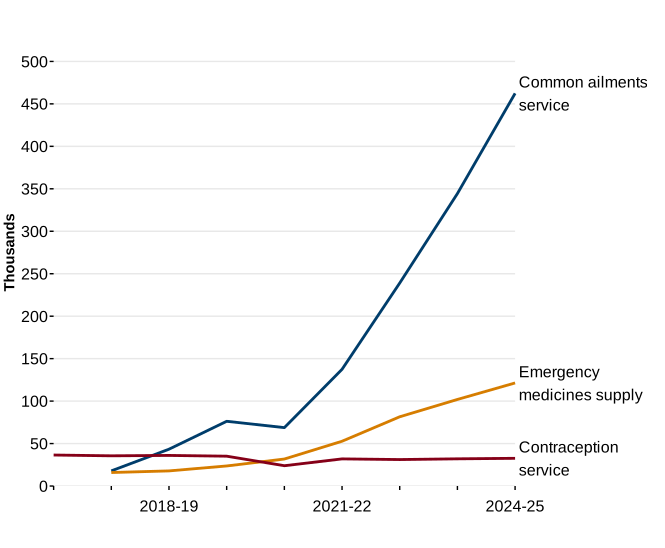
Description of figure 2: line chart showing a large upward trend in common ailments services consultations, which accounted for the majority of CCPS consultations in the latest year. Emergency medicines supply consultations continued to increase year-on-year, while contraception service consultations remained broadly stable.
[Note 1] Common ailments service and emergency medicines supply data only available from financial year 2017 to 2018 onwards.
Source: Claims made to Pharmacy Services, NHS Wales Shared Services Partnership
Analysis for each of the three CCPS priority services is provided in the following sections.
Common ailments service
Between April 2024 to March 2025, the service allowed patients to access free advice and where appropriate, the supply of medicines to treat 27 different common ailments at community pharmacies.
Just more than 462,000 consultations for common ailments were provided. This is an increase of 34.4% from the previous year and just more than six times (506.6%) as many consultations as five years ago.
Nearly 346,000 different people used the service. The large majority (77.3%) had one consultation in the year, but 20.3% had two or three consultations and 2.4% had four or more consultations.
Figure 3: most common reason for common ailments service consultations, April 2024 to March 2025
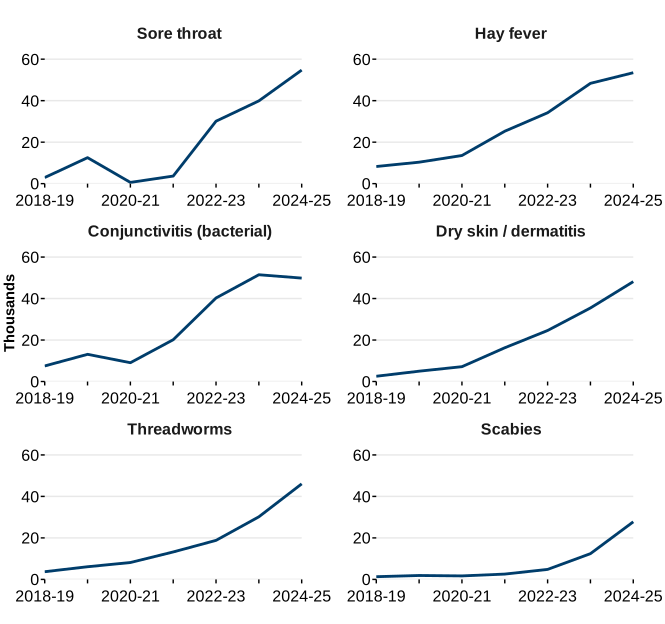
Description of figure 3: line charts showing the most common reason for a consultation was sore throat with almost 55,000 consultations in the latest year. There were large upward trends in all six of the most common ailments (sore throat, hay fever, conjunctivitis (bacterial), dry skin/dermatitis threadworms and scabies) over the last five years.
Source: Claims made to Pharmacy Services, NHS Wales Shared Services Partnership
Common ailments service: number of consultations per ailment, by local health board on StatsWales
Over half (54.6%) of all consultations were for the 5 most common conditions; sore throat (11.8%), hay fever (11.6%), conjunctivitis (10.8%), dry skin/dermatitis (10.4%) and threadworms (10.0%)
26 of the same ailments were available through the service in the previous year. Consultations for 24 of these increased; consultations for scabies (123.7% increase) and mouth ulcers (123.1%) more than doubled, while consultations for eight other ailments increased by more than half. Colic consultations decreased by 20.6% (though there are only a small number of consultations for this each year) and conjunctivitis consultations decreased by 3.2%.
Consultations by month are published on StatsWales and show that while the long-term trend is upwards, there have been peaks in late spring/early summer each year which correlate with peaks in hay fever consultations.
A record number (46,421) of consultations occurred in March 2025, the last month in the financial year, overtaking the previous high (42,098) recorded in June 2024.
Figure 4: distribution of common ailments service consultations by age and sex, April 2024 to March 2025
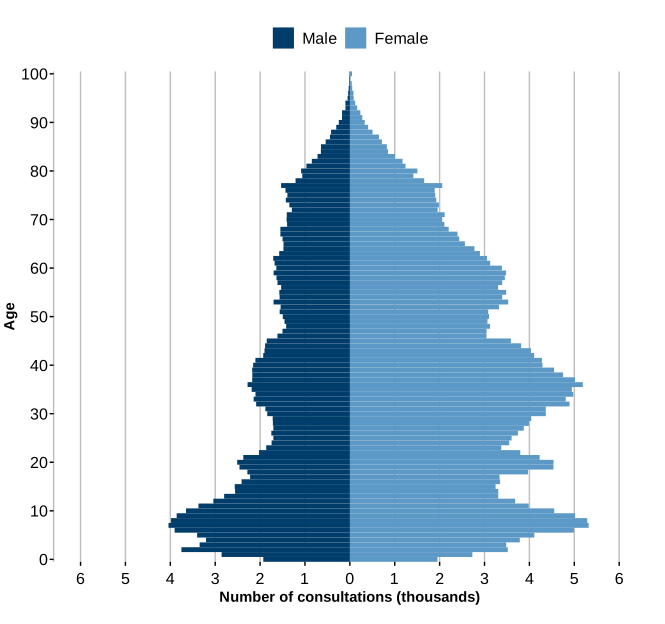
Description of figure 4: population pyramid showing high concentrations of consultations for children, females aged close to 20, and females aged between 30 and 45. Fewer males used the service than females, but peaks for male consultations were around similar ages to females.
Source: Claims made to Pharmacy Services, NHS Wales Shared Services Partnership
Common Ailments Service consultations by age band and sex on StatsWales
Nearly a quarter (24.8%) of all consultations were for children aged 15 or younger. 54.4% of these were for girls and 45.6% were for boys.
There were nearly twice as many consultations for adult (aged 16 or older) females as there were for adult males: a little more than 227,900 (65.5%) consultations for adult females compared to nearly 119,900 (34.5%) consultations for adult males.
The number of consultations for both female and male adults peaked between ages 30 to 45, which accounted for 31.6% of all adult female consultations 27.4% of all adult male consultations.
Sore Throat Test and Treat (STTT)
The ‘sore throat test and treat’ service was introduced for patients who had a common ailments consultation for sore throat or tonsilitis in the financial year 2023 to 2024. The STTT service allows pharmacists to provide point of care tests that identify if a streptococcus bacterial infection is present, enabling the pharmacist to provide appropriate medicines or advice and prevent the unnecessary use of antibiotics.
88.6% of community pharmacies were able to provide the STTT service on 31 March 2025.
Emergency medicines supply
The emergency medicine supply service enables pharmacists to supply patients with their regular prescription-only medicines in emergency situations. This includes times when a patient may have run out, lost, damaged, or is otherwise unable to obtain a prescription before their next dose is due.
There were nearly 121,400 emergency medicines consultations provided, an increase of 19.1% from the previous year and more than five times higher (413.5%) than five years ago.
Nearly half of requests (or 47.9%) for emergency medicines were due to the patient not ordering items from their GP in time (StatsWales), while just over a quarter (27.6%) of requests were because the items were not available for collection at the general practice.
More than 77,000 patients (or 63.9%) would have gone without their medication, had their medication not been supplied (StatsWales). While 25,900 (or 21.3%) would have contacted their general practice and just over 1,000 (or 0.9%) patients would have visited an emergency department.
Figure 5: ten most frequently supplied items through emergency medicines supply, April 2024 to March 2025 [Note 1]
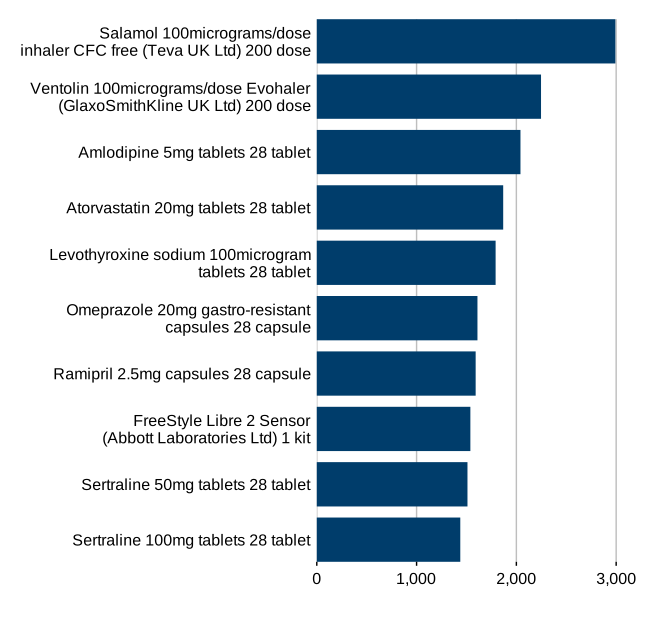
Description of figure 5: bar chart showing the ten most common items supplied in the financial year 2024 to 2025, ranged from Salamol 100 micrograms inhaler (nearly 3,000 times) to Sertraline 100 milligrams tablets.
[Note 1] Data are presented as they are recorded by pharmacies, which may include brand names, dosage forms, strengths, and volumes. Therefore, the same medicine name (for example Sertraline) may be recorded multiple times in different dosage forms, strengths or volumes.
Source: Claims made to Pharmacy Services, NHS Wales Shared Services Partnership
Emergency medicines supply: most frequently supplied items by year on StatsWales
Just over 189,000 items were prescribed and dispensed through the emergency medicines supply, 19.9% more than in the previous year and more than five times as many (418.3%) compared to five years ago.
In three quarters (75.1%) of consultations, one item was prescribed and dispensed. In nearly one in five (18.0%) consultations, either two or three items were prescribed and dispensed, while four or more items were supplied in 6.9% of all consultations.
8,000 different items were dispensed during the year.
The two most commonly dispensed items were Salamol 100 micrograms inhaler (1.6% of all items dispensed) and Ventolin 100 micrograms inhaler (1.2% of all items dispensed). Both items are commonly used to relieve respiratory symptoms caused by conditions such as asthma and chronic obstructive pulmonary disease.
The other eight most common emergency items dispensed are generally used to treat symptoms such as high blood pressure (Amlodipine and Ramipril), high cholesterol (Atorvastatin), hyperthyroidism (Levothyroxine), acid reflux (Omeprazole), diabetes (FreeStyle Libre sensor), and anxiety and depression (Sertraline).
Contraception service
The community pharmacy contraception service allows pharmacists to provide sexual health advice and some methods of contraception that include emergency contraception, bridging contraception (an initial 3-month supply of the progestogen-only pill), or a mixture of both.
The number of contraception consultations has been broadly stable over the long term, with some year-to-year fluctuations.
There were almost 33,000 consultations provided during the year, an increase of 1.9% from the previous year, but a decrease of 7.1% from five years ago.
In 98.2% of these consultations some form of contraception was supplied.
Figure 6: reason for requesting emergency contraception, between financial year 2015 to 2016 and financial year 2024 to 2025
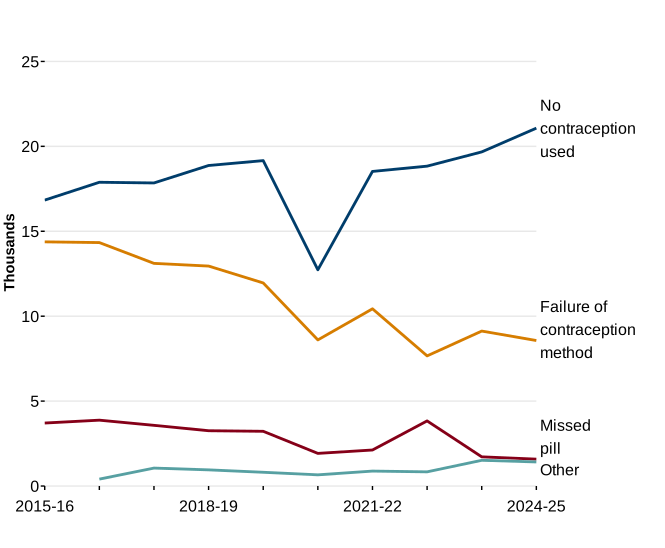
Description of figure 6: line chart showing the main reason for an appointment over the last ten years was because no contraception had been used. This has been on an upward trend over the decade, apart from in the COVID-19 affected years; in contrast, the number of requests due to a failure of contraception method has been on a downward trend over the same period.
Source: Claims made to Pharmacy Services, NHS Wales Shared Services Partnership
Contraception service: reason for consultation by age band on StatsWales
The number and percentage of consultations where the patient reported they had not used contraception has been increasing over the long term. 64.6% of patients reported this in the financial year 2024 to 2025, an increase of 16.4 percentage over the decade.
In contrast, 26.2% reported their contraception method failed; a decrease of 14.9 percentage points over the decade.
In one in twenty (4.9%) consultations, the patient reported they had missed a dose of the daily contraceptive pill. Consultations for this reason have been on a long-term downward trend and have decreased by 54.3% over the last decade.
Discharge medicines reviews
The discharge medicines review service (DMR) aims to provide support to patients recently discharged from hospital by ensuring that changes made to their medicines are enacted as intended in the community.
While not a component of CCPS, most pharmacies (687 of the 690 community pharmacies on 31 March 2025, (or 99.6%)) were accredited to provide discharge medicines reviews.
Figure 7: number of discharge medicines reviews per year between financial year 2015 to 2016 and financial year 2024 to 2025
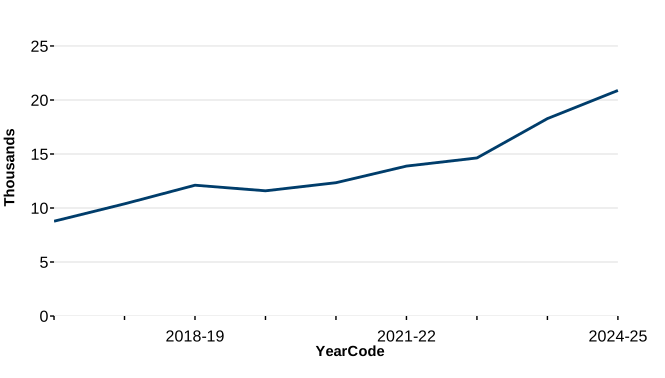
Description of figure 7: line chart showing the number of discharge medicines reviews has increased markedly over time, more than doubling over the decade.
Source: Claims made to Pharmacy Services, NHS Wales Shared Services Partnership
Discharge Medicine Reviews (DMRs) by local health board and year on StatsWales
Just fewer than 20,900 discharge medicines reviews took place in community pharmacies in the year, an increase of 14.3% from the previous year and an increase of 80.1% from five years ago.
Quality and methodology information
Full quality and methodology information is available in the quality report.
Accredited Official Statistics status
The United Kingdom Statistics Authority has designated these statistics as Accredited Official Statistics (formerly known as National Statistics), in accordance with the Statistics and Registration Service Act 2007 and signifying compliance with the Code of Practice for Statistics (UK Statistics Authority).
This status means that official statistics meet the highest standards of trustworthiness, quality and public value.
All official statistics should comply with all aspects of the Code of Practice for Statistics. They are awarded Accredited Official Statistics status following an assessment by the Office for Statistics Regulation. The authority considers whether the statistics meet the highest standards of code compliance, including the value they add to public decisions and debate.
Since the latest review by the Office for Statistics Regulation, we have continued to comply with the Code of Practice for Statistics, and have made the following improvements:
- Included additional open data, with more detailed breakdowns, on our StatsWales website
- Sourced claim-level data to allow for more rigorous data validations and some reproducible analytical pipelines
- Included further insights into patients who received CCPS consultations, including analysis of:
- Gender of the patient
- Age group of the patient
- Reason for consultation
- What patient would have done without consultation
- Seasonal flu eligibility criteria
- Updated main quality information and refreshed commentary throughout the release, including longer time comparisons of data
Statement of compliance with the Code of Practice for Statistics
Our statistical practice is regulated by the Office for Statistics Regulation (OSR). OSR sets the standards of trustworthiness, quality and value in the Code of Practice for Statistics that all producers of official statistics should adhere to.
All of our statistics are produced and published in accordance with a number of statements and protocols to enhance trustworthiness, quality and value. These are set out in the Welsh Government’s Statement of Compliance.
These accredited official statistics demonstrate the standards expected around trustworthiness, quality and public value in the following ways.
Trustworthiness
Community pharmacy statistics are produced with integrity and are presented without political interference. All analysis included in this release is matter of fact and the presentation of these statistics is designed to minimise any misleading inferences.
The decision to introduce consultation analysis and present statistics on the core parts of the CCPS align with changes in community pharmacy policy and done with the public good in mind.
These statistics were pre-announced on the Statistics and Research area of the Welsh Government website more than 28-days before publication and were published at 9.30am on the release date. Pre-release access is granted to a short list of Welsh Government officials, no more than 5 days before the publication date, in accordance with the Pre-release Access to Official Statistics (Wales) Order 2009.
This release does not include any revisions to past data.
All underlying data is stored securely with access restricted to only the statisticians who produce this publication. Statistics are compiled by professional statisticians using the latest available data and applying methods using their professional judgement and analytical skillset.
Quality
The statistics are produced in line with our Statistical Quality Management Strategy. Validation checks are performed by Welsh Government statisticians and queries referred to NHS Shared Services Partnership where necessary.
The statistics are based on pharmacies who need accreditation to provide services and then make claims made for payment for providing the services. All pharmacies in contract with Welsh health boards are included and the administrative systems where data is submitted are well established.
The statistical release is approved by senior statisticians before publication. Data is published in line with statement on confidentiality and data access each quarter.
Where there are data quality issues, they are stated in the release and on StatsWales.
Value
Community pharmacies are one of the four major providers of NHS primary care services and a crucial part of the overall health service in Wales. They provide medicines to millions of patients each year and provide additional consultation services that relieve pressure on general practices and emergency departments.
The statistics in this release inform the public and policy makers about the activity which community pharmacies have performed in the year and some analysis of the patients who have used some of their core services.
These statistics are published annually, as soon as practicable after then end of the reference period (financial years ending in March each year).
The statistics are published with brief analysis and commentary, in addition to open data format tables which are published on StatsWales. StatsWales data is accompanied by metadata to aid interpretation and assess the quality of the data. The outputs are aimed to provide the whole range of users with the level of information they need.
You are welcome to contact us directly with any comments about how we meet these standards. Alternatively, you can contact OSR by emailing regulation@statistics.gov.uk or via the OSR website.
Well-being of Future Generations Act (WFG)
The Well-being of Future Generations Act 2015 is about improving the social, economic, environmental and cultural wellbeing of Wales. The Act puts in place seven wellbeing goals for Wales. These are for a more equal, prosperous, resilient, healthier and globally responsible Wales, with cohesive communities and a vibrant culture and thriving Welsh language. Under section (10)(1) of the Act, the Welsh Ministers must (a) publish indicators (“national indicators”) that must be applied for the purpose of measuring progress towards the achievement of the wellbeing goals, and (b) lay a copy of the national indicators before Senedd Cymru. Under section 10(8) of the Well-being of Future Generations Act, where the Welsh Ministers revise the national indicators, they must as soon as reasonably practicable (a) publish the indicators as revised and (b) lay a copy of them before the Senedd. These national indicators were laid before the Senedd in 2021. The indicators laid on 14 December 2021 replace the set laid on 16 March 2016.
Information on the indicators, along with narratives for each of the wellbeing goals and associated technical information is available in the Wellbeing of Wales report.
Further information on the Well-being of Future Generations (Wales) Act 2015.
The statistics included in this release could also provide supporting narrative to the national indicators and be used by public services boards in relation to their local wellbeing assessments and local wellbeing plans.
We want your feedback
We welcome any feedback on any aspect of these statistics which can be provided by email to: stats.healthinfo@gov.wales
Contact details
NHS Workforce and Primary Care Statistics
Email: stats.healthinfo@gov.wales
Media: 0300 025 8099
SFR 18/2026
