
Llefydd gwag, gosodiadau ac ôl-ddyledion tai cymdeithasol: Ebrill 2023 i Mawrth 2024
Gwybodaeth am nifer yr unedau tai a oedd yn wag, y nifer a rentwyd i denantiaid a tenantiaid a oedd ar ei hôl hi gyda'u rhent ar gyfer Ebrill 2023 i Mawrth 2024. Saesneg yn unig.
Ar y dudalen hon
Introduction
This release presents information about the number of social housing units that were empty (vacancies), the number of housing units rented to tenants (lettings) and the number of social housing tenancies who were in rent arrears during April 2023 to March 2024. The information is used to assess: the effectiveness of social landlords in managing their stock; gauge turnover rates for social housing; and monitor the number of social housing tenancies in debt across Wales.
Social housing refers to housing units (including bedsits and bed spaces) owned by and rented from social landlords (local authorities and Registered Social Landlords (RSLs)). The data used in this release is provided by the social landlords. Social housing stock data is published in our social landlord housing stock and rents release and on the StatsWales website: Social housing stock and rents.
Main points
- At 31 March 2024, there were 4,819 vacant social housing units (2% of total social housing stock). This was a 1% decrease on the 4,882 vacant units (revised figure) at 31 March 2023.
- At 31 March 2024, 1,725 units (36% of all vacancies) had been vacant for 6 months or more, an increase of 14% from 31 March 2023. 399 of these units were available for letting.
- During 2023-24, 17,239 lettings occurred. This is a decrease of 3% on 2022-23. Of these, 39% were housed from waiting lists, 36% through priority lettings to the homeless and 25% via transfers or exchanges.
- At 31 March 2024, 108,424 (46%) of social housing tenancies were in rent arrears. This was an increase of 7% from 31 March 2023 and the highest figure to date. Just over 4% of all tenancies had been in rent arrears for 13 weeks or more.
Social housing units in Wales
At 31 March 2024 there were a total of 241,669 social housing units in Wales. Of these, 95% (229,229) were general need or sheltered housing units which were rented from Welsh social landlords at social rents (as regulated by the Welsh Government Rent and Service Charge Standard). The remaining 5% (12,440) were social housing units not covered by the Welsh Government Social Rent Policy but still classed as social housing (e.g. ‘extra care’ or supported housing units).
RSLs owned 63% (152,513 units) of all social housing units at 31 March 2023 and the 11 stock retaining authorities owned the remaining 37% (89,156 units).
Detailed data sets for social housing stock can be found on StatsWales.
Social housing vacancies as at 31 March
There may be a number of reasons why the housing units are vacant, and why some of these are not available for letting, such as awaiting sale, demolition or undergoing improvements and repair.
The 4,819 vacant units at 31 March 2024 were a decrease of 1% on 31 March 2023, and represents 2% of all social housing stock. The proportion of social housing stock vacant has remained around 2% each year since records began in 2005-06. The proportion of RSL stock vacant has remained consistently lower than for local authorities in recent years. At 31 March 2024, 1.8% of RSL stock was vacant compared to 2.3% of local authority stock.
Figure 1: Social landlord vacancies as at 31 March each year [Note 1] [Note 2] [Note 3]
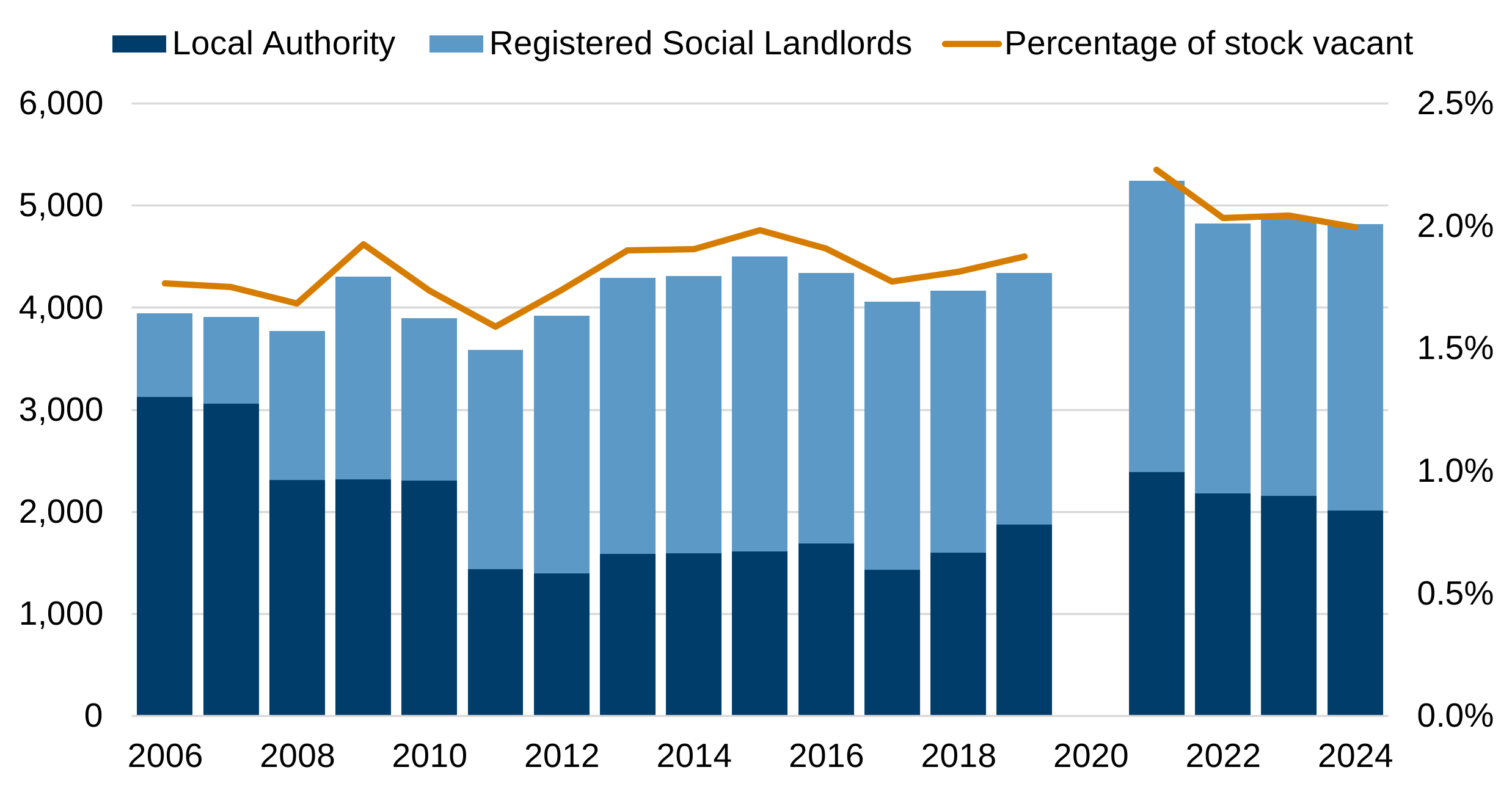
Description of Figure 1: A stacked bar chart showing the number vacancies broken down by social landlord with a line chart to show the percentage of total vacancies.
Source: Annual social landlord stock and vacancies returns
Total stock at social rent by local authority area and accommodation type (StatsWales)
Vacancies by local authority area, availability and duration (StatsWales)
[Note 1] As a percentage of total social housing stock.
[Note 2] Data not collected for 2019-20 due to the impact of the COVID-19 pandemic.
[Note 3] Throughout the time series, data points have included imputations from a small number of local authorities or RSLs. For further details, please see the accuracy section of the quality report.
(r) One RSL (Taff Housing) revised their vacancies figure for 2022-23.
Between 31 March 2023 and 31 March 2024, the number of units empty for 6 months or more increased by 14% to 1,725. These units accounted for fewer than 1% of all social housing stock as at 31 March 2024, the same as the previous year.
At 31 March 2024, the proportion of vacant units for both local authorities and RSLs was around 2%, with both having around 1% of their stock vacant for 6 months or more.
Figure 2: Percentage of social housing stock vacant by length of vacancy at 31 March 2024 [Note 1]
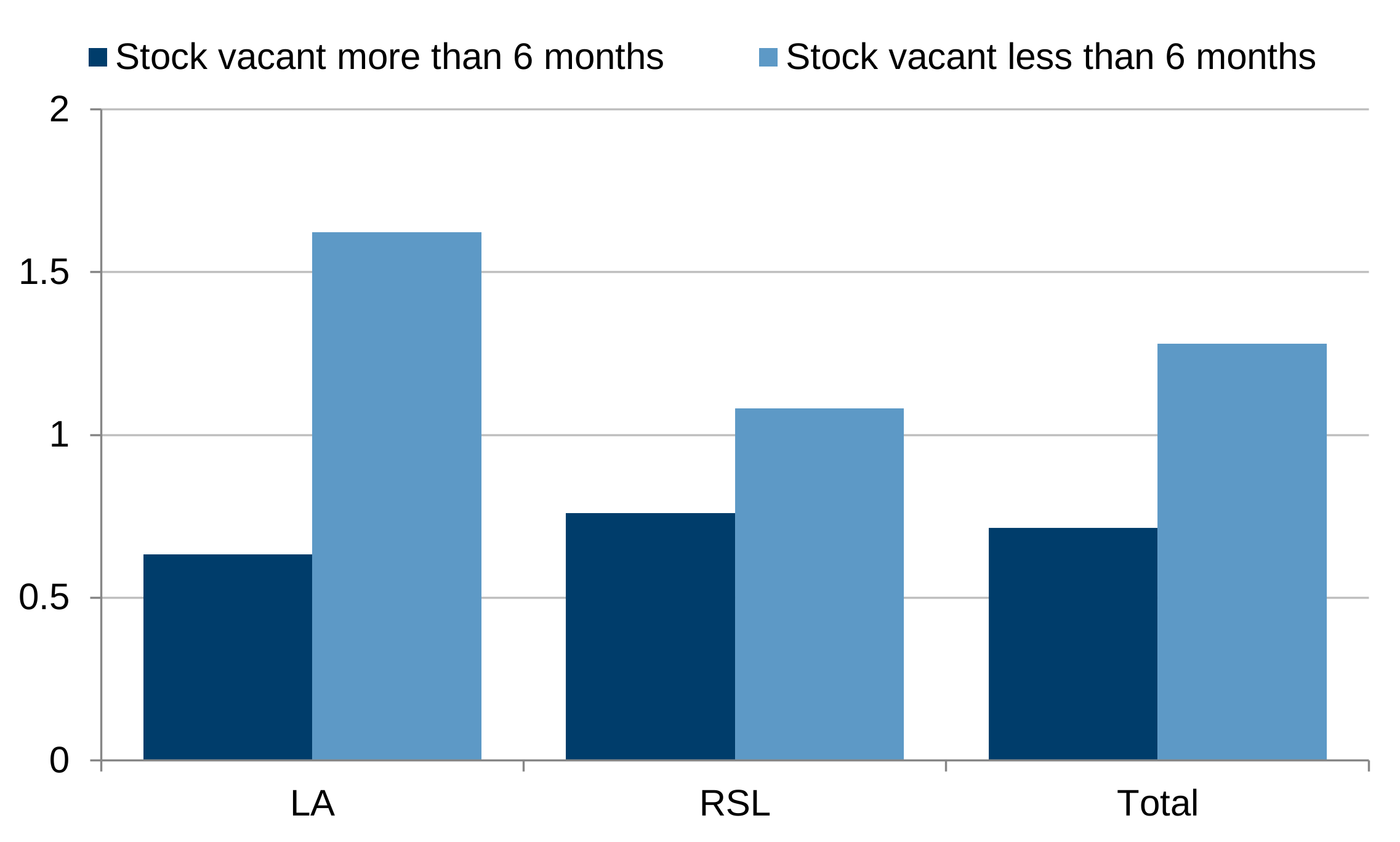
Description of Figure 2: A bar graph showing the percentage of vacant stock in both LA and RSL properties in Wales.
Source: Annual social landlord stock and vacancies returns
Vacancies by year, provider type, duration and availability (StatsWales)
[Note 1] As a percentage of total social housing stock.
The percentage of vacant social housing units as at 31 March 2024 varied across Wales, ranging from 3% in 6 local authorities to under 1% in Merthyr Tydfil and Isle of Anglesey. There was no particular pattern associated with rural or urban authorities.
Of the 11 local authorities who transferred their stock to registered social landlords, Newport was the only transfer authority that had vacancy levels above the Wales average.
Further details, including a list of the large-scale voluntary transfers of local authority stock and dates of transfer to registered social landlords, are found in the quality report.
Figure 3: Percentage of social housing stock vacant at 31 March 2024, by local authority
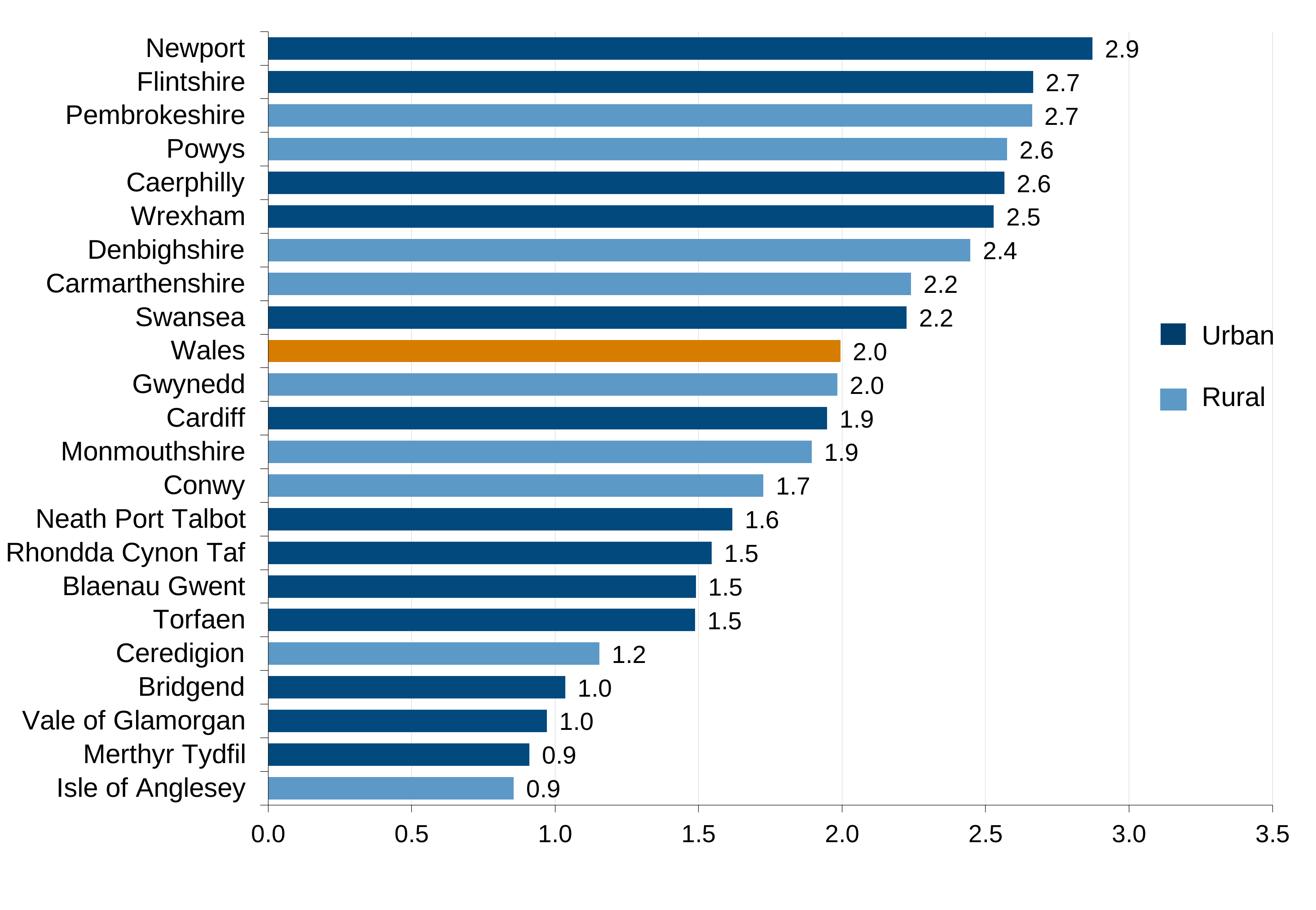
Description of Figure 3: A bar graph showing that the percentage of social housing stock vacant by local authority varies from under 1% to just under 3% in Wales.
Source: Annual social housing stock and vacancies returns
Vacant social housing available for letting
Not all stock that was vacant at 31 March 2024 was available for letting. Reasons why social housing stock may not be available for letting include the housing units undergoing or awaiting improvements, or awaiting sale or demolition.
The percentage of vacant social housing stock which is available for letting has generally been decreasing annually since 31 March 2012 when it accounted for 59%. At 31 March 2024, 36% of all vacant social housing was available for letting, though across Wales this varied between 86% in Torfaen to less than 1% in Pembrokeshire.
Figure 4: Percentage of vacant social housing stock available for letting at 31 March each year [Note 1] [Note 2]
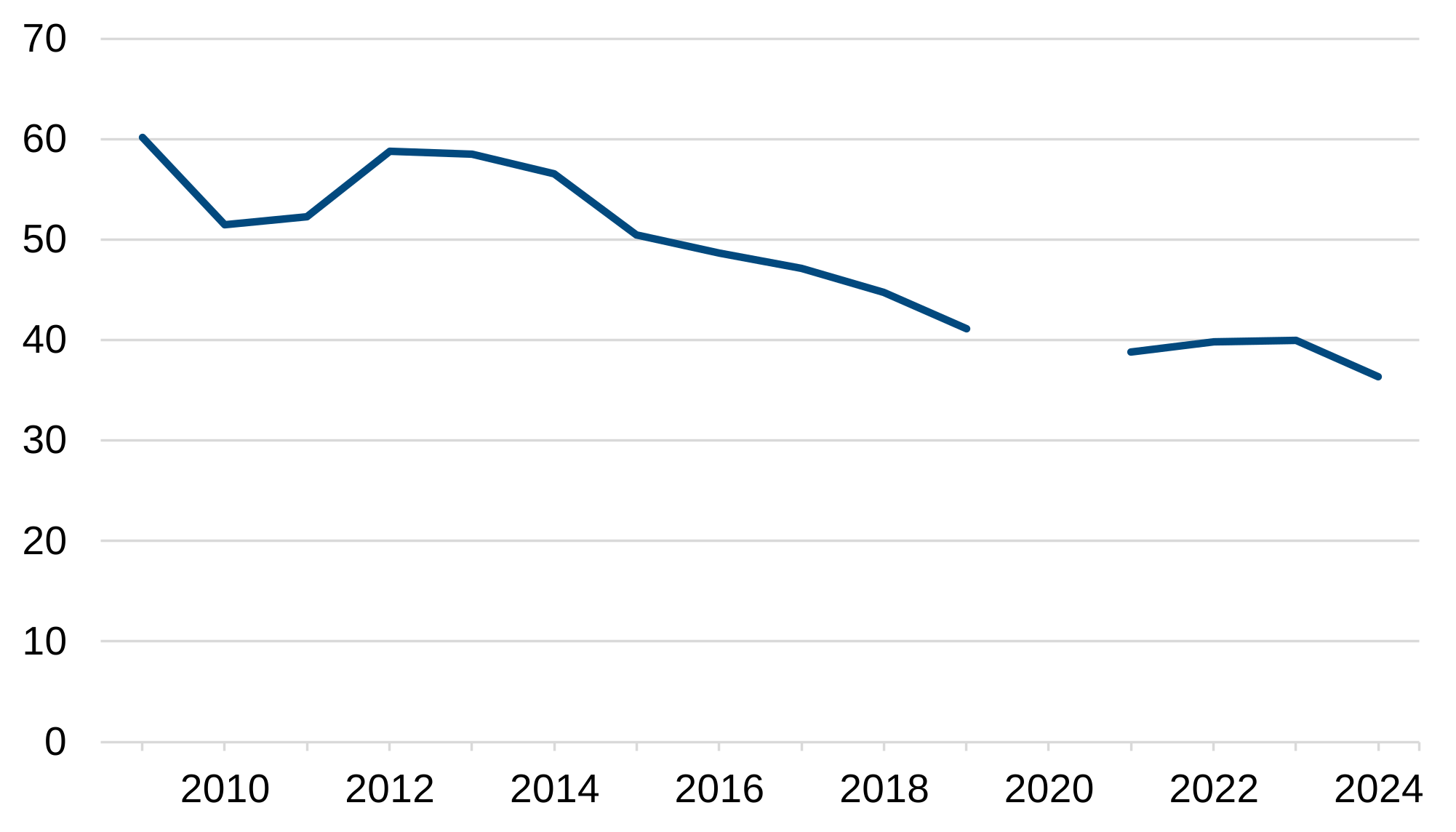
Description of Figure 4: A line chart showing that the percentage of vacant social housing stock which is available for letting in Wales has generally been decreasing annually since 31 March 2012.
Source: Annual social housing stock and vacancies returns
[Note 1] Data not collected for 2019-20 due to the impact of the COVID-19 pandemic.
[Note 2] Throughout the time series, data points have included imputations from a small number of local authorities or RSLs. For further details, please see the accuracy section of the quality report.
Figure 5: Percentage of vacant social housing stock available for letting at 31 March 2024
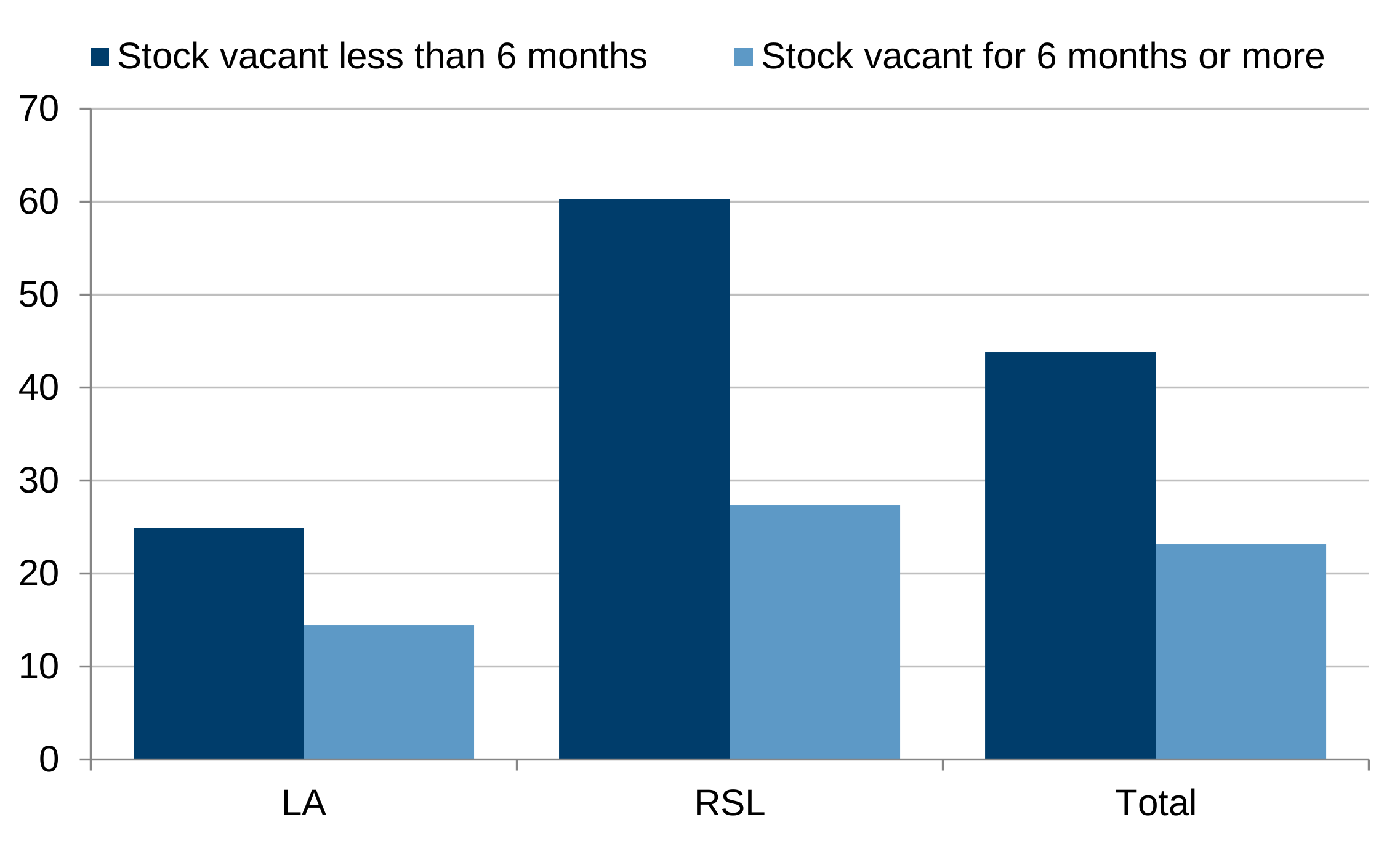
Description of Figure 5: A bar graph showing the percentage of vacant social housing stock available for letting, broken down by properties vacant for less than 6 months and for 6 months or more.
Source: Annual social housing stock and vacancies returns
At 31 March 2024, 3,094 social housing units had been vacant for less than 6 months. Of these, 1,355 (44%) were available for letting. 60% of RSL units that had been vacant for less than 6 months were available for letting compared with 25% of local authority units.
At 31 March 2024, 1,725 social housing units had been vacant for 6 months or more. Of these, 399 (23%) were available for letting. The percentage available for letting was higher for RSL properties at 27% than for local authority properties at 15%.
At a local authority level, the number of social housing units vacant for 6 months or more can be relatively small so the percentage available for letting can vary considerably depending on local circumstances.
Housing stock at social rents: let and lettings
Social housing stock let
A total of 236,850 social housing units were let at 31 March 2024, which is 98% of all social housing stock. The number of RSL social housing units let increased by 1% to 149,705 units since 2023, the same percentage as local authority lets (87,145 units). The percentage of stock let was the same for RSLs as it was for local authorities (98%).
Figure 6: Social housing stock let as at 31 March each year [Note 1] [Note 2]
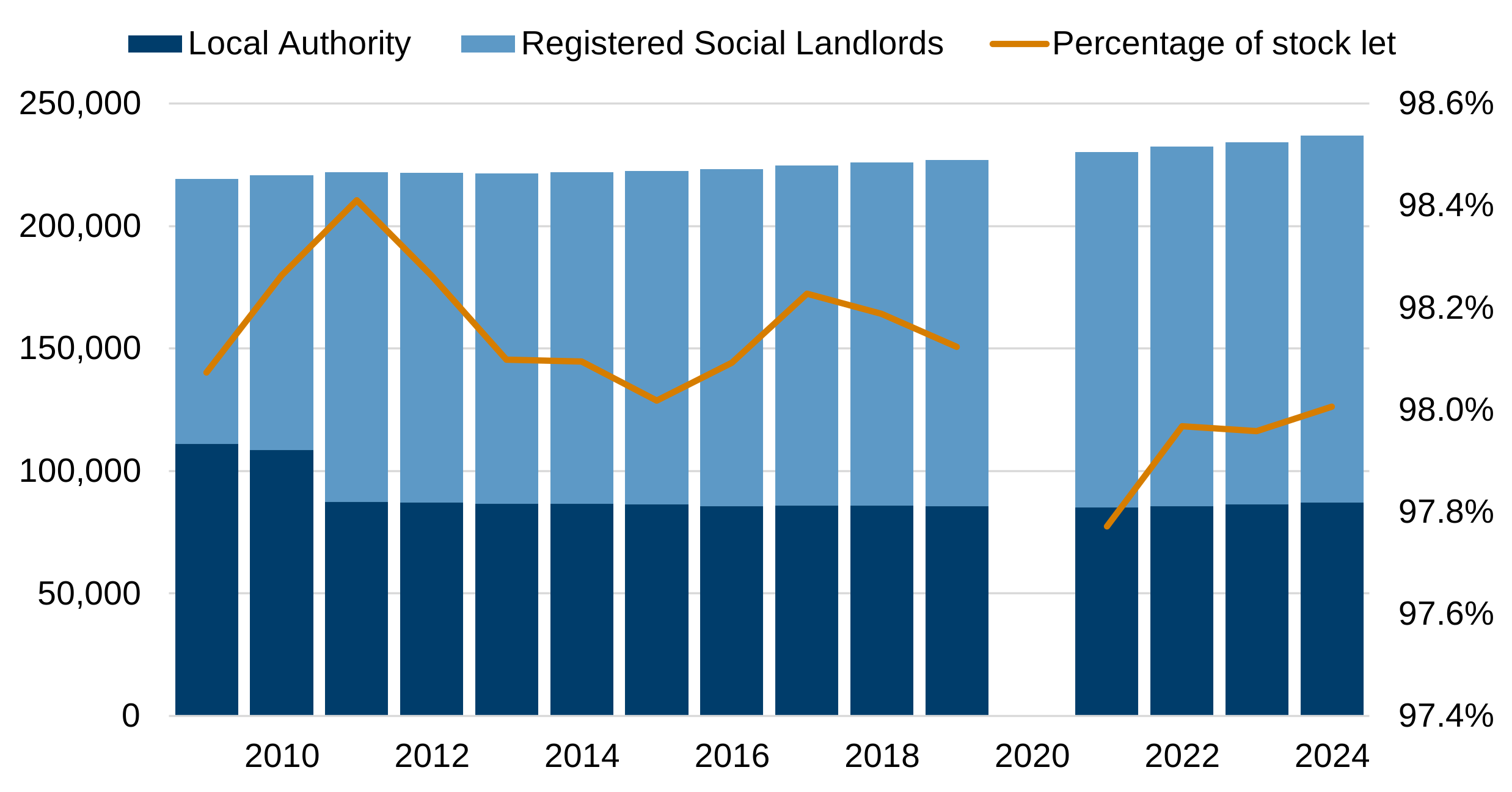
Description of Figure 6: A stacked bar chart showing the number of social housing stock let by social landlord with a line chart to show the percentage of total stock let.
Source: Annual social housing stock and vacancies returns
Total stock at social rent by local authority area and accommodation type (StatsWales)
[Note 1] Data not collected for 2019-20 due to the impact of the COVID-19 pandemic.
[Note 2] Throughout the time series, data points have included imputations from a small number of local authorities or RSLs. For further details, please see the accuracy section of the quality report.
(r) One RSL (Clwyd Alyn Housing) revised their social housing stock figure for 2022-23.
Social housing lettings
New lettings (which includes lettings to new tenants, re-lets, transfers and exchanges) of social housing stock decreased by 3% during 2023-24, to 17,239. There were 6,737 new lettings via the housing waiting list [footnote 1], a decrease of 13% from 2022-23. This is the second year where ‘Housed from waiting list’ accounted for fewer than half of new lettings.
In 2023-24, there were 6,150 new lettings for households re-housed on a priority basis due to homelessness (up by 4% on 2022-23 and the highest figure to date). The proportion of these lettings has been generally increasing each year since 2013-14 and represented 36% of all lettings in 2023-24.
During 2023-24, there were a total of 4,352 transfers and exchanges, where existing tenancies transfer within a social landlord’s stock (transfer) or moves from another social landlord’s stock (exchange), accounting for 25% of all lettings. Compared to 2022-23 the number of transfers decreased by 5% while the number of exchanges increased by 18%. If there is a transfer within an RSL’s own stock that leads to the tenant moving to a different local authority area it counts as a transfer in the new local authority area. All exchanges count as an exchange for both social landlords involved in the exchange.
Figure 7: Social housing lettings during the financial year, 1 April 2023 to 31 March 2024 [Note 1] [Note 2]
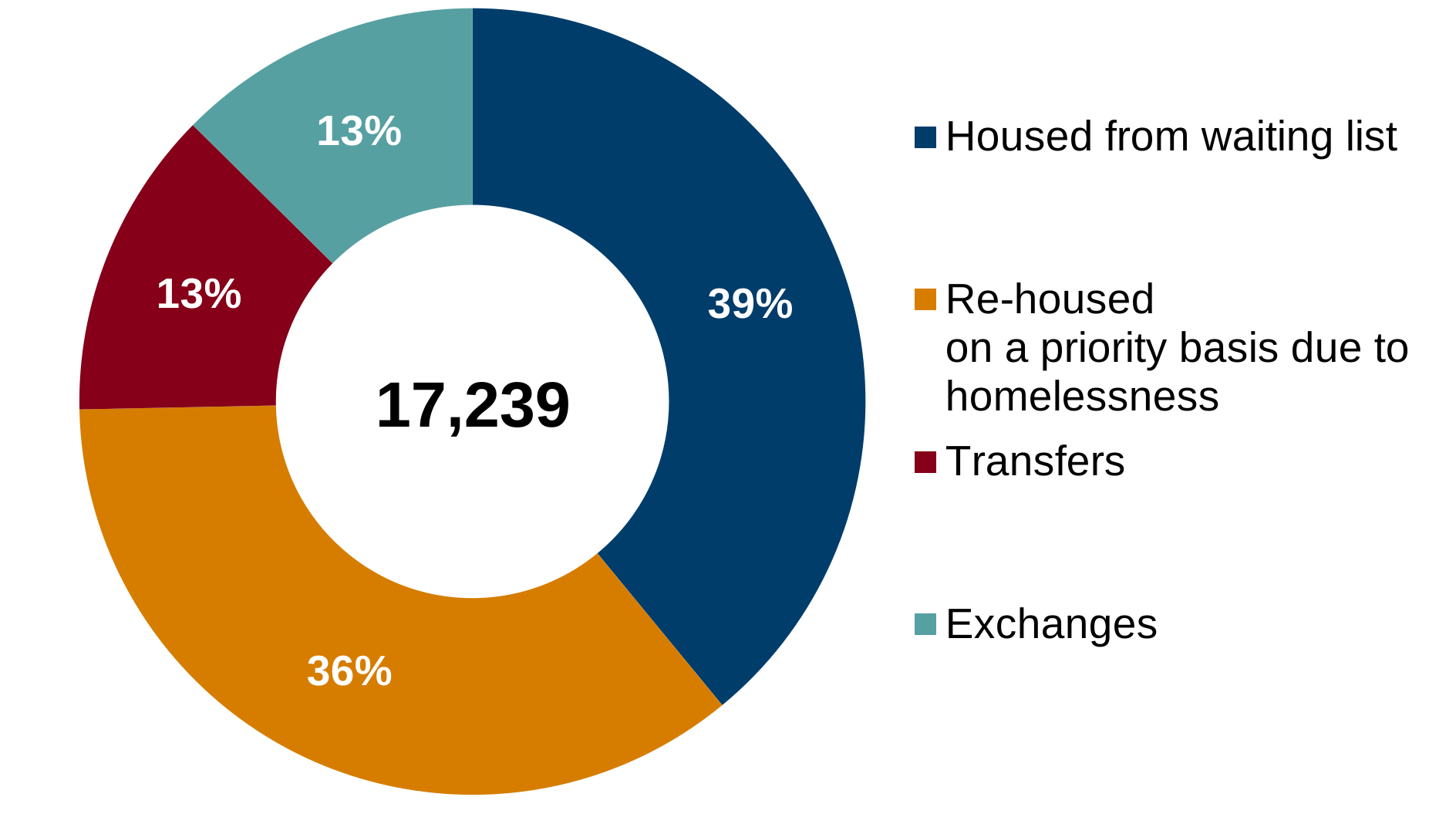
Description of Figure 7: A donut chart showing that the largest proportion of new housing lettings in 2023-24 were housed from waiting list, followed by re-housed on a priority basis due to homelessness.
Source: Annual social landlord stock and lettings returns
Number of lettings by year and letting type (StatsWales)
[Note 1] Housed from the waiting list includes: Lettings from a landlord's or another waiting list; non-priority homeless; lettings resulting from a nomination from another landlord; and lettings resulting from resettlement/move-on strategies or disabled registers.
[Note 2] Please note that the figures may not sum to 100 due to rounding.
For 5 of the 22 local authorities, the majority of new lettings during 2023-24 were made to those housed from waiting lists, with the highest proportion being 56% in Denbighshire. The lowest proportion of these lettings was 21% in Bridgend.
During 2023-24, Swansea had the highest proportion of new priority lettings due to homelessness at 55%, followed by Carmarthenshire at 53% and Conwy at 49%. The lowest proportion of new priority lettings due to homelessness was in Torfaen at 16%.
The highest proportion of new lettings through transfers and exchanges was 37% in Bridgend, followed by 35% in Cardiff and 34% in Gwynedd, whilst the lowest proportion of new lettings through transfers and exchanges was in Powys at 14%, followed by Isle of Anglesey at 16% and Swansea at 18%.
Exchanges accounted for 24% of all new lettings in Cardiff, followed by 22% in Bridgend and 20% in Monmouthshire. Wrexham had the highest percentage of transfers accounting for 24% of all new lettings during the year, followed by Torfaen at 21% and Gwynedd at 20%.
Looking at the number of new lettings per 100 units of stock at social rent gives an indication of the turnover rate for social rented stock (general needs and sheltered housing) [footnote 2]. The new letting rate for Wales was 7.5 per 100 units of stock at social rents during 2023-24, a decrease from a rate of 7.8 in 2022-23.
At the local authority level, Cardiff had the highest number of new lettings (1,833) in 2023-24, but the highest number of new lettings per 100 units of stock at social rent was in Ceredigion at 9.8.
Ceredigion had the lowest number of new lettings during 2023-24 (326), whilst Gwynedd had the lowest number of new lettings per 100 units of all stock at social rents at 6.1.
In 12 of the 22 local authorities, the number of new lettings per 100 units of stock at social rent (general needs and sheltered) was at, or above the Wales average.
A full data set for social housing lettings by local authority is available on StatsWales.
Social housing rent arrears as at 31 March
A social housing tenancy is in rent arrears when they have failed to pay the rent due at the appropriate time. As this relates to tenancy agreement it is not a count of social housing tenants living in poverty. At 31 March 2024, there were 108,424 tenancies in arrears, accounting for 46% of all social housing tenancies. This was an increase of 7,039 (7%) on the 101,385 tenancies in arrears at 31 March 2023. Figures have increased substantially since the COVID-19 pandemic and this year’s figure is the highest recorded. In their data returns, a number of social landlords cited recent welfare reforms and in particular the roll out of Universal Credit as having an impact on the level of rent arrears, as well as the cost-of-living crisis seen nationally having a contributory effect.
Figure 8: Number of social housing tenancies in rent arrears as at 31 March each year [Note 1] [Note 2] [Note 3]
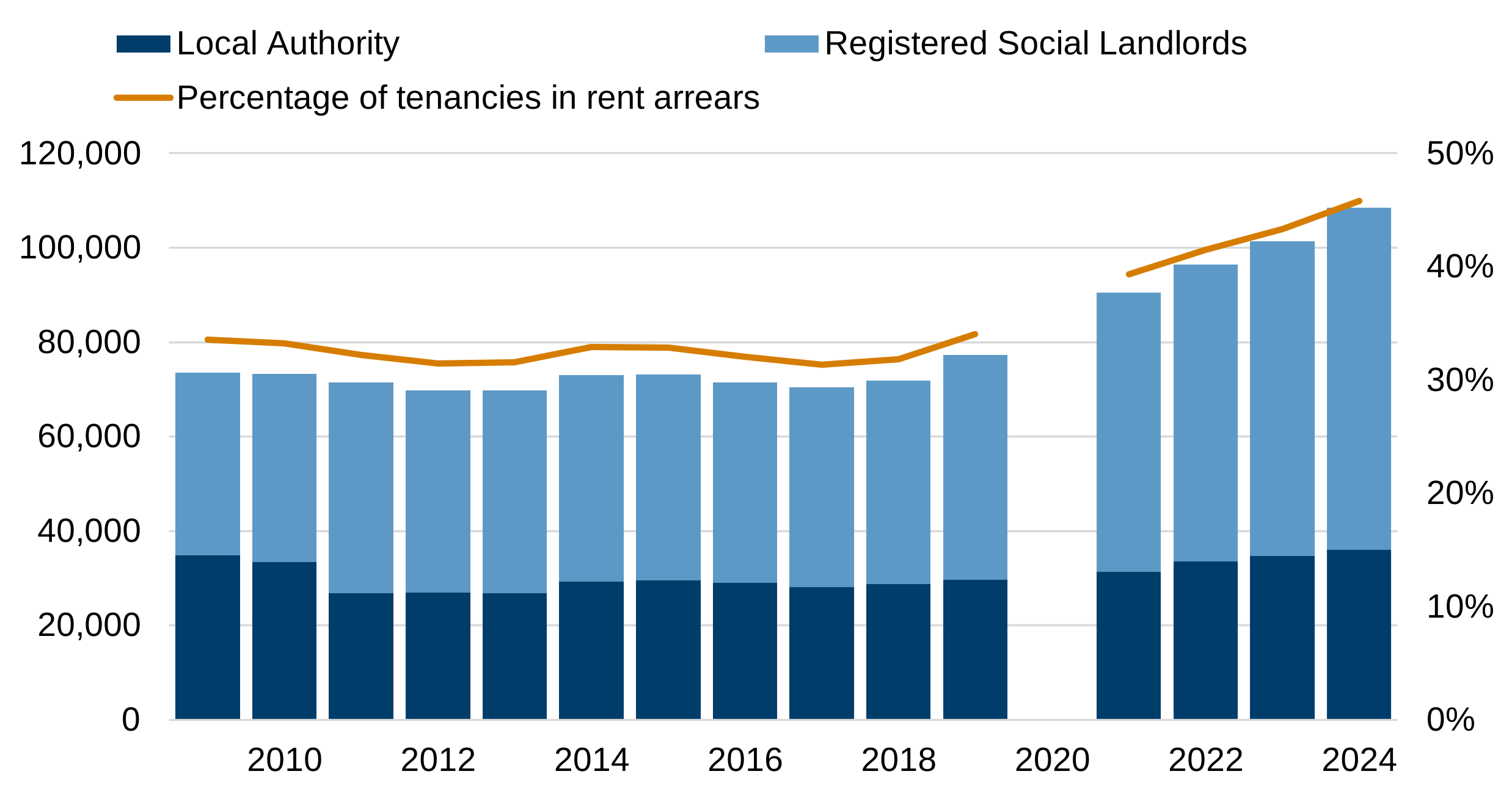
Description of Figure 8: A stacked bar chart showing the number of social housing tenancies in rent arrears by year and tenure. A line chart is also included to show the total percentages of tenancies in rent arrears each year. This has continued to increase since the COVID-19 pandemic.
Source: Annual social housing stock and vacancies returns
Tenancies in arrears at 31 March by year, provider and duration (StatsWales)
[Note 1] The total number of tenancies is calculated as total social housing stock minus vacant units at 31 March each year.
[Note 2] Data not collected for 2019-20 due to the impact of the COVID-19 pandemic.
[Note 3] Throughout the time series, data points have included imputations from a small number of local authorities or RSLs. For further details, please see the accuracy section of the quality report.
(r) One RSL (Clwyd Alyn Housing) revised their social housing stock figure for 2022-23.
The proportion of tenancies in rent arrears was higher for RSLs (48%) than for local authority (41%).
At 31 March 2024, 72,397 RSL tenancies were in rent arrears, an increase of 9% compared to 2023. The number of local authority tenancies in rent arrears at 31 March 2024 was also up by 4% on the previous year to 36,027.
Across Wales, the highest percentage of social housing tenancies in arrears was seen in Newport (64%) and the lowest in Powys (31%). There was considerable variation in the percentage of tenancies in arrears amongst both the rural and urban authorities, with 10 authorities recording arrears at or above the Wales average of 46%. In 2024, urban areas generally saw a larger number of tenancies in rent arrears than rural areas.
Length of time of rent arrears
At 31 March 2024, 41% of all social housing tenancies had been in arrears for less than 13 weeks and 4% had been in arrears for 13 weeks or more.
Of the 108,424 social tenancies in Wales in rent arrears at 31 March 2024, 91% (98,268) had been in arrears for less than 13 weeks, with the remaining 9% (10,156) in arrears for 13 weeks or more.
The number of local authority tenancies in rent arrears of less than 13 weeks was 31,951 at 31 March 2024 (3% higher than in 2023) and for RSLs it was 66,317 (7% higher than in 2023).
Figure 9a: Percentage of all tenancies in rent arrears for less than 13 weeks as at 31 March each year [Note 1] [Note 2] [Note 3] [Note 4] [Note 5]
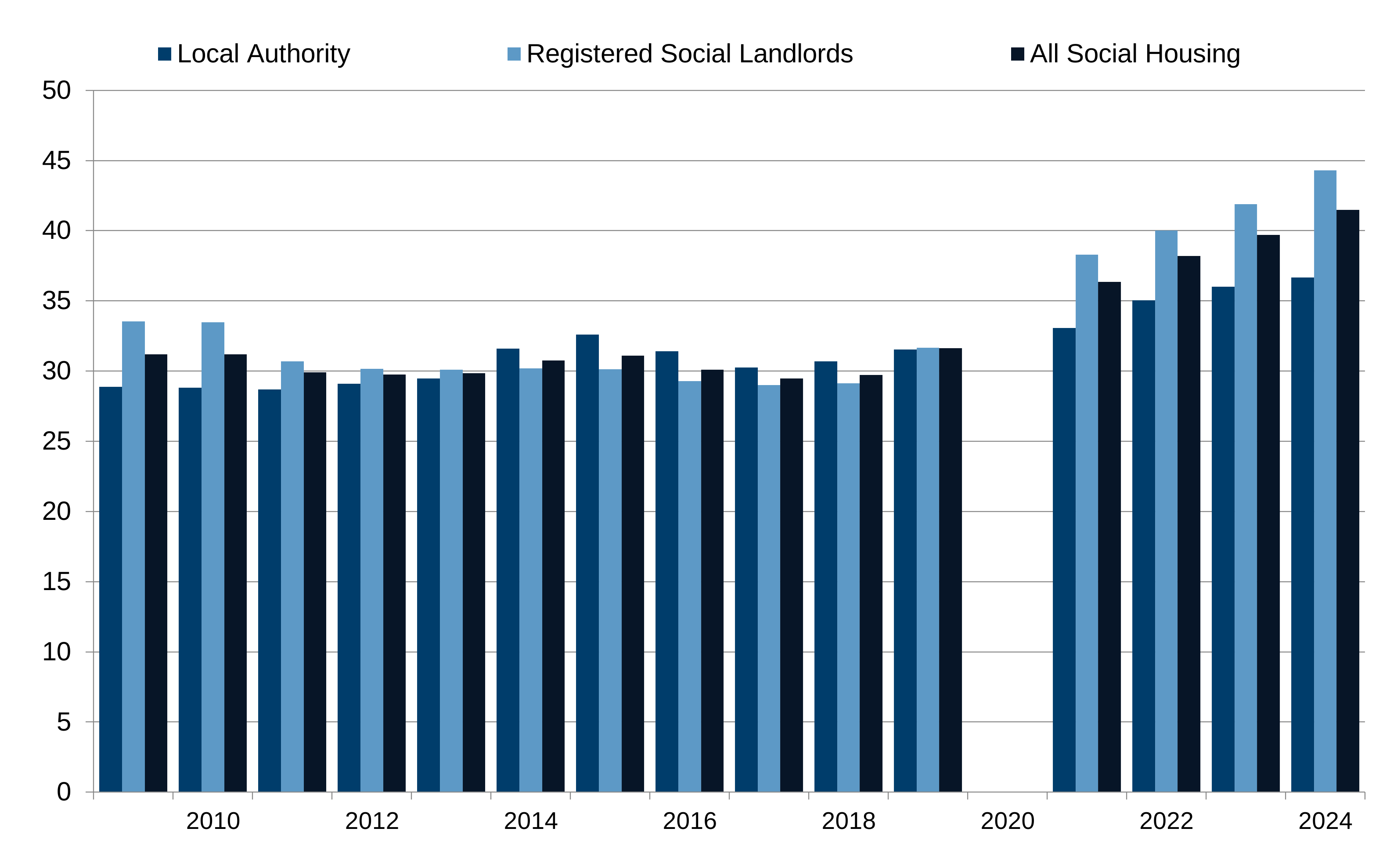
Description of Figure 9a: Bar graph showing that the percentage of all tenancies in rent arrears for less than 13 weeks. The percentage remained fairly consistent until 2019 but has seen annual increases since 2021.
Source: Annual social housing stock and vacancies returns
The percentage of tenancies in rent arrears for less than 13 weeks remained fairly stable between 2009 and 2017, however, has increased steadily between 2018 and 2024 for both local authority and registered social landlord tenancies.
Figure 9b: Percentage of all tenancies in rent arrears for 13 weeks or more as at 31 March each year [Note 1] [Note 2] [Note 3] [Note 4] [Note 5]
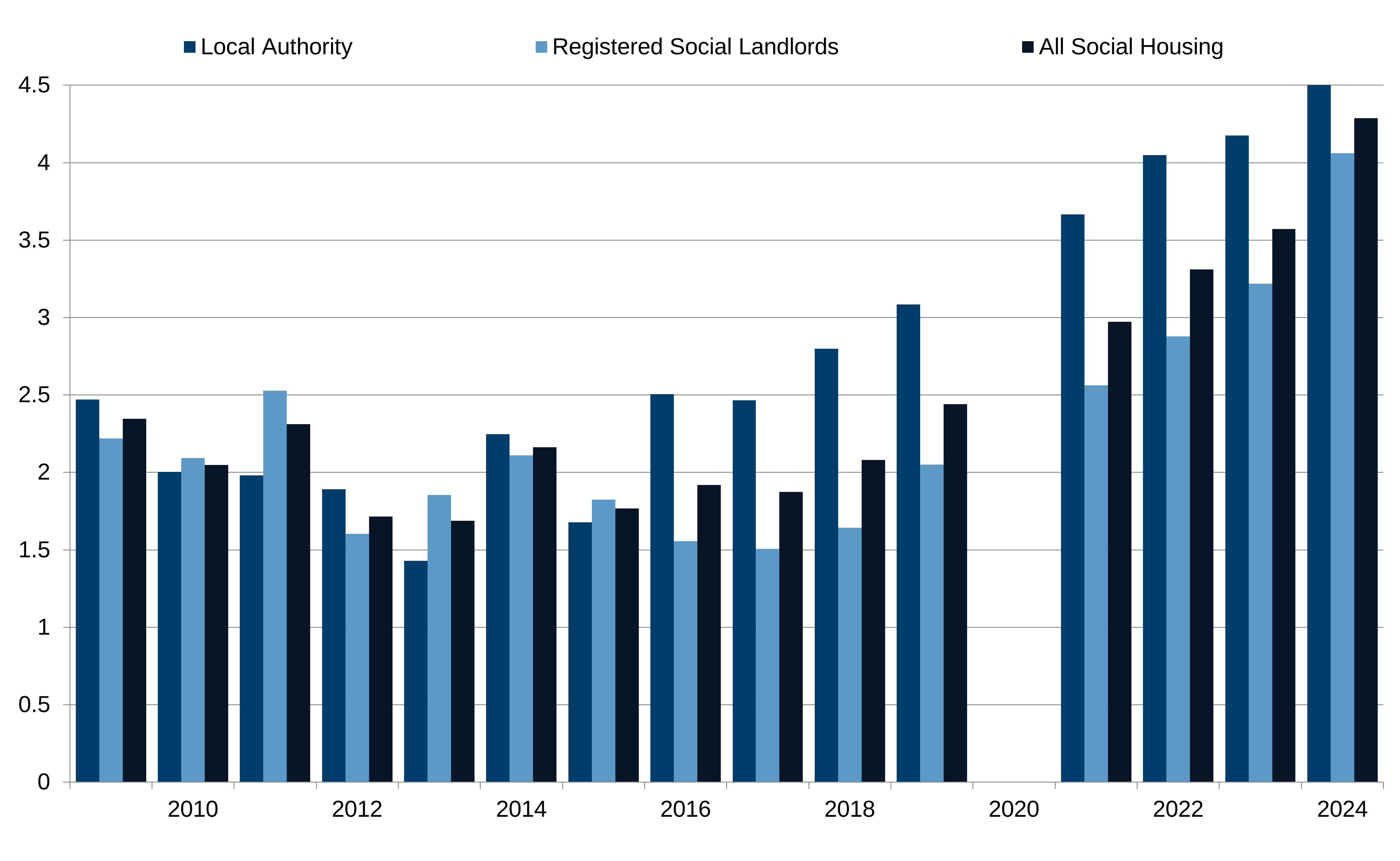
Description of Figure 9b: Bar graph showing the percentage of all tenancies in rent arrears for 13 weeks or more. The percentage of tenancies in long term rent arrears has been increasing every year since 2017.
Source: Annual social housing stock and vacancies returns
[Note 1] As at 31 March each year.
[Note 2] Arrears are shown for tenancies in self-contained and non self-contained units only. Arrears data is not collected for intermediate tenures and tenures not at social rents.
[Note 3] The total number of tenancies is calculated as total stock minus vacant dwellings. Total stock includes all self-contained and non self-contained units but excludes intermediate tenures and tenures not at social rents.
[Note 4] Data not collected for 2019-20 due to the impact of the COVID-19 pandemic.
[Note 5] Throughout the time series, data points have included imputations from a small number of local authorities or RSLs. For further details, please see the accuracy section of the quality report.
The percentage of tenancies in rent arrears for 13 weeks or more fluctuated between 2009 and 2016, following a generally downward trend. However, between 2017 and 2024 there has been a sharp increase for both local authority and registered social landlord tenancies in rent arrears for 13 weeks or more. At 31 March 2024, 5% of local authority tenancies had been in rent arrears for 13 weeks or more compared with 4% of RSL tenancies.
Further breakdowns on tenancies in arrears are available on the StatsWales website.
Glossary
Exchanges
Lettings through exchanges involve units let to tenants of other social landlords through mutual exchanges during the financial year; and existing tenants enabled to move within the local authority’s stock through mutual exchange agreements during the financial year. If an exchange leads to the tenancy being in a different local authority area it is counted as an exchange in both local authority areas and both social landlords involved in the exchange.
Housed from the waiting list
This includes lettings from waiting lists, lettings to non-priority homeless, lettings resulting from a nomination from another landlord and lettings resulting from resettlement/move-on strategies or disabled registers.
New-let
A new-let is the letting of a dwelling that comes under registered social landlord or local authority management for the first time and will include newly built dwellings.
Re-let
A re-let is the lettings of an existing registered social landlord or local authority managed dwelling but does not include the renewal of a tenancy.
Tenancies
Tenancies refer to the tenancy agreements between an individual (or individuals in the case of joint tenancies) and the social landlord. The number of tenancies only includes the tenancy agreement for each individual social housing unit and not all social housing tenants living in that property.
The total number of tenancies shown in this release is calculated as total stock minus vacant dwellings at 31st March. Total stock includes all self-contained and non self-contained units but excludes intermediate tenures and tenures not at social rents.
Transfers
Lettings through transfers involve tenants transferring within the organisation’s stock, i.e. where an existing tenant is transferred to another tenancy under the organisation’s policy for transfers.
Footnotes
[1] New lettings include lettings to new tenants, re-lets, transfers and exchanges.
[2] Includes lettings from a landlord's or another waiting list; non-priority homeless; lettings resulting from a nomination from another landlord; and lettings resulting from resettlement/move-on strategies or disabled registers.
[3] Lettings information includes only general needs and sheltered housing units let by social landlords at social rent under the under the Welsh Government Social Rents Policy framework. The rate of lettings per 100 units of stock is based on general needs and sheltered stock only.
Quality and methodology information
Detailed information on data quality and methodology can be found in the quality report.
Official statistics status
All official statistics should show the standards of the Code of Practice for Statistics (UK Statistics Authority).
These are accredited official statistics. They were independently reviewed by the Office for Statistics Regulation in July 2012. They comply with the standards of trustworthiness, quality and value in the Code of Practice for Statistics.
It is Welsh Government’s responsibility to maintain compliance with the standards expected of accreditation. If we become concerned about whether these statistics are still meeting the appropriate standards, we will discuss any concerns with OSR promptly. Accreditation can be cancelled or suspended at any point when the highest standards are not maintained, and reinstated when standards are restored.
Accredited official statistics are called National Statistics in the Statistics and Registration Service Act 2007.
Statement of compliance with the Code of Practice for Statistics
Our statistical practice is regulated by the Office for Statistics Regulation (OSR). OSR sets the standards of trustworthiness, quality and value in the Code of Practice for Statistics that all producers of official statistics should adhere to.
All of our statistics are produced and published in accordance with a number of statements and protocols to enhance trustworthiness, quality and value. These are set out in the Welsh Government’s Statement of Compliance.
These accredited official statistics (OSR) demonstrate the standards expected around trustworthiness, quality and public value in the following ways.
Trustworthiness
This data is collected directly from local authorities and Registered Social Landlords who have all the records of what units are vacant, who properties have been let to and how many are in arrears.
Quality
The published figures provided are compiled by professional analysts using the latest available data and applying methods using their professional judgement and analytical skillset. Statistics published by Welsh Government adhere to the Statistical Quality Management Strategy which supplements the Quality pillar of the Code of Practice for Statistics (UK Statistics Authority) and the European Statistical System principles of quality for statistical outputs.
Data for the Welsh Government Social Housing Vacancies, Lettings and Arrears Collection is collected by Welsh Government directly from local authorities and Registered Social Landlords. Both complete data collection forms based on data stored on their respective IT systems and return the completed forms to Welsh Government via its secure web data transfer system.
Validation checks are performed by Welsh Government statisticians and queries referred to local authorities and Registered Social Landlords where necessary. The statistical release is then drafted, signed off by senior statisticians and published in line with the statement on confidentiality and data access which is informed by the trustworthiness pillar contained in the Code of Practice for Statistics (UK Statistics Authority).
Value
The purpose of the statistical release is to provide evidence about the social housing landscape across Wales in terms of stock and rental income, for policy development, Ministerial advice and decision making and to inform the wider public. This statistical release also supports the Welsh Government’s long-term plan for homelessness: Homelessness Strategy and the development of legislation in line with the Programme for Government commitment to reform housing law in relation to homelessness services.
You are welcome to contact us directly with any comments about how we meet these standards. Alternatively, you can contact OSR by emailing regulation@statistics.gov.uk or via the OSR website.
Well-being of Future Generations Act (WFG)
The Well-being of Future Generations Act 2015 is about improving the social, economic, environmental and cultural wellbeing of Wales. The Act puts in place seven wellbeing goals for Wales. These are for a more equal, prosperous, resilient, healthier and globally responsible Wales, with cohesive communities and a vibrant culture and thriving Welsh language. Under section (10)(1) of the Act, the Welsh Ministers must (a) publish indicators (“national indicators”) that must be applied for the purpose of measuring progress towards the achievement of the wellbeing goals, and (b) lay a copy of the national indicators before Senedd Cymru. Under section 10(8) of the Well-being of Future Generations Act, where the Welsh Ministers revise the national indicators, they must as soon as reasonably practicable (a) publish the indicators as revised and (b) lay a copy of them before the Senedd. These national indicators were laid before the Senedd in 2021. The indicators laid on 14 December 2021 replace the set laid on 16 March 2016.
Information on the indicators, along with narratives for each of the wellbeing goals and associated technical information is available in the Wellbeing of Wales report.
Further information on the Well-being of Future Generations (Wales) Act 2015.
The statistics included in this release could also provide supporting narrative to the national indicators and be used by public services boards in relation to their local wellbeing assessments and local wellbeing plans.