Rhaglen Plant Iach Cymru Ionawr i Rhagfyr 2025
Mae ystadegau a dadansoddiad pellach o’r ganran o blant cymwys sydd yn gysylltiadau ymwelydd iechyd drwy’r Rhaglen Plant Iach Cymru ar gyfer 2025.
Ar y dudalen hon
Introduction
The Healthy Child Wales Programme (HCWP) specifies 9 contacts with health professionals at set points in time for children in Wales aged between 10 days and 3.5 years. Local health boards should offer these contacts to all children in Wales.
This annual report provides summary statistics on the completion rate of contacts children received through the HCWP in 2025. It also provides longer term trend analyses, using quarterly data that is already available on StatsWales.
Data is sourced from the National Community Child Health Database (NCCHD), hosted by Digital Health and Care Wales (DHCW).
Data for the HCWP is collected using a paper-based system, which limits the accuracy of the data collected. In particular this process affects the 6-week and 8-week contacts. Data collected is of sufficient quality to show the broad picture of the programme but is likely to slightly undercount the number of contacts which took place. More details on the programme and data source are available in the quality report.
The COVID-19 pandemic substantially impacted the programme in 2020, though the majority of contacts were carried out ‘as normal’ from 2021 onwards. Specific details on how the programme was affected in 2020 are provided in the Healthy Child Wales Programme, January to December 2020 statistical release.
Main points
- 213,143 HCWP contacts were recorded in 2025 (an increase since 2024).
- 88% of contacts were completed overall (5.5 percentage points higher than in 2024, continuing the longer-term upward trend).
- 96% of children had their first contact recorded aged 10 to 14 days (the highest rate).
- 82% of children had contact at 6 to 8 weeks (the lowest rate).
- 29,633 contacts that should have been offered were recorded as not taking place (a decrease from 44,389 in 2024) - in most cases this was because there was no appointment on record.
Annual summary of Healthy Child Wales Programme
Figure 1: annual Healthy Child Wales Programme contact completion rate 2018 to 2025
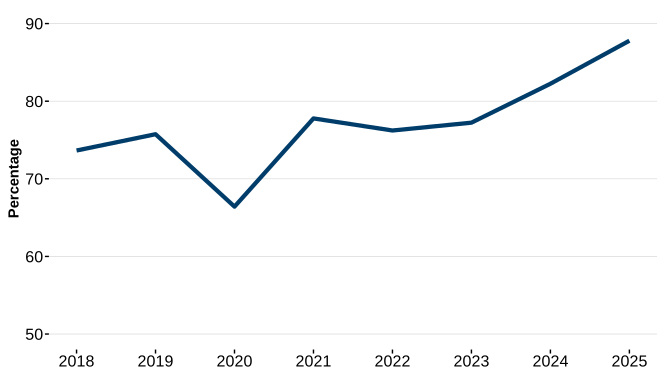
Description of figure 1: line chart which shows that the percentage of contacts completed has steadily increased for the most part since the start of programme, with the highest figure recorded this year.
Source: NCCHD, Digital Health and Care Wales
In 2025, 213,143 contacts were received by eligible children, equivalent to 88% of all contacts which should have been offered.
The completion rate varied by contact point. 96% of contacts (25,162 out of 26,263) were received by children who should have been offered contacts when aged between 10 to 14 days, the highest completion rate of any contact. This compares to 82% of contacts received by children who should have been offered contacts when they were 6 to 8 weeks (21,330 out of 26,105), the lowest completion rates of any contact.
Figure 2: number of children eligible for Healthy Child Wales Programme contacts, and number of contacts received 2025
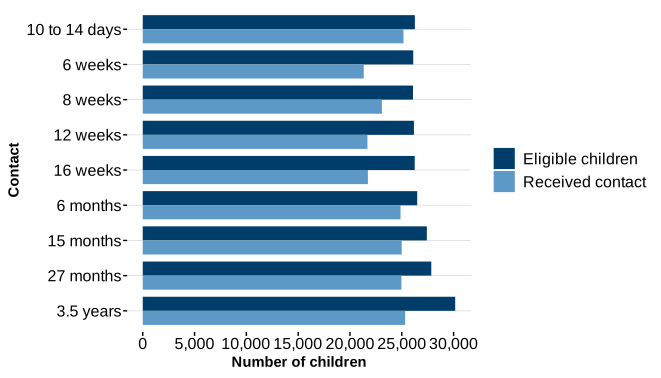
Description of figure 2: bar chart showing, the number of eligible children increased as the contact age increased, and contacts completed varied between contacts points with proportionally more contacts completed at 10 to 14 days than at any other of the contact points.
Source: NCCHD, Digital Health and Care Wales
Figure 3: contact completion rates at each contact point 2018 to 2025 [Note 1] [Note 2]
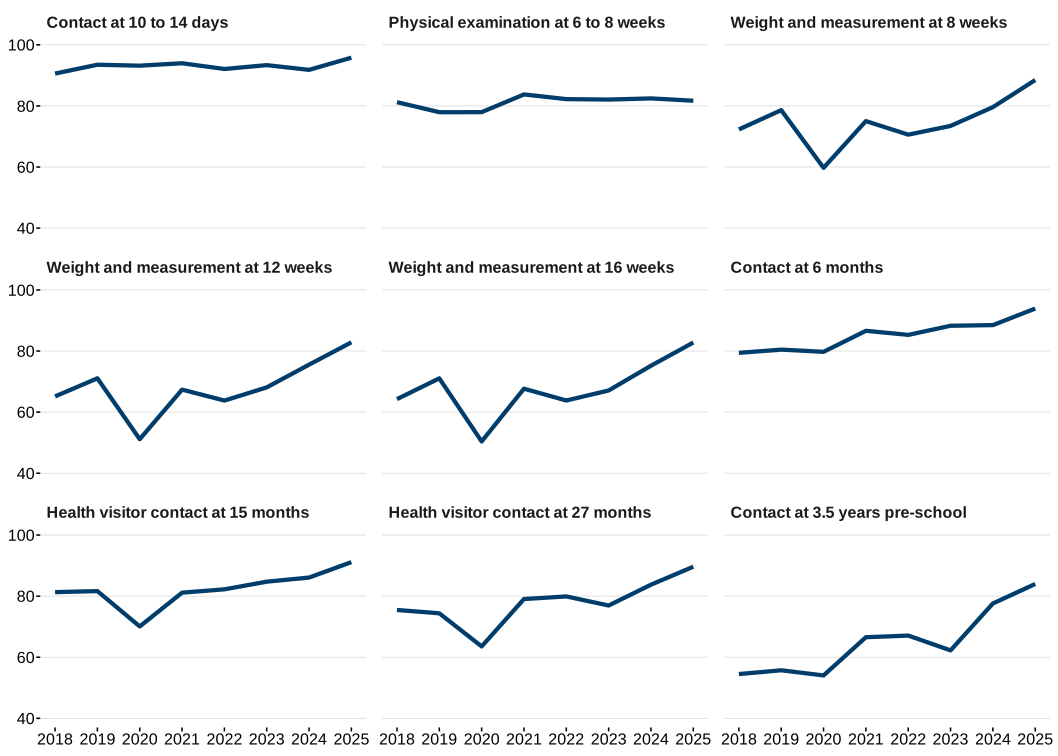
Description of figure 3: line charts showing the percentage of eligible children receiving contacts at each point has increased for the most part since the start of programme. There was a marked fall during the pandemic for most contact points in 2020, however the completion rate at all contact points has since recovered.
Source: NCCHD, Digital Health and Care Wales
[Note 1] The actual percentage of eligible children receiving their contact at 8 weeks may be higher than the numbers presented because some health visitor contacts at 8 weeks may have been recorded on a 6 week contact form, see quality report for more detail.
[Note 2] Y axis does not start at zero.
All contacts offered through the HCWP are voluntary, so personal choice affects the percentage of eligible children receiving a contact.
Overall, there is a longer-term upward trend in the percentage of eligible children receiving contacts. The impact of the COVID-19 pandemic is clear in 2020, but the programme recovered in 2021 and the percentage of children receiving contacts since then has been at a broadly similar level to the quarters just prior to the pandemic or at some contact points on an upward trend.
Contacts at 10 to 14 days, 6 weeks and 6 months were prioritised in Welsh Government guidance issued at various times during the waves of the pandemic. The data for these contacts shows less of a reduction in the percentage of children receiving contacts in 2020 than all other contact points.
Reasons for not receiving a contact
All eligible children across Wales should be sent an invite for all contacts either directly through the post (for contacts that align with immunisations, providing consent is given) or via their health visitor or GP for all other contacts. Where no contact took place, the reason is recorded on the child health system.
Figure 4: reason for no contact, all contacts combined 2025
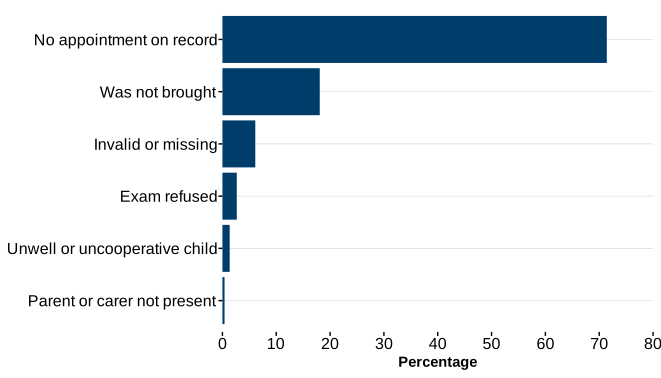
Description of figure 4: bar chart showing the majority of contacts which did not occur, had no appointment on record.
Source: NCCHD, Digital Health and Care Wales
During 2025 there were 29,633 contacts which were not completed according to the child health system records. This was a decrease since 2024 (44,389 not completed). Contacts may not be completed because:
- contacts were not offered by health boards because they did not have the capacity to offer it
- contacts were offered and not taken up by parents of eligible children
- contacts did occur, but the data collection form was not completed or added to the child health system
The majority (71%) of incomplete contacts were not made because there was no appointment on record for the reasons stated above. Where an appointment was made, the main reason why the contact did not happen was because the child was not brought to the appointment (18% of incomplete contacts). In addition, 6% of incomplete contacts had missing or invalid data.
Contacts within programme age range 2025
While the HCWP is designed for children to receive a contact at specific ages, in practice each contact point has a minimum and maximum age threshold within which the contact should take place. These thresholds are shown in the quality report.
Figure 5: percentage of contacts received within age range, below the minimum age, and above the maximum age 2025
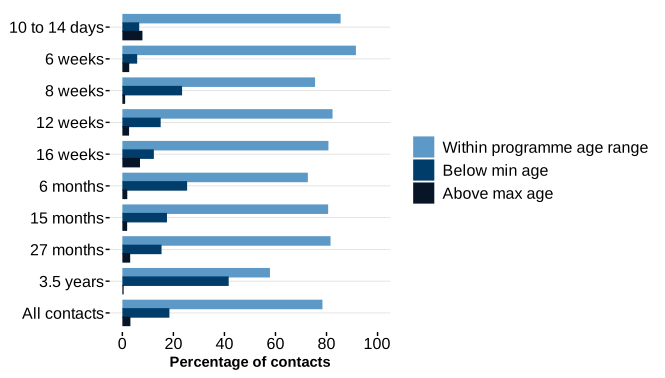
Description of figure 5: bar chart showing most contacts occurred within the specified age ranges.
Source: NCCHD, Digital Health and Care Wales
Healthy Child Wales Programme: annual percentage of contacts received within age ranges (StatsWales)
The majority of all contacts (78%) were made within the specified age range, though there was some variation between contact points.
When children had their contact outside of the age threshold, it was largely before the minimum age at all contact points, apart from the 10 to 14 day contact. The largest percentage of children not seen within the age range was at 3.5 years, where over two-fifths of children had their contact before the lower age threshold.
Local health board summary
Figure 6: contact completion rate (percentage of eligible children) by local health board 2025 [Note 1]
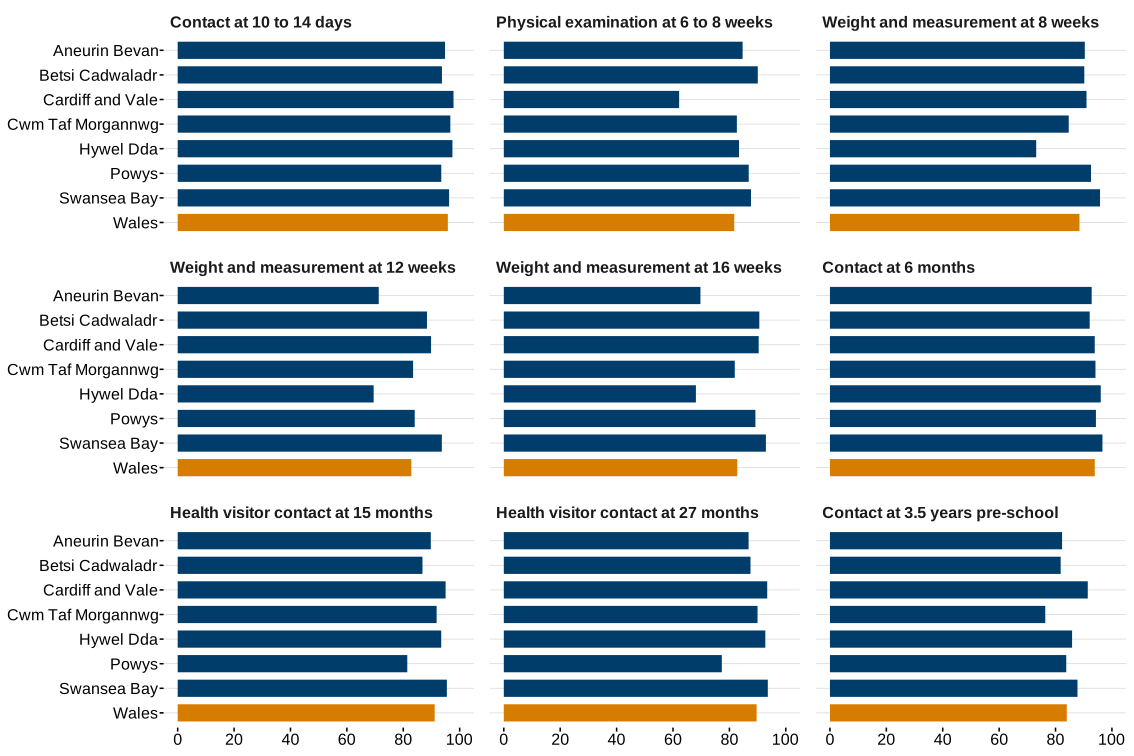
Description of figure 6: bar charts showing the completion rates for the different contact points by health board vary between contact point and health board providing the service.
Source: NCCHD, Digital Health and Care Wales
[Note 1] The actual percentage of eligible children receiving their contact at 8 weeks may be higher than the numbers presented because some health visitor contacts at 8 weeks may have been recorded on a 6 week contact form, see quality and methodology information for more detail.
While there is variation, some health boards have consistently higher completion rates than others. In 2025, Swansea Bay had completion rates greater than the Wales average at all contact points, and Cardiff and Vale had completion rates greater than the Wales average at 7 of the 9 contact points.
Whereas Aneurin Bevan had completion rates above the Wales average at only 2 contact points.
The Health Visiting service at Cwm Taf Morgannwg was subject to a period of industrial action between 31 October 2024 and 26 February 2025. During this period data was not collected however all HCWP contacts were being delivered.
Data based on the child’s resident local authority is also published on StatsWales.
Flying Start
Flying Start is a Welsh Government early years programme for families who live in relatively disadvantaged areas. The programme complements the HCWP and offers enhanced health visiting services through additional visits at 24+ week gestation, from the baby’s birth to six weeks old, and between the ages of 9 to 12 months and 18 to 24 months. Statistics summarising activity for Flying Start are published annually: Flying Start: summary statistics.
When the HCWP was first introduced, contact completion rate was lower for children in Flying Start areas, compared to children in non-Flying Start areas. This was expected whilst both programmes became aligned. Since mid-2017, there has been little difference between completion rates for children in both areas.
In the last quarter of 2025, the percentage of eligible children receiving their contact was 85% in Flying Start areas and 87% in non-Flying Start areas.
Quality and methodology information
The Healthy Child Wales Programme
Further information on the Healthy Child Wales Programme (HCWP) can be found on the Welsh Government website and the NHS Wales Data Dictionary.
Full quality and methodology information can be found in the quality report.
Monitoring the programme and data source
The programme is supported by a child health system, delivered by Digital Health and Care Wales (DHCW). The system enables health boards to schedule HCWP contacts, provides a consistent data collection form for each contact, and a consistent digital infrastructure for data to be entered on. The data collected supports policies aimed at improving children’s health across Wales.
Note that HCWP contacts before 10 days of age and after 3.5 years are not reported in this release. Other key components of the programme are reported elsewhere:
- Immunisation statistics (COVER statistics) are published by Public Health Wales.
- Infant feeding statistics are published in our quarterly and annual breastfeeding statistical releases.
Statement of compliance with the Code of Practice for Statistics
Our statistical practice is regulated by the Office for Statistics Regulation (OSR). OSR sets the standards of trustworthiness, quality and value in the Code of Practice for Statistics that all producers of official statistics should adhere to.
All of our statistics are produced and published in accordance with a number of statements and protocols to enhance trustworthiness, quality and value. These are set out in the Welsh Government’s Statement of Compliance.
These official statistics demonstrate the standards expected around trustworthiness, quality and public value in the following ways. This applies to all the statistics in this release.
Trustworthiness
The data used in this statistical release is collected via the NCCHD. The NCCHD consists of anonymised records for all children born, resident or treated in Wales and born after 1987. It brings together data from the child health system databases which are held by local health boards. This is a long-established data collection and database. There are some data quality issues with certain data items in this dataset which are explained in more detail in the quality report.
Quality
The published figures are compiled by professional analysts using the latest available data and applying methods using their professional judgement and analytical skillset. Statistics published by Welsh Government adhere to the Statistical Quality Management Strategy which supplements the Quality pillar of the Code of Practice for Statistics and the European Statistical System principles of quality for statistical outputs.
Data is collected by Digital Health Care Wales directly from local health boards via local Child Health Systems.
Validation checks are performed by Welsh Government statisticians and queries referred to local health boards where necessary. The statistical release is then drafted, signed off by senior statisticians and is published in line with statement on confidentiality and data access which is informed by the trustworthiness pillar contained in the Code of Practice for Statistics.
Value
The purpose of the statistical release is to provide evidence for policy development; to allow local health boards to monitor and benchmark their service provision against all other local health boards in Wales; and to inform for the wider public about provision of child health services. This annual statistical release also supports the Welsh Government’s long-term plan for health and social care: A Healthier Wales.
You are welcome to contact us directly with any comments about how we meet these standards. Alternatively, you can contact OSR by emailing regulation@statistics.gov.uk or via the OSR website.
Well-being of Future Generations Act (WFG)
The Well-being of Future Generations Act 2015 is about improving the social, economic, environmental and cultural wellbeing of Wales. The Act puts in place seven wellbeing goals for Wales. These are for a more equal, prosperous, resilient, healthier and globally responsible Wales, with cohesive communities and a vibrant culture and thriving Welsh language. Under section (10)(1) of the Act, the Welsh Ministers must (a) publish indicators (“national indicators”) that must be applied for the purpose of measuring progress towards the achievement of the wellbeing goals, and (b) lay a copy of the national indicators before Senedd Cymru. Under section 10(8) of the Well-being of Future Generations Act, where the Welsh Ministers revise the national indicators, they must as soon as reasonably practicable (a) publish the indicators as revised and (b) lay a copy of them before the Senedd. These national indicators were laid before the Senedd in 2021. The indicators laid on 14 December 2021 replace the set laid on 16 March 2016.
Information on the indicators, along with narratives for each of the wellbeing goals and associated technical information is available in the Wellbeing of Wales report.
Further information on the Well-being of Future Generations (Wales) Act 2015.
The statistics included in this release could also provide supporting narrative to the national indicators and be used by public services boards in relation to their local wellbeing assessments and local wellbeing plans.
Contact details
Community and population health statistics
Email: stats.healthinfo@gov.wales
Media: 0300 025 8099
SFR: 42/2026