
Ystadegau twristiaeth ddomestig Prydain Fawr: Ionawr a Mawrth 2025
Data ar deithiau dros nos ac ymweliadau undydd gan drigolion Prydain i gyrchfannau ledled Prydain rhwng Ionawr a Mawrth 2025. Saesneg yn unig.
Ar y dudalen hon
Introduction
This is the first release of the main estimates for the volume and value of domestic tourism trips taken by British residents in Wales and Great Britain for the period January to March 2025. This report contains estimates for both overnight trips and day trips.
The report also includes estimates and details of overnight and day trips taken in Wales, and in Great Britain for comparative purposes. Detailed results for England and Scotland are being published by VisitEngland and VisitScotland.
These statistics are used to monitor domestic tourism demand and measure the contribution and impact of domestic tourism on the visitor economy. A key purpose of these statistics is to uncover insights into market trends over time. Changes in survey methodology mean that results published in this release are not directly comparable with data published for 2019 and previous years. Please refer to the section on comparability and coherence. Changes in expenditure should be considered in light of increased costs, as these estimates have not been adjusted for inflation.
The statistics are labelled as ‘official statistics in development’ to enable testing and further modification to meet user needs. Further information on this is available on the Office for National Statistics (ONS) website. We are keen to check that the new tourism statistics meet user needs and invite you to provide feedback on the information in this output at tourismresearch@gov.wales.
Main points
Wales trips
During the period January to March 2025, Great Britain (GB) residents took 1.43 million overnight trips in Wales with 3.29 million nights and £368 million spent during these trips.
Approximately 6% of all GB trips included an overnight stay in Wales. The share of total GB nights was 6%, while the share of total GB expenditure on overnight trips was 5%.
From January to March 2025, GB residents took 11.47 million tourism day trips in Wales, with £467 million spent during these trips.
Approximately 5% of tourism day trips taken in GB included a visit in Wales. The share of total GB expenditure on tourism day trips was 4% for Wales.
The average expenditure per trip was £258 for overnight trips, and £41 for day trips.
The average duration of overnight trips to Wales was 2.3 nights with an average spend of £112 per night.
Compared to the first quarter of 2024, the volume of overnight trips taken in Wales during the first quarter of 2025 was 11% lower, whilst expenditure was 11% higher. In comparison, the volume of day trips taken in Wales was 5% lower, while expenditure on day trips taken in Wales was 6% lower.
Great Britain trips
During the period January to March 2025, GB residents took 22.03 million overnight trips in GB with 58.95 million nights and £7.76 billion spent during these trips.
86% of overnight trips taken in GB during the first quarter of 2025 included an overnight stay in England, 10% included an overnight stay in Scotland and 6% included an overnight stay in Wales.
From January to March 2025, GB residents took 209.48 million tourism day trips in GB, with £10.57 billion spent during these trips.
87% of day trips taken in GB during the first quarter of 2025 included an a visit in England, 8% included a visit in Scotland, and 5% included a stay in Wales.
The average expenditure per trip was £352 for overnight trips, and £50 for day trips.
The average duration of overnight GB trips was 2.7 nights with an average spend of £132 per night.
Compared to the first quarter of 2024, the volume of overnight trips taken in GB during the first quarter of 2025 was 4% higher, whilst expenditure was 47% higher. In contrast, the volume of day trips taken in GB was 9% lower, while expenditure on day trips taken in GB was 11% lower.
Trips, nights and spend to GB nations
| Overnight trips | Great Britain | England | Scotland | Wales |
|---|---|---|---|---|
| Trips (millions) | 22.03 | 18.88 | 2.20 | 1.43 |
| % Great Britain trips | 100% | 86% | 10% | 6% |
| Nights (millions | 58.95 | 49.58 | 6.08 | 3.29 |
| % Great Britain nights | 100% | 84% | 10% | 6% |
| Spend (£ millions) | £7,758 | £6,639 | £752 | £368 |
| % Great Britain spend | 100% | 86% | 10% | 5% |
Source: Great Britain Tourism Survey: overnight trips, January to March 2025
[Note 1] Percentages do not sum to 100% as some trips included visits to more than one nation.
From January to March 2025, there were 22.03 million overnight trips taken in GB by British residents with a total of 58.95 million nights and a total expenditure of £7.76 billion. There were 1.43 million overnight trips taken in Wales with a total of 3.29 million nights and a total expenditure of £368 million. 6% of overnight trips included an overnight stay in Wales. The share of total nights in Wales was 6%, and the share of total expenditure was 5%.
| Tourism day trips | Great Britain | England | Scotland | Wales |
|---|---|---|---|---|
| Trips (millions) | 209.48 | 184.02 | 16.54 | 11.47 |
| % Great Britain trips | 100% | 88% | 8% | 5% |
| Spend (£ millions) | £10,569 | £9,218 | £884 | £467 |
| % Great Britain spend | 100% | 87% | 8% | 4% |
Source: Great Britain Tourism Survey: day trips, January to March 2025
[Note 1] Percentages do not sum to 100% as some leisure day trips included visits to more than one nation.
There were 209.48 million tourism day trips taken in GB by British residents from January to March 2025, with a total expenditure of £10.57 billion. During the same period there were 11.47 million tourism day trips taken in Wales with a spend of £467 million. 5% of tourism day trips taken during the first quarter of 2025 included a visit to Wales. The share of total spend in Wales during the first quarter of 2025 (r) was 4%.
(r) Revised on 14 October 2025.
Characteristics of GB and Wales trips
During the first quarter of 2025, the average spend per trip for overnight trips was considerably higher than during the same period in 2024, both for Wales and GB, continuing the overall trend of increasing spend on trips taken. In contrast, average spend per trip for tourism day visits for the first quarter of 2025 remained broadly in line with the same period in 2024, both for Wales and GB. Changes in expenditure should be considered in light of increased costs, as these estimates have not been adjusted for inflation.
| Measure | Great Britain | Wales |
|---|---|---|
| Overnight trips | £352 | £258 |
| Tourism day trips | £50 | £41 |
Source: Great Britain Tourism Survey: overnight and day trips, January to March 2025
During the first quarter of 2025, the average duration of trips taken in Wales was 2.3 nights, lower than the average for GB, at 2.7. The average length of trips taken during the first quarter of 2025 was lower compared to the same period in 2024, for both trips taken in Wales and trips taken in GB as a whole. The average spend per trip was higher for trips taken in the first quarter of 2025, compared to the same period in 2024, for both trips taken in Wales and in GB.
| Measure | Great Britain | Wales |
|---|---|---|
| Average spend per night | £132 | £112 |
| Average nights per trip | 2.7 | 2.3 |
Source: Great Britain Tourism Survey: overnight trips, January to March 2025
Trip trends for Wales and GB
There was a decrease of 11% in the volume of overnight trips to Wales during the first quarter of 2025, compared to the same period in 2024. The volume of overnight trips taken during the period January to March 2025 was also lower compared to the same period in 2023 and 2022.
Figure 1: volume of overnight trips to Wales in millions by quarter of visit, January 2022 to March 2025
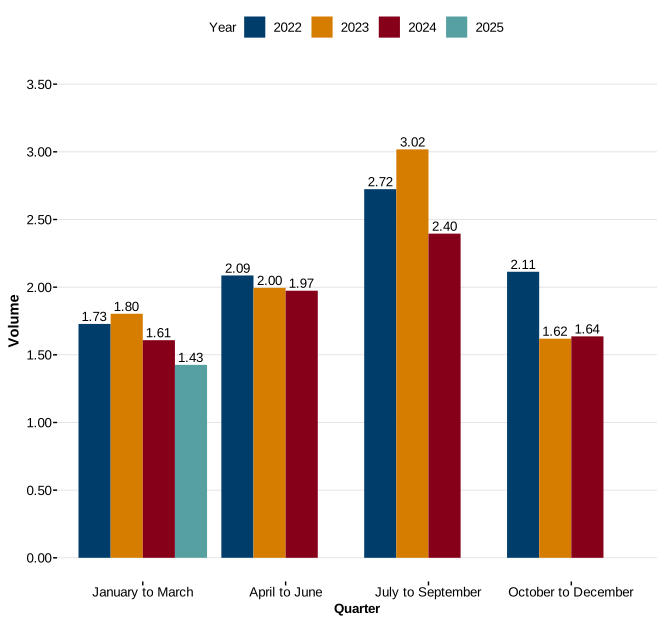
Description of figure 1: a clustered column chart showing the volume of overnight trips taken in Wales for each quarter, with trip levels during the first quarter of 2025 lower than in previous years.
Source: Great Britain Tourism Survey: overnight trips, January 2022 to March 2025
Expenditure on overnight trips taken in Wales during the first quarter of 2025 was 11% higher, compared to the first quarter of 2024. This was also higher than expenditure on overnight trips taken during the first quarters of 2023 and 2022.
Figure 2: expenditure on overnight trips taken in Wales in millions of pounds by quarter of visit, January 2022 to March 2025
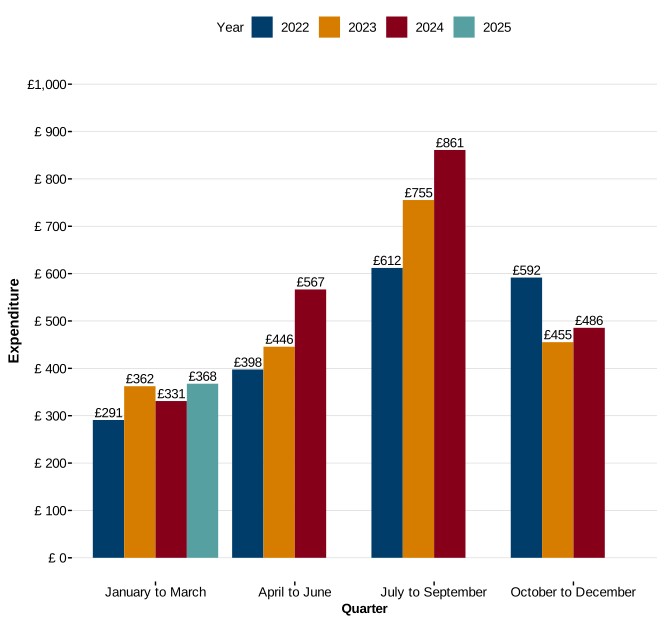
Description of figure 2: a clustered column chart showing quarterly expenditure on overnight trips taken in Wales, with spend higher during the first quarter of 2025 than in previous years.
Source: Great Britain Tourism Survey: overnight trips, January 2022 to March 2025
During the first quarter of 2025, the volume of overnight trips taken in GB was 4% higher compared to the first quarter of 2024. However, this was still lower than the volume of overnight trips taken during the first quarters of 2022 and 2023.
Figure 3: volume of overnight trips taken in Great Britain in millions by quarter of visit, January 2022 to March 2025
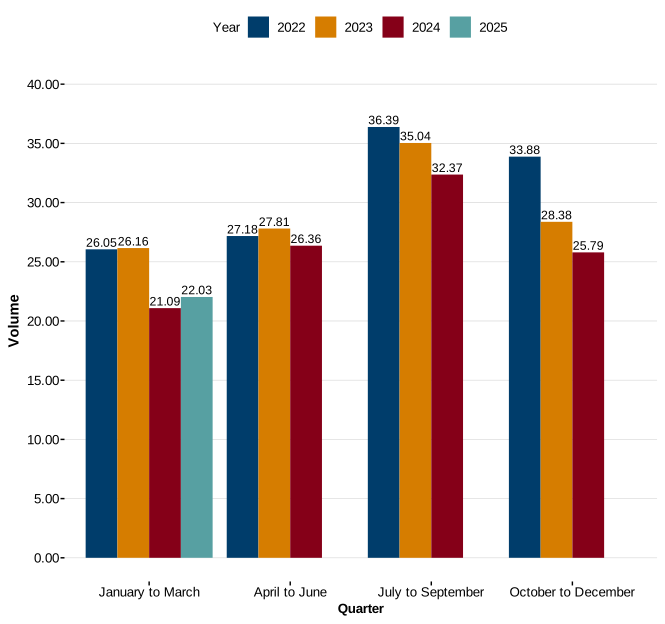
Description of figure 3: a clustered column chart showing the quarterly volume of overnight trips, with trip levels in the first quarter of 2025 higher than in 2024, but lower than in 2023 and 2022.
Source: Great Britain Tourism Survey: overnight trips, January 2022 to March 2025
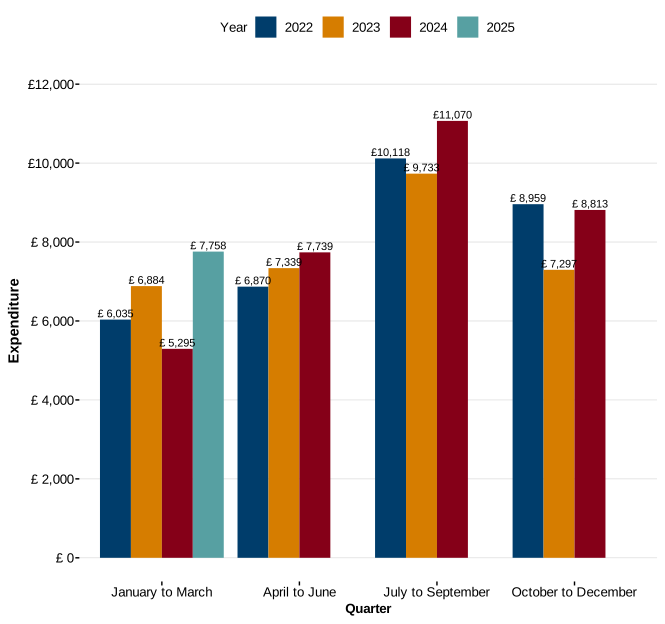
During the first quarter of 2025, expenditure for overnight trips taken in GB was 47% higher compared to the same period in 2024. This was also higher than expenditure on overnight trips taken during the first quarters of 2023 and 2022. Changes in expenditure should be considered in light of increased costs, as these estimates have not been adjusted for inflation.
Figure 4: expenditure on overnight trips taken in Great Britain in millions of pounds by quarter of visit, January 2022 to March 2025
Source: Great Britain Tourism Survey: overnight trips, January 2022 to March 2025
Description of figure 4: a clustered column chart showing quarterly expenditure on overnight trips taken in GB, with spend during the first quarter much higher than in previous years.
During the period January to March 2025, the volume of tourism day trips taken to Wales was 5% lower than during the same period in 2024. This was higher than the volume of tourism day trips taken during the first quarter of 2023, but lower than during the first quarter of 2022.
Figure 5: volume of tourism day trips to Wales in millions by quarter of visit, January 2022 to March 2025
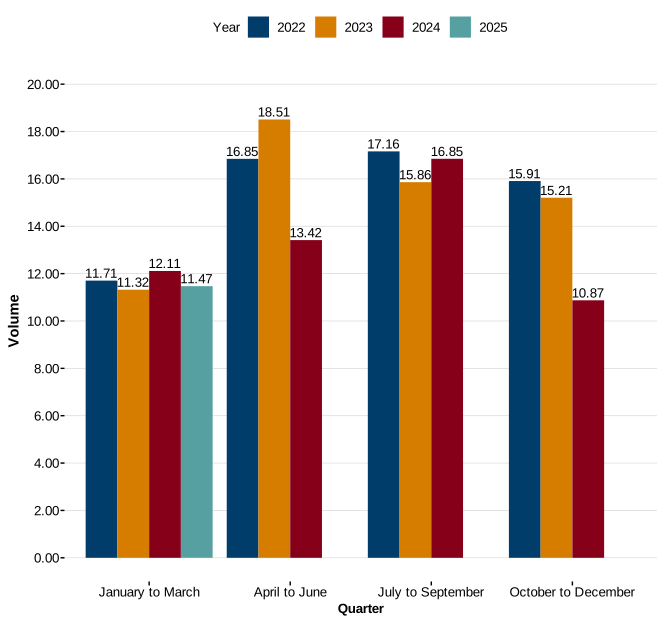
Description of figure 5: a clustered column chart showing that quarterly volumes of tourism day trips taken in Wales were lower during the first quarter of 2025, compared to 2024 and 2022, but slightly higher compared to 2023.
Source: Great Britain Tourism Survey: day trips, January 2022 to March 2025
During the first quarter of 2025, expenditure on tourism day trips taken to Wales was 6% lower compared to the same period in 2024. However, this was higher than expenditure on tourism day trips taken during the first quarters of 2023 and 2022.
Figure 6: expenditure on tourism day trips taken in Wales in millions of pounds by quarter of visit, January 2022 to March 2025
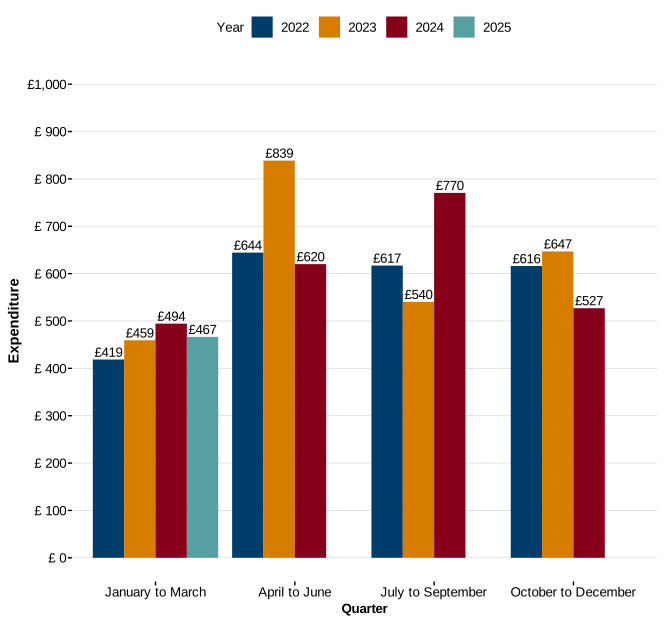
Description of figure 6: a clustered column chart showing that quarterly expenditure tourism day trips taken in Wales were lower during the first quarter of 2025, compared to 2024, but higher compared to 2023 and 2022.
Source: Great Britain Tourism Survey: day trips, January 2022 to March 2025
The volume of tourism day trips taken in GB during the period January to March 2025 was 9% lower, compared to the same period in 2024. This was also lower than the volume of day trips taken during the first quarter of 2023, but slightly higher compared to the first quarter of 2022.
Figure 7: volume of tourism day trips taken in Great Britain in millions by quarter of visit, January 2022 to March 2025
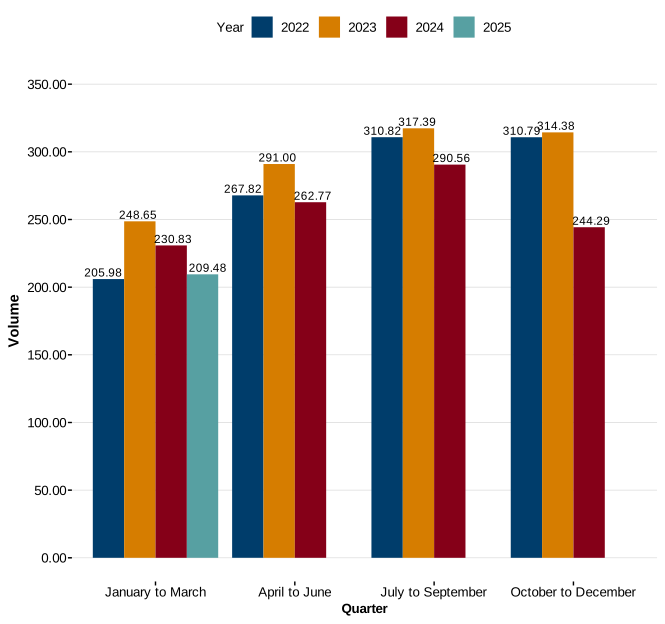
Description of figure 7: a clustered column chart showing that, during the first quarter of 2025, the volume of tourism day trips taken in GB was lower compared to 2024 and 2023, but higher compared to 2022.
Source: Great Britain Tourism Survey: day trips, January 2022 to March 2025
During the first quarter of 2025, expenditure on tourism day trips taken in GB was 11% lower compared to the same period in 2024. This was also slightly lower than expenditure on day trips taken during the first quarter of 2023, but higher than the first quarter of 2022.
Figure 8: expenditure on tourism day trips taken in Great Britain in millions of pounds by quarter of visit, January 2022 to March 2025 (r)
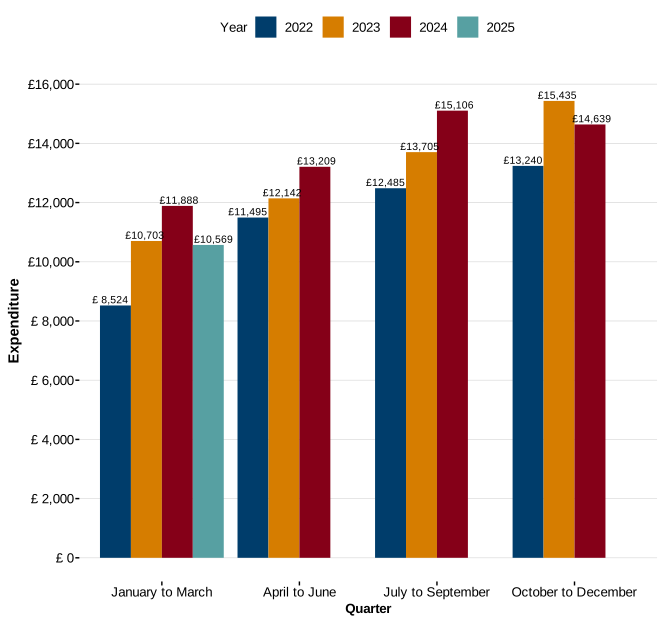
Description of figure 8: a clustered column chart showing that, during the first quarter of 2025, expenditure on tourism day trips taken in GB was lower compared to 2024 and 2023, but higher compared to 2022.
Source: Great Britain Tourism Survey: day trips, January 2022 to March 2025
(r) Revised on 14 October 2025.
Quality and methodology information
Definitions
To qualify as an eligible GB Domestic Overnight Trip the following criteria must be met:
- The trip involved a stay of at least one night in one or more of the GB nations; England, Scotland or Wales.
- The trip is not taken on a frequent basis (less often than once a week).
- For GB Domestic Overnight Holiday Trips; the main purpose of the trip was for holiday, pleasure or leisure.
- For GB Domestic Overnight VFR Trips (VFR); the main purpose of the trip was for visiting friends and relatives, including VFR trips that were combined with a holiday.
- For GB Domestic Overnight Business Trips; the main purpose of the trip was for business.
- For GB Domestic Overnight Miscellaneous/Other Trips; the main purpose of the trip was for another type of trip taken not covered by the above classifications including personal events, public events, or for study, medical, religious purposes, or any overnight stay in GB as part of an overseas trip.
To qualify as an eligible GB Domestic Tourism Day Trip the following criteria must be met:
- The trip lasted for 3 or more hours, including travel time, to undertake one or more eligible leisure activities.
- The trip is undertaken less often than once a week.
- The trip included a visit to a place outside of the local authority where the trip started, except where the main activity undertaken was watching live sports events, going to visitor attractions or going to public events.
- The trip did not begin from a holiday accommodation base.
Eligible leisure activities are:
- Visiting friends or relatives
- Going to a visitor attraction, such as a historic house, theme park, or museum
- Taking part in sports or outdoor leisure activities
- Going sightseeing and exploring areas
- Taking part in hobbies and interests
- Taking part in a health or wellbeing experience
- Attending a special event or celebration (such as a wedding or birthday)
- Attending an organised public event (such as an exhibition or live sport)
- Going to an arts, cultural or entertainment experience (such as a museum)
- Food and drink, a night out or speciality shopping
- Taking part in leisure activities not mentioned above
Other definitions used in this publication
Volume
An estimate of what the grossed-up number of trips undertaken by the population would be if the survey sample is representative of the whole GB population. The reported volume of trips is an estimate of trips by individuals, so that a travel party of two people would count as two individual trips.
Value
An estimate of what the total expenditure relating to the volume of trips undertaken by the population would be if the survey sample is representative of the whole GB population.
Bednights
An estimate of what the grossed-up number of nights spent on overnight trips undertaken by the population would be if the survey sample is representative of the whole GB population.
These definitions and the associated qualifying criteria have been revised as part of the new combined survey to align with agreed international standards. These changes impact the comparability of the published domestic tourism estimates from 2021 onwards with 2019 and previous years.
Methodology
Since 2021, data on both domestic overnight trips and domestic day trips has been collected through an online survey. The sample for this online survey is a non-probability-based design sourced from 4 ESOMAR accredited online panel providers and includes quotas for key demographic variables to make the overall sample as representative as possible of GB population. The target annual sample size for the survey of overnight visitors is 60,000 completed interviews, while the target for the survey of day visitors is 35,000 completed interviews. Not every person who is interviewed will have taken an eligible trip and so the base sizes used for trip estimation are lower than the number of interviews.
A weighting scheme is used to make the results as representative as possible of the GB population. However, the use of a non-probability online sample limits the extent to which the survey responses are truly representative of the full GB population, a limitation of similar online sample surveys. The new weighting scheme uses the National Statistics Socio-economic Classification (NS-SEC) mapped to approximate social grade for population statistics, for the purpose of quotas and weighting to the GB population. The change to using NS-SEC as the population statistics source will impact the estimation and reporting of trips compared to the previous reporting of social grade used in 2019 and previous years.
In 2024, a review of the methodology was undertaken to address volatility in the data. As a result of the review, a range of changes were applied to the methodology. For further details on the changes made to the methodology in 2024, please see the statement on the methodological review. For a comprehensive guide to the survey methodology, please see the background quality reports.
Comparability and coherence
Statistics for domestic tourism have been collected in a broadly similar way since 1989. However, the changes in survey methodology introduced in 2021 means that results published from April 2021 onwards are not directly comparable with data published for 2019 and previous years. Results from April 2021 onwards are available, and are comparable with the results in this report.
Accuracy
The statistics produced from the Great Britain Tourism Survey and the Great Britain Day Visits Survey in 2019 and previous years have been designated as official statistics, which provides reassurance to users that the statistics are produced to the very highest professional standards of trustworthiness, quality and value, set out in the Code of Practice for Statistics (UK Statistics Authority). Due to the changes in methodology and the impact of the COVID-19 pandemic, the survey results for 2021 and onwards have been labelled as ‘official statistics in development’ (Office for Statistics Regulation). The new survey and statistics have undergone a comprehensive programme of quality assurance including piloting of the survey, analysis of changes to the trip definitions, testing the impact of the new weighting scheme and a review of caps and imputation rules. Changes to the survey methodology and estimation have taken account of a review and advice provided by the Methodology Advisory Service of the ONS. A further review of the methodology was undertaken in 2024 to address volatility in the data and estimates for 2022 and 2023 were revised following the review. For further information on the review undertaken in 2024, please see the statement on the methodological review.
Relevance
These statistics are used both within and outside the Welsh Government to monitor domestic tourism demand and measure the contribution and impact of domestic tourism on the visitor economy. A key purpose of these statistics is to uncover insights into market trends over time.
The survey sponsors are planning to engage with the priority users of the statistics to check the new survey information meets their needs and we encourage users of the statistics to provide feedback on the data and this output at tourismresearch@gov.wales.
Timeliness and punctuality
All outputs adhere to the Code of Practice by pre-announcing the date of publication through the upcoming calendar. Furthermore, should the need arise to postpone an output this would follow the statement on revisions, errors and postponements. We aim to publish data as soon as possible after the relevant research time period. It is anticipated that future results for Wales will be published on a quarterly basis, to ensure estimates are supported by robust trip base sizes. Specific publication timings will be notified on the WG website, but the aim is to publish quarterly statistics for Wales approximately 12 to 13 weeks after the end of each quarter based on the 4 week survey trip taking reference period and to allow for quality assurance and reporting timescales.