
Derbyn cleifion i gyfleusterau iechyd meddwl: Ebrill 2022 i Fawrth 2025
Data ar nifer y cleifion a dderbyniwyd i gyfleusterau iechyd meddwl yn ffurfiol ac yn anffurfiol, a chleifion sy'n destun triniaeth gymunedol dan oruchwyliaeth ar gyfer Ebrill 2022 i Fawrth 2025. Saesneg yn unig.
Ar y dudalen hon
Introduction
This statistical release summarises the number of admissions to mental health facilities in the financial years 2022 to 2023, 2023 to 2024 and 2024 to 2025 both formally and informally, and patients subject to supervised community treatment.
The number of admissions is not equivalent to number of patients, as a patient can be admitted more than once in a year and would be counted as a separate admission on each occasion. This release does not include data on place of safety detentions (Detentions under Section 135 and 136 of the Mental Health Act), which are published separately.
The Mental Health Act 1983 (UK legislation), amended in 2007 (UK legislation), allows people with a “mental disorder” to be admitted to hospital, detained and treated without their consent, whether for their own health, safety, or for the protection of other people.
People can be admitted, detained and treated under different sections of the Mental Health Act. People who are compulsorily admitted to hospital are referred to as ‘formal’ patients and people who are admitted to hospital when they are unwell without using compulsory powers are referred to as ‘informal’ patients. Part II of the Act allows a patient to be compulsorily admitted under the Act if they are suffering from “mental disorder” as defined in the Act.
Most of these admissions are to NHS facilities but a small number of admissions are to independent hospitals. The Mental Health Act also allows people to be placed on supervised community treatment, after a period of compulsory treatment in hospital.
Caution is advised when comparing data for 2020 to 2021 and 2021 to 2022 with other years. These years were affected by the COVID-19 pandemic, and some hospitals reported a change in practice to reduce patients detained in mental health facilities at this time, with greater provision of services within the community.
Further breakdowns of data included in this release are published on StatsWales.
Definitions of Sections under the Mental Health Act are provided in the Glossary.
Main points
In 2024 to 2025, there were 6,293 admissions to mental health facilities, a decrease of 297 (5%) from 2023 to 2024 and by almost a third (32%) since 2015 to 2016.
2,412 or 38% of the total admissions were formal admissions in 2024 to 2025 under the Mental Health Act 1983 and other legislation, compared with 1,732 or 19% in 2015 to 2016.
3,881 or 62% of the total admissions were informal admissions in 2024 to 2025, compared with 7,565 or 81% in 2015 to 2016.
In 2024 to 2025, 53% of admissions were male patients and 47% were female. More formal admissions have been male than female each year since reporting began.
94% of formal admissions were detained without the involvement of criminal courts (Part II) in 2024 to 2025; this has consistently been the case since 2015 to 2016.
126 patients were discharged from hospital under supervised community treatment during 2024 to 2025, a decrease of 14% from 2023 to 2024 (147 patients) and 41% from 2015 to 2016 (216 patients).
Admissions by status
Figure 1: number of admissions to mental health facilities by status, between 2015 to 2016 and 2024 to 2025 [Note 1]
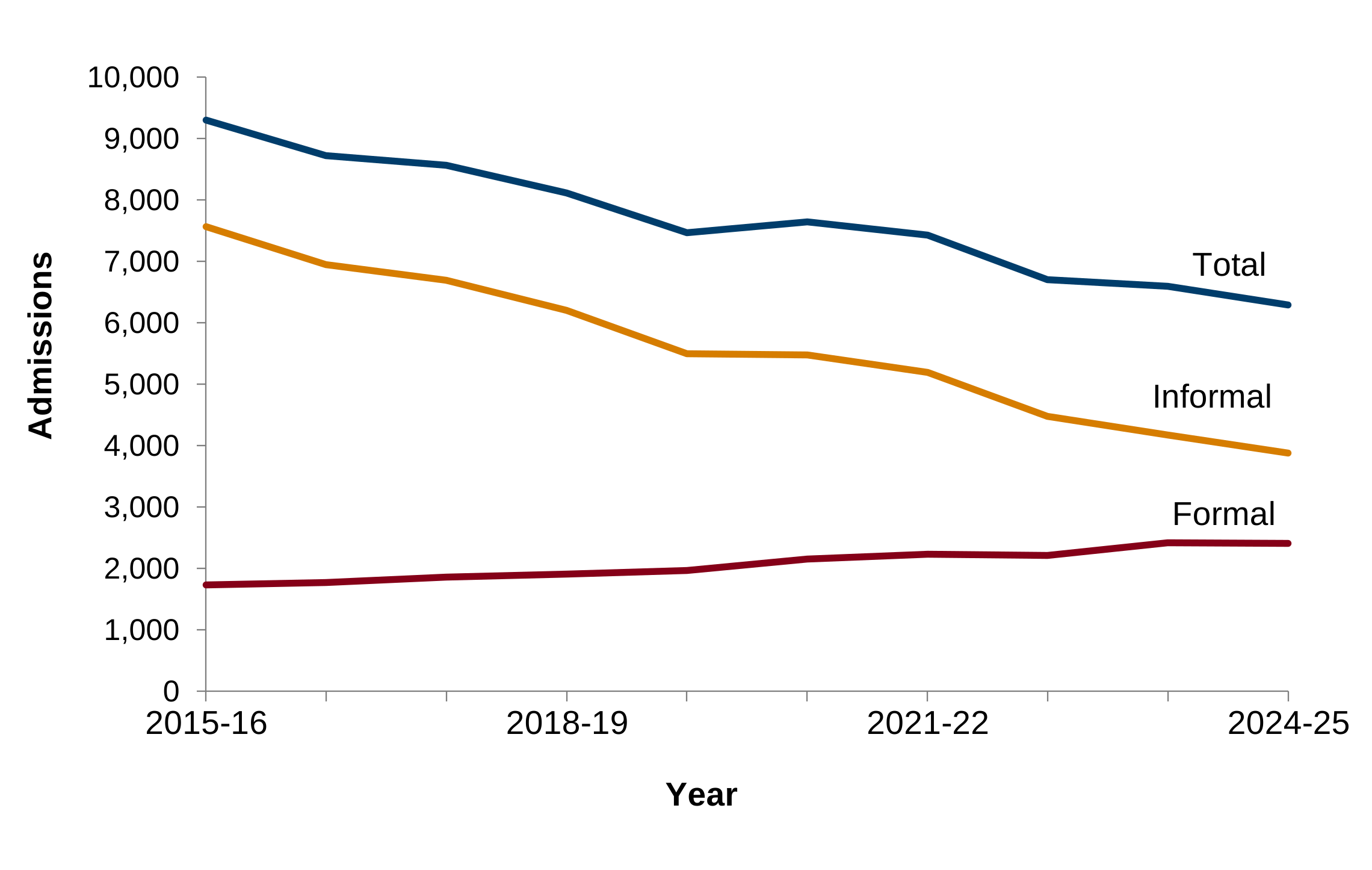
Description of figure 1: line chart showing that overall total admissions have decreased over the last 10 years. This has been driven by informal admissions which have decreased each year, whereas formal admissions have increased slightly over the same period.
Source: KP90 data collection form, Welsh Government
Admissions to mental health facilities, by local health board, sex and legal status, on StatsWales
[Note 1] The total for independent hospitals is an estimate in 2017 to 2018, 2018 to 2019 and 2019 to 2020 – see Quality and methodology information for more details.
In the last 10 years the total number of admissions has steadily fallen from 9,297 in 2015 to 2016 to 6,293 in 2024 to 2025, a decrease of almost a third (32%). This decrease was driven by a decline in informal admissions which has nearly halved (7,565 to 3,881) in the same period. In contrast, formal admissions increased by 39% or more than a third (1,732 to 2,412).
Figure 2: number of admissions to mental health facilities by status and sex of patient, between 2015 to 2016 and 2024 to 2025 [Note 1]
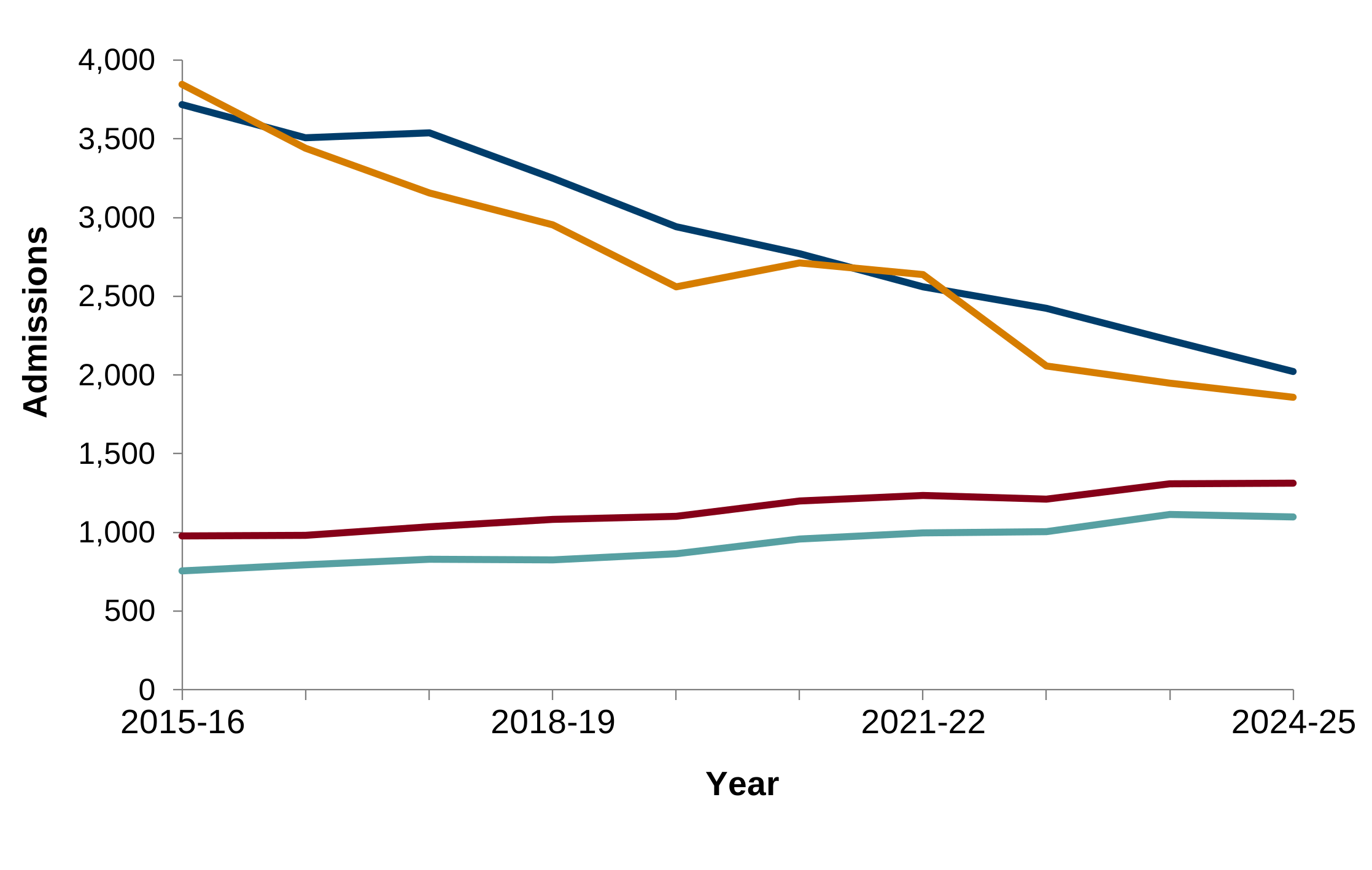
Description of figure 2: line chart showing that in each year over the last 10, there were more formal admissions for males than females. In all but two years (2015 to 2016 and 2021 to 2022), the same was true for informal admissions.
Source: KP90 data collection form, Welsh Government
Admissions to mental health facilities, by local health board, sex and legal status, on StatsWales
[Note 1] The total for independent hospitals is an estimate in 2017 to 2018, 2018 to 2019 and 2019 to 2020 – see Quality and methodology information for more details.
In 2024 to 2025, 53% of all admissions were male patients and 47% were female patients.
For formal admissions, in 2024 to 2025, 54% of admissions were male patients and 46% were female. Over the time the data has been collected, there has consistently been a higher proportion of males than females, although this gap has remained fairly constant from 2015 to 2016 when 56% of admissions were to male patients.
In all but two years (2015 to 2016 and 2021 to 2022), the same is true for informal admissions. In 2024 to 2025, there was a higher proportion of males (52%) admitted informally than females (48%).
Legal status
Figure 3: number of formal admissions to mental health facilities by legal status, between 2015 to 2016 and 2024 to 2025 [Note 1] [Note 2]
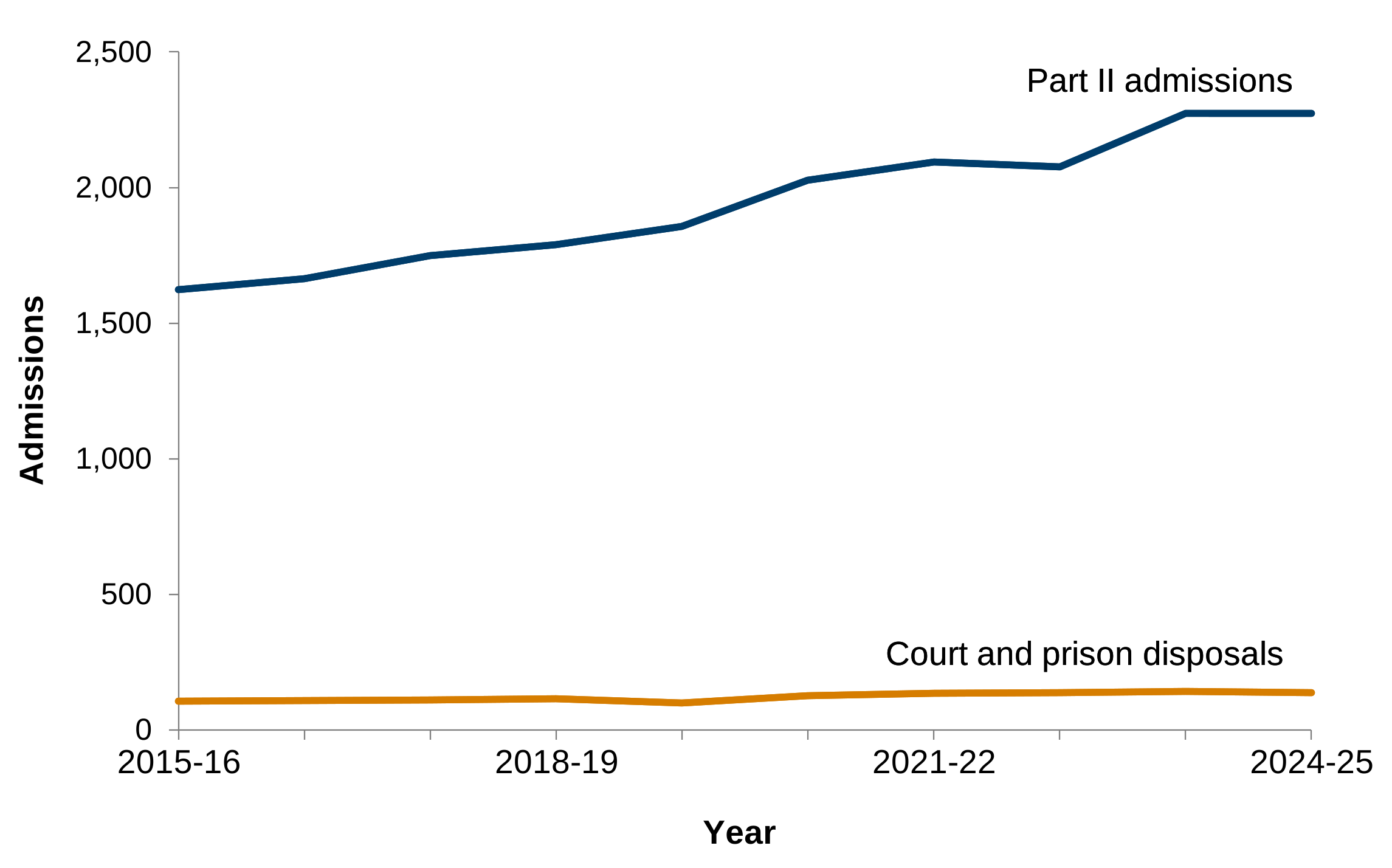
Description of figure 3: line chart showing that of those admitted formally under sections of the Mental Health Act between 2015 to 2016 and 2024 to 2025, the majority were admitted under Part II.
Source: KP90 data collection form, Welsh Government
[Note 1] The total for independent hospitals is an estimate in 2017 to 2018, 2018 to 2019 and 2019 to 2020 – see Quality and methodology information for more details.
[Note 2] There was also a small number (less than 10) of formal admissions under other sections of the Mental Health Act 1983 and other Acts in each year shown.
The number of formal admissions under sections of the Mental Health Act has increased most years since 2015-16. This increase has been largely driven by an increase in those admitted under Part II (1,623 in 2015 to 2016 to 2,273 in 2024 to 2025).
Of those admitted formally, the large majority in each year were admitted under Part II (around 94% in 2024 to 2025). This has consistently been the case in the 10 years since 2015 to 2016 (over 93% each year). Court and prison disposals accounted for around 6% and less than 0.1% were formally admitted under other powers.
Admissions by type of facility
Figure 4: percentage of admissions to mental health facilities by type of facility and method of admission, between 2015 to 2016 and 2024 to 2025 [Note 1] [Note 2]
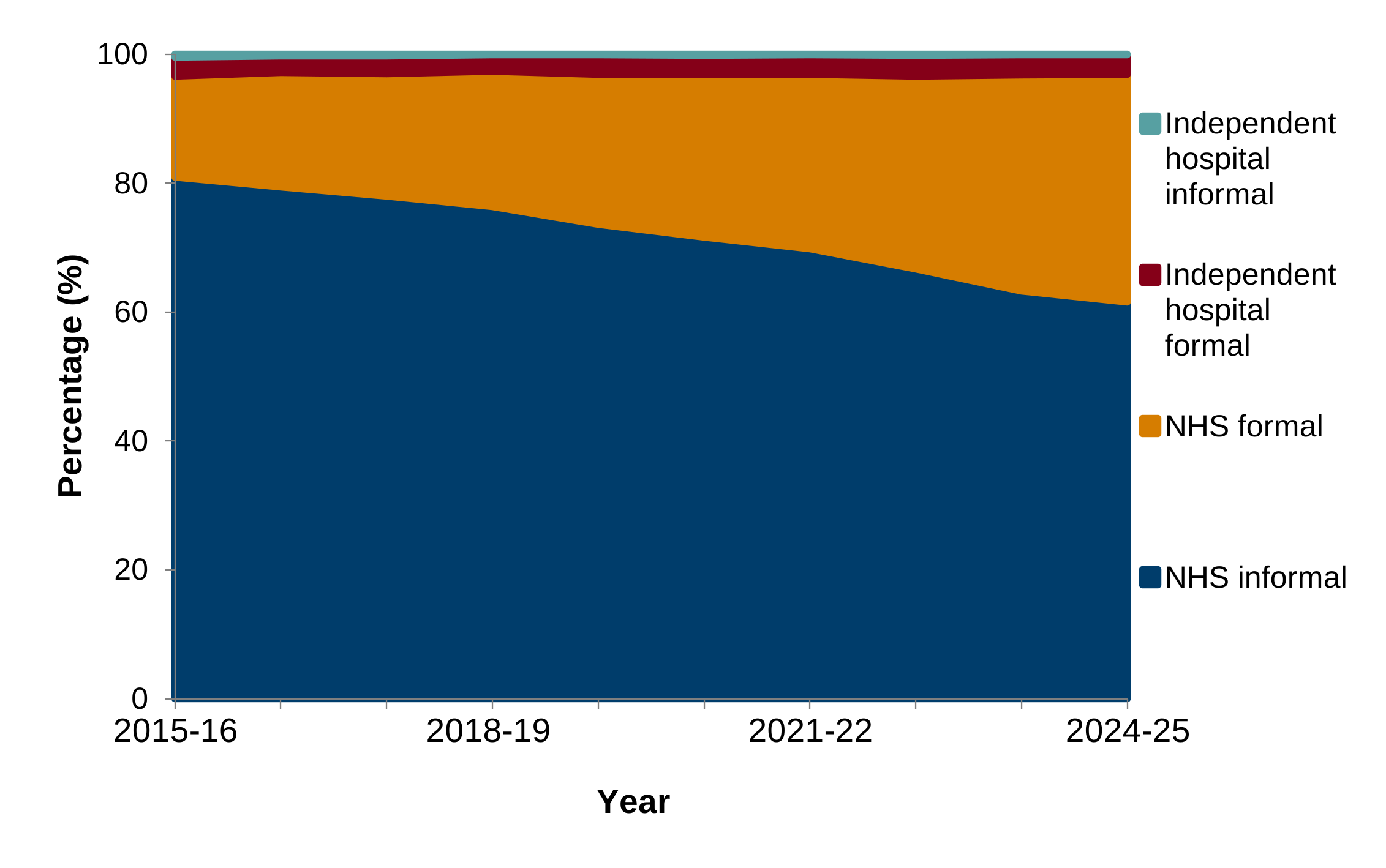
Description of figure 4: stacked area chart showing that since 2015 to 2016 the percentage of NHS informal admissions has decreased, whilst NHS formal admissions percentage has increased.
Source: KP90 data collection form, Welsh Government
[Note 1] The total for independent hospitals is an estimate in 2017 to 2018, 2018 to 2019 and 2019 to 2020 – see Quality and methodology information for more details.
[Note 2] There are a small percentage of independent hospital informal admissions included on the graph which may not be easily visible.
In 2024 to 2025, just under 62% of all admissions were informal NHS admissions, 35% were formal NHS admissions, 3% were formal independent hospitals admissions and 0.1% informal independent hospitals admissions. This contrasts with 2015 to 2016 when just under 81% of all admissions were informal NHS admissions, 16% were formal NHS admissions, 3% were formal independent hospitals admissions and 0.5% informal independent hospitals admissions.
Formal admissions accounted for 96% of total admissions to independent hospitals. In contrast, formal admissions only accounted for 36% of total admissions to NHS facilities.
Each year between 2015 to 2016 and 2024 to 2025, 97% of all admissions were to NHS facilities and 3% of all admissions were to independent hospitals.
Figure 5: number of admissions to mental health facilities by method of admission, local health board and independent hospitals, 2024 to 2025
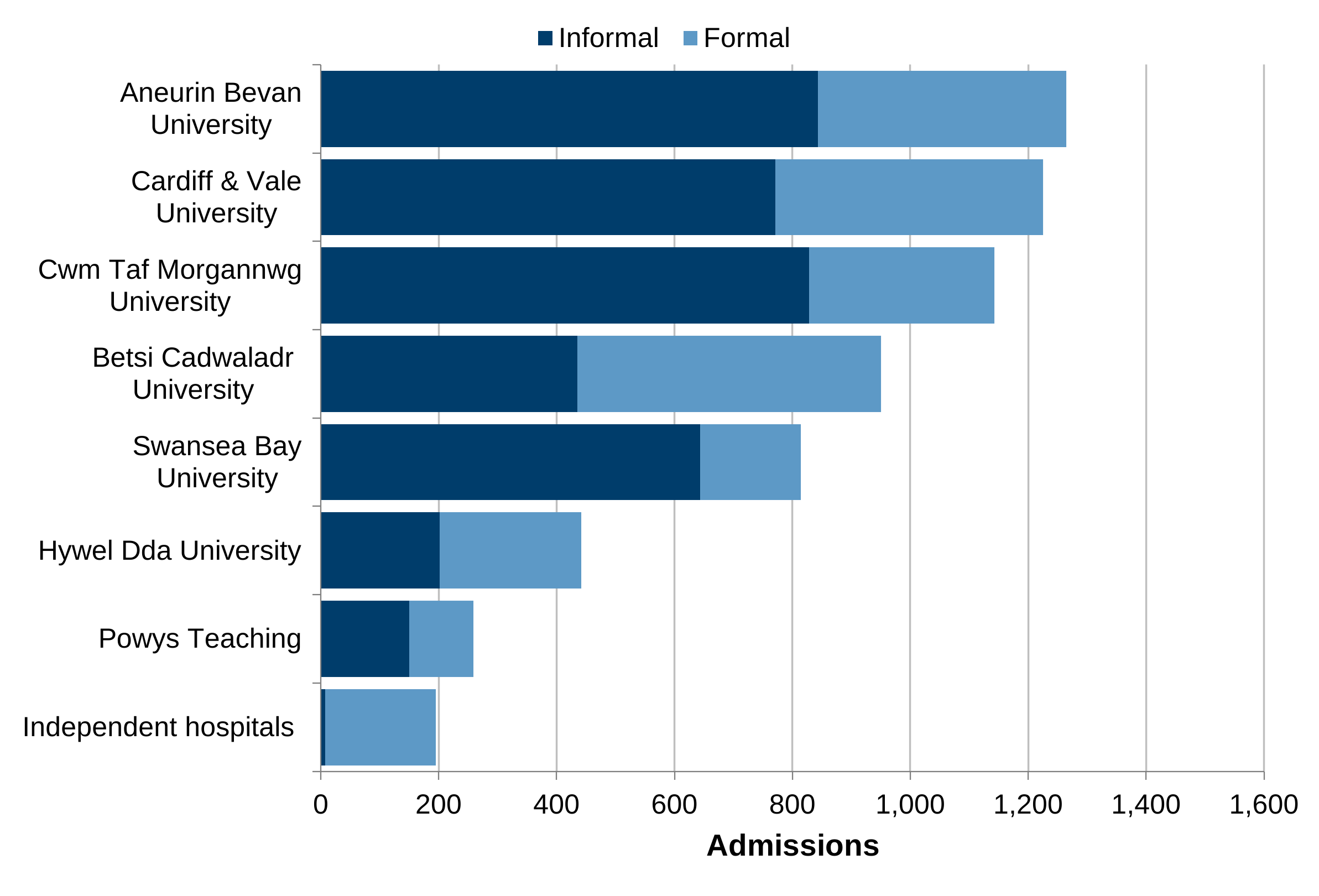
Description of figure 5: bar chart showing that for most local health boards, informal admissions accounted more than half of the total admissions. This was not the case for Hywel Dda University and Betsi Cadwaladr University. For independent hospitals, formal admissions accounted for nearly all of the total admissions.
Source: KP90 data collection form, Welsh Government
In 2024 to 2025, the majority (89%) of NHS admissions were split between 5 local health boards: Cardiff and Vale University, Betsi Cadwaladr University, Swansea Bay University, Cwm Taf Morgannwg University and Aneurin Bevan University. Aneurin Bevan University had the highest number of NHS admissions (1,265 or 21% of the total) whereas Powys Teaching had the lowest (259 or 4% of the total).
For 5 of the 7 local health boards, in 2024 to 2025, there were more informal admissions than formal. For independent hospitals, 96% of admissions were formal admissions. The proportion of NHS admissions that were informal ranged from a lowest of 46% in Hywel Dda University and Betsi Cadwaladr University to a highest of 79% in Swansea Bay University.
Figure 6: rates of admission per 10,000 resident population by method of admission and local health board, 2024 to 2025 [Note 1] [Note 2]
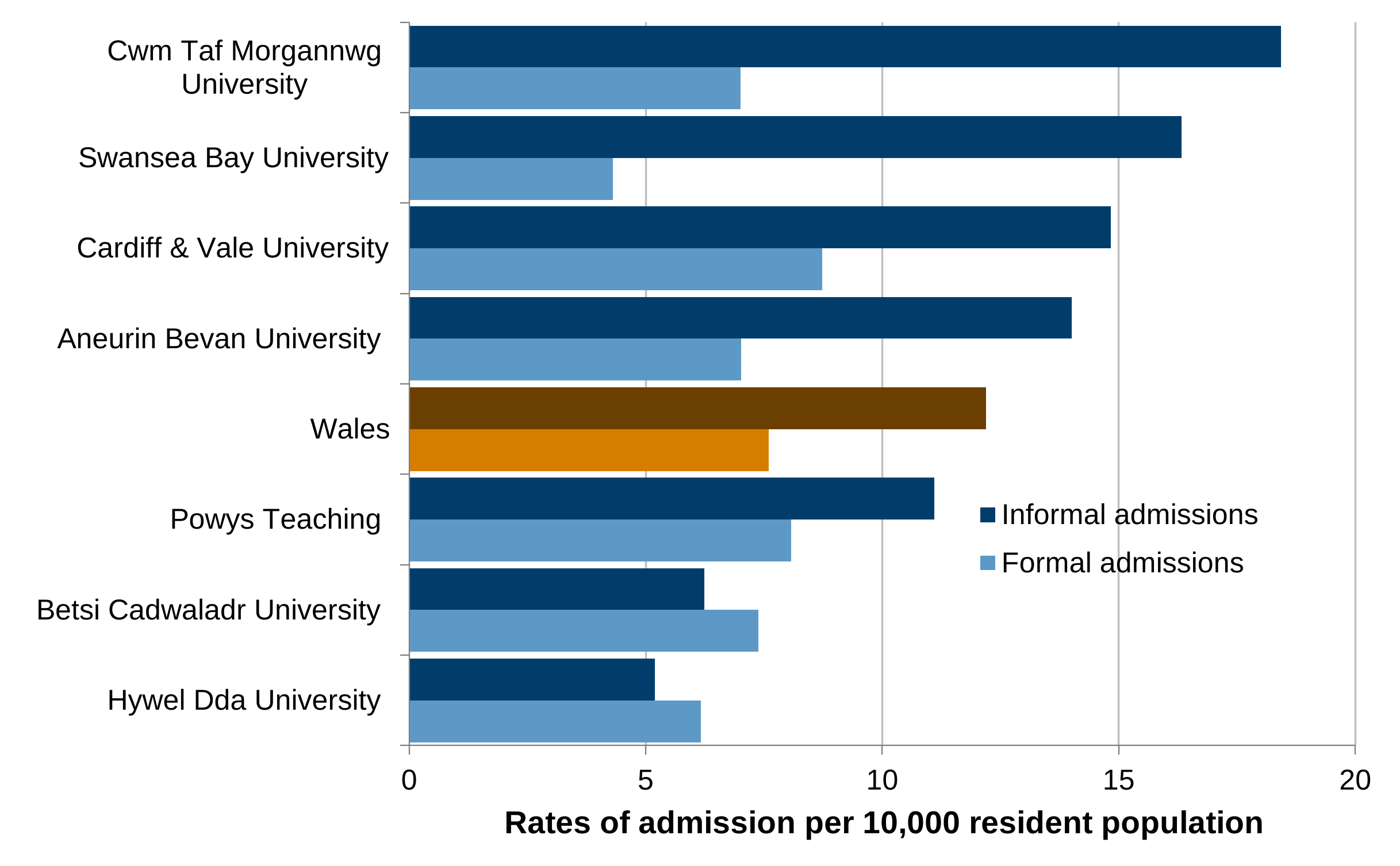
Description of figure 6: bar chart showing that Cwm Taf Morgannwg followed by Swansea bay had the highest rate of informal admissions per 10,000 resident population by local health board and Cardiff and Vale followed by Powys had the highest rate of formal admissions.
Sources: KP90 data collection form, Welsh Government, Mid-year population estimates, Office of National Statistics
[Note 1] Rate per 10,000 resident population based on the 2024 mid-year estimates (StatsWales).
[Note 2] Wales total includes admissions from independent hospitals.
The rate per 10,000 resident population shows the number of admissions that happen for every 10,000 people living in an area. This allows comparisons between local health boards despite their different sizes.
In 2024 to 2025, Cwm Taf Morgannwg University LHB had the highest rate of informal admissions (18.4 per 10,000 population) and Hywel Dda University LHB had the lowest rate of informal admissions (5.2 per 10,000 population).
Cardiff & Vale University LHB had the highest rate of formal admissions (8.7 per 10,000 population) and Swansea Bay University LHB had the lowest rate of formal admissions (4.3 per 10,000 population). Rates for independent hospitals are not applicable.
The admission rates for Wales were 12.2 per 10,000 population for informal admissions, and 7.6 per 10,000 population for formal admissions.
Admissions by characteristics
Figure 7: number of admissions to mental health facilities by age group, between 2022 to 2023 and 2024 to 2025 [Note 1] [Note 2]
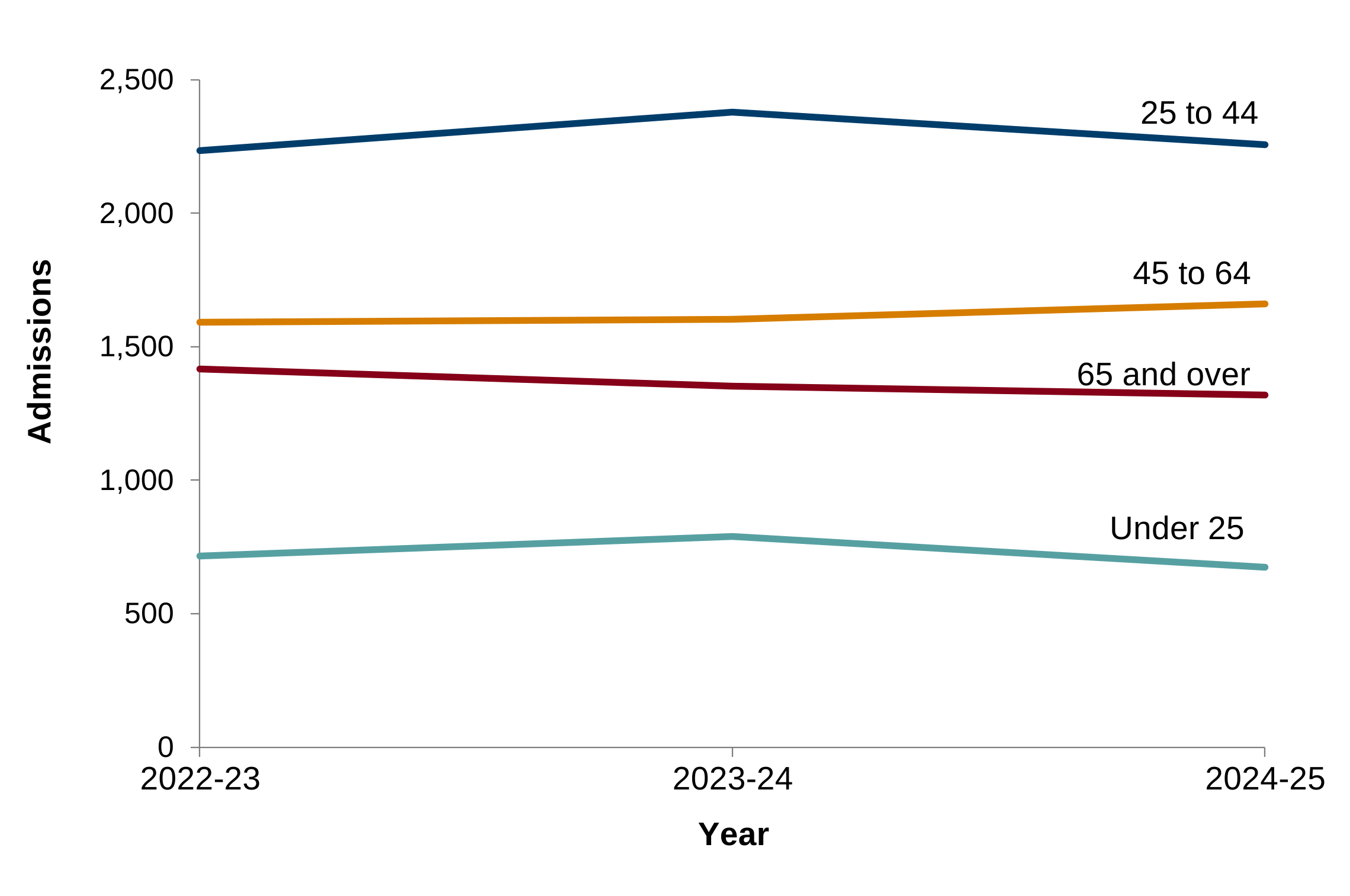
Description of figure 7: line chart showing the most common age group admitted was 25 to 44 and the least common age group was under 25. All age groups have stayed broadly similar over the last 3 years.
Source: KP90 data collection form, Welsh Government
[Note 1] Betsi Cadwaladr University LHB was unable to provide age group information for informal figures for 3 facilities in 2022 to 2023 and 2024 to 2025 and 4 facilities in 2023 to 2024 - see Quality and methodology information for more details.
[Note 2] 2022 to 2023 was the first year that this data was collected.
In 2024 to 2025, 11% of admissions were in the under 25 years age group, 38% were in the 25 to 44 years age group, 28% were in the 45 to 64 years age group and 22% were in the 65 years or older. These proportions have remained fairly consistent over the last 3 years.
Figure 8: percentage of admissions to mental health facilities by ethnicity compared to the population, 2024 to 2025 [Note 1] [Note 2]
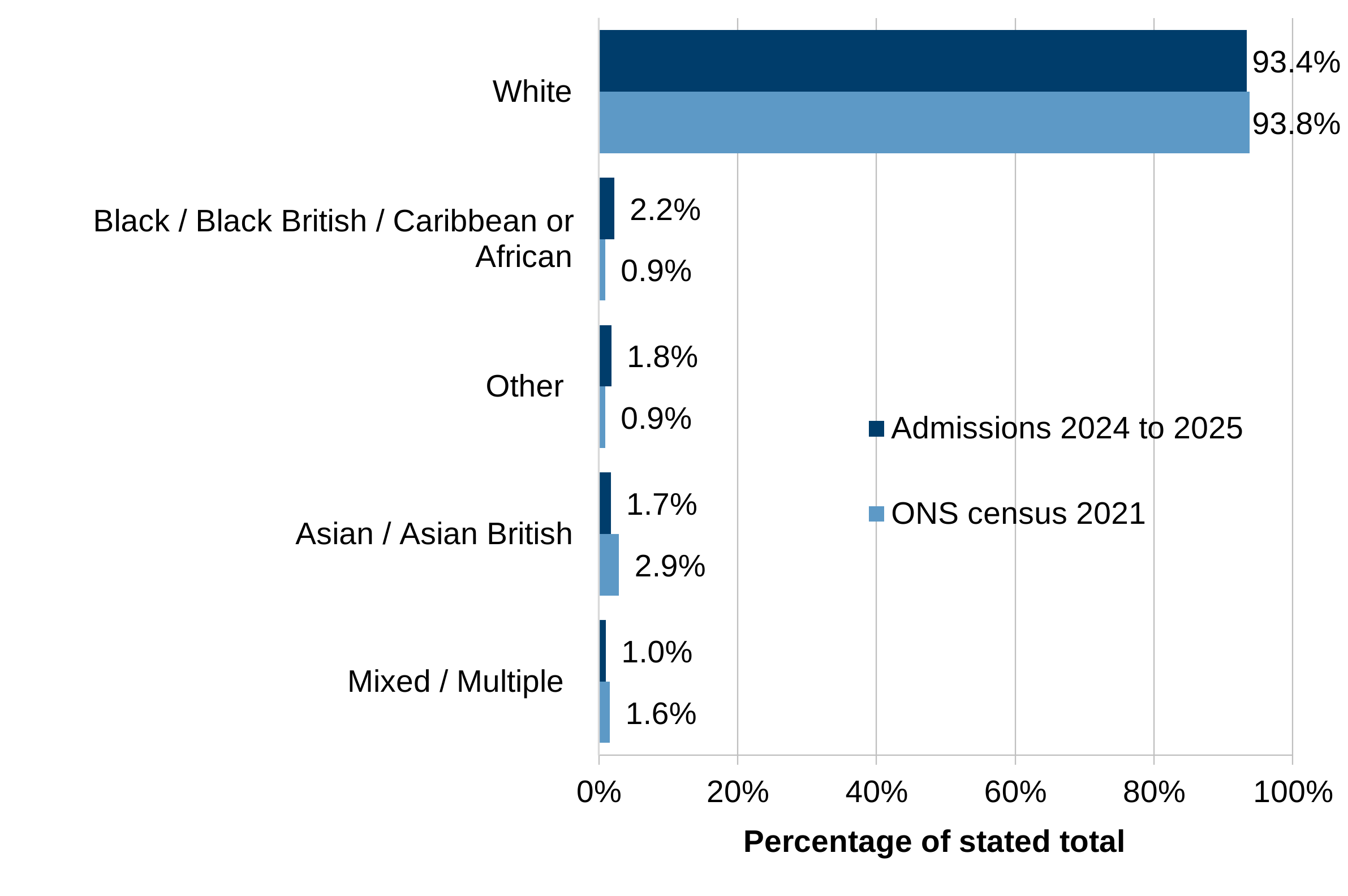
Description for figure 8: bar chart showing the large majority of admissions were recorded in the White ethnic group (93.4%). The next highest ethnic group was Black/ Black British/ Caribbean or African (2.2%).
Sources: KP90 data collection form, Welsh Government, 2021 Census, Office of National Statistics
[Note 1] 21% of admission records had undisclosed ethnicity data in 2024 to 2025. These undisclosed admission records have not been included when calculating percentage proportions of ethnic group and we do not know the distribution of these missing records. It is unknown whether these records would have the same distribution across the ethnic groups as the disclosed records. Consequently, figures reported here should be interpreted based on general trends of each group rather than small differences between each group.
[Note 2] Betsi Cadwaladr University LHB was unable to provide ethnicity information for informal figures for 3 facilities in 2022 to 2023 and 2024 to 2025 and 4 facilities in 2023 to 2024 - see Quality and methodology information for more details.
A similar proportion of admissions to mental health facilities who disclosed their ethnicity in 2024 to 2025 were from White ethnic groups compared to the general population captured in the Census 2021 (ONS).
Around double the expected proportion of admissions were from Black / Black British / Caribbean or African and Other ethnic groups compared to the general population.
The Asian / Asian British and Mixed / Multiple ethnic groups had a lower proportion of patients compared to the general population.
Supervised community treatment
Supervised community treatment (SCT) allows patients to continue their treatment in the community following a period of detention in hospital.
Patients detained in hospital for treatment under section 3 (and certain Part III sections) can be discharged from detention onto a community treatment order (CTO) to continue their treatment in the community. Section 3 allows for detention for up to six months, after which the order can be renewed for a further six months and then for one year at a time.
Figure 9: number of patients discharged from hospital under supervised community treatment (SCT), between 2015 to 2016 and 2024 to 2025
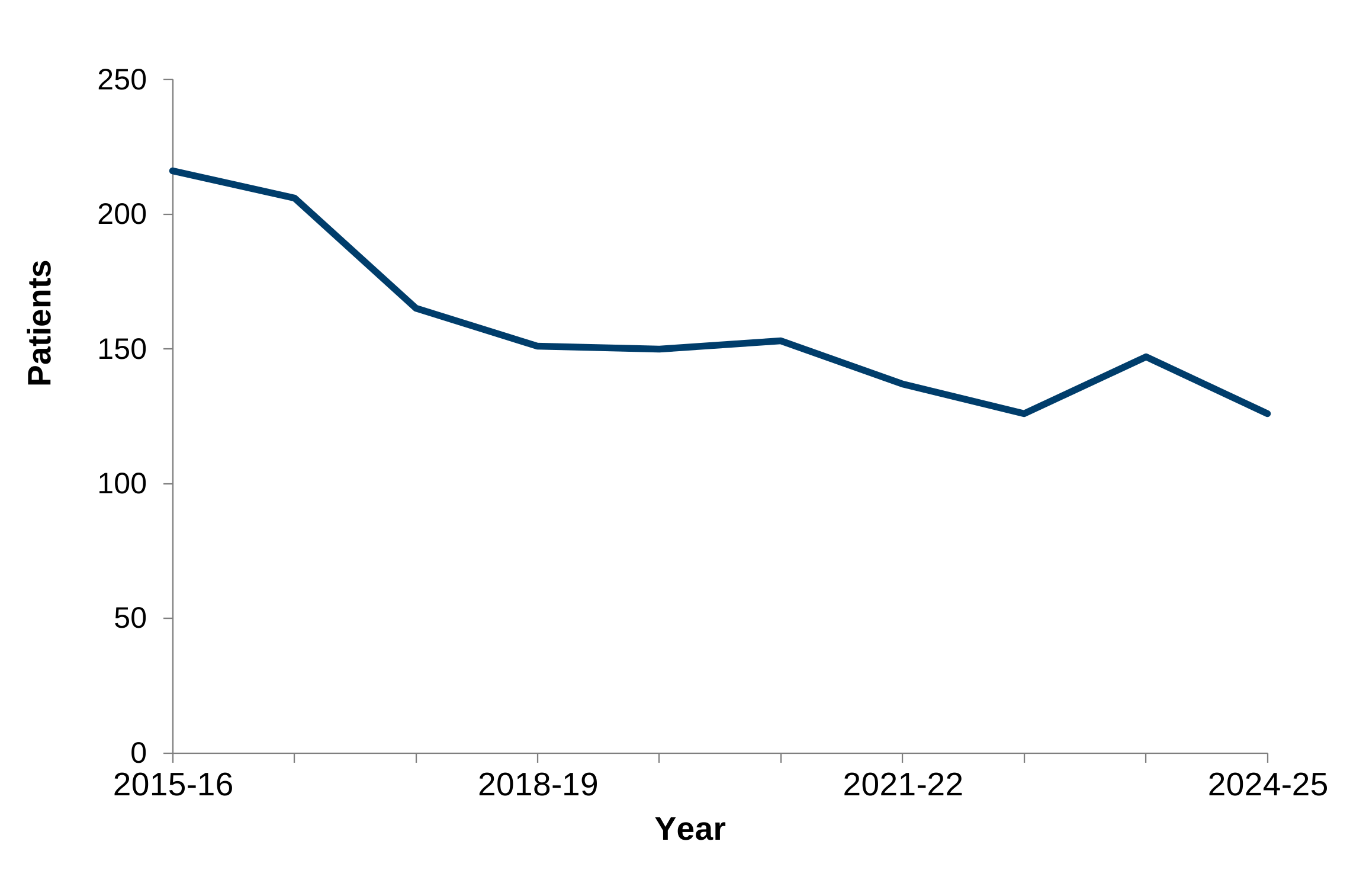
Description of figure 9: line chart showing the number of patients discharged from hospital under supervised community treatment has decreased since 2015 and 2016.
Source: KP90 data collection form, Welsh Government
126 patients were discharged from hospital under SCT during 2024 to 2025, a decrease of 14% from 2023 to 2024 (147 patients) and 41% from 2015 to 2016 (216 patients).
In 2024 to 2025, 91% of patients had a legal status under section 3 prior to SCT. A further 9% had a legal status under other sections prior to SCT.
Figure 10: supervised community treatment (SCT) related activity, between 2015 to 2016 and 2024 to 2025
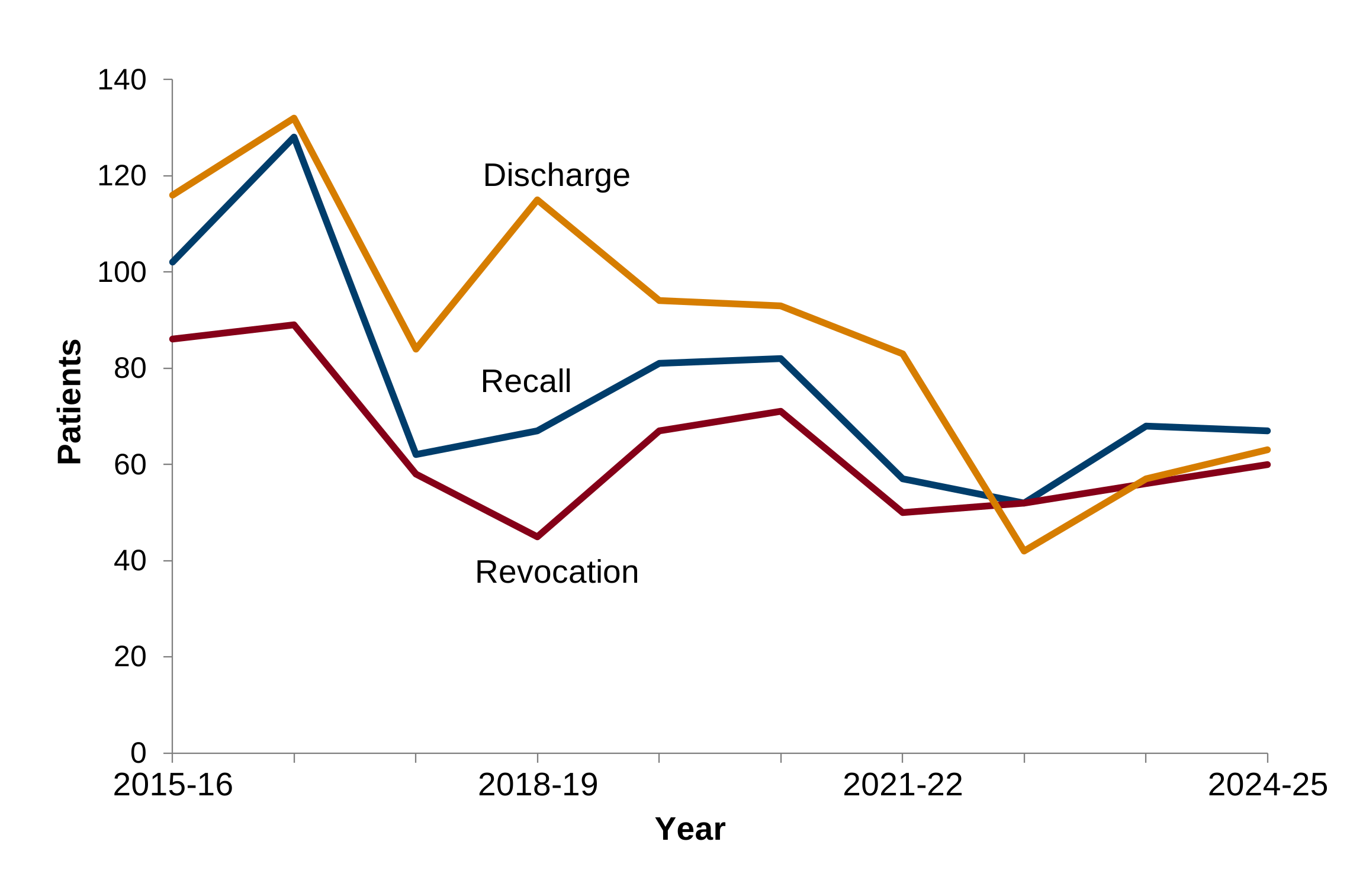
Description of figure 10: line chart showing that the numbers of patients for each supervised community treatment (SCT) activity have generally decreased since 2015 to 2016.
Source: KP90 data collection form, Welsh Government
For those patients subject to SCT, there were 67 recalls to hospital, 60 revocations and 63 discharges. This contrasts with 2015 to 2016 when there were 102 recalls to hospital, 86 revocations and 116 discharges.
Quality and methodology information
Glossary
The Mental Health Acts 1983 and 2007
An outline of the main section of the Mental Health Act 1983 (UK legislation), under which people can be formally detained in hospital, is given below. Changes were made to the Mental Health Act 1983 by the Mental Health Act 2007 (UK legislation).
Part II admissions
Part II of the Act allows a patient to be compulsorily admitted under the Act if he/she is suffering from mental disorder as defined in the Act and where this is necessary:
- in the interests of his/her own health or
- in the interests of his/her own safety or
- for the protection of other people.
The relevant sections are:
Section 2
Admission to hospital for assessment or assessment and treatment; this section has a detention limit of 28 days after which a person becomes an informal patient (unless detained under section 3).
Section 3
Admission to hospital for treatment; this section allows for detention for up to six months, after which the order can be renewed for a further six months and then for one year at a time.
Section 4
Admission for assessment in emergency; this section has a detention limit of 72 hours and cannot be renewed but a person may be assessed for further detention under section 2 or 3.
Section 5(2)
A registered medical practitioner or approved clinician’s power to hold informal patients already in hospital; this section has a detention limit of 72 hours and cannot be renewed.
Section 5(4)
Nurses’ holding power of an informal patient already in hospital and receiving treatment for a mental disorder; the detention limit of six hours of this section cannot be renewed.
Admissions following court disposal
Part III of the Act relates to people involved in criminal proceedings.
The relevant sections are:
Sections 35
Accused person remanded to hospital for report relating to that person’s mental health; this section has a detention period of 28 days and can be renewed for two further periods of 28 days (12 weeks in total).
Section 36
Accused person remanded to hospital for treatment; this section has a detention period of 28 days which can be renewed for two further periods of 28 days (12 weeks in total).
Section 37
Convicted person sent to hospital for treatment (known as a ‘hospital order’); this section allows for detention for up to 6 months, after which the order can be renewed for a further six months and then for one year at a time.
Section 37 can be accompanied by a restriction order under section 41 (known as section 37/41)
Patients detained under section 37/41 can only be discharged by a Mental Health Review Tribunal or the Secretary of State.
Section 38
Convicted person sent to hospital for assessment prior to sentencing (an interim hospital order) cannot be renewed beyond a period of 12 months. Section 37(4) lasts for a maximum of 28 days.
Section 44
Potential section 37 patient committed to hospital by a magistrates court pending a crown court hearing for restriction order.
Section 45A
Sentenced person given a hospital direction and limitation direction alongside a prison sentence. The hospital direction is equivalent to a section 37 hospital order and the limitation direction is similar to a restriction order under section 41.
Section 47
Prisoner, serving a sentence, transferred from prison (or other form of detention) to hospital – either with or without a restriction direction under section 49 (a restriction direction is similar to a restriction order under section 41).
Section 48
Prisoner, not sentenced, transferred from prison (or other form of detention) to hospital – either with or without a restriction direction under section 49.
Patients subject to detention under sections 45A, 47/49 or 48/49 are subject to continuous detention until such time as they are either discharged, the restrictions end, or they are returned to prison.
Place of safety detentions data
Following the changes to the Mental Health Act relating to Section 135 and 136 in December 2017, the Welsh Government decided to cease collecting data on the ‘Use of Sections 135 and 136 of the Mental Health Act 1983’ on an annual basis via the KP90 form. The information was previously published annually at an all Wales level only in the Admission of patients to mental health facilities Statistical First release in Tables 4a and 4b. The last of the releases showing this data was published on the 31 January 2018, showing the 2016 to 2017 data.
Since December 2019 the data has been published via the quarterly Section 135 and 136 data returns that health boards provide on the following link Detentions under Section 135 and 136 of the Mental Health Act.
Supervised community treatment
Supervised community treatment (SCT) was introduced into the Mental Health Act 1983 by the Mental Health Act 2007 and its purpose is to allow patients to continue their treatment in the community following a period of detention in hospital. SCT has only been available since 3 November 2008.
Patients detained in hospital for treatment under section 3 (and certain Part III sections) can be discharged from detention onto a community treatment order (CTO) to continue their treatment in the community. While on a CTO, they can, if necessary, be recalled to hospital for up to 72 hours, normally for further treatment. If they need to remain detained in hospital for more than 72 hours, their CTO can be revoked. If that happens, they go back to being detained under the section they were on before going onto the CTO (“revocation of SCT”). A discharge from SCT occurs when a patient’s CTO ends without being revoked.
Assignment of SCT
Assignment of SCT refers to the process of transferring the responsibility for the patient from one hospital to another (including where these are managed by the same hospital managers).
Independent hospitals
These are establishments, other than an NHS hospital, which provide treatment or nursing (or both) for persons liable to be detained under the Mental Health Act 1983. The Care Standards Act 2000 also provides that such independent hospitals should be registered under Part II of that Act and should comply with such National Minimum Standards as may be published. Although Healthcare Inspectorate Wales (HIW) retains responsibility for the registration and inspection of the independent hospitals, individual establishments were responsible for supplying data on detained patients. Care should be taken when interpreting figures relating to independent hospitals.
Two independent hospitals in 2017 to 2018, 2018 to 2019 and 2019 to 2020 did not provide a return. As a result, we have used their data submitted for 2016 to 2017 as an estimate for 2017 to 2018, 2018 to 2019 and 2019 to 2020.
New ethnicity and age group collection
The KP90 collection form was expanded in 2022 to 2023 to include ethnicity and age group data for admissions only. It collects psychiatric admissions during the reporting period by their age group and ethnicity when admitted.
Due to current IT systems and resources limitations, Betsi Cadwaladr University LHB have confirmed that they are currently unable to provide ethnicity and age group information for informal admissions for 3 facilities in 2022 to 2023 and 2024 to 2025 and 4 facilities in 2023 to 2024. This means that ethnicity and age group admission data is missing for:
- 739 informal admissions in 2022 to 2023
- 465 informal admissions in 2023 to 2024
- 383 informal admissions in 2024 to 2025
Betsi Cadwaladr University LHB have confirmed that the issue of providing complete informal demographics for all facilities will likely be rectified in time for the 2027 to 2028 collection.
Mental Health (Wales) Measure 2010
Data on the Mental Health (Wales) Measure 2010, places duties on local health boards and local authorities about the assessment and treatment of mental health problems.
Statement of compliance with the Code of Practice for Statistics
Our statistical practice is regulated by the Office for Statistics Regulation (OSR). OSR sets the standards of trustworthiness, quality and value in the Code of Practice for Statistics that all producers of official statistics should adhere to.
All of our statistics are produced and published in accordance with a number of
statements and protocols to enhance trustworthiness, quality and value. These are set out in the Welsh Government’s Statement of Compliance.
These official statistics demonstrate the standards expected around trustworthiness, quality, and public value in the following ways.
Trustworthiness
The main source of information is the admissions, changes in status and detentions under the Mental Health Act 1983 data collection (KP90) return.
Welsh Government Knowledge and Analytical Services (KAS) collect 100% of returns from Local Health Boards. The collection is a 100% survey and as such no estimation of the figures is calculated, and hence there is no sampling error.
The data collections are overseen by the Welsh Information Standards Board (WISB) (Digital Health Care Wales), which is the custodian of the Information Standards Assurance Process. WISB mandates data collections through the NHS and Local Heath Boards, appraises information standards and provides assurance on matters related to confidentiality and consent.
These statistics are pre-announced on the Statistics and Research Upcoming calendar. Access to the data during processing is restricted to those involved in the production of the statistics, quality assurance and for operational purposes. Pre-release access is restricted to eligible recipients in line with the Code of Practice (UK Statistics Authority).
In the unlikely event of incorrect data being published, revisions to data would be made and users informed in conjunction with our revisions, errors and postponements arrangements.
Notes inform the users whether the outputs have been revised or not (denoted r). We will also give an indication of the size of the revision between the latest and previous release. There are not generally revisions to the data. However, if there are revisions, they generally only take place when we receive a resubmission from the LHB for previous years’ data and the revisions will be published at the same time as the most recent year’s data.
Quality
Statistics published by Welsh Government adhere to the Statistical Quality Management Strategy which supplements the Quality pillar of the Code of Practice for Statistics and the European Statistical System principles of quality for statistical outputs.
Data are collected by financial year and are subject to validation checks performed by Welsh Government statisticians and queries referred to local health boards where necessary prior to publication. However, it is the responsibility of these organisations to ensure that the figures have been compiled correctly in accordance with central definitions and guidelines.
Agreed standards and definitions within Wales provide assurance that the data is consistent across local health boards. Every year the data are collected from the same sources and adhere to the national standard, meaning that they should be coherent within and across organisations.
The statistical release is then drafted and quality assured by senior statisticians and published in line with the Code of Practice for Statistics (UK Statistics Authority).
We aim to use Plain English in our outputs and all outputs adhere to the Welsh Government accessibility policy. Furthermore, all our headlines are published in Welsh and English.
Definitions of terms used can be found in the NHS Wales Data Dictionary.
Value
The statistics are important and have a number of uses, for example: advice to Ministers; NHS Wales; media; informing the debate in the Welsh Parliament and beyond; assisting in research in mental health issues; economic analysis.
Furthermore, these statistics enable service providers such as Local Health Boards to monitor their own performance.
More detailed data are also available at the same time on the StatsWales website and this can be manipulated online or downloaded into spreadsheets for use offline.
The information published here also supports the Welsh Government’s long term plan for health and social care: A Healthier Wales.
The timeliness of the data provides the most recent update using reliable data.
You are welcome to contact us directly with any comments about how we meet these standards. Alternatively, you can contact OSR by emailing regulation@statistics.gov.uk or via the OSR website.
Well-being of Future Generations Act (WFG)
The Well-being of Future Generations Act 2015 is about improving the social, economic, environmental and cultural wellbeing of Wales. The Act puts in place seven wellbeing goals for Wales. These are for a more equal, prosperous, resilient, healthier and globally responsible Wales, with cohesive communities and a vibrant culture and thriving Welsh language. Under section (10)(1) of the Act, the Welsh Ministers must (a) publish indicators (“national indicators”) that must be applied for the purpose of measuring progress towards the achievement of the wellbeing goals, and (b) lay a copy of the national indicators before Senedd Cymru. Under section 10(8) of the Well-being of Future Generations Act, where the Welsh Ministers revise the national indicators, they must as soon as reasonably practicable (a) publish the indicators as revised and (b) lay a copy of them before the Senedd. These national indicators were laid before the Senedd in 2021. The indicators laid on 14 December 2021 replace the set laid on 16 March 2016.
Information on the indicators, along with narratives for each of the wellbeing goals and associated technical information is available in the Well-being of Wales report.
Further information on the Well-being of Future Generations (Wales) Act 2015.
The statistics included in this release could also provide supporting narrative to the national indicators, particularly National Indicator 29 (Mental-wellbeing), and be used by public services boards in relation to their local wellbeing assessments and local wellbeing plans.
We want your feedback
We welcome any feedback on any aspect of these statistics which can be provided by email to stats.healthinfo@gov.wales.
Next update: October 2026