
Gwariant a gyllidebwyd gan awdurdodau lleol ar gyfer ysgolion: Ebrill 2025 i Fawrth 2026
Gwybodaeth am yr adnoddau y mae awdurdodau lleol wedi cyllidebu i'w darparu ar gyfer gwasanaethau addysg ac ysgolion ar gyfer Ebrill 2025 i Fawrth 2026. Saesneg yn unig.
Ar y dudalen hon
Introduction
This statistical bulletin analyses the resources that local authorities have budgeted to make available for education and school services in the financial year prior to March 2026.
It analyses overall school expenditure, delegated school expenditure and expenditure per pupil.
This report only deals with financial years, for example, April 2025 to March 2026. These will be displayed as 2025-26.
The data are provided on the revenue account (RA) and Section 52 Budget (S52B) returns submitted by all 22 county councils in Wales.
Detailed information over time and at a local authority and individual school level is published in the associated data tables (MS Excel) and on the StatsWales website (Education) and StatsWales website (Delegated school budgets).
Main points
Schools expenditure is budgeted to be £3,870 million, an increase of 7.8% over the previous year.
Schools expenditure per pupil is budgeted to be £8,616, a year-on-year increase of 8.7% or £690.
The budget per pupil can be broken down into £6,902 per pupil delegated to schools and £1,714 per pupil retained for centrally funded school services.
The funding delegated to schools is budgeted to be £3,100 million. The amount of funding that local authorities delegate directly to schools ranges between 72% and 87% of overall schools budgeted expenditure.
80.1% of the total schools budgeted expenditure is delegated directly to schools, a decrease of 0.5 percentage points compared to the previous year.
Figure 1: Schools budgeted expenditure per pupil: difference from the Wales average, 2025-26
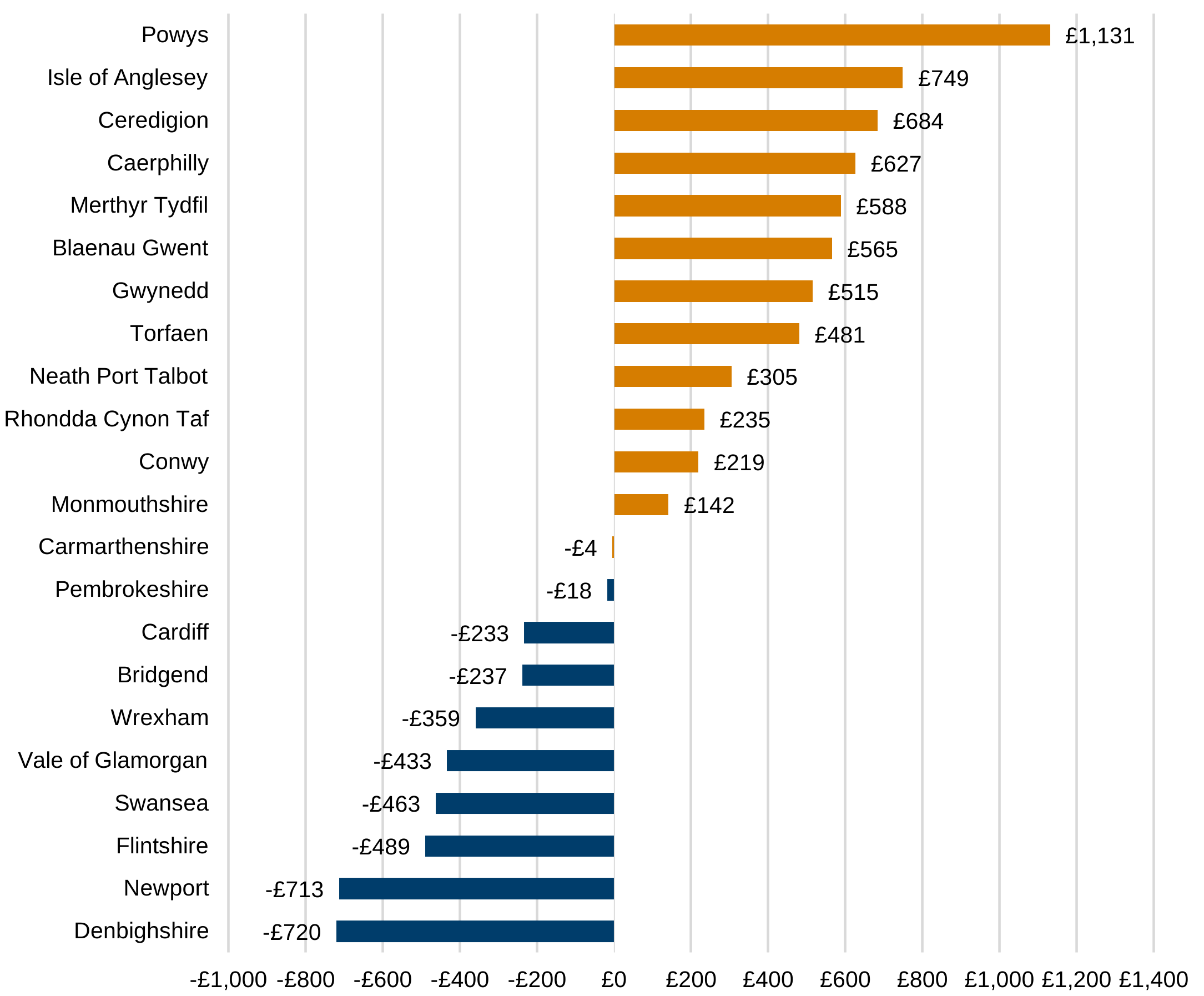
Description of Figure 1: Bar chart showing that Powys has the highest budgeted expenditure per pupil at £1,131 above the Wales average and Denbighshire has the lowest at £720 below the Wales average. Denbighshire’s year-on-year change reflects a technical adjustment to realign support costs.
Source: Welsh Government revenue account and section 52 returns.
More data on the school budgets be found in the associated data tables (MS Excel) and on the StatsWales website (Education) and StatsWales website (Delegated school budgets).
Figure 2: Delegation rates: percentage point difference from the Wales average, 2025-26
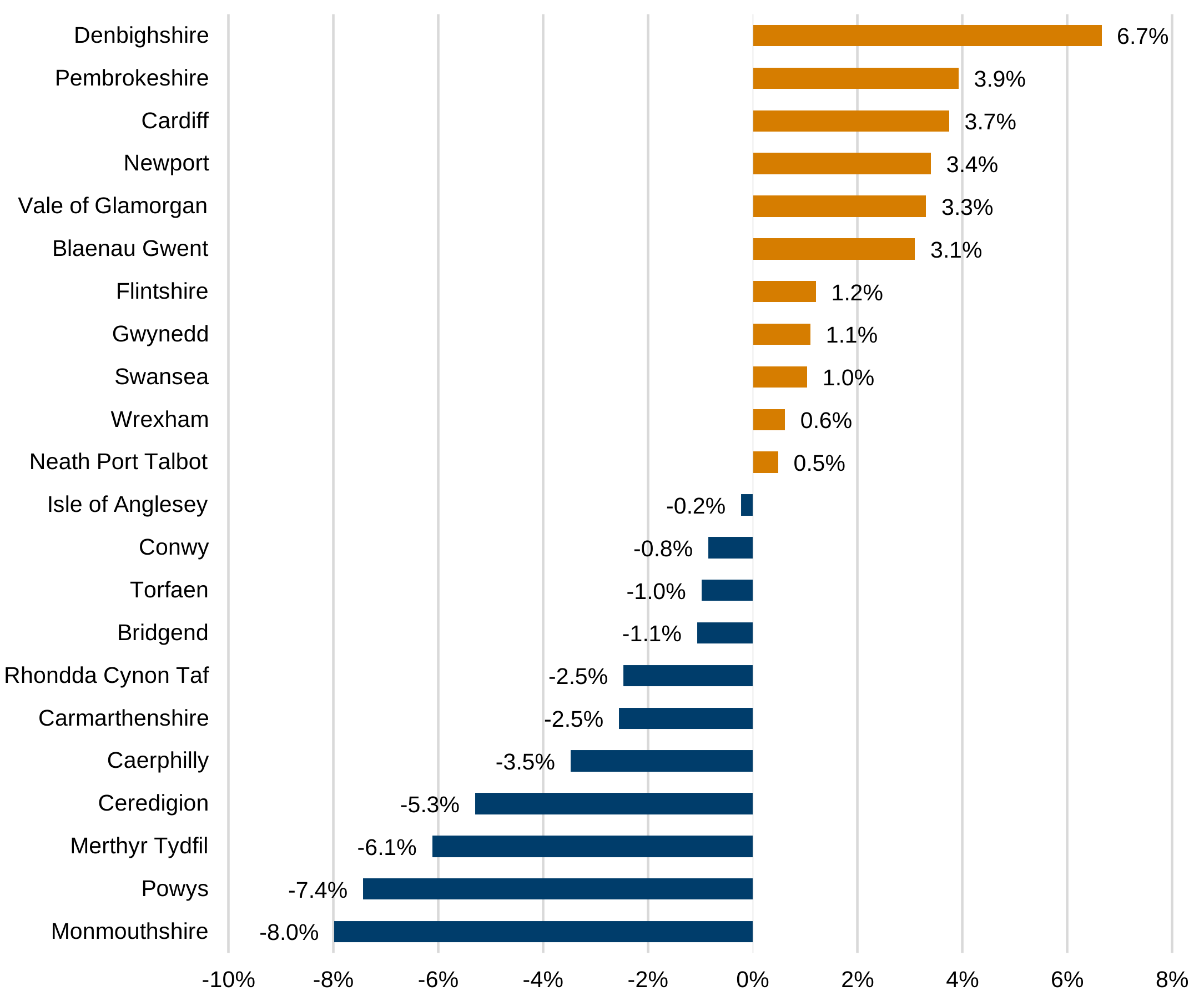
Description of Figure 2: Bar chart showing that Denbighshire has the highest delegation rate at 6.7% above the Wales average. Denbighshire's year-on-year change reflects a technical adjustment to realign support costs. Monmouthshire has the lowest delegation rate at 8.0% below the Wales average.
Source: Welsh Government revenue account and section 52 returns.
More data on the school budgets be found in the associated data tables (MS Excel) and on the StatsWales website (Education) and StatsWales website (Delegated school budgets).
Figure 3: Breakdown of schools budgeted expenditure, 2004-05 to 2025-26
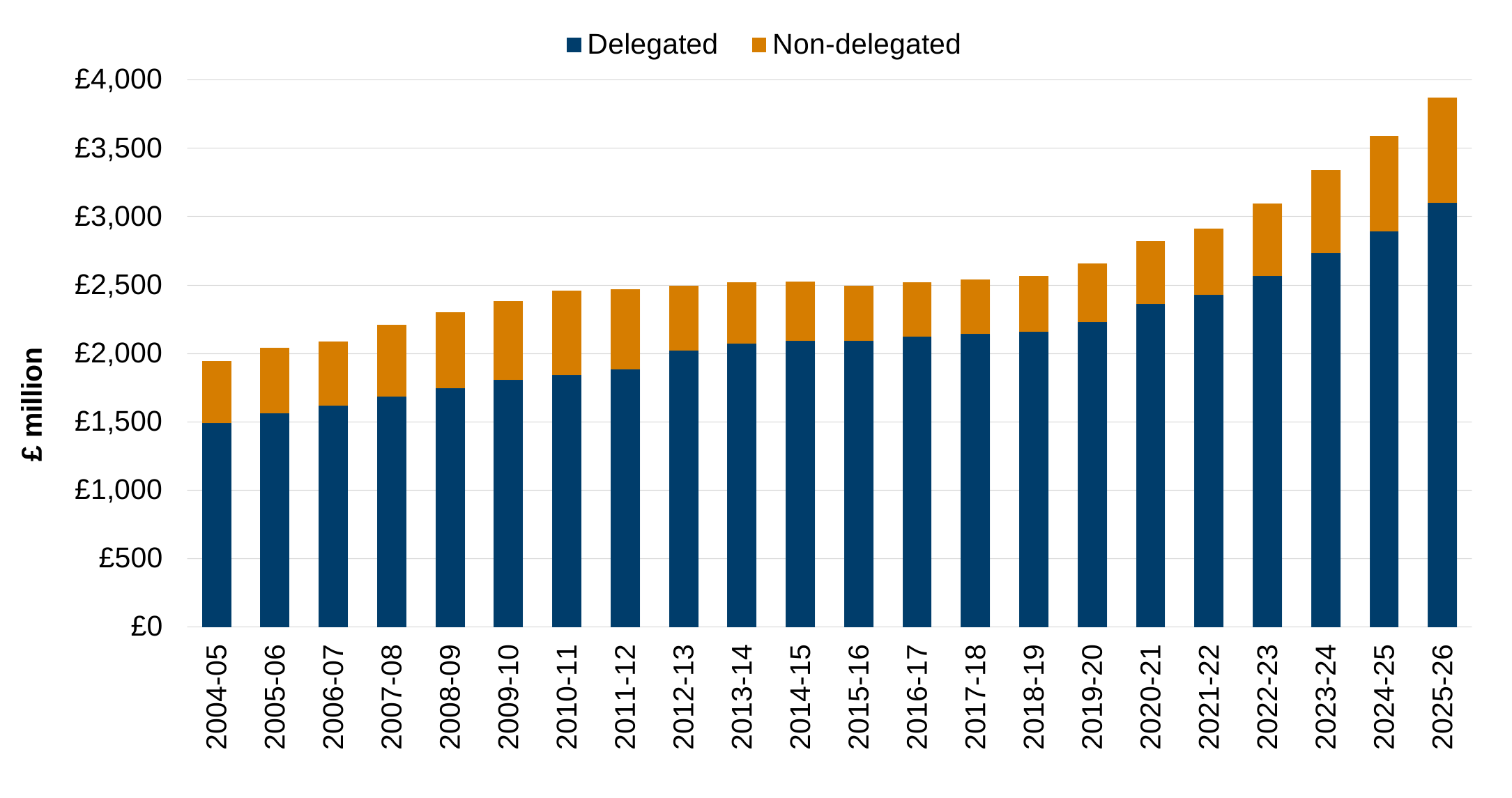
Description of Figure 3: Bar chart showing schools budgeted expenditure increasing over the past 6 years and is to increase by 7.8% in 2025-26.
Source: Welsh Government revenue account and section 52 returns.
More data on the school budgets be found in the associated data tables (MS Excel) and on the StatsWales website (Education) and StatsWales website (Delegated school budgets).
Figure 4: Breakdown of schools budgeted expenditure, 2025-26 (£ million)
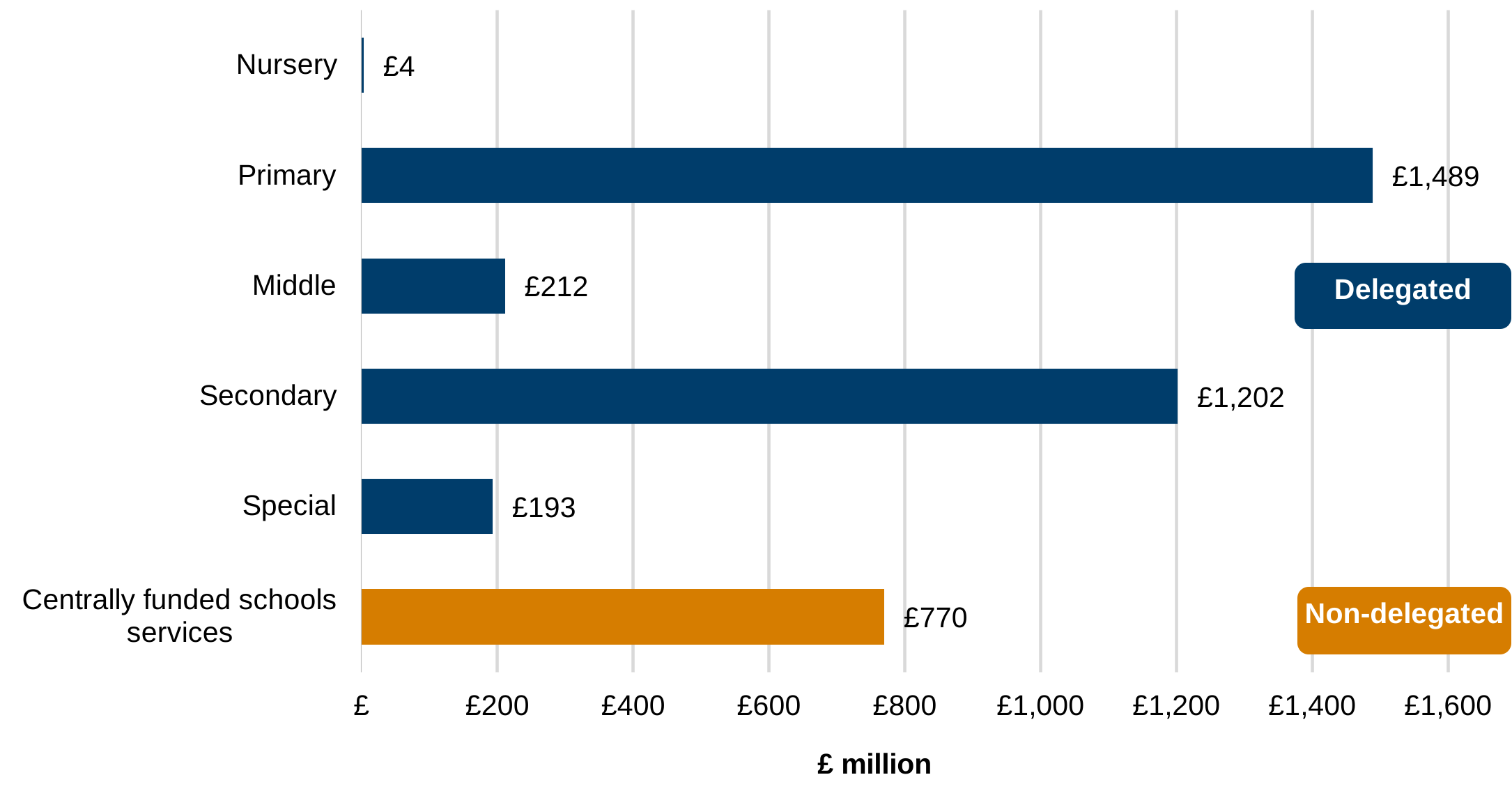
Description of Figure 4: Bar chart showing the distribution of budgeted expenditure between delegated budgeted expenditure by sector and budgets held centrally by the local authority. £770 million is retained centrally by local authorities to be spent on schools.
Source: Welsh Government revenue account and section 52 returns.
More data on the school budgets be found in the associated data tables (MS Excel) and on the StatsWales website (Education) and StatsWales website (Delegated school budgets).
Figure 5: Percentage change in school budgets per pupil, 2007-08 to 2025-26: cash and real terms (2023-24 prices)
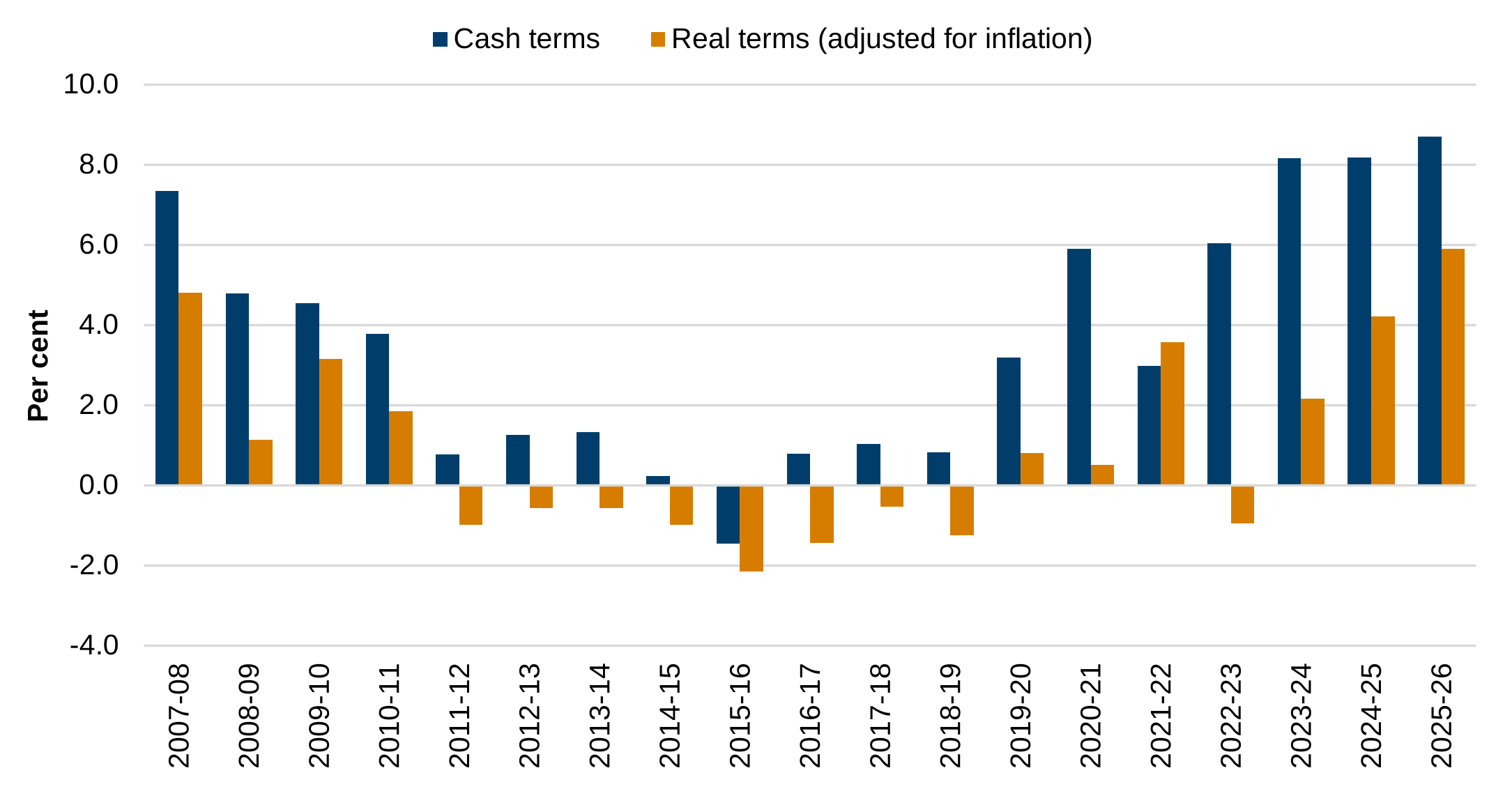
Description of Figure 5: Bar chart showing the percentage change over time in school budgets per pupil in cash and real terms. Over the past 10 years, school budgets per pupil have been increasing in cash terms in most years. There have been increases in real terms in each of the last 3 years.
Source: Welsh Government revenue account and section 52 returns.
More data on the school budgets be found in the associated data tables (MS Excel) and on the StatsWales website (Education) and StatsWales website (Delegated school budgets).
Comparison with England
In January 2012 we published a statistical article explaining why the Wales data on school funding cannot be compared with England. This situation arose due to the rollout of Academies in England and the separate funding and data arrangements that followed. The Chief Statistician published an update on this issue in March 2015.
In 2018, the Institute for Fiscal Studies (IFS) published a paper comparing Wales and England school expenditure per pupil having identified a new data source that enabled academies and maintained schools data in England to be combined and thus enabled a comparison of trends with Wales. Whilst there still may be some issues in the comparability of the data at a detailed level, we worked with the IFS researchers to consider their methods and believe it is the most robust comparison that currently exists of trends in recent years. It is important to note that the IFS analysis is on a different basis to our previous statistical publications and therefore cannot be directly compared.
The IFS report that school funding per pupil in England has fallen at a faster rate than in Wales over time largely due to the growth in pupil numbers in England.
The latest comparisons can be found in the latest IFS publication which compares per pupil expenditure across the UK.
Glossary
Data sources
The main sources of information on school budgets in Wales are the revenue account (RA) and the section 52 budget (S52B) returns. Wales collect 100% of returns from all twenty-two county councils.
The numbers of pupils used for the calculations are based on full-time equivalent pupil numbers in nursery, primary, secondary and special schools, as shown in S52 Part 1 returns, i.e. the pupil numbers on which Local Authorities (LAs) based their budgets.
The real terms data has been calculated using the GDP deflators published by the Treasury.
Effects of COVID-19 on previous years budgets
Local authorities in general did not budget on a COVID-19 basis so some central government support grants that were awarded in 2020-21 and 2021-22 are not included in the data. The budgets are therefore lower than actuals for the years affected by the COVID-19 pandemic.
Outturn data on school expenditure over time can be found at on the StatsWales website.
Background
Sources of funding
Local authority budgets for education services are funded mainly from shares of revenue support grant, council tax and redistributed non‑domestic rates. In addition, funding is provided through specific grants provided by the Welsh Government, including grants for post-16 provision in schools. The grant for post-16 provision in schools forms part of core funding for schools and is part of a local authority’s schools budget.
The provisions of the Education Act 2002 brought into force for financial year 2004-05 through the “LEA Budget, Schools Budget and Individual Schools Budget (Wales) Regulations 2003” require local authorities to allocate expenditure to 3 budgets. These are: LEA budget (covers central LA functions involved in Additional Learning Needs; school improvement; access to education; further education and training for young persons and adults and strategic management - as set out in Schedule 1 to the 2003 Regulations), the schools budget (covers expenditure directly aimed at supporting schools and comprises of expenditure on services for which the LA retains funding centrally, such as: Additional Learning Needs services, school meals and milk and the Individual Schools Budget or funding delegated/devolved to schools.
To focus comparisons, non-school expenditure such as further education and training for young persons and adults, youth service and home to college transport have been excluded throughout with the exception of table 1 which shows net revenue expenditure on total education i.e. all school and non-school expenditure.
The figure below shows the different strands of education expenditure within local authorities. For the purposes of this schools release, we focus on the first 3 strands and ignore any non-school expenditure (except in table 1 which shows the net revenue budget for total education).
Delegated or devolved school budget + School budget + LEA budget spent on schools = Total school budget + LEA budget spent on non-school services =Total education budget
Note
The ‘delegated or devolved school budget’ is also known as the ‘individual school budget’. The ‘school budget’ and ‘LEA budget spent on schools’ are held by the LEA.
Flying Start expenditure
For 2015-16 onwards, authorities were asked to report flying start consistently and class all related expenditure as Social Services rather than Education.
Quality and methodology information
Statement of compliance with the Code of Practice for Statistics
Our statistical practice is regulated by the OSR. OSR sets the standards of trustworthiness, quality and value in the Code of Practice for Statistics that all producers of official statistics should adhere to.
All of our statistics are produced and published in accordance with a number of statements and protocols to enhance trustworthiness, quality and value. These are set out in the Welsh Government’s Statement of Compliance.
These accredited official statistics (OSR) demonstrate the standards expected around trustworthiness, quality and public value in the following ways.
You are welcome to contact us directly with any comments about how we meet these standards. Alternatively, you can contact OSR by emailing regulation@statistics.gov.uk or via the OSR website.
Trustworthiness
The main sources of information on schools budgets are the revenue account (RA) and section 52 budget (S52B) return.
We collect 100% of returns from all twenty-two county councils. The collection is a 100% survey and as such no estimation of the figures is calculated, and hence there is no sampling error.
The data collection is carried out in March and April. The data is normally published in June, this allows time to collect, collate and validate the data.
In tables where figures have been rounded to the nearest final digit there may be an apparent discrepancy between the sum of the constituent items and the total as shown.
The statistics that are collected adhere to recognised professional standards. Specifically, the finance data is required under legislation and also must adhere to CIPFA accounting procedures. However, further guidelines are also available on the interpretation of these standards to ensure consistency.
Adhering to the professional code (CIPFA’s SeRCOP) has meant that changes over time have been minimal. Where there have been time series which are not comparable from the start of the time series to the end this will be shown clearly in the outputs. Where advance warning is known of future changes these will be pre-announced in accordance with Welsh Government arrangements.
The existence of a professional code and our adherence to it provides assurance that the data are consistent across domains, such as local authorities.
The Welsh local government finance statistics are published in an accessible, orderly, pre-announced manner on the Welsh Government website at 9:30am on the day of publication. All releases are available to download for free.
All outputs adhere to the Code of Practice by pre-announcing the data of publication through the upcoming calendar web pages.
Access to the data during processing is restricted to those involved in the production of the statistics, quality assurance and for operational purposes.
Pre-release recipient information can be found on the Welsh Government website.
Quality
The published figures are compiled by professional analysts using the latest available data and applying methods using their professional judgement and analytical skillset.
Statistics published by Welsh Government adhere to the Statistical Quality Management Strategy which supplements the Quality pillar of the Code of Practice for Statistics and the European Statistical System principles of quality for statistical outputs.
When data is received through the returns, validation checks are performed by Welsh Government statisticians and queries referred to local authorities where necessary. The statistical release is then drafted and quality assured by senior statisticians and published in line with the Code of Practice for Statistics (UK Statistics Authority).
The data collection contains multiple validation checks at source to ensure the best quality data is provided. This includes year-on-year tolerance checks and arithmetic consistency checks.
Once we receive the data, it goes through further validation and verification checks, for example:
- spend per head by local authority
- extra arithmetic consistency checks
- cross checks with other relevant data collections
- thorough tolerance checks
- outturn comparison with budgets
- cross checks with data from other government departments
- verification that data outside of tolerances are correct
More detailed guidance on the steps taken to ensure quality can be found in the Local government finance statistics: quality report.
Value
The statistics are important and have a number of uses, for example: advice to Ministers; local government finance revenue settlement calculations; unitary authority comparisons and benchmarking; expenditure in Wales compared to other countries; informing the debate in the Senedd and beyond; assisting in research in public expenditure issues; economic analysis.
More detailed data are also available at the same time on the StatsWales website (Education) and StatsWales website (Delegated school budgets) and this can be manipulated online or downloaded into spreadsheets.
Data on school budgets are also available for England (gov.uk) and Scotland (Scottish Government).
We aim to use Plain English in our outputs and all outputs adhere to the Welsh Government accessibility policy.
Well-being of Future Generations Act (WFG)
The Well-being of Future Generations Act 2015 is about improving the social, economic, environmental and cultural wellbeing of Wales. The Act puts in place seven wellbeing goals for Wales. These are for a more equal, prosperous, resilient, healthier and globally responsible Wales, with cohesive communities and a vibrant culture and thriving Welsh language. Under section (10)(1) of the Act, the Welsh Ministers must (a) publish indicators (“national indicators”) that must be applied for the purpose of measuring progress towards the achievement of the wellbeing goals, and (b) lay a copy of the national indicators before Senedd Cymru. Under section 10(8) of the Well-being of Future Generations Act, where the Welsh Ministers revise the national indicators, they must as soon as reasonably practicable (a) publish the indicators as revised and (b) lay a copy of them before the Senedd. These national indicators were laid before the Senedd in 2021. The indicators laid on 14 December 2021 replace the set laid on 16 March 2016.
Information on the indicators, along with narratives for each of the wellbeing goals and associated technical information is available in the Wellbeing of Wales report.
Further information on the Well-being of Future Generations (Wales) Act 2015.
The statistics included in this release could also provide supporting narrative to the national indicators and be used by public services boards in relation to their local wellbeing assessments and local wellbeing plans.
Further details
A full detailed breakdown over time of the data contained in this release is available on our StatsWales website (Education) and StatsWales website (Delegated school budgets).
We want your feedback
If you have any feedback on this statistical release especially on the change from PDF to HTML and associated data tables then please contact us using the email address below.