Adroddiad rheoli gwastraff trefol awdurdod lleol: Ebrill 2024 i Mawrth 2025
Data ar yr ailddefnyddio, ailgylchu a chompostio o wastraff trefol ar gyfer Ebrill 2024 i Mawrth 2025. Saesneg yn unig.
Ar y dudalen hon
Context
The release presents information on local authority municipal waste collected and sent for treatment from household and non-household sources. The data are from the Waste Data Flow system monitored by Natural Resources Wales (NRW). In its current waste strategy ‘Beyond Recycling’ (2021), the Welsh Government set statutory targets of recycling a minimum of 64% of waste by 2019 to 2020, and 70% of waste by 2024 to 2025. The strategy contains a number of other targets.
A new section on workplace recycling has been included in this year’s release.
Throughout the report, references to financial years are used. When referencing financial years 'to' are used (e.g. 2024 to 2025).
Main results
The recycling rate is defined as the percentage of local authority municipal waste that was reused, recycled or composted. This has increased considerably during the last two decades (from around 5% in the late 1990s).
The recycling rate increased from 66.6% in 2023 to 2024 to 68.4% in 2024 to 2025. This is lower than the target of 70% set for 2024 to 2025 in the ‘Beyond Recycling’ (2021) Strategy.
- 20 of the 22 local authorities reported an increase in their recycling rate compared with 2023 to 2024
- 12 of the 22 local authorities met or exceeded the 2024 to 2025 70% target
- 1.42 million tonnes of local authority municipal waste was generated in 2024 to 2025, a slight increase (0.6%) since 2023 to 2024, and the third lowest recorded since 2001 to 2002
- residual household waste per person decreased by 3.3%, from 168kg in 2023 to 2024 to 163kg in 2024 to 2025
Figure 1: percentage of local authority municipal waste reused, recycled or composted by year, between 2010 to 2011 and 2024 to 2025
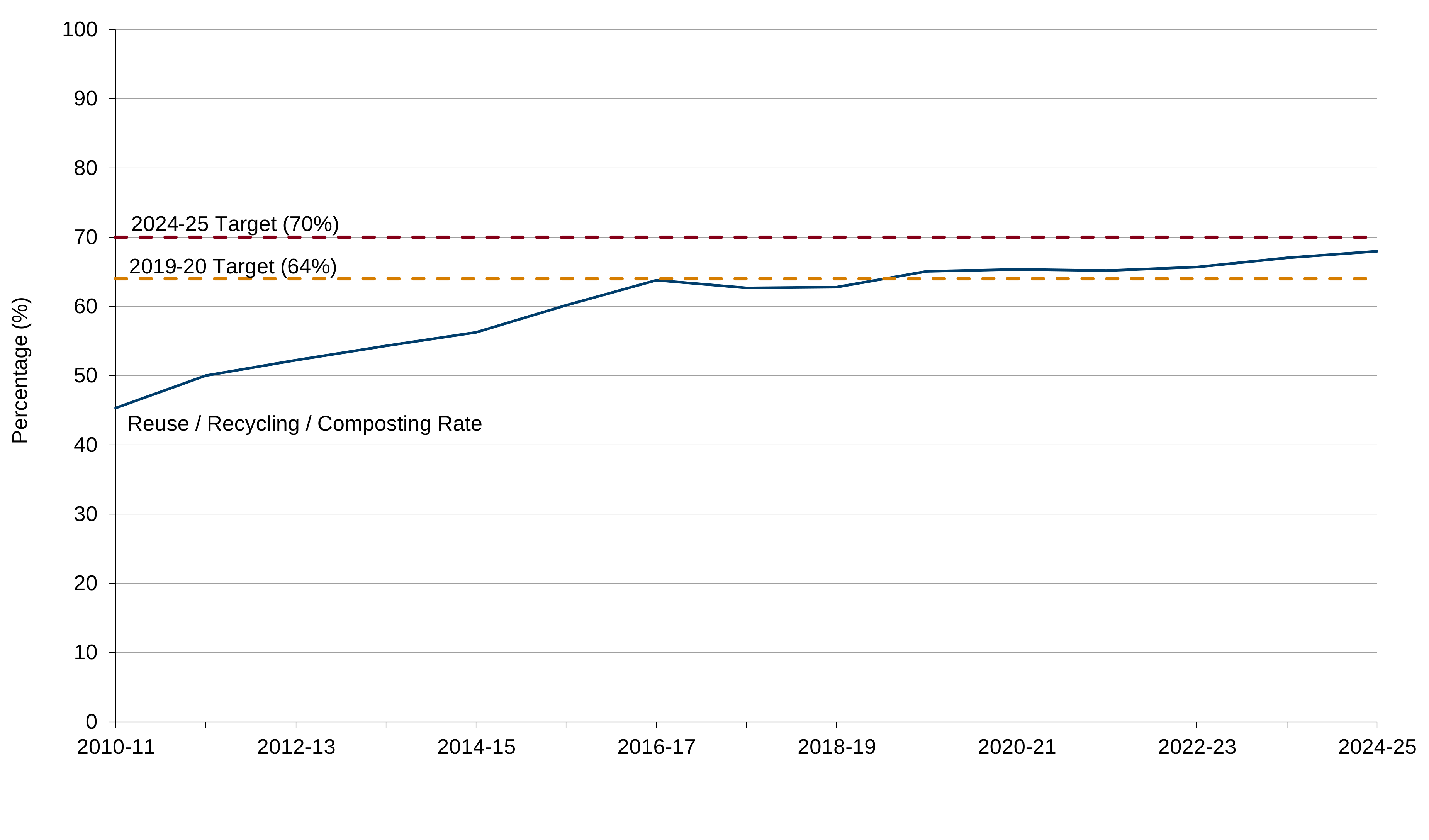
Description of figure 1: a line chart to show the percentage of local authority municipal waste reused, recycled or composted between 2012 to 2013 and 2024 to 2025 for Wales. The chart shows that the recycling rate has generally increased since 2010 to 2011. The rate meets the annual target for each year between 2019 to 2020 and 2023 to 2024 but is lower than the target for 2024 to 2025.
Source: WasteDataFlow
Data limitations
Natural Resources Wales undertakes ongoing validation of waste data submitted by local authorities to Waste Data Flow.
Additional validation undertaken by NRW has identified that the proportion of wood reported as recycled or reused is likely to have been over‑stated in recent years. This affects the headline recycling rates.
Wood usually contributes around 4 percentage points to the overall national recycling rate. Based on the information available, we estimate that the national recycling rate for Wales in 2024 to 2025 is likely to be a minimum of 1 percentage point lower than reported. The impact at local authority level varies: some authorities are unaffected, while for others the rate could be between 1 and 5 percentage points lower.
It is not possible to revise the figures for 2024 to 2025 or for previous years as the available information does not allow the extent of the issue to be calculated with sufficient accuracy. Future reporting arrangements for wood recycling are being reviewed, and further information will be provided in forthcoming releases.
Users can continue to refer to the overall recycling trends and compare across years, but should note that the headline recycling rate is likely to be lower than published. Wood recycling figures should be considered low quality and should not be used for detailed analysis or for comparing performance between authorities. The accompanying quality report provides further detail.
The coronavirus (COVID-19) pandemic impacted on the collection and management of Welsh local authority municipal waste during 2020 to 2021 and 2021 to 2022. Please see the quality report.
Local authority municipal (household and non-household) that was reused, recycled or composted
The headline recycling rate is defined as: the amount of local authority municipal waste (excluding abandoned vehicles) that was sent for reuse, recycling or composting divided by the total amount of waste in tonnes collected by or on behalf of local authorities. It includes both household and non-household waste. More information about recycling rates can be found on the My Recycling Wales website.
The overall recycling rate for Wales increased from 66.6% in 2023 to 2024 to 68.4% in 2024 to 2025.
Figure 2: percentage of local authority municipal waste prepared for reuse, recycling or composting in Wales, between 2010 to 2011 and 2024 to 2025 [Note 1]
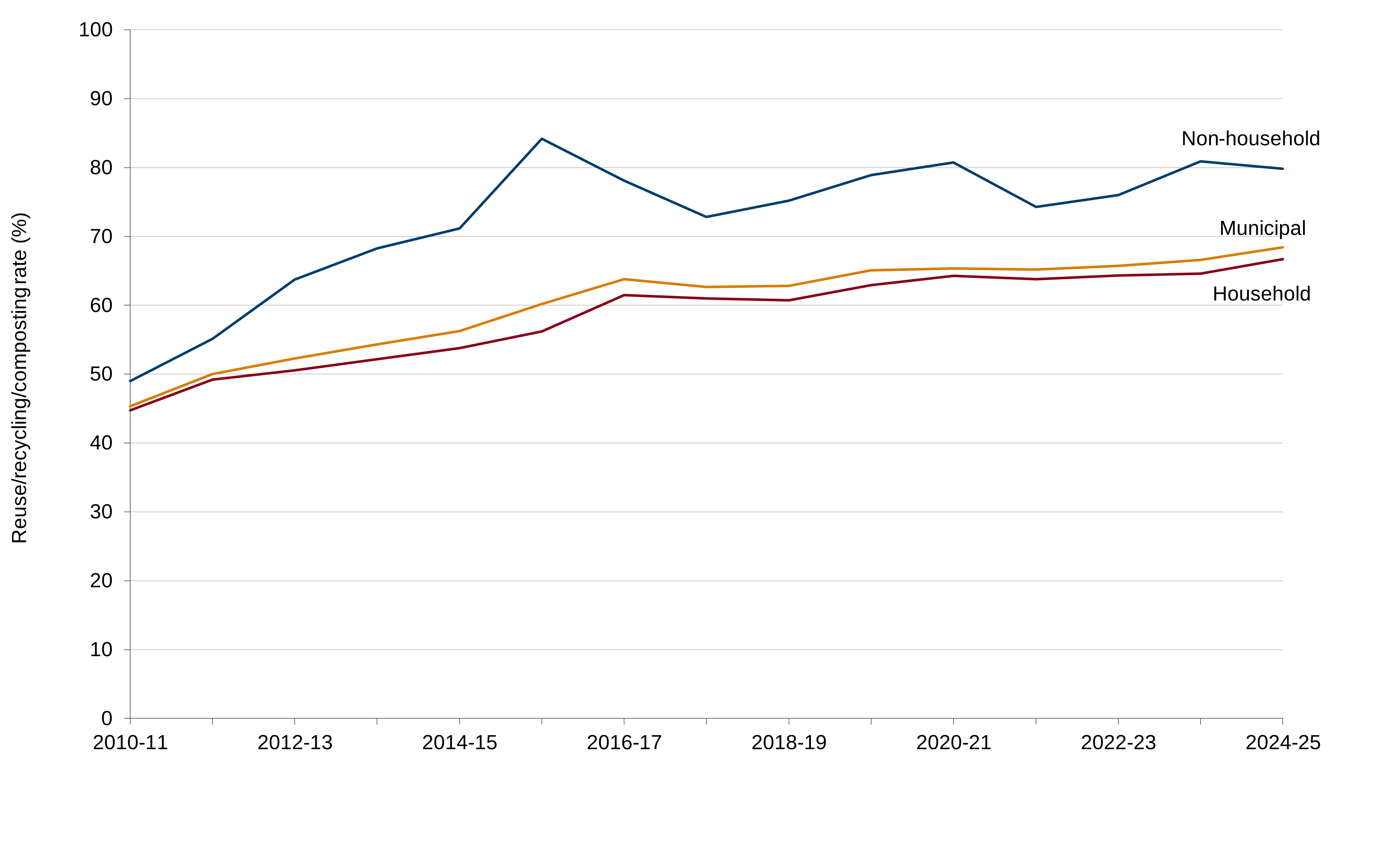
Description of figure 2: a line chart to show the percentage of local authority municipal waste prepared for reuse, recycling or composting in Wales between 2010 to 2011 and 2024 to 2025. The chart shows that, generally, both household and non-household recycling rates have increased.
Source: WasteDataFlow
[Note 1] Household and non-household recycling rates have been estimated based on total waste sent for recycling. These are based on applying an apportionment of waste collected from household and non-household sources to the sent total tonnes. The non-household rate is more sensitive to change since it accounts for a much lower proportion of the collected total compared to household. A decrease in either rate does not necessarily mean less waste was collected for recycling from the source since this rate is also influenced by any changes to residual waste collected from either source.
The household recycling rate increased from 64.6% in 2023 to 2024 to 66.7% in 2024 to 2025. During the same period, the non-household recycling rate decreased by 1.1 percentage points to 79.8%. Household waste accounts for the majority of all municipal waste collected (87.3%), and therefore changes in household recycling rates have a greater impact on the overall recycling rate than the non-household recycling rate.
Figure 3: local authority municipal waste reuse, recycling, or composting rates, by local authority, 2023 to 2024 and 2024 to 2025 [Note 1]
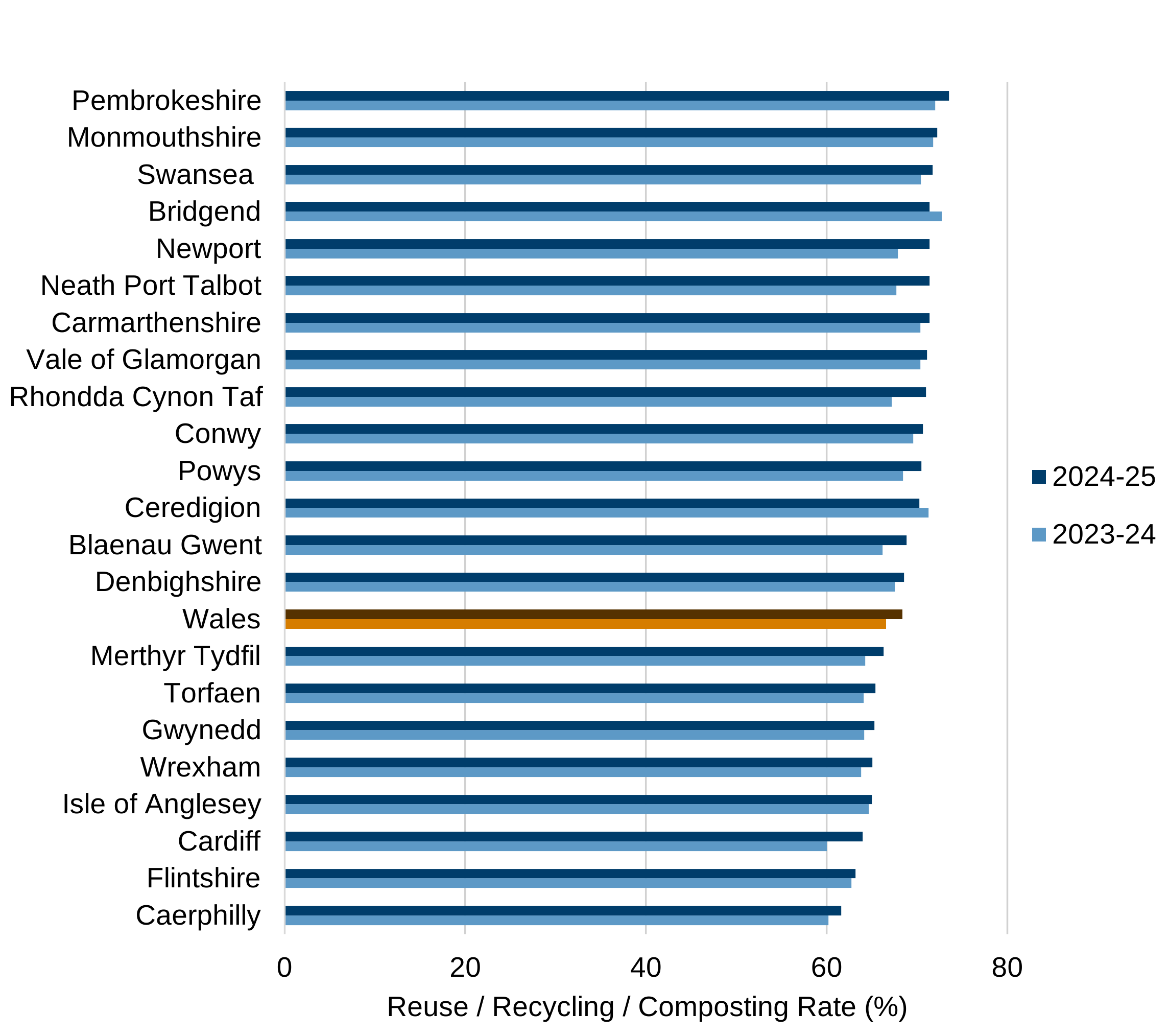
Description of figure 3: a comparative bar chart showing local authority municipal waste reuse, recycling or composting rates by local authority for the years 2023 to 2024 and 2024 to 2025. The chart shows that 20 local authorities reported an increase in recycling rates in 2024 to 2025 compared with 2023 to 2024.
Source: WasteDataFlow
[Note 1] Local authorities are listed in order of municipal waste reuse, recycling or composting rates based on 2024 to 2025 figures, from highest to lowest.
Data for 2024 to 2025 shows that:
- 20 of the 22 local authorities reported an increase in their recycling rate compared with 2023 to 2024
- recycling rates across local authorities varied from 61.6% in Caerphilly to 73.5% in Pembrokeshire
- 12 local authorities met the 2024 to 2025 statutory target of 70%: Bridgend, Carmarthenshire, Ceredigion, Conwy, Monmouthshire, Neath Port Talbot, Newport, Pembrokeshire, Powys, Rhondda Cynon Taf, Swansea and Vale of Glamorgan
- 10 did not meet the target: Blaenau Gwent, Caerphilly, Cardiff, Denbighshire, Flintshire, Gwynedd, Isle of Anglesey, Merthyr Tydfil, Torfaen and Wrexham
- recycling rates for Caerphilly and Flintshire were below the previous target of 64% (set for 2019 to 2020)
Waste generated (collected)
‘Waste generated (collected)’ is defined as waste collected directly, or from sites, by local authorities. There are sometimes differences in the amount of waste generated and the amount of waste sent for disposal by a local authority. This is due to stockpiling of waste collected in a previous year, delays in reporting across periods, inconsistencies in measurement as waste is weighed when it is collected and again when it is sent for treatment, and loss in weight through various treatment processes.
In general, the total amount of local authority municipal waste generated has gradually decreased in Wales since the early 2000s (with some fluctuation in recent years).
Figure 4: total local authority municipal waste generated in Wales (thousand tonnes), between 2001 to 2002 and 2024 to 2025
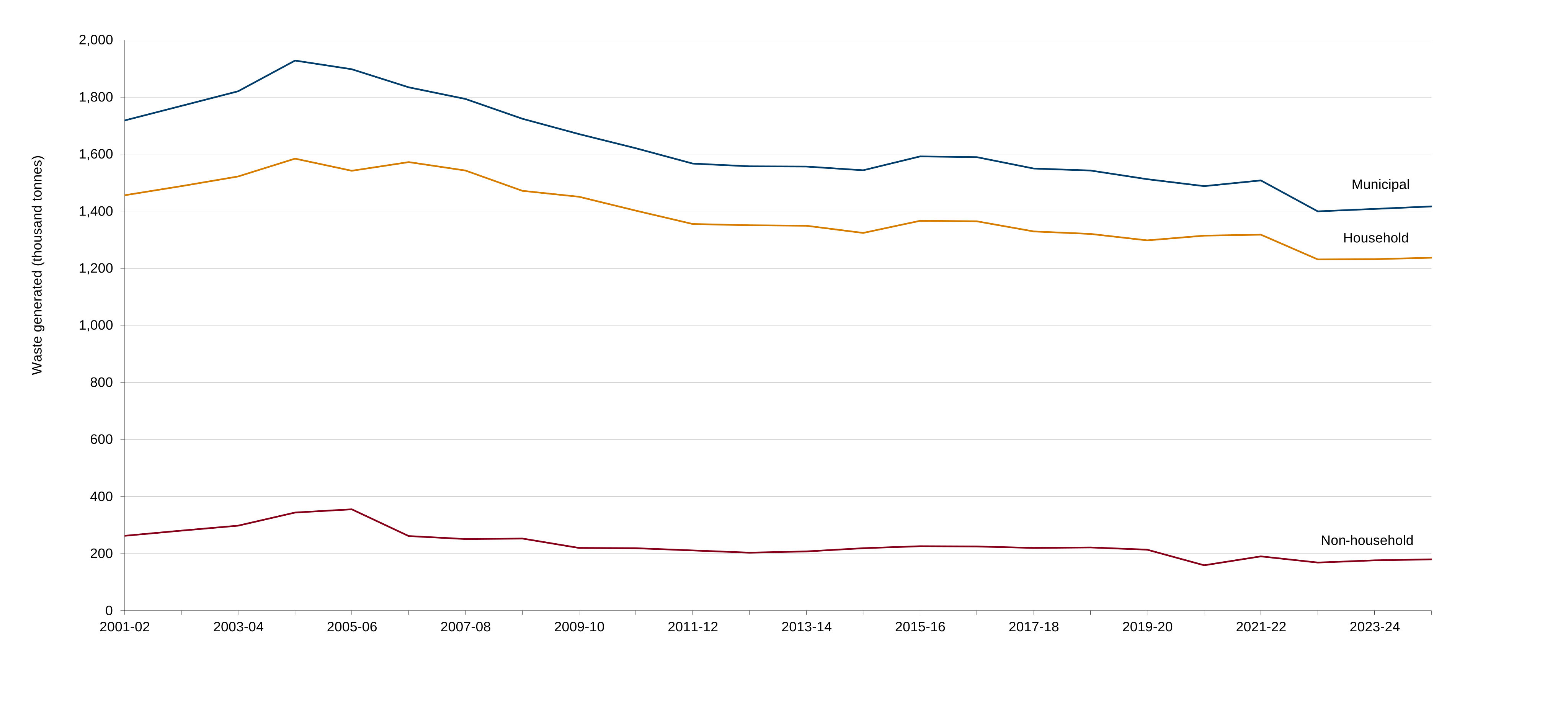
Description of Figure 4: A line chart to show the total local authority municipal waste generated in Wales in thousands of tonnes between 2001 to 2002 and 2024 to 2025. The chart shows that there has generally been a decrease in waste generated and that a larger proportion of all municipal waste is generated from household waste.
Source: WasteDataFlow
1.42 million tonnes of municipal waste was generated in Wales in 2024 to 2025. This is the third lowest total recorded since 2001 to 2002. However, the total has increased every year since the lowest point of 1.4 million tonnes in 2022 to 2023.
Since 2001 to 2002, total municipal waste has decreased by 17.5%, largely driven by a decrease in household waste. Between 2023 to 2024 and 2024 to 2025, total municipal waste increased by 0.6%, with household waste increasing by 0.4% and non-household waste increasing by 0.4%.
During 2023 to 2024, NRW increased validation of local authority reported household and non-household splits of waste collected. This has helped to improve the accuracy of the estimated split for 2023 to 2024. However, this needs to be taken into consideration when comparing to the splits from previous years.
The ‘Beyond Recycling’ (2021), strategy includes a target to reduce the total amount of household waste collected to 761 thousand tonnes by 2050. A reduction path was implemented from 2006 to 2007 to reduce household waste by 18 thousand tonnes each year, in order to reach the target. Figure 5 shows the amount of household waste collected compared to the reduction path.
Figure 5: household waste collected in Wales between 2006 to 2007 and 2024 to 2025 (thousand tonnes) compared to the reduction path
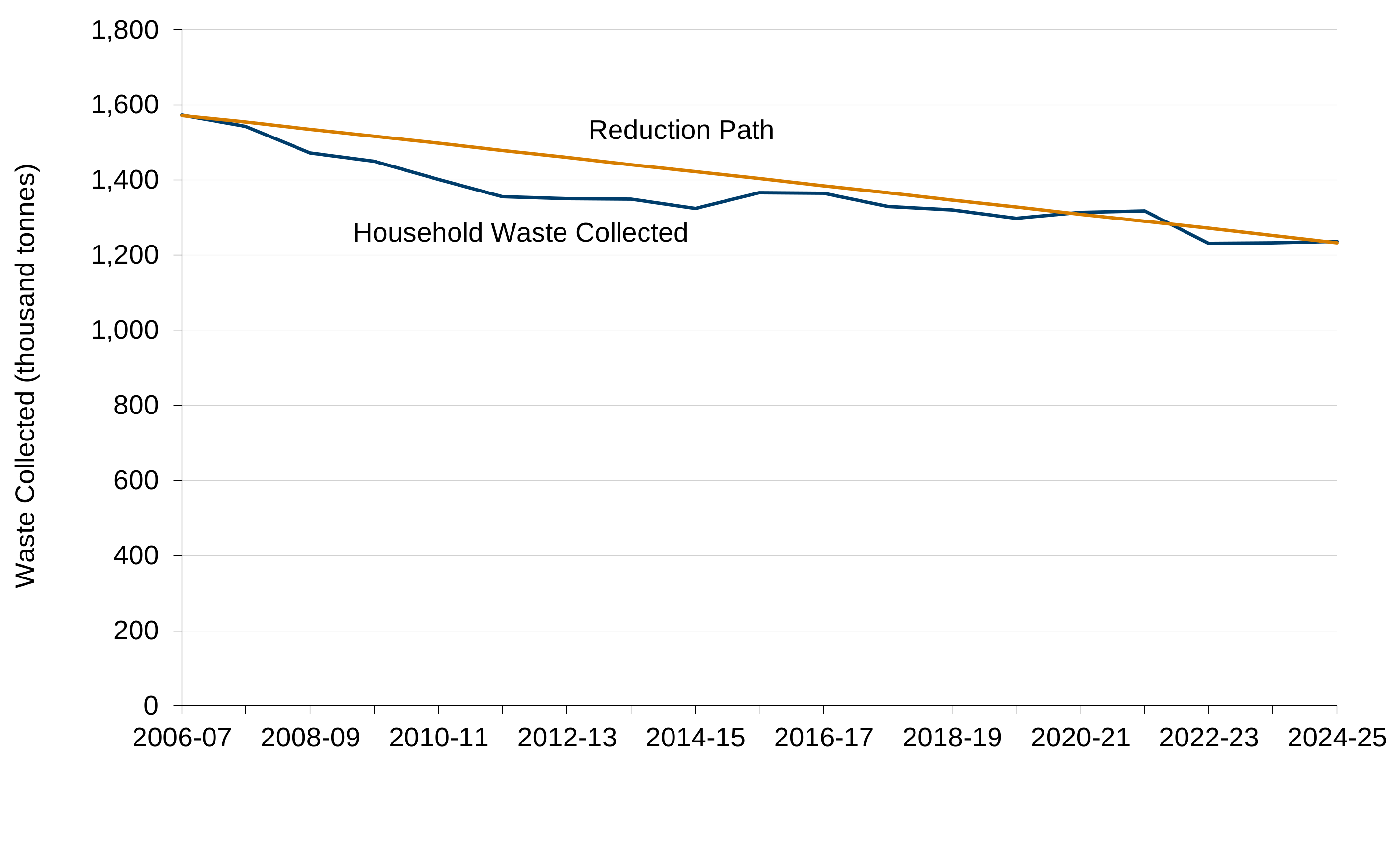
Description of figure 5: a line chart showing household waste collected in Wales from 2006 to 2007 to 2024 to 2025 in thousand tonnes compared to the reduction path of an annual 1.2% decrease in household waste collection from 2006 to 2007. The chart shows that the amount of household waste collected has decreased with a similar trend to the reduction path, however in recent years the amount of household waste collected has stayed at a similar level rather than decreasing.
Source: WasteDataFlow
The amount of household waste collected has gradually decreased from 1,572 thousand tonnes in 2006 to 2007 to 1,237 thousand tonnes in 2024 to 2025. At first, the reduction in household waste slightly exceeded the steady decrease of the reduction path, reaching a peak in 2011 to 2012 when waste collected was 7.8 percentage points below the reduction path.
Figure 6: waste collected for reuse, recycling, or composting in Wales by material, 2024 to 2025 (%)
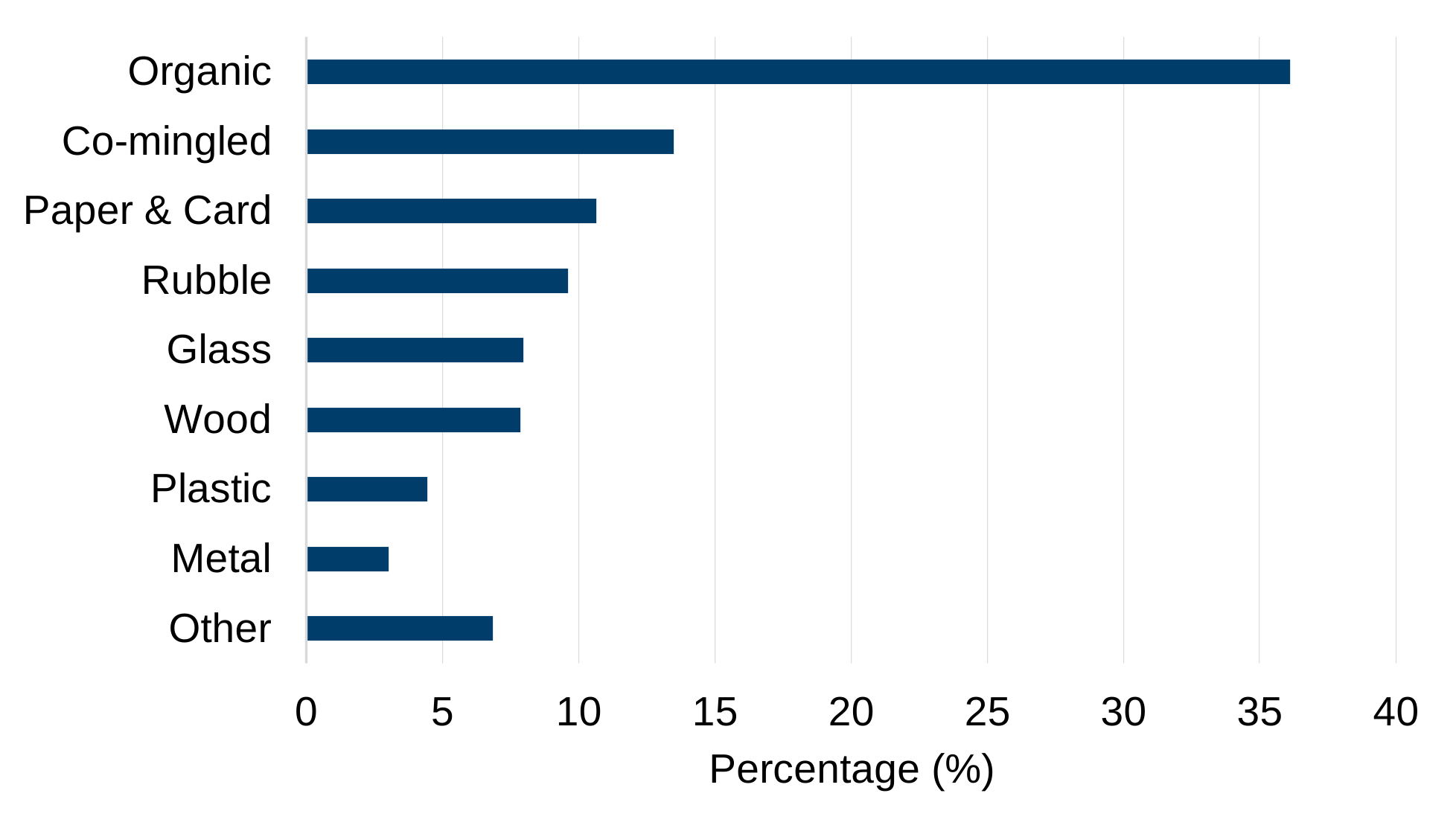
Description of figure 6: a bar chart to show the waste collected for reuse, recycling or composting in Wales by material for the year 2024 to 2025.
Source: WasteDataFlow
Data for 2024 to 2025 shows that:
- over a third (36.1%) of all material collected for reuse, recycling or composting was organic material (organic waste includes food, green (garden) and other compostable waste)
- the volume of organic waste increased by 6.7% compared to 2023 to 2024, with notable increases in separate green & food collections from both household and non-household sources
- co-mingled materials accounted for 13.5% of all waste collected for reuse, recycling or composting
- 11.7% of waste collected for reuse, recycling or composting was classified as ‘plastic’ or ‘metal’ - these make up the lowest identified material collected for reuse, recycling or composting
Plastic, metals, paper and glass are co-collected by some local authorities, therefore are included in the ‘co-mingled’ category in Figure 6.
Residual household waste
‘Residual household waste’ is waste generated that is not included in separate recycling or composting collection rounds. That is, household waste that is not prepared for reuse, recycling or composting. The amount of residual household waste per person forms one component of the Wellbeing of Future generation’s indicator on waste (see related statistics section).
Figure 7: residual household waste in Wales (Kilograms), between 2012 to 2013 and 2024 to 2025 [Note 1] [Note 2]
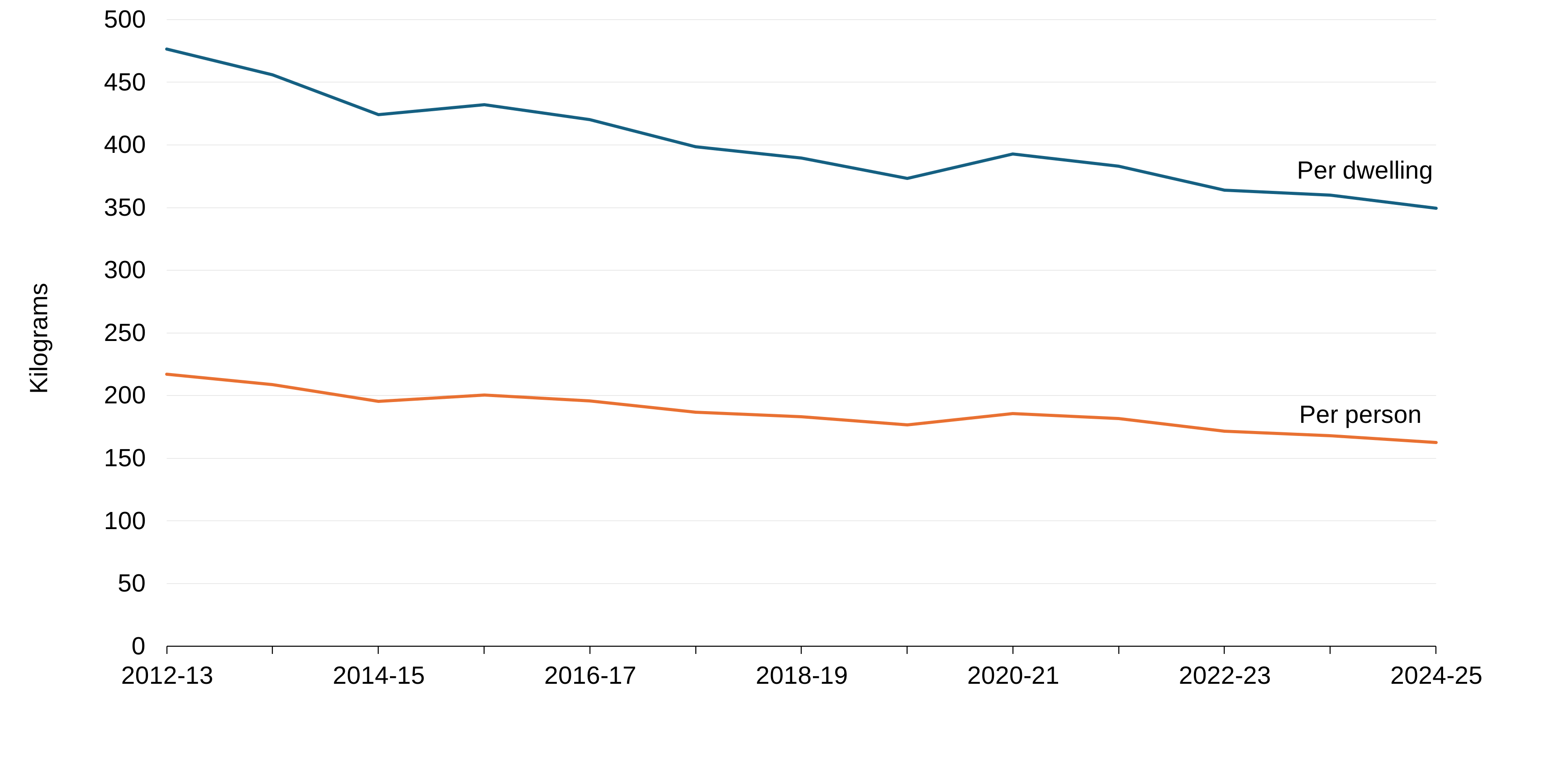
Description of figure 7: a line chart to show the residual household waste per person and per dwelling in Wales in Kilograms between 2012 to 2013 and 2024 to 2025. The chart shows that there has been a decrease in waste produced per person and per dwelling.
Source: WasteDataFlow, Welsh Government and ONS
[Note 1] The population data is from mid-year 2024 estimates
[Note 2] The dwelling data is from March 2024 estimates
Residual household waste per person decreased by 3.3%, falling from 168kg in 2023 to 2024 to 163kg in 2024 to 2025. Residual household waste per dwelling also decreased by 2.9%, falling from 360kg in 2023 to 2024 to 349kg in 2024 to 2025.
Waste management (sent)
‘Waste management’ data is based on the amount of waste sent for treatment, rather than the amount of waste generated (collected) by local authorities. The treatment of waste can consist of physical, thermal, chemical or biological processes, including sorting, that change the characteristics of the waste in order to reduce its volume or hazardous nature, facilitate its handling or enhance recovery.
There are sometimes differences in the amount of waste generated and the amount of waste sent for disposal by a local authority. This is due to stockpiling of waste collected in a previous year, delays in reporting across periods, inconsistencies in measurement as waste is weighed when it is collected and again when it is sent for treatment, and loss in weight through various treatment processes.
Note that the figures for incineration are based on the net tonnages rather than the gross total sent for incineration. The net figures subtract the amount of residual ash used for recycling. See the glossary for more detail.
Figure 8: waste sent for treatment by management method (%), between 2012 to 2013 and 2024 to 2025 [Note 1]
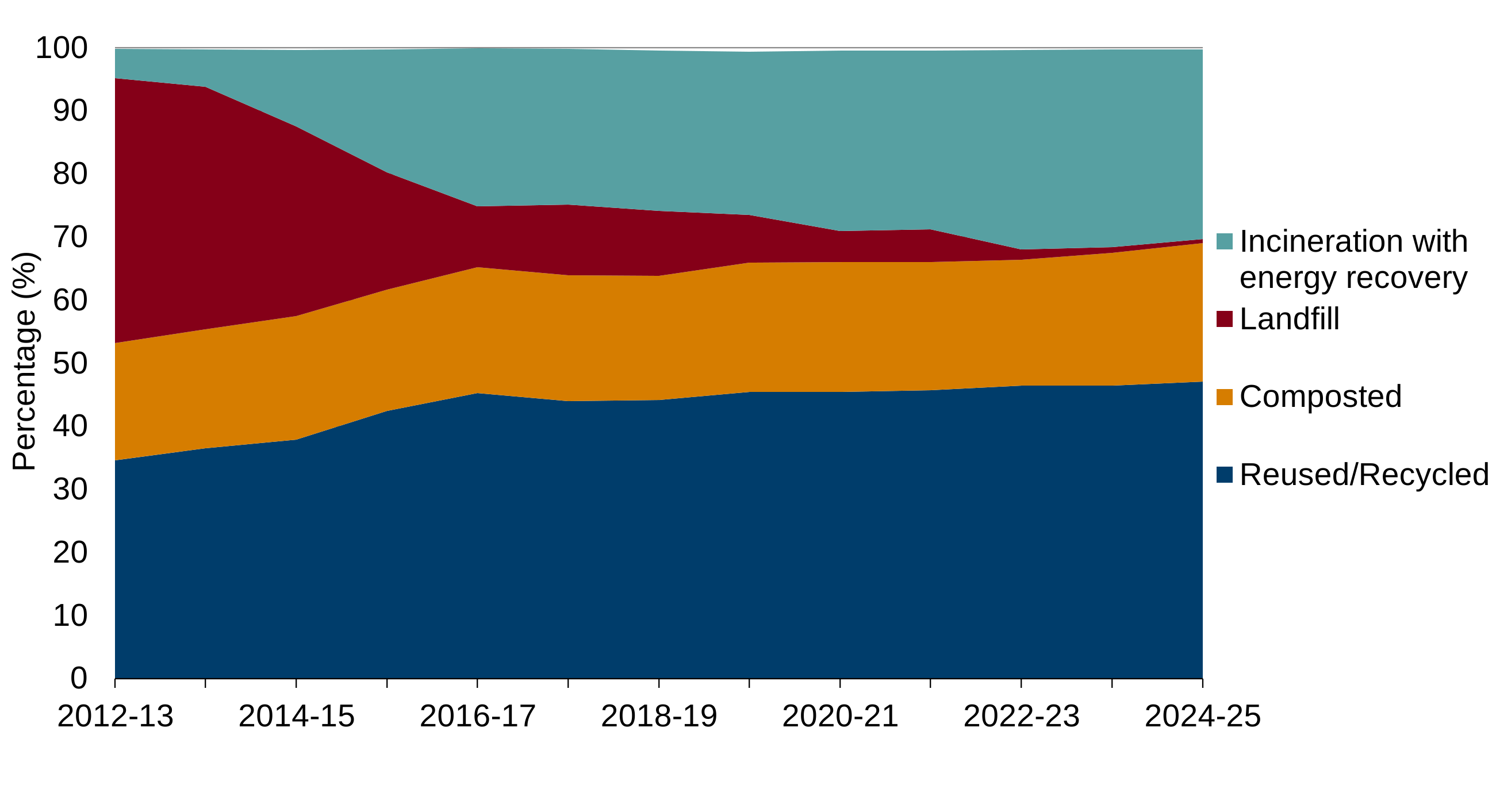
Description of figure 8: a filled line chart to show the waste sent for disposal or treatment by management method as percentages between 2012 to 2013 and 2024 to 2025. The chart shows that the percentage of waste disposed at landfill sites has decreased whilst there has been a significant increase in waste disposed through incineration. The percentage of waste being reused, recycled or composted has also increased substantially over the period.
Source: WasteDataFlow
[Note 1] Figure 8 is a summary of all waste managed during the period. It uses the total waste managed as a denominator as opposed to the total waste generated, therefore recycling and landfill percentages are not directly comparable to national performance and local authority strategic indicators.
The latest data shows that:
- between 2012 to 2013 and 2024 to 2025, the amount of waste sent for treatment declined by 8%
- there have been some considerable changes in management method; see The State of Natural Resources Report (SoNaRR) 2025 in useful links for further information
- there has been a significant decrease in the proportion of waste disposed of via landfill, falling from 42.0% in 2012 to 2013 to 0.7% in 2024 to 2025
- there has been a substantial increase in the proportion of waste disposed of via incineration with energy recovery (rising from 4.7% in 2012 to 2013 to 30.0% in 2024 to 2025)
- in 2024 to 2025, of all waste sent for disposal or treatment, 969 thousand tonnes were reused, recycled, or composted
- the amount of waste reused or recycled in 2024 to 2025 was 47.1%, an increase of 0.7 percentage points compared with 2023 to 2024
Workplace recycling
The Workplace Recycling Law, which came into force in Wales on 6 April 2024, requires all occupiers of workplaces - including businesses, charities, and public sector bodies - to present specified recyclable materials separately from each other and from residual waste, and require collectors to keep these materials separate. The regulations also ban certain separately collected recyclable materials from incineration and landfill, prohibit all wood waste from landfill, and introduce a ban on disposing of food waste to sewer from workplaces.
Waste data flow data on non-household waste collected by local authorities largely relates to workplace premises; however, it does not capture waste from all workplaces in Wales. By comparing local authority municipal waste data with findings from the 2018 Industrial and Commercial Waste Survey (NRW), we estimate that local authorities collect a relatively small proportion of total workplace waste (less than a quarter). It is unclear whether this data is representative of all workplaces in Wales. However, these figures provide useful insight into the scale of non-household waste collected at the kerbside by local authorities.
| Selected materials | 2023-24 (tonnes) | 2024-25 (tonnes) | Difference (tonnes) | % Difference |
|---|---|---|---|---|
| Food | 6,608 | 10,231 | 3,623 | 54.8% |
| Paper & Card | 7,742 | 10,874 | 3,132 | 40.5% |
| Metal | 844 | 1,006 | 162 | 19.2% |
| Plastic | 926 | 1,056 | 129 | 14.0% |
| Glass | 3,387 | 4,527 | 1,140 | 33.7% |
Description of Table 1: the materials within this table have been selected to align with workplace recycling regulations which came into effect in 2024.
Source: WasteDataFlow
Table 1 shows that:
- food waste saw the largest percentage difference in the volume of waste collected between 2023 to 2024 and 2024 to 2025, with an increase of 54.8%
- of the materials collected for recycling, metal and plastic increased the least, increasing by 19.2% and 14.0% respectively
- residual waste dropped 15.8% between 2023 to 2024 and 2024 to 2025
These material types may have been estimated by local authorities where it is not feasible to weigh separately at the point of collection or first waste receiving site.
Material figures are based on tonnages reported as collected for recycling and residual figures are those reported as collected for disposal. This is prior to treatment of the waste tonnages by the waste industry so not necessarily the end fate for all these tonnages.
See the quality report for more details.
Related statistics
Recycling in the UK
Municipal waste management statistics are also published for other parts of the UK. The Department for Environment, Food and Rural Affairs publish an annual UK Statistics on Waste data set, which includes a ‘Waste from households’ recycling rate for each UK country. This is based on a methodology that is as consistent as possible across the UK, but differs slightly from the Wales household recycling rate appearing earlier in this release. Latest data shows that the Waste from households recycling rate for Wales is considerably higher than for the other UK countries.
Figure 9: recycling rate by UK country, 2015 and 2023 (%) [Note 1] [Note 2]
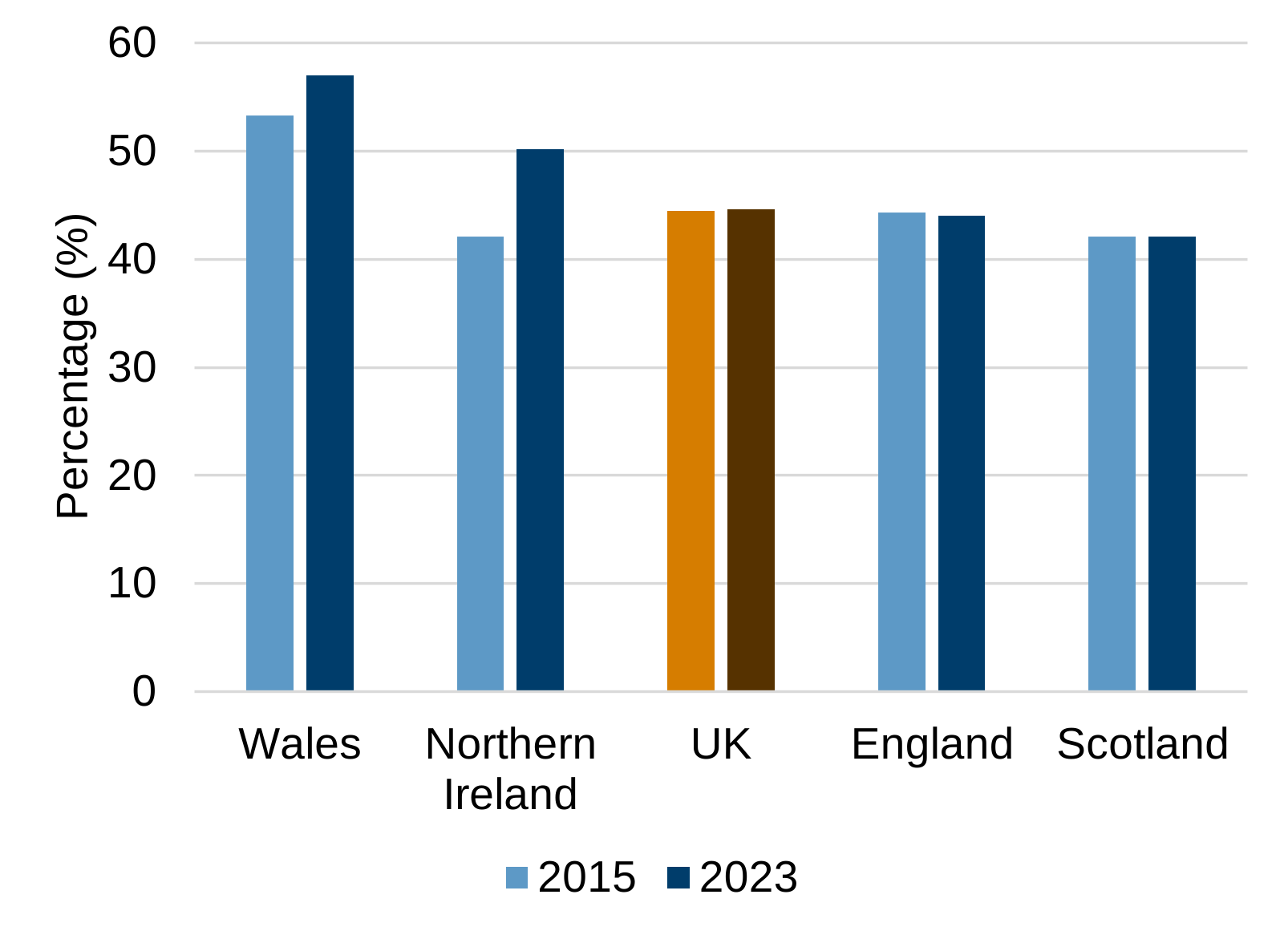
Description of figure 9: a bar chart to show the recycling rate by UK country as a percentage of household waste generated in 2015 and 2023.
Source: The Department for Environment, Food and Rural Affairs
[Note 1] The most recent data on household recycling rates by UK country is from 2023. In addition, the earliest data on the recycling rate of each UK country is from 2015, which is why comparisons are made between 2015 and 2023.
[Note 2] 2023 figures for England and the UK are provisional due to incomplete reporting by one local authority in England.
Latest data shows that:
- the household recycling rate in Wales has increased from 53.3% in 2015 to 57% in 2023
- in England the household recycling rate decreased between 2015 and 2023, going from 44.3% to 44.0%
- the household recycling rate in Scotland remained the same between 2015 and 2023 at 42.1%
- Northern Ireland saw the largest increase in household recycling rate, with it going from 42.1% in 2015 to 50.2% in 2023.
Waste collection and disposal are largely devolved matters so there are differences in both policy and operation within the UK. The four countries have put together a document to show the similarities and differences within the UK to help reach consistent UK statistics: Local Authority Waste Statistics – Recycling Measures.
Wellbeing of Future Generations
One of the national indicators relates to waste ‘Amount of waste generated that is not recycled, per person’. This is defined as the total amount (kg) of residual waste (i.e. waste that is not collected for reuse, recycling or composting) in Wales, by all sectors, on a per person basis. This indicator is calculated from three separate elements – Household waste, Construction & Demolition (C&D) Waste and Industrial & Commercial (I&C) Waste. Whilst the household element is updated quarterly, the latest Construction & Demolition (NRW) and Industrial & Commercial (NRW) data relate to 2019 and 2018 respectively. The amount of waste generated that was not recycled, per person in 2012 was 523kg. Of the total 1,650 thousand tonnes of waste not recycled, 545 thousand was from household waste, 138 thousand from construction and demolition waste and 966 thousand from industrial and commercial waste.
Quality information
Detailed quality information, including the context of the release, its uses, strengths and limitations, data processing cycle and administrative data quality assurance information are available in the accompanying quality report.
Official statistics status
All official statistics should show the standards of the Code of Practice for Statistics (UK Statistics Authority).
These are accredited official statistics. They were independently reviewed by the Office for Statistics Regulation (OSR). They comply with the standards of trustworthiness, quality and value in the Code of Practice for Statistics.
It is Welsh Government’s responsibility to maintain compliance with the standards expected of accreditation. If we become concerned about whether these statistics are still meeting the appropriate standards, we will discuss any concerns with OSR promptly. Accreditation can be cancelled or suspended at any point when the highest standards are not maintained, and reinstated when standards are restored.
Accredited official statistics are called National Statistics in the Statistics and Registration Service Act 2007.
Statement of compliance with the Code of Practice for Statistics
Our statistical practice is regulated by the Office for Statistics Regulation (OSR). OSR sets the standards of trustworthiness, quality and value in the Code of Practice for Statistics that all producers of official statistics should adhere to.
All of our statistics are produced and published in accordance with a number of statements and protocols to enhance trustworthiness, quality and value. These are set out in the Welsh Government’s Statement of Compliance.
These accredited official statistics (OSR) demonstrate the standards expected around trustworthiness, quality and public value in the following ways.
Trustworthiness
Under regulation 6 of the Landfill Allowances Scheme (Wales) Regulations 2004 (LAS Regulations) and regulation 5 of The Recycling, Preparation for Re-use and Composting Targets (Monitoring and Penalties) (Wales) Regulations 2011, local authorities in Wales are required to report quarterly information on collected municipal waste; the amount of municipal waste sent to landfills and the amount of municipal waste sent to other facilities. This information is submitted by local authorities via WasteDataFlow. The monitoring authority (Natural Resources Wales) is then responsible for validation of this information.
Quality
The monitoring authority (Natural Resources Wales (NRW)) is responsible for the validation of waste data submitted to WasteDataFlow by local authorities. Reporting requirements are detailed in the NRW reporting protocol published on WasteDataFlow. The validation involves a procedure of checking that all relevant WasteDataFlow questions have been completed by the local authorities and any discrepancies in calculations between entered inputs and outputs are identified. Any anomalies are then communicated to the individual local authorities and remedial action is taken to resolve them. NRW also request local authorities to provide evidence in relation to their reported recycling data, which is an ongoing process during each validation quarter and throughout the scheme year.
The statistical release is then drafted by WG statisticians, signed off by senior statisticians and published in line with the Code of Practice for Statistics (UK Statistics Authority).
Value
The purpose of the statistical release is to provide evidence for policy development; to allow local authorities to monitor and benchmark their service provision against all other local authorities in Wales; and to inform for the wider public about waste statistics across Wales. The statistical release also contributes towards the monitoring of the Welsh Government’s waste strategy ‘Beyond Recycling’ (2021).
The release is as timely as possible whilst maintaining reliability, with annual data published around 7 months after the end of the end of the reference period.
You are welcome to contact us directly with any comments about how we meet these standards. Alternatively, you can contact OSR by emailing regulation@statistics.gov.uk or via the OSR website.
Well-being of Future Generations Act (WFG)
The Well-being of Future Generations Act 2015 is about improving the social, economic, environmental and cultural wellbeing of Wales. The Act puts in place seven wellbeing goals for Wales. These are for a more equal, prosperous, resilient, healthier and globally responsible Wales, with cohesive communities and a vibrant culture and thriving Welsh language. Under section (10)(1) of the Act, the Welsh Ministers must (a) publish indicators (“national indicators”) that must be applied for the purpose of measuring progress towards the achievement of the wellbeing goals, and (b) lay a copy of the national indicators before Senedd Cymru. Under section 10(8) of the Well-being of Future Generations Act, where the Welsh Ministers revise the national indicators, they must as soon as reasonably practicable (a) publish the indicators as revised and (b) lay a copy of them before the Senedd. These national indicators were laid before the Senedd in 2021. The indicators laid on 14 December 2021 replace the set laid on 16 March 2016 and this release includes 1 of the national indicators namely ‘Amount of waste generated that is not recycled, per person’. This indicator covers the total amount (kg) of residual waste (i.e. waste that is not reused, recycled or composted) in Wales by all sectors, on a per person basis. Information included within this release is used to calculate the ‘local authority residual household waste’ component of the national indicator. Information on waste from the industrial and commercial sector and the construction and demolition sector are not reported in this statistical release.
Information on the indicators, along with narratives for each of the wellbeing goals and associated technical information is available in the Wellbeing of Wales report.
As a national indicator under the Act they must be referred to in the analyses of local well-being produced by public services boards when they are analysing the state of economic, social, environmental and cultural well-being in their areas.
The Act states national milestones must be set that “…the Welsh Ministers consider would assist in measuring whether progress is being made towards the achievement of the well-being goals.” In doing so Welsh Ministers must specify how we know that a national milestone has been achieved and the time by which it is to be achieved.
National milestones are not performance targets for any individual organisation, but are collective measures of success for Wales.
Further information on the Well-being of Future Generations (Wales) Act 2015.
The statistics included in this release could also provide supporting narrative to the national indicators and be used by public services boards in relation to their local wellbeing assessments and local wellbeing plans.
Useful links
- Current Welsh Government waste strategy ‘Beyond Recycling’ (2021)
- Recycling in Wales ‘My Recycling Wales website’.
- More general information can be found on the NRW website.
- Workplace recycling
- SoNaRR 2025: Foreword and summary (NRW)
Contact details
Rural Affairs and Environment Statistics
Email: stats.environment@gov.wales
Media: 0300 025 8099
SFR 7/2026