
Presgripsiynau gofal sylfaenol: Ebrill 2024 i Fawrth 2025
Mae'r datganiad hwn yn darparu ystadegau ar eitemau a ragnodwyd gan ymarferwyr gofal sylfaenol yng Nghymru ac a ddosbarthwyd yn y gymuned (fel arfer mewn fferyllfeydd cymunedol) yn y DU ar gyfer Ebrill 2024 i Fawrth 2025. Saesneg yn unig.
Ar y dudalen hon
Introduction
These statistics focus analyses on the measure ‘general practice prescriptions’ which counts the number of items and net ingredient costs of items prescribed through general practices in Wales and dispensed in the community (usually through community pharmacies) anywhere in the UK.
Secondary analysis is provided on items prescribed independently by other primary care practitioners in Wales, and on the number of items dispensed in the community in Wales, which may have been prescribed anywhere in the UK. Guidance on which measures to use is included in the 'Which data should I use?' section.
'Items’ refer to each different medicine or appliance listed on a prescription regardless of quantity or volume. Only items which are dispensed are counted.
Main points
- All primary care practitioners in Wales prescribed just over 86 million items that were dispensed in the community, anywhere in the UK, in 2024-25.
- Of these, 85.6 million items were prescribed through general practices, an increase 1.2% from 2023-24 and the highest number on record.
- The number of items prescribed through general practices in Wales and dispensed in the community in the UK has increased steadily over the longer-term with 8.2% more items prescribed over the last decade.
- Net ingredient costs of items prescribed have increased more sharply than items prescribed over the longer-term with costs 20.4% higher than a decade ago.
- The net ingredient cost per patient registered with a GP in Wales was £216.18, £2.08 higher than the previous year and £32.94 higher than ten years ago.
- Six out of ten (59.3%) of items prescribed through general practices in Wales were to treat conditions affecting either the cardiovascular, central nervous, or endocrine systems.
- Dental practitioners independently prescribed 197,000 items, an annual decrease of 12.3%; pharmacists working in community pharmacies prescribed 151,000 items, an increase of 88.5%; and optometrists prescribed 31,000 items, an increase of 53.8%.
- More prescription items per population were dispensed in Wales than any of the other UK countries. However, cost per item was the lowest and the cost per population was the second lowest and of all for countries.
General practice prescriptions
Statistics in this section are based on items prescribed by staff working in Welsh general practices, that are subsequently dispensed in the community, anywhere in the UK. This includes all items prescribed by GPs, nurses, pharmacists and other qualified prescribers employed directly in general practices.
It also includes a relatively small number of items (less than 0.5% of the total) prescribed in non-primary care contractor settings such as specialist continence services, prisons and police stations.
It does not include items prescribed by practitioners working in NHS dental practices, pharmacies or optometry practices (shown separately in Figure 9), items prescribed in hospitals, or items prescribed through any non-NHS service.
Figure 1: Items prescribed through general practices in Wales and dispensed in the community in the UK, 2015-16 to 2024-25
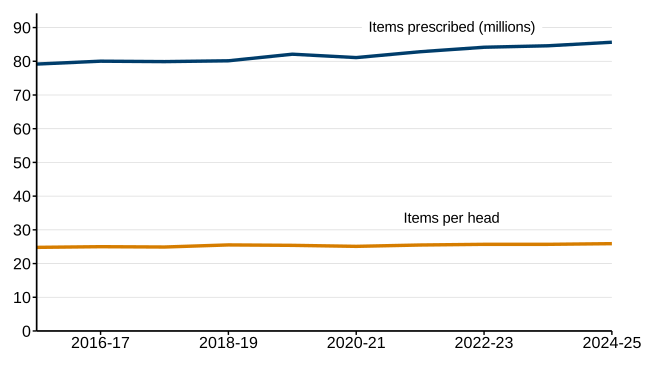
Description of Figure 1: Line chart showing the number of items prescribed and dispensed has increased steadily over the last ten years, while there has been a marginal increase in the number of items prescribed per head.
Source: Pharmacy and Dispensing Systems, NHS Wales Shared Services Partnership
Prescriptions summary data by year on StatsWales
In 2024-25, there were 85.6 million items prescribed through general practices in Wales and dispensed in the community, anywhere in the UK, a 1.2% annual increase and the highest on record.
This is equivalent to 25.9 items per patient registered with a GP in Wales, a marginal increase of 0.2 from the previous year.
The longer-term trend shows a broadly steady increase; the number of items prescribed and dispensed increased by 5.6% in the last five years and by 8.2% in the last ten years.
Figure 2: Net ingredient cost of items prescribed by GPs in Wales and dispensed in the community in the UK, 2015-16 to 2024-25 [Note1]
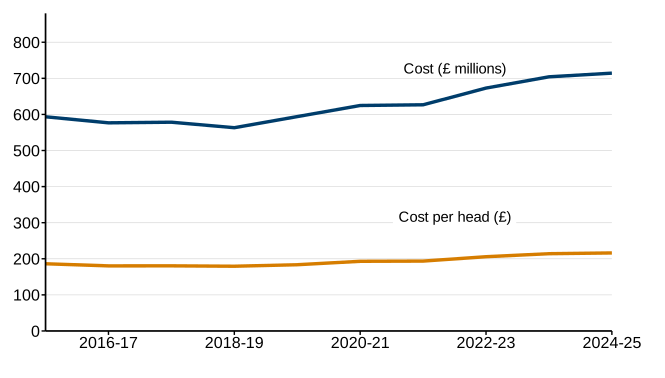
Description of Figure 2: Line chart showing the net ingredient cost of all items prescribed through general practices and dispensed in the community has been on an upward trend since 2018-19. Net ingredient cost per head has increased over the same period at a slightly lower rate.
Source: Pharmacy and Dispensing Systems, NHS Wales Shared Services Partnership
[Note 1] Net ingredient costs for all years are not adjusted for inflation, as drug prices are subject to various controls including the Pharmaceutical Price Regulation Scheme.
Prescriptions summary data by year on StatsWales
In 2024-25, the total net ingredient cost of all items prescribed through general practices in Wales and dispensed in the community, anywhere in the UK, was just over £714 million, an annual increase of £10.2 million (or 1.4%).
This is equivalent to £216.18 per patient registered with a GP in Wales, an annual increase of £2.08 per patient.
In the three years before 2018-19, the total net ingredient cost had been on a slight downward trend, but it has increased in every year since. The net ingredient cost has increased by 14.4% in the last five years and by 20.4% in the last ten years.
Figure 3: Average net ingredient costs per item prescribed through general practices in Wales and dispensed in the community in the UK, 2015-16 to 2024-25
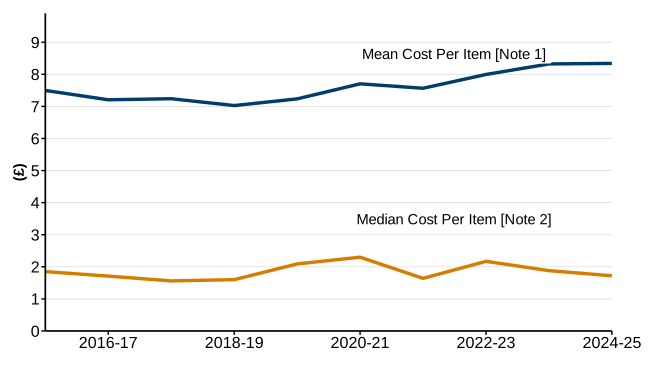
Description of Figure 3: Line chart showing the mean cost per item prescribed through general practices in Wales and dispensed in the community in the UK has increased slightly every year since 2018-19. The median cost per item has varied from year-to-year but has remained close to £1.90 over the last 10 years.
Source: Pharmacy and Dispensing Systems, NHS Wales Shared Services Partnership
[Note 1] Mean cost per item is calculated by dividing the net ingredient cost for all items prescribed in the financial year by the number of items prescribed in the financial year.
[Note 2] Median cost per item, refers to middle value of the cost per item prescribed in the March of each year only. Data for a single month is used for practical purposes given the volume of prescription items issued. The median may vary for other months during the year.
Mean and median cost per item prescribed on StatsWales
In 2024-25, the mean net ingredient cost per item was £8.34. This was £0.02 higher than in 2023-24 and £0.84 higher than ten years ago.
The median cost per item in March 2025 was £1.72. This was £0.16 lower than in March 2024 and £0.13 lower than ten years ago.
The median cost per item is much lower than the mean cost per item as there were a relatively low number of items with a very high net ingredient cost. These high-cost items will have a greater impact on the mean than the median. The median measure is likely to be a better reflection of the cost of the most commonly prescribed items.
British National Formulary (BNF) chapters
The British National Formulary (BNF) is a pharmaceutical reference book containing information and advice on prescribing. Every item prescribed is categorized by its BNF chapter (for example, central nervous system), section (for example, analgesics); sub-paragraph (for example, non-opioid analgesics and compound preparations) and chemical name (for example, paracetamol).
Data for all of these categories are provided in spreadsheets linked on the ‘Data’ tab of the latest release page and will shortly be added to an interactive dashboard that will be available on the publication page for this release.
Figure 4: Number and net ingredient cost of items prescribed through general practices in Wales and dispensed in the community in the UK, by British National Formulary (BNF) chapter, 2015-16 to 2024-25
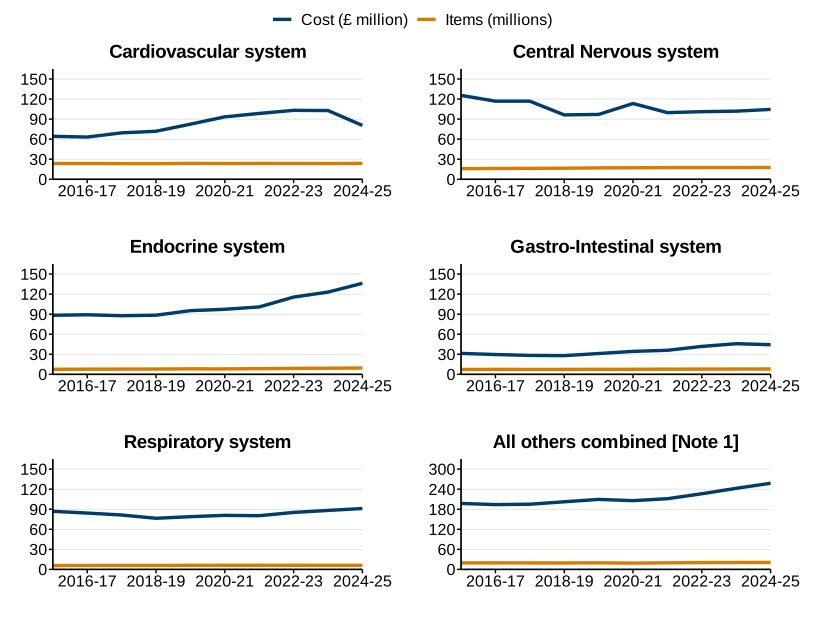
Description of Figure 4: Line charts showing gradual increases in the number of items prescribed in the five largest BNF chapters, but large changes in costs. The costs of endocrine, respiratory and gastro-intestinal items have all increased over the past five years, while costs for central nervous system have remained broadly.
Source: Pharmacy and Dispensing Systems, NHS Wales Shared Services Partnership
[Note 1] The chart for ‘All others combined’ includes data for the remaining 18 BNF chapters combined, and its vertical axis is on a different scale to the other charts in this Figure.
Prescription items and cost by area and BNF chapter - time series on StatsWales
In 2024-25, 23.7 million items (27.7% of all items) were prescribed and dispensed for treatment of the cardiovascular system, equal to 7.2 items per patient registered with a GP in Wales, the most from any single BNF chapter.
The number of cardiovascular items prescribed has remained broadly stable over the last ten years. The cost for these items increased by 25.5% over the same period, but decreased by 21.7% from last year.
17.6 million items (20.5% of all items) were prescribed and dispensed for the treatment of the central nervous system. The number of items prescribed has increased by 11.6% over the last decade, but the cost has decreased by 16.7%.
The chapter with the highest net ingredient costs was endocrine system (£136 million), which accounted for a fifth (19.1%) of the total cost of all items prescribed. The number of endocrine items prescribed increased by 25.9% over the last decade and their cost increased by 54.2%.
The BNF chapters with the highest average cost per item were preparations used in diagnosis (£87.50, but with only two items prescribed in the year); stoma appliances (£75.92); incontinence appliances (£28.54); and malignant diseases and immunosuppression (£26.62).
The chapters with the lowest cost per item were cardiovascular system (£3.39); musculoskeletal and joint diseases (£4.84); and gastro-intestinal system (£5.55).
Most common items prescribed
This section focusses on the most common items (chemical names) prescribed through general practices in Wales and dispensed anywhere in the community in the UK, in the latest financial year.
Figure 5: The ten most prescribed items through general practices in Wales and dispensed in the community in the UK, 2024-25
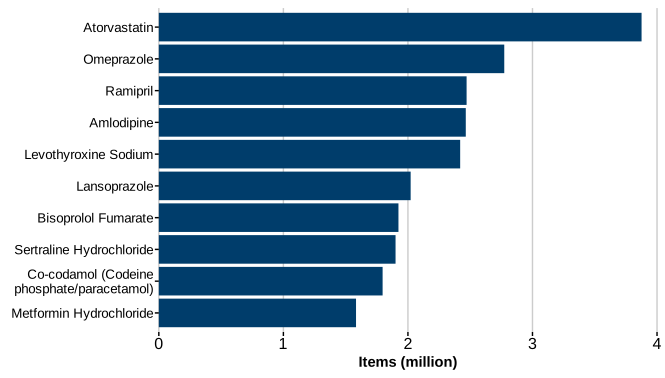
Description of Figure 5: Bar chart showing the ten most common items varied from Atorvastatin (3.9 million items) to Metformin Hydrochloride (1.6 million items).
Source: Pharmacy and Dispensing Systems, NHS Wales Shared Services Partnership
Atorvastatin (a lipid-regulating medicine) was prescribed just fewer than 3.9 million times and was the most prescribed item in 2024-25. This is equivalent to one in every 22 (or 4.5%) of all items prescribed.
The ten most common items accounted for just more than a quarter (27.1%) of all items prescribed in 2024-25, and all items apart from Metformin Hydrochloride were among the ten most prescribed items in the previous year.
Prescriptions for eight of the ten most common items increased from the previous year, with the largest increases for Atorvastatin (6.5%) and Sertraline Hydrochloride (3.4%).
The number of items prescribed decreased from the previous year for Levothyroxine Sodium (1.0%) and Omeprazole (0.7%).
Items prescribed by general practice staff role
While most items are prescribed by general practitioners (GPs), other staff employed in general practices are also qualified to prescribe items.
Figure 6: Items prescribed by GPs in Wales and dispensed in the community in the UK, 2020-21 to 2024-25
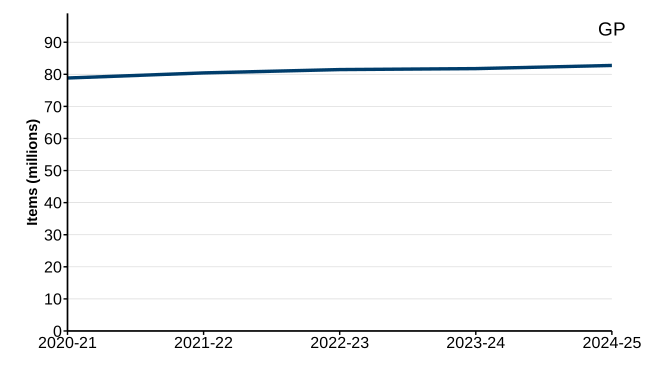
Description of Figure 6: Line chart showing that the number of items prescribed specifically by GPs has increased slightly in every year since 2020-21, with nearly 82.8 million items prescribed by GPs in the latest year.
Source: Pharmacy and Dispensing Systems, NHS Wales Shared Services Partnership
Items prescribed by practitioner type on StatsWales
Figure 7: Items prescribed by wider staff in general practices in Wales and dispensed in the community in the UK, 2020-21 to 2024-25
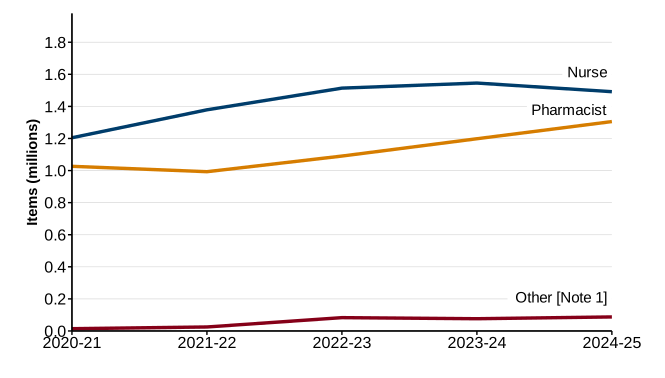
Description of Figure 7: Line chart showing that the number of items prescribed by non-GP staff in general practices has increased by 28.5% between 2020-21 and 2024-25, with nearly 2.8 million items prescribed by nurses and pharmacists combined in the latest year.
Source: Pharmacy and Dispensing Systems, NHS Wales Shared Services Partnership
[Note 1] Includes paramedics, physiotherapists, and other qualified prescribers providing direct patient care.
Items prescribed by practitioner type on StatsWales
Between 2020-21 and 2024-25, the majority of items prescribed in general practice were from GPs and this has steadily increased over the period. However, the proportion of all items prescribed by GPs has decreased slightly from 97.2% in 2020-21 to 96.6% in 2024-25.
In 2024-25, just fewer than 1.5 million items were prescribed by nurses, a decrease of 3.5% from the previous year. This is the first decrease in five years. In total, 1.7% of all items prescribed in general practices in Wales and dispensed in the UK were issued by general practice nurses.
A record high number of items (just over 1.3 million) were prescribed by pharmacists working in general practices, an increase of 8.9% from the previous year. In total,1.5% of all items prescribed through general practices in Wales and dispensed in the UK were issued by general practice pharmacists.
Just fewer than 88,000 items were prescribed by other staff in general practice.
Items independently prescribed by primary care practitioners outside general practices
Items can be prescribed by other primary care practitioners who work in NHS dental practices, community pharmacies and optometry practices. This does not include items prescribed in hospitals or items prescribed through non-NHS providers.
Figure 8: Items prescribed independently by other primary care practitioners in Wales and dispensed in the community in the UK, 2020-21 to 2024-25
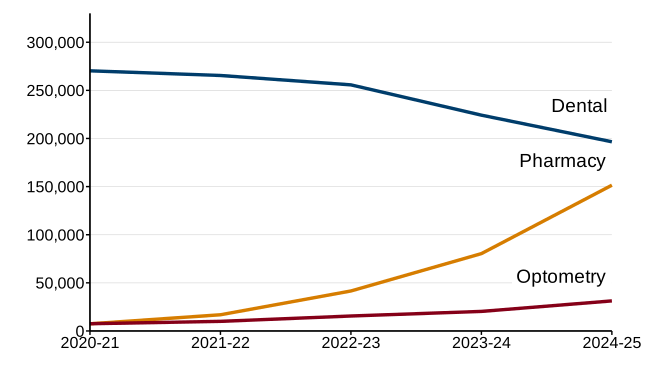
Description of Figure 8: Line chart showing, more items are prescribed by dental practitioners than other independent prescribers, but items prescribed by dentists have decreased every year since 2020-21. The number of items prescribed independently through pharmacies and optometry practices have increased in every year over the time series, with marked growth in the most recent year.
Source: Pharmacy and Dispensing Systems, NHS Wales Shared Services Partnership
Items prescribed by practitioner type on StatsWales
In 2024-25, just fewer than 197,000 items were prescribed through NHS dental practices, a 12.3% decrease from the previous year.
Just more than 151,000 items were prescribed through community pharmacies, almost twice (88.5% increase) the number provided in the previous year.
Just more than 31,000 items were prescribed through optometry practices, 53.8% more than in the previous year.
While not a primary care service, 327 items were prescribed by paramedics directly through the Welsh Ambulance Services NHS Trust in 2024-25. While this was a very small number of items compared to other practitioners, it was an increase of 30.8% from the previous year.
Emergency medicine supply
In certain emergency circumstances, such as patients losing medication or patients unexpectedly running out of medication, community pharmacists can provide a limited quantity of medicines without a prescription. These are counted separately to items prescribed directly by community pharmacists and are therefore not included in the data for Figure 8.
Figure 9: The ten most common medicines provided through emergency medicine supply, 2024-25 (r)
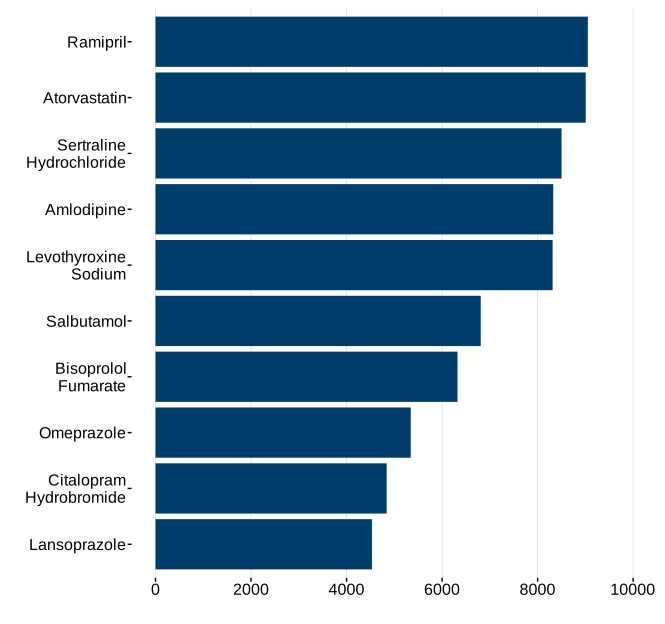
Description of Figure 9: Bar chart showing the commonly items prescribed through emergency medicine supply ranged from Ramipril (9,052 items) to Lansoprazole (4,532 items) in 2024-25.
(r) Figure 9 revised on 12 May 2026.
Source: Choose Pharmacy System, Digital Health and Care Wales
In total, just more than 189,000 items were dispensed by pharmacists through the emergency medicine supply, an increase of 19.9% from the previous year.
679 different items were prescribed, but the most common 10 items accounted for more than a third (37.6%) of the total.
In 2024-25, the items most commonly dispensed through the emergency medicine supply were Ramipril (a drug used to treat high blood pressure), Atorvastatin (primarily used to treat high blood cholesterol), and Sertraline hydrochloride (primarily used to treat depression or anxiety).
Prescription volumes
In October 2022, the All Wales Medicines Strategy Group recommended that longer prescribing intervals, where clinically appropriate would benefit patients and healthcare providers. For example, if a patient is usually prescribed medication in 28 day intervals they could instead be prescribed 56 day intervals, which would reduce administration time and costs for healthcare providers and reduce the frequency of medication collection for the patient.
Over time this change should result in fewer items being prescribed to some patients to treat certain conditions, but the volume of the item per prescription would increase.
As the same items can be prescribed in various forms (liquid/tablets/powder) and in different volumes, it is not possible to measure the volume of items prescribed accurately. However, a sample of 54 medications, known as the ‘28-day basket’ of medications can be used as an approximation of prescription volume. These 54 medications are usually taken as once-daily doses, therefore the total quantity doses divided by the number of times the item is prescribed can give an indication of the average number of days of treatment prescribed.
Figure 10: Average prescription volume for medications in the ‘28-day basket’ medications per month, March 2020 to March 2025
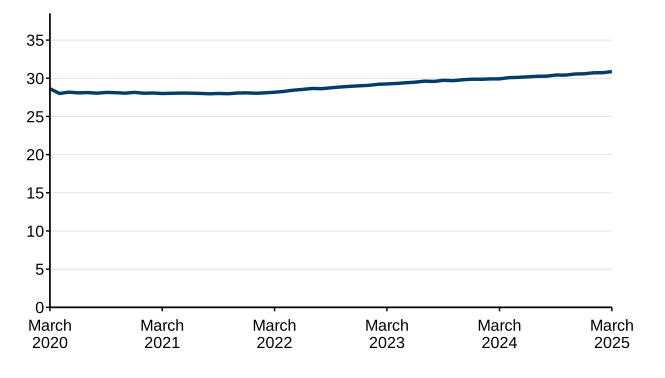
Description of Figure 10: Line chart showing that prescription volumes have increased incrementally in most months since the longer prescribing intervals policy was recommended in October 2022.
Source: Pharmacy and Dispensing Systems, NHS Wales Shared Services Partnership
In March 2025, there was an average of 30.9 doses per prescription in the ‘28-day basket’ of medications. This was 1.0 doses per prescription (or 3.2%) higher than in March 2024 and 1.6 doses (or 5.5%) higher than in March 2023.
Analysis by local health board
The demographics of local health board areas are different and therefore their clinical needs are different. For example, patients registered at GP practices in Wales (StatsWales) data for October 2024 shows that 21.7% of the patients were aged 65 or over but this ranged between 28.4% in Powys to 16.6% in Cardiff and Vale.
To account for the different age profiles, health board analysis is provided by prescribing unit (PU), rather than by health board population. Prescribing units are calculated by giving a greater weight (by a factor of three) to the population aged 65 or over. This adjustment is made as older patients typically require more medications. By making this adjustment for age profiles, the differences between health boards are more likely to reflect differences in the health of the populations and differences in local prescribing culture.
The number and cost of items prescribed by cluster and health board, categorised by BNF chapter is published separately on StatsWales.
Figure 11: Items and costs analyses by health board prescribing unit, 2024-25 [Note 1]
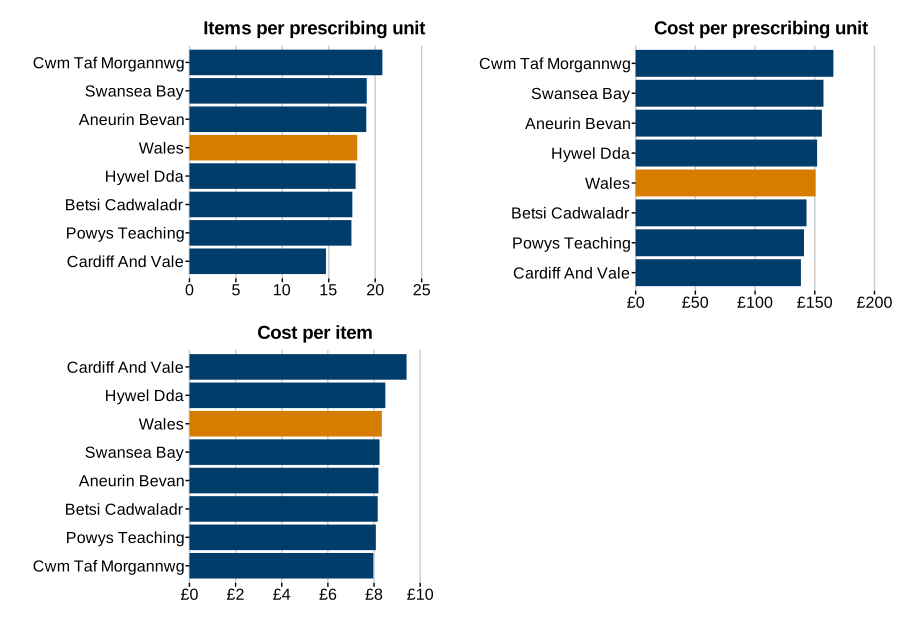
Description of Figure 11: Bar chart showing that the number of items prescribed per prescribing unit ranged from 14.8 in Cardiff and Vale to 20.8 in Cwm Taf Morgannwg, while the costs ranged from £138.86 in Cardiff and Vale to £165.62 in Cwm Taf Morgannwg. The average cost per item ranged from £7.97 in Cwm Taf Morgannwg to £9.41 in Cardiff and Vale.
Source: Pharmacy and Dispensing Systems, NHS Wales Shared Services Partnership
[Note 1] These charts are presented next to each other to provide additional context; the horizontal axis for each is based on a different scale.
[Note 2] Prescribing units are equal to the number of patients ages under 65 registered at GP practices plus three times the number of patients aged 65 or older, at the mid-way point of the financial year (October).
Prescription items and costs by local health board prescribing unit on StatsWales
In 2024-25, there were large variations in the number of items prescribed and dispensed between each health board, with 29.2% fewer items prescribed per prescribing unit in Cardiff and Vale than in Cwm Taf Morgannwg.
Similarly, there were variations between the net ingredient costs for items prescribed in each health board with the cost per prescribing unit £27.20 (or 16.4%) lower in Cardiff in Vale than in Cwm Taf Morgannwg.
However, there was less variation in the cost per items prescribed, per prescribing unit, with six of the seven health boards within £0.26 of the Wales average. The highest cost per item, per prescribing unit was in Cardiff and Vale, 12.8% higher than the Wales average.
The statistics suggest fewer items per prescribing unit were required in Cardiff and Vale health board, but a higher proportion of the items prescribed were more expensive items than in other health boards. Conversely, more items per prescribing unit were required in Cwm Taf Morgannwg, but a higher proportion of the items prescribed were relatively less expensive items than in other health boards.
UK comparisons
This section compares the number of items dispensed and their net ingredient costs across the four UK countries.
The data in this section is based on the measure ‘prescription items dispensed in the community’. These data are based on the location of the community pharmacy where items were dispensed, rather than by the location of the general practice which issued the prescription. Therefore, statistics for Wales in this section will differ from those presented in the other sections in the release. Prescriptions dispensed in the community is a broadly consistent measure available across all four countries.
For consistency between countries, the latest available Office for National Statistics (ONS) mid-year population estimates (2024) are used in this section, rather than the number of people registered to a GP practice.
The latest data for Wales and England refers to the financial year 2024-25, for Scotland the financial year 2023-24, and for Northern Ireland the calendar year 2023.
Figure 12: Prescription items dispensed in community pharmacies per population, UK countries, latest available year [Note 1]
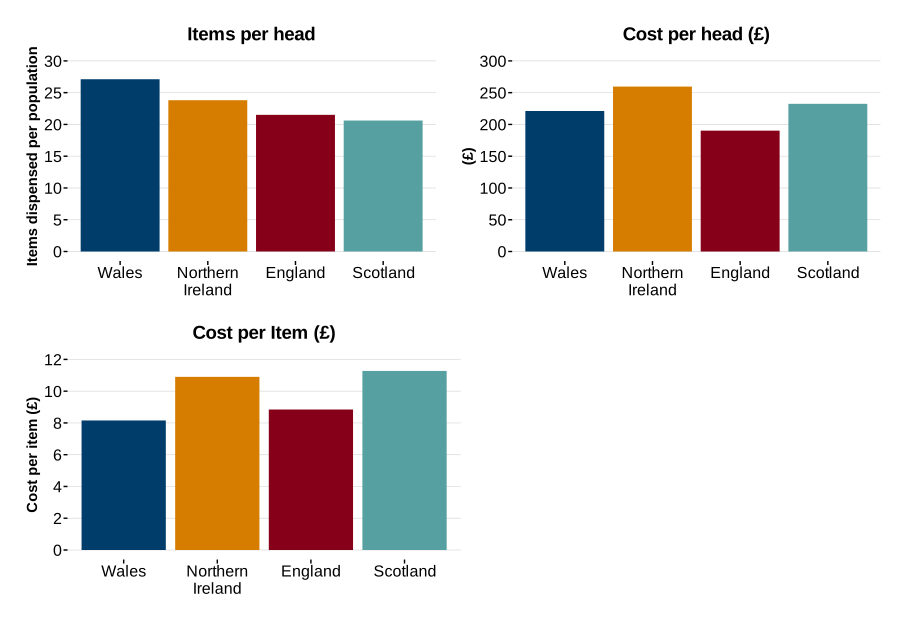
Description of Figure 12: Bar charts showing the number of items dispensed per population, ranged from 20.6 in Scotland to 27.1 in Wales; the net ingredient costs per population ranged from £190.23 in England to £259.59 in Northern Ireland; and the net ingredient cost per prescription item varied from £8.16 in Wales to £11.27 in Scotland.
[Note 1] These charts are presented next to each other to provide additional context; the vertical axis for each is based on a different scale.
Sources: Pharmacy and Dispensing Systems, NHS Wales Shared Services Partnership (Wales), NHS Business Services Authority (England); Public Health Scotland (Scotland) and Business Services Organisation (Northern Ireland).
There is variation in prescribing between countries, which is likely to be explained by different prescribing policies, population health needs, and prescribing cultures in each location.
6.5 more items per population were dispensed in Welsh community pharmacies compared to Scottish community pharmacies. However, the total net ingredient cost of those items was £11.31 lower per person in Wales than in Scotland.
The net ingredient cost per prescription item was £8.16 in Wales, the lowest of all UK countries. This was £3.12 cheaper than in Scotland, £2.75 cheaper than Northern Ireland and £0.69 cheaper than in England.
This means that while more items are dispensed in Wales, the items cost less than those dispensed in other countries. This may be explained by a number of factors including: lower volumes of items prescribed in Wales compared to other countries; differences in types of items prescribed in each country; and the availability of certain items in each country. This is particularly a factor in for Wales as certain more expensive stoma appliances are only available for dispensing in specialist settings located in England.
Quality and methodology information
Detailed quality and methodology information is published in the accompanying quality report.
Unless otherwise stated, statistics referring to items prescribed through general practices also includes a relatively small number of items dispensed in the community which had been prescribed in a community setting that was not a formal general practice, pharmacy, dental practice or optometry practice, but had been allocated a prescribing code (W code) by the local health board. These include settings such as specialist continence services, prisons, police stations and public health services. In 2024-25, items from these settings accounted for less than 0.5% of all items prescribed.
NHS Shared Service Partnership also publish data on items prescribed through general practices every month, based on the same data which is presented in this publication.
An interactive data tool that allows users to search data on BNF chapters, sections, and sub paragraphs, based on general practice prescriptions is published alongside this release. Data for 2024-25 will be updated in this tool as soon as practicable after the publication date.
Data for England (NHS Business Services Authority), Scotland (Public Health Scotland) and Northern Ireland (HSC Business Services Organisation) is published on each country’s respective websites.
Complementary data on general practice workforce, general practice populations (StatsWales), deprivation at general practice level and community pharmacies are also published by Welsh Government.
Which data should I use?
A comparison of items prescribed through general practices in Wales and dispensed in the UK with items prescribed anywhere in the UK and dispensed in Wales (StatsWales) shows 85.7 million items were prescribed through general practices in Wales and dispensed in the community in the UK, compared to 86.4 million items prescribed by anywhere in the UK and dispensed in the community in Wales.
In general, when analysing prescriptions data for Wales, items prescribed through general practices (labelled ‘items prescribed by GPs’ on the StatsWales data table should be used as the primary source. This is because this data shows what is being prescribed to people registered with Welsh general practices and this activity is monitored and influenced by health board policy. This data includes items that are prescribed by GPs, nurses, pharmacists, paramedics, physios and any other licensed prescribers who work in general practices. The items prescribed in Welsh general practices can be dispensed in any community dispensary in the UK (usually community pharmacies).
‘Items dispensed in the community’ should be used for more specific purposes where users are interested only in the items actually dispensed in Wales, and if direct comparisons are being made between different UK countries. While the number of items prescribed through general practice is close to the number of items prescribed and dispensed in Wales it does not exactly match for a number of reasons including:
- items prescribed in Wales but dispensed elsewhere in the UK (including the Isle of Man) are counted in general practice prescriptions but not ‘prescriptions dispensed in the community’; this is particularly common for specialist items such as stomas and incontinence appliances which are often dispensed by appliance contractors, many of which are not located in Wales
- items prescribed in another UK country (including the Isle of Man) but dispensed in Wales are not included in general practice prescriptions, but are included in ‘prescriptions dispensed in the community’
- items which were prescribed by hospital practitioners, which are subsequently dispensed in a community pharmacy, will not be included in general practice prescriptions, but they would be included in ‘prescriptions dispensed in the community’
Note that both ‘general practice prescriptions’ and ‘prescriptions dispensed in the community’ capture prescriptions which are dispensed by dispensing doctors, appliance contractors and community (high street) pharmacies. Neither source contains data for items prescribed and dispensed in hospitals.
Statement of compliance with the Code of Practice for Statistics
Our statistical practice is regulated by the Office for Statistics Regulation (OSR). OSR sets the standards of trustworthiness, quality and value in the Code of Practice for Statistics that all producers of official statistics should adhere to.
All of our statistics are produced and published in accordance with a number of statements and protocols to enhance trustworthiness, quality and value. These are set out in the Welsh Government’s Statement of Compliance.
These official statistics in development demonstrate the standards expected around trustworthiness, quality and public value in the following ways.
Trustworthiness
The published statistics are compiled by professional analysts using the latest available data and applying methods using their professional judgement and analytical skillset.
These statistics are pre-announced on the Statistics and Research area of the Welsh Government website. Access to the data during processing is restricted to those involved in the production of the statistics, quality assurance and for operational purposes. Pre-release access is restricted to eligible recipients in line with the Code of Practice for Statistics.
Quality
Statistics published by Welsh Government adhere to the Statistical Quality Management Strategy which supplements the Quality pillar of the Code of Practice for Statistics and the European Statistical System principles of quality for statistical outputs.
Value
The purpose of this statistical release is to provide an annual review of prescribing activity in primary care in Wales, with more specific underlying data published in spreadsheets, on open data StatsWales tables and a dashboard. These products allow all users access to the data and analysis they require, from high level summaries to individual chemical name data.
Well-being of Future Generations Act (WFG)
The Well-being of Future Generations Act 2015 is about improving the social, economic, environmental and cultural wellbeing of Wales. The Act puts in place seven wellbeing goals for Wales. These are for a more equal, prosperous, resilient, healthier and globally responsible Wales, with cohesive communities and a vibrant culture and thriving Welsh language. Under section (10)(1) of the Act, the Welsh Ministers must (a) publish indicators (“national indicators”) that must be applied for the purpose of measuring progress towards the achievement of the wellbeing goals, and (b) lay a copy of the national indicators before Senedd Cymru. Under section 10(8) of the Well-being of Future Generations Act, where the Welsh Ministers revise the national indicators, they must as soon as reasonably practicable (a) publish the indicators as revised and (b) lay a copy of them before the Senedd. These national indicators were laid before the Senedd in 2021. The indicators laid on 14 December 2021 replace the set laid on 16 March 2016.
Information on the indicators, along with narratives for each of the wellbeing goals and associated technical information is available in the Wellbeing of Wales report.
Further information on the Well-being of Future Generations (Wales) Act 2015.
The statistics included in this release could also provide supporting narrative to the national indicators and be used by public services boards in relation to their local wellbeing assessments and local wellbeing plans.