
Safon Ansawdd Tai Cymru: ar 31 Mawrth 2025 (ystadegau swyddogol mewn datblygiad)
Gwybodaeth am y cynnydd a wneir gan landlordiaid cymdeithasol o ran cyflawni'r Safon Ansawdd Tai Cymru ar gyfer eu holl stoc ar 31 Mawrth 2025. Saesneg yn unig.
Ar y dudalen hon
Introduction
This release presents statistics on how well social housing in Wales met the Welsh Housing Quality Standard 2023 as at 31 March 2025. The new standard came into effect in April 2024 and sets expectations for the quality, safety, energy performance and carbon emissions of social homes. The expectations in the standard are required to be met by 2034.
These are the first annual statistics produced for the new standard and are being published as official statistics in development while the new data collection process becomes established. The annual statistics will report on progress in meeting the standard over the course of the 10 year period social landlords have to achieve compliance.
As at 31 March 2025, a total of 245,310 social homes in Wales fell within the scope of the WHQS across 45 social landlords.
Main points
WHQS at 31 March 2025
- Among social landlords that submitted data, a total of 112,075 homes (48%) fully met the standard by passing all relevant elements.
- A further 12,805 homes (5%) met the standard with a conditional pass, where some element requirements could not be met due to physical, financial or heritage constraints.
- A total of 109,795 homes (47%) did not yet meet the standard. This includes 44,990 homes (19%) that failed at least one element, 40,195 homes (17%) recorded as temporary fails, and 24,610 homes (10%) with missing assessments.
Data considerations
These statistics are published as official statistics in development because both the WHQS 2023 dataset and the new property‑level methodology are still being established. The data provides a reasonable Wales-level assessment of compliance against the standard. However, users should bear in mind that data quality and completeness are likely to improve over time. The first year of data collection highlighted several data quality challenges, including missing or inconsistent element assessments and variation in how landlords interpreted the new standard. Welsh Government has carried out extensive validation and engaged closely with landlords through workshops, follow‑up meetings and expanded guidance to improve data quality. A fuller explanation of the methods used, the quality of the data, and how we are working with users to develop these statistics is provided in the separate WHQS assessment methodology and WHQS quality report.
Comparison with previous WHQS
The statistics for the new standard are not directly comparable with the statistics for the previous 2008 version of the standard because the standard itself, the data collected and the way compliance is assessed have all changed. Under the old standard, compliance increased from 33% in 2012 to 78% by March 2023 Welsh Housing Quality Standard: as at 31 March 2023.
In the first year of the new standard, 48% of homes were compliant. The energy efficiency and decarbonisation requirements will not be included in compliance assessments until March 2027.
Background information
Between 2020 and 2023, Welsh Government worked with landlords and stakeholders to redesign the WHQS. The new standard includes stronger requirements, especially around:
- energy efficiency and decarbonisation
- safety and security
- comfort and wellbeing
All existing social homes are expected to meet the new standard by 2034 (elements in part 3 energy efficiency and decarbonisation may be reached at different times).
The standard is organised into 8 themes that describe what a quality home should provide. Under the new standard, a social home must offer:
- a good state of repair
- safety and security
- affordability to heat with minimal environmental impact
- an up‑to‑date kitchen and utility area
- an up‑to‑date bathroom
- a comfortable home that promotes wellbeing
- a suitable garden
- an attractive outside space
Of the 44 elements that make up the standard, 39 are measurable and therefore are included in the statistical return.
Further information on the standard assessment is provided in the separate WHQS assessment methodology document.
Overall compliance with the standard
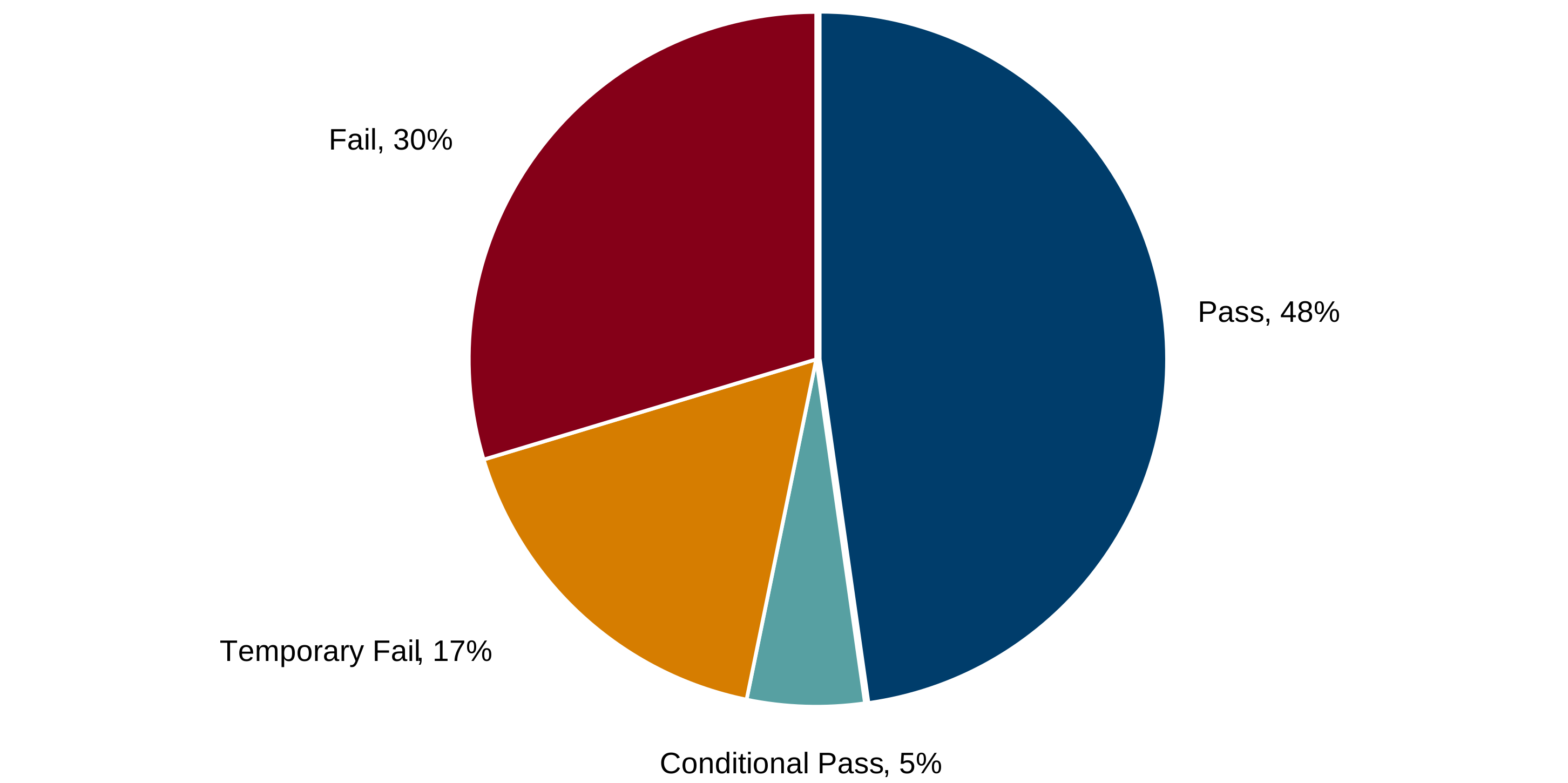
Figure 1: social home compliance with WHQS (%) 31 March 2025
Source: Annual WHQS returns
Description of Figure 1: A pie chart showing that 48% of homes complied with the standard, 5% achieved a conditional pass, 17% were temporary fails and 30% were non-compliant.
Full compliance
At 31 March 2025, a total of 112,075 homes (48% of those with submitted data) met all relevant elements of WHQS. Energy efficiency and decarbonisation elements will be included in compliance assessments from March 2027.
Conditional passes
An additional 12,805 homes (5%) received a conditional pass.
Reasons for conditional passes
Overall classifications are based on the highest‑priority reason within the assessment hierarchy. Further detail is available in the WHQS assessment methodology.
Breakdown of conditional pass reasons
- Physical constraints: 6,710 homes (3%).
- Cost prohibitive: 6,055 homes (3%).
- Heritage or conservation constraints: 45 homes (less than 1%).
Non‑compliance
A total of 109,795 homes (47%) did not meet the standard. This includes:
- temporary fails: 40,195 homes (17%)
- missing data: 24,610 homes (10%)
- fails: 44,990 homes (19%)
Many homes were non‑compliant due to a small number of elements. A total of 49,305 homes (21%) were non‑compliant due to only one element.
Temporary fails
Temporary fails were recorded for 40,195 homes (17%). Overall classifications are based on the highest‑priority temporary fail reason in the assessment hierarchy.
Breakdown of temporary fail reasons
- Programmed works within five years: 29,775 homes (13%).
- Tenant refusal: 7,810 homes (3%).
- Tenant timing delays: 2,570 homes (1%).
- Tenant behaviour or financial restrictions: 40 homes (less than 1%).
Missing data
Social landlords must provide a minimum dataset for each home. Missing assessments for any element result in a classification of non‑compliance due to missing data.
A total of 24,610 homes (10%) were non‑compliant for this reason. Of these, 9,200 homes (4%) were missing only one element.
Among the 44 landlords included:
- 26 landlords (59%) provided complete assessments
- 18 landlords (41%) had at least one home with missing or invalid responses
Fails
Fails were recorded for 44,990 homes (19%). The number of failed elements varied. A total of 36,455 homes (16%) failed overall due to a single failed element. Some landlords noted that homes with multiple failed elements were typically long‑term unoccupied homes undergoing improvement work.
Compliance based on available element assessments
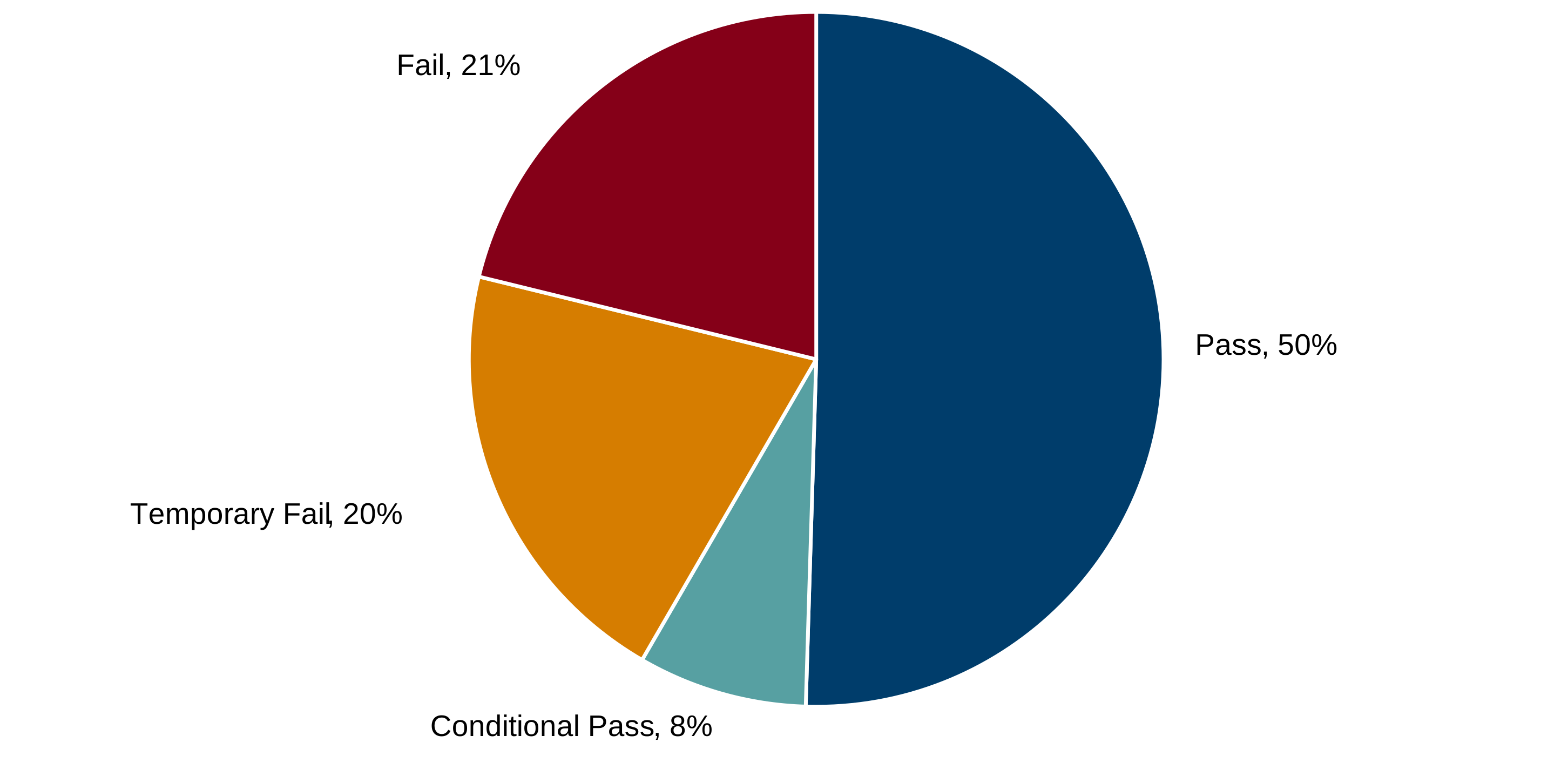
Because of the high volume of missing element assessments in this first year, an alternative version of compliance is provided for context. This is not the official measure and is not intended to be used once data completeness improves.
In this approach, a home is assessed as meeting the standard if it passes all elements for which an assessment is available. Where available element assessments include any temporary fails or fails, these determine the home’s overall compliance classification, following the hierarchy described in WHQS assessment methodology.
This adjustment is not applied to the 4,695 homes (5%) with missing or invalid assessments for statutory or regulatory elements (Section 1: good state of repair and Section 2: safety and security). These homes remain recorded as fails.
Figure 2: social home compliance with WHQS (%) 31 March 2025, based on available element assessments
Source: Annual WHQS returns
Description of Figure 2: A pie chart showing compliance based only on available element assessments at 31 March 2025. Missing element assessments are excluded. The chart shows that 50% of social homes met the standard, 8% received a conditional pass, 20% were temporary fails and 21% did not meet the standard.
Quality and methodology information
Data quality and methods
The WHQS 2023 return is a property‑level data collection covering 39 measurable elements of the standard. Social landlords submit data through a secure transfer system using a prescribed template and set of response codes. The statistics are produced by Welsh Government analysts who:
- receive completed WHQS returns
- validate submissions and query issues with landlords where needed
- quality‑assure the compiled dataset before publication
The first year of the new standard presented a number of challenges for landlords, including:
- shifting from aggregate to record‑level reporting
- limitations in IT systems and software
- data maturity and resourcing issues
- reliance on manual completion of templates
- inconsistent or invalid element assessment responses
- large volumes of missing element assessments (affecting 10% of homes submitted)
Substantial validation work was undertaken during 2025, including individual feedback to landlords, follow‑up meetings, a sector‑wide data quality workshop, and a revised data submission deadline. As a result, the publication of figures for 31 March 2025 was delayed allowing for further improvement of data quality.
Due to this being the first year of data collection, and challenges in terms of capturing complete and consistent data, this first year’s release provides only headline figures at a national level. More detailed breakdowns, including landlord‑level results, have not been included. As data quality improves, further detail will be reintroduced in future updates.
How we are involving users and keeping them informed
Users of these statistics include social landlords (who are also data providers), Welsh Government policy teams, sector bodies, and the wider public. Engagement with users during 2024 to 2025 has included:
- a WHQS data collection pilot group (October 2024 to March 2025)
- WHQS data collection workshops for all social landlords (June 2024 and February 2025)
- a WHQS data quality workshop for all social landlords (September 2025)
- follow‑up meetings with individual landlords (October to November 2025)
- targeted additional guidance based on queries raised
- sharing initial results back to landlords for review and feedback
- ongoing policy–data engagement to support consistent interpretation of the standard
We will continue to keep users informed through published quality reports, updated guidance, future workshops, and direct communication with social landlords. Our aim is to improve the clarity, reliability and value of the statistics for all users as the data matures in future years.
WHQS statistics development plan
The first year of WHQS 2023 highlighted several data quality and implementation challenges, including varied interpretation of the new requirements and limitations in data systems. Further development work is planned to improve the completeness, consistency and reliability of future WHQS returns.
The development work planned for 2026 includes the following.
Improved guidance and clarification
- Clearer instructions on interpretation and implementation of the standard.
- Updated data specification and response code guidance.
Support for data quality and maturity
- A wider cross‑sector initiative to strengthen data quality, governance and maturity.
- Continued one‑to‑one support to landlords where needed.
Improvements to data submission and processing
- Developing automated and reproducible analytical pipelines (RAP).
- Reviewing and enhancing the WHQS data submission templates.
Enhanced future reporting
- For the next publication cycle we will consider publishing more detailed analyses, including landlord‑level data, when quality allows.
- Reviewing whether alternative or supplementary measures (such as “available assessment” compliance) are still needed.
Regular user engagement
- Continued workshops, technical sessions, and guidance updates.
- Transparency through updates in annual publications and quality reports.
Statement of compliance with the Code of Practice for Statistics
These are ‘official statistics in development’ as the method employed is still in development, and there are some known data quality issues. The WHQS quality report provides further detail of quality and methodology information. Feedback on how well these statistics meet your needs is very welcome as we make further improvements.
Our statement of compliance with the Code of Practice for Statistics produced by the Office for Statistics Regulation (OSR) is included in the WHQS quality report, providing details of how we comply with standards expected around trustworthiness, quality and public value.
You are welcome to contact us directly with any comments about how we meet these standards. Alternatively, you can contact OSR by emailing regulation@statistics.gov.uk or via the OSR website.
Well-being of Future Generations Act (WFG)
The Well-being of Future Generations Act 2015 is about improving the social, economic, environmental and cultural wellbeing of Wales. The Act puts in place seven wellbeing goals for Wales. These are for a more equal, prosperous, resilient, healthier and globally responsible Wales, with cohesive communities and a vibrant culture and thriving Welsh language. Under section (10)(1) of the Act, the Welsh Ministers must (a) publish indicators (“national indicators”) that must be applied for the purpose of measuring progress towards the achievement of the wellbeing goals, and (b) lay a copy of the national indicators before Senedd Cymru. Under section 10(8) of the Well-being of Future Generations Act, where the Welsh Ministers revise the national indicators, they must as soon as reasonably practicable (a) publish the indicators as revised and (b) lay a copy of them before the Senedd. These national indicators were laid before the Senedd in 2021. The indicators laid on 14 December 2021 replace the set laid on 16 March 2016 but this release does not include national indicators.
Information on the indicators, along with narratives for each of the wellbeing goals and associated technical information is available in the Wellbeing of Wales report.
Further information on the Well-being of Future Generations (Wales) Act 2015.
The statistics included in this release could also provide supporting narrative to the national indicators and be used by public services boards in relation to their local wellbeing assessments and local wellbeing plans.