
Tanau glaswelltir, coetir a chnydau: Ebrill 2024 i Fawrth 2025
Data am y math o dân, anafiadau, difrod a ffynhonnell ar gyfer Ebrill 2024 i Fawrth 2025.
Ar y dudalen hon
Introduction
This bulletin is complementary to data on fire incidents published in December 2025. It examines the impact and patterns in grassland, woodland and crop fires in the financial year ending March 2025 (denoted as FYE 2025), and comparisons are made with financial year ending March 2024 (FYE 2024).
In this bulletin, a grassland, woodland or crop fire is a fire which has been assigned a location code of "grassland, woodland or crops" by the relevant Fire and Rescue Authority (FRA) and should not be considered a measure of wildfires.
The Welsh Government compiles these statistics from reports submitted by all three Fire and Rescue Authorities (FRAs) in Wales to Fire and Rescue Data Platform (FaRDaP) held by the Ministry for Housing, Communities and Local Government (MHCLG). Data for financial years between FYE 2010 and FYE 2025 was previously submitted by the FRAs to the Incident Recording System (IRS).
Incidents in this bulletin are those attended in Wales and may include a small number of incidents attended by English FRAs.
A glossary of terms used within this bulletin can be found via the link in the navigation pane on the left.
Main points
- Around one in six attendances by a FRA at fires in Wales in FYE 2025 were grassland, woodland or crop related.
- The FRAs attended 1,778 grassland, woodland and crop fires in Wales in FYE 2025, a similar number to FYE 2023.
- In FYE 2025, around 7 in 10 fires on grassland, woodland and crops were started deliberately.
- Almost half the grassland woodland and crop fires in FYE 2025 occurred in March 2025.
- Grassland, woodland and crops accounted for 27% of fires in Mid and West Wales FRA, whilst in North Wales and South Wales the respective percentages were 17% and 13%.
Number of grassland, woodland and crop fires
In FYE 2025 FRAs attended 1,778 grassland, woodland and crop fires in Wales, which is similar to the number attended in the previous year. This is the second lowest number of such fires in the available time period. While this figure is 19% lower than 5 years ago and 32% lower than 10 years ago, the time series is prone to fluctuation for this type of fire.
Figure 1: number of fires on grassland, woodland and crops and other locations in Wales, FYE 2015 to FYE 2025
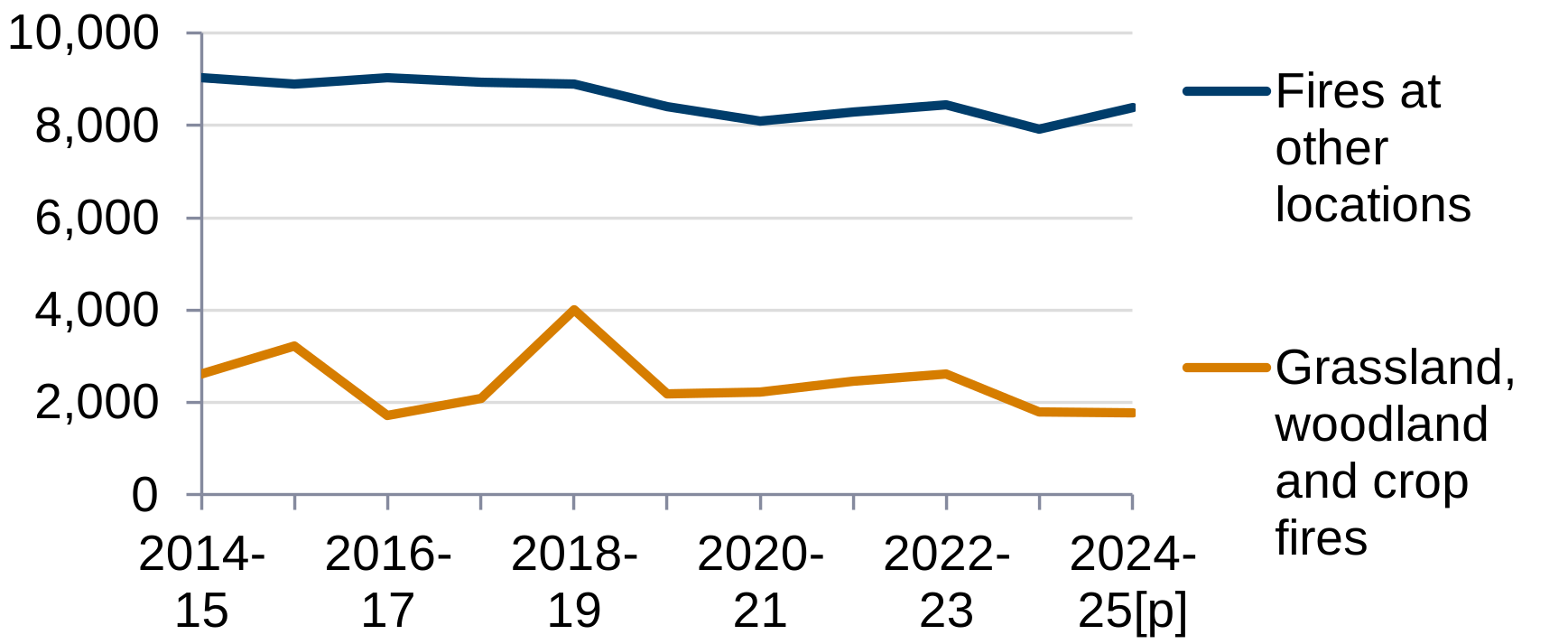
Description of figure 1: line chart showing the number of grassland, woodland and crop fires and fires at other locations in Wales between FYE 2015 and FYE 2025. Numbers of both types of fires are lower than they were FYE 2015, though the number of grassland, woodland and crop fires has been more prone to fluctuation.
[p] Provisional data
Of the 10,166 total fires attended in Wales in FYE 2025, 17% occurred on grassland, woodland and crops. In comparison, 3% of all primary fires took place on grassland, woodland or crops and whilst the corresponding proportion for secondary fires was 27%.
Over the last 10 years the proportion of fires occurring on grassland, woodland and crops ranges from a low of 16% (in FYE 2017) up to 27% (in FYE 2016).
Figure 2: number of grassland, woodland and crop fires, by type, FYE 2015 to FYE 2025
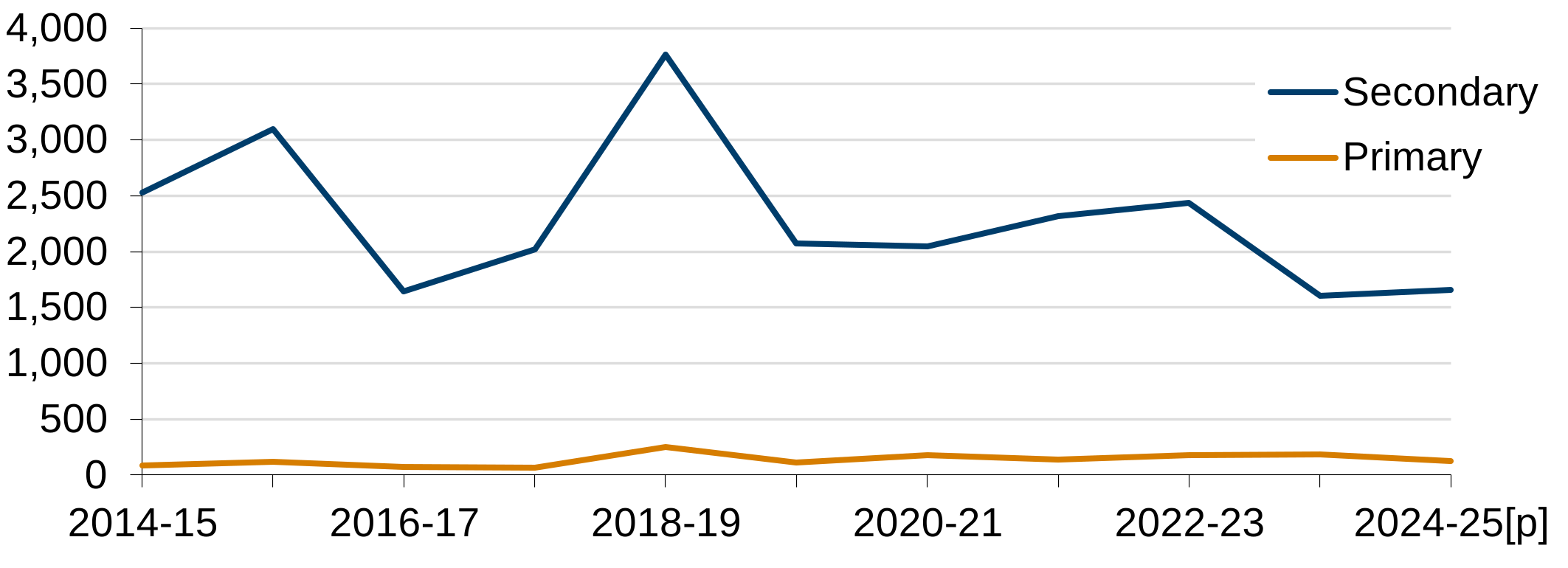
Description of figure 2: a line chart showing the annual number of grassland, woodland and crop fires between FYE 2015 and FYE 2025, split into primary and secondary fires. The chart shows that each year only a small number of such fires were primary fires (7% in FYE 2025 but no more than 10% throughout the time series), and the majority are secondary fires. Whilst there have been peaks and troughs in the time series for secondary grassland, woodland and crop fires, numbers in recent years have been more stable with smaller year on year increases and decreases.
[p] Provisional data.
Fire and rescue area
Primary fires
In FYE 2025, 124 primary grassland, woodland and crop fires were attended in Wales, a decrease of 33% on the number in FYE 2024. The locations of these primary fires are shown in figure 3.
Figure 3: map of primary grassland, woodland and crop fires FYE 2025
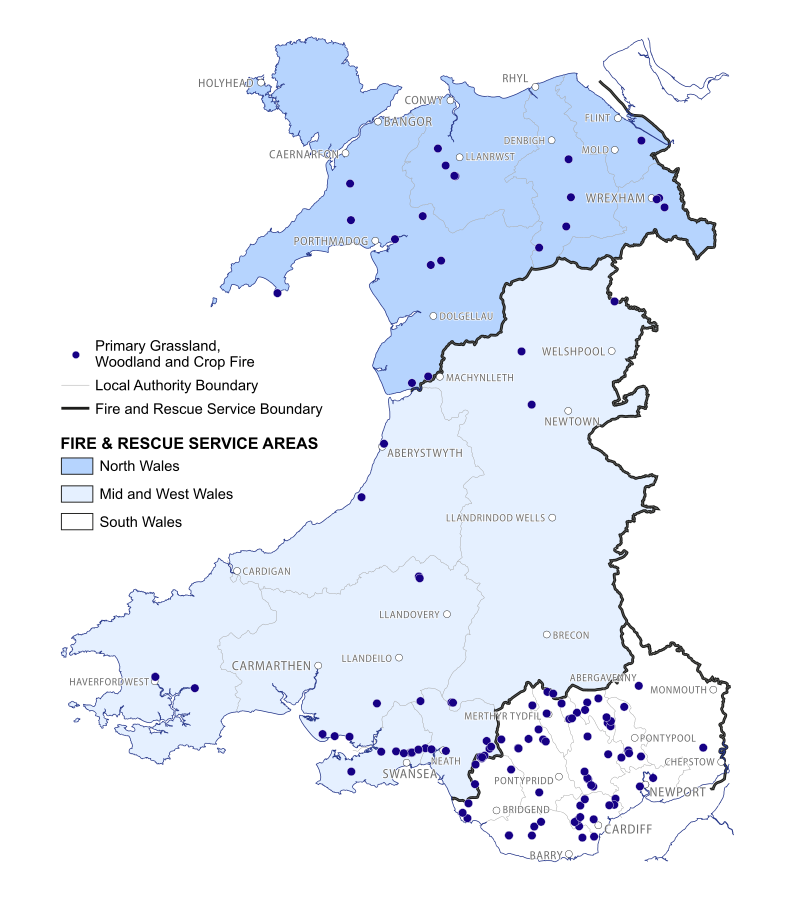
Description of figure 3: a map of Wales pinpointing the locations of primary grassland, woodland and crop fires in FYE 2025. The map shows that primary grassland fires are concentrated in the South Wales FRA region.
More than half of primary grassland fires in FYE 2025 occurred in the South Wales FRA Region (54%). A further 29% were in Mid and West Wales and the remaining 17% were in North Wales.
Only North Wales saw an increase in the number of primary grassland fires, more than doubling from 10 in FYE 2024 to 21 in FYE 2025. In South Wales numbers fell by 44% and in Mid and West Wales they were down 35%.
There was a total of 77 primary fires in woodland (62% of primary grassland, woodland and crop fires) in FYE 2025. A further 22 fires occurred on stacked/baled and standing crops.
Secondary fires
In FYE 2025 there were 1,654 secondary grassland, woodland and crop fires in Wales, a rise of 3% compared with FYE 2024; figure 4 shows the locations of these secondary fires.
Figure 4: map of secondary grassland, woodland and crop fires FYE 2025
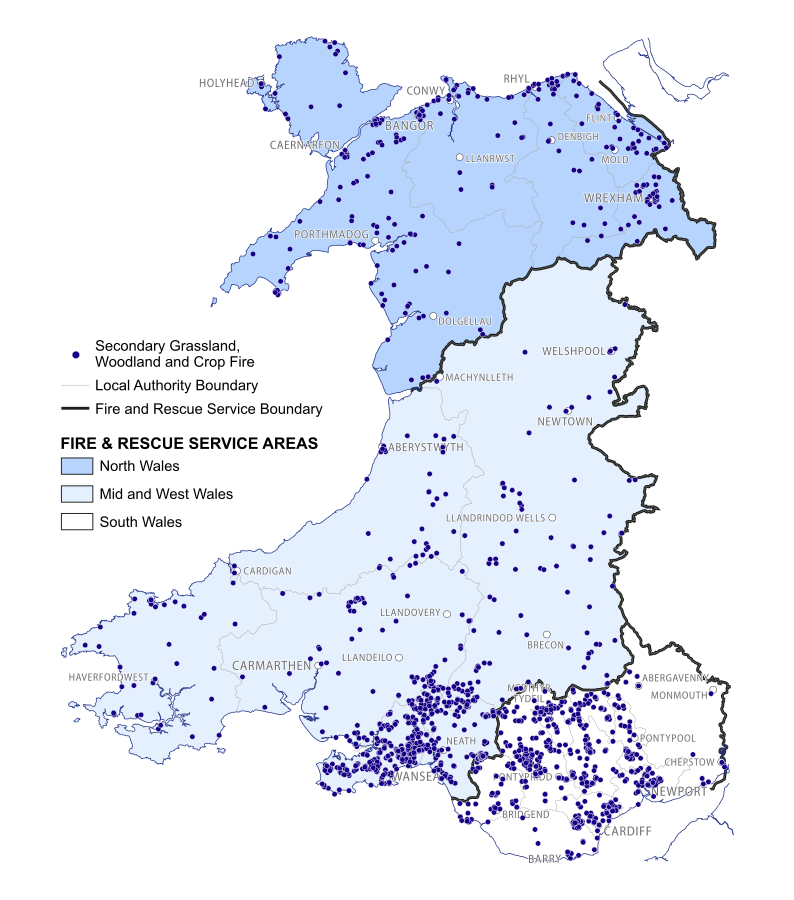
Description of figure 4: a map of Wales showing the locations of secondary grassland, woodland and crop fires in FYE 2025. The map highlights several clusters of these fires, for example in the south Wales valleys and Swansea in FYE 2025.
In FYE 2025 for the first time in the available time series the number of secondary grassland fires in Mid and West Wales FRA outnumbered those in South Wales FRA, with 46% occurring in Mid and West Wales and 37% in South Wales; the FYE 2025 South Wales figure is the lowest for this FRA in the available time series. The remaining 17% occurred in North Wales FRA. There were increases in both North Wales (of 30%) and Mid and West Wales (of 25%) compared to the previous year, whilst there was a decrease in South Wales of 21%.
Motive
Throughout the time series the majority of grassland, woodland and crop fires were started deliberately. In FYE 2025, 72% of grassland, woodland and crop fires were deliberate, 3 percentage points higher than in the previous year.
Figure 5: number of grassland, woodland and crop fires by motive, FYE 2015 to FYE 2025
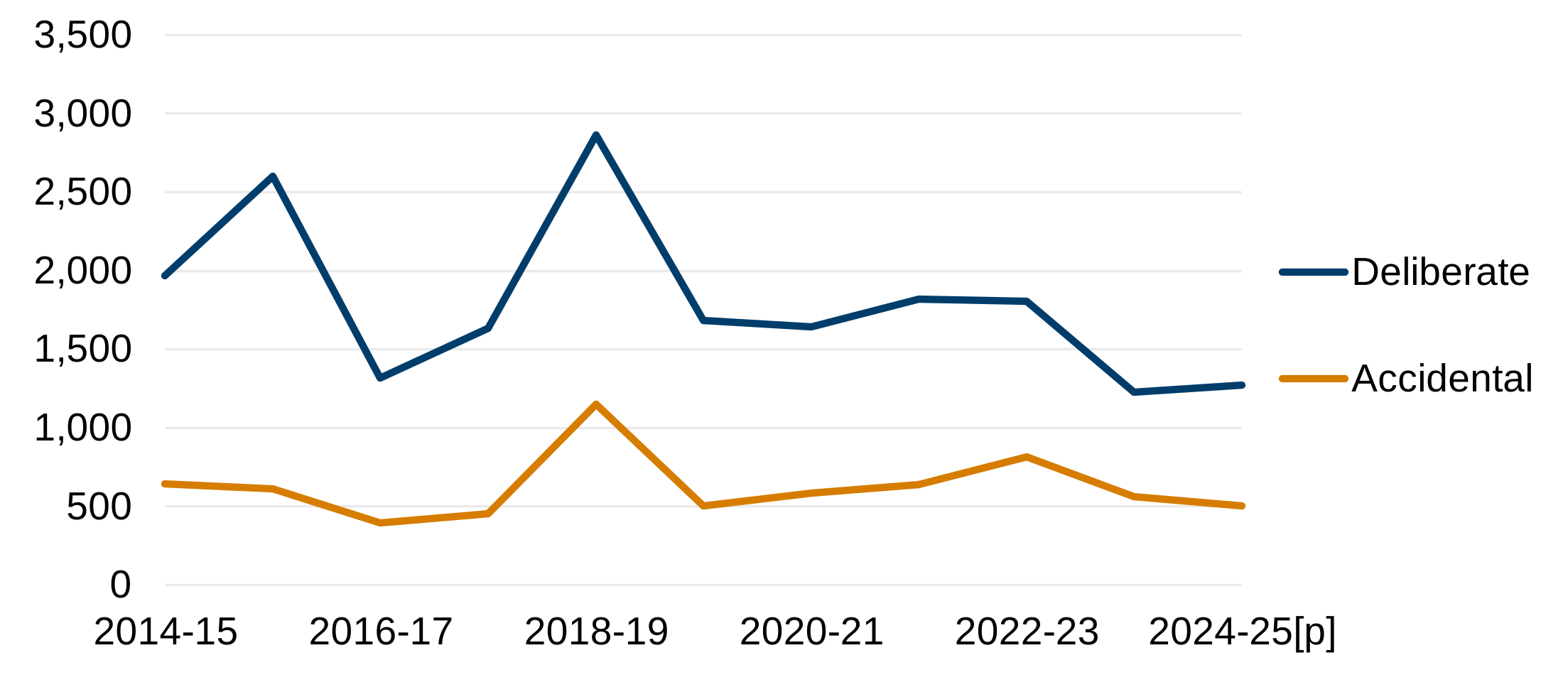
Description of figure 5: line chart shows a time series of all grassland, woodland and crop fires, split by motive between FYE 2015 and FYE 2025. The chart shows that there are more deliberate fires of this type than accidental, though both series show a similar pattern over the past 10 years.
[p] Provisional data.
Numbers of deliberate grassland fires rose by 4% compared with FYE 2024 (from 1,226 to 1,272 fires) although this is still the second lowest number in the time series. The number of accidental grassland fires fell by 10% in FYE 2025 (from 563 to 506).
For both deliberate and accidental fires occurring on grassland, woodland and crops, the vast majority were secondary fires; 94% of deliberate grassland fires and 92% of accidental grassland fires were secondary.
Month
The majority of grassland, woodland and crop fires typically take place in the spring and summer months. March 2025 recorded almost half of the grassland fires for FYE 2025, with 880 fires; this is more than 10 times the number in March 2024 and the highest March figure since March 2012. On average there were 28 grassland woodland and crop fires each day in March 2025 compared with 3 each day for the rest of the year.
The occurrence of outdoor fires is likely to be influenced by the weather. Data from the Met Office shows that March 2025 had the most hours of sunshine in any March since 1929 and the least amount of rainfall in March since 1944.
December 2024 saw the second lowest numbers of grassland, woodland and crop fires of all months in FYE 2025. The month also saw the most rainfall for the year and the least hours of sunshine.
Aside from March, there were increases in the number of grassland, woodland and crop fires in 3 other months compared with the same month in the previous year;
- in February 2025 there were more than 7 times as many of these fires as in February 2024.
- more than 3 times as many of these fires in August 2024 with compared 2023.
- in November 2024 there were 10 more of these fires than in November 2023.
In 8 months of the year there were decreases compared with the same month in the previous year. June 2024 saw the largest decrease; down 79% from 675 in June 2023 to 144 in June 2024.
Figure 6: number of grassland, woodland and crop fires, by month, FYE 2019 to FYE 2023 median, FYE 2024 and FYE 2025
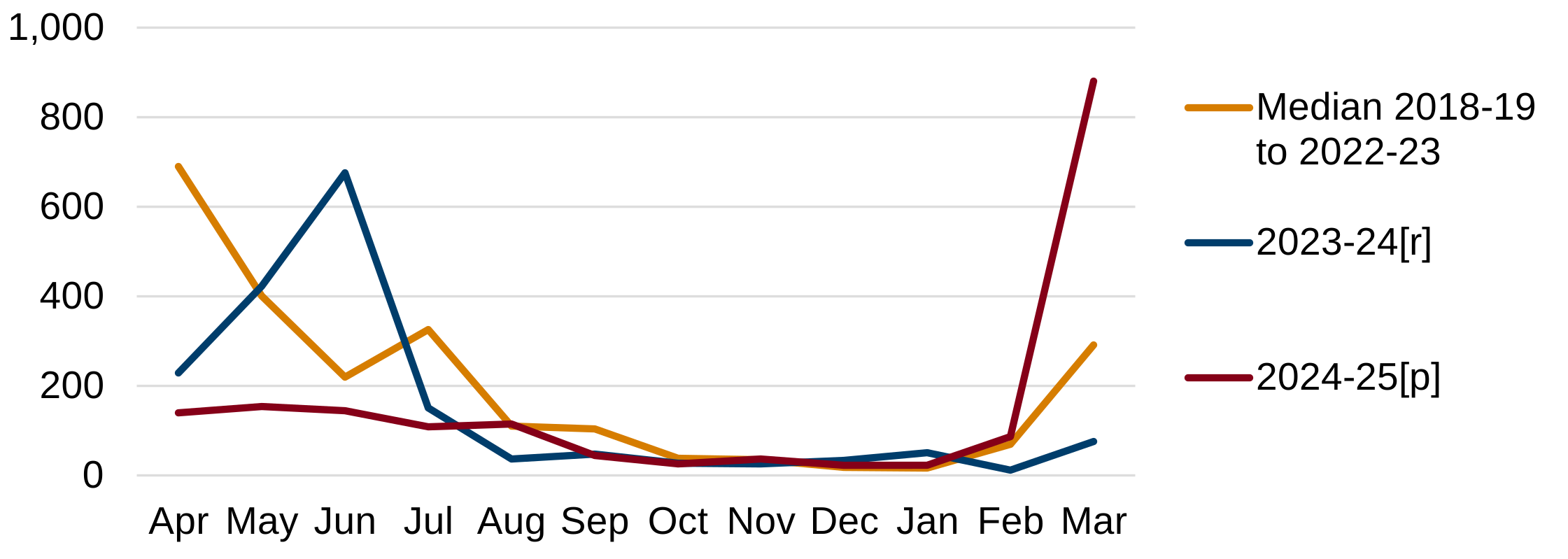
Description of figure 6: a line chart showing the number of grassland, woodland and crop fires by month for FYE 2024 and FYE 2025, and the median number of such fires for the years FYE 2019 to FYE 2023. The chart shows that such fires tend to occur most frequently in the Spring and Summer months. There are some noticeable spikes in June 2023 and March 2025 compared to previous years.
[p] Provisional data.
It should be noted that other weather conditions such as snow and ice may also affect the number of fires in the winter.
Local authority
Figure 7: number of grassland, woodland and crop fires by local authority and motive, FYE 2025[p] [Note 1]
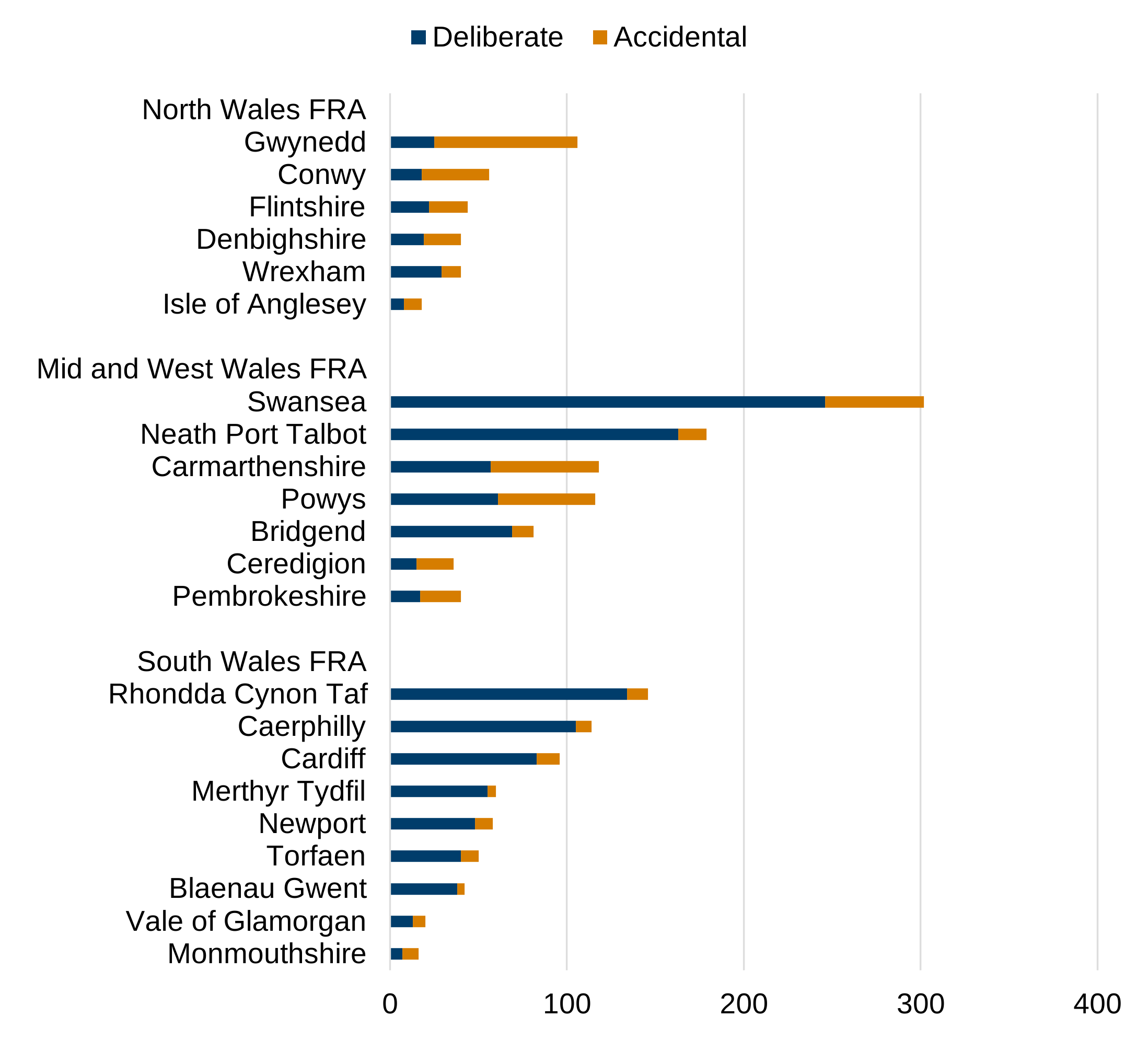
Description of figure 7: a bar chart showing the numbers of grassland fires which were accidental, and which were deliberate for local authorities in FYE 2025. The chart illustrates how local authorities in North Wales tend to have a higher proportion of accidental fires whilst those in South Wales have a higher proportion of deliberate fires.
Swansea local authority had the highest number of grassland, woodland and crop fires in Wales in FYE 2025with 302 (equating to 17% of these fires in Wales). Neath Port Talbot had the next highest number, with 10% of grassland, woodland and crop fires in Wales in FYE 2025. Monmouthshire had the smallest number with 16 (less than 1% of those in Wales), closely followed by Isle of Anglesey with 18 fires.
[Note 1] Local authorities have been assigned to incidents based on grid references; see the quality information for further details.
[p] Provisional data.
Compared with FYE 2024, 11 local authorities saw a decrease in the number of grassland, woodland and crop fires in FYE 2025; the largest percentage decreases were in Blaenau Gwent (down 62% from 111 to 42) and the Vale of Glamorgan (down 49%).
The remaining 11 local authorities saw increases in the number of grassland, woodland and crop fires in FYE 2025. The largest proportional increases were observed in Wrexham where the number of these fires was almost treble, and in Denbighshire and Conwy where they approximately doubled. However, these increases are based on relatively small numbers of fires.
In 10 local authorities, over 80% of all grassland, woodland and crop fires were started deliberately, with 7 being in the South Wales FRA region. The local authorities where the highest proportions of grassland, woodland and crop fires started deliberately occurred were Merthyr Tydfil, Caerphilly and Rhondda Cynon Taf (all with 92%), closely followed by Neath Port Talbot (91%) and Blaenau Gwent (90%).
Gwynedd and Conwy had the smallest percentages of grassland fires started deliberately (24% and 32% respectively). In FYE 2025 Gwynedd had the most accidental grassland fires of all Welsh local authorities, making up 16% of such fires in Wales.
Area damaged
Fires are classified according to the size of area damaged in the course of a fire. In FYE 2025, over half of grassland, woodland and crop fires (55%) damaged 20 square metres or less. Almost a fifth of such fires damaged between 21 and 200 square metres and a quarter damaged an area over 200 square metres.
The number of grassland, woodland and crop fires damaging 20 metres or less fell (by 14%) compared to the previous year. Numbers of those damaging between 21 and 200 square metres saw little change whilst those damaging an area over 200 square metres rose by 52%; the vast majority of fires in this category (93%) were secondary fires.
Approximately a fifth of the total land area in Wales is designated as national park. In FYE 2025, 79 grassland, woodland and crop fires took place on national park land; 92% of these were secondary fires. Of the 468 grassland, woodland and crop fires which damaged over 200 square metres, 8% occurred in national parks.
Over the last 10 years there have been 705 grassland, woodland and crop fires on national park land, equating to 3% of all such fires in the period. During this period, half of such fires damaged areas of more the 200 square metres.
The cause of rapid fire growth is recorded, if appropriate, for primary grassland, woodland and crop fires. Over the last 10 years, half of primary fires (49%) where strong winds were a factor damaged over 10,000 square metres.
Source and cause
Information is available on the source of primary fires, but not secondary fires. Figure 8 looks at the source of the flame, spark or heat that first ignited the fire. This differs from the cause of the fire, which refers to why the fire started, for instance careless handling, overheating or natural causes (which are classed as accidental causes) or deliberate.
In 19% of the primary grassland fires over the last 5 years the source of ignition was a naked flame and a further 12% were due to matches and candles. In 47% of primary grassland fires in the last 5 years, the source was unknown.
Figure 8: percentage of primary grassland, woodland and crop fires by source of ignition, FYE 2021 to FYE 2025 [Note 1]
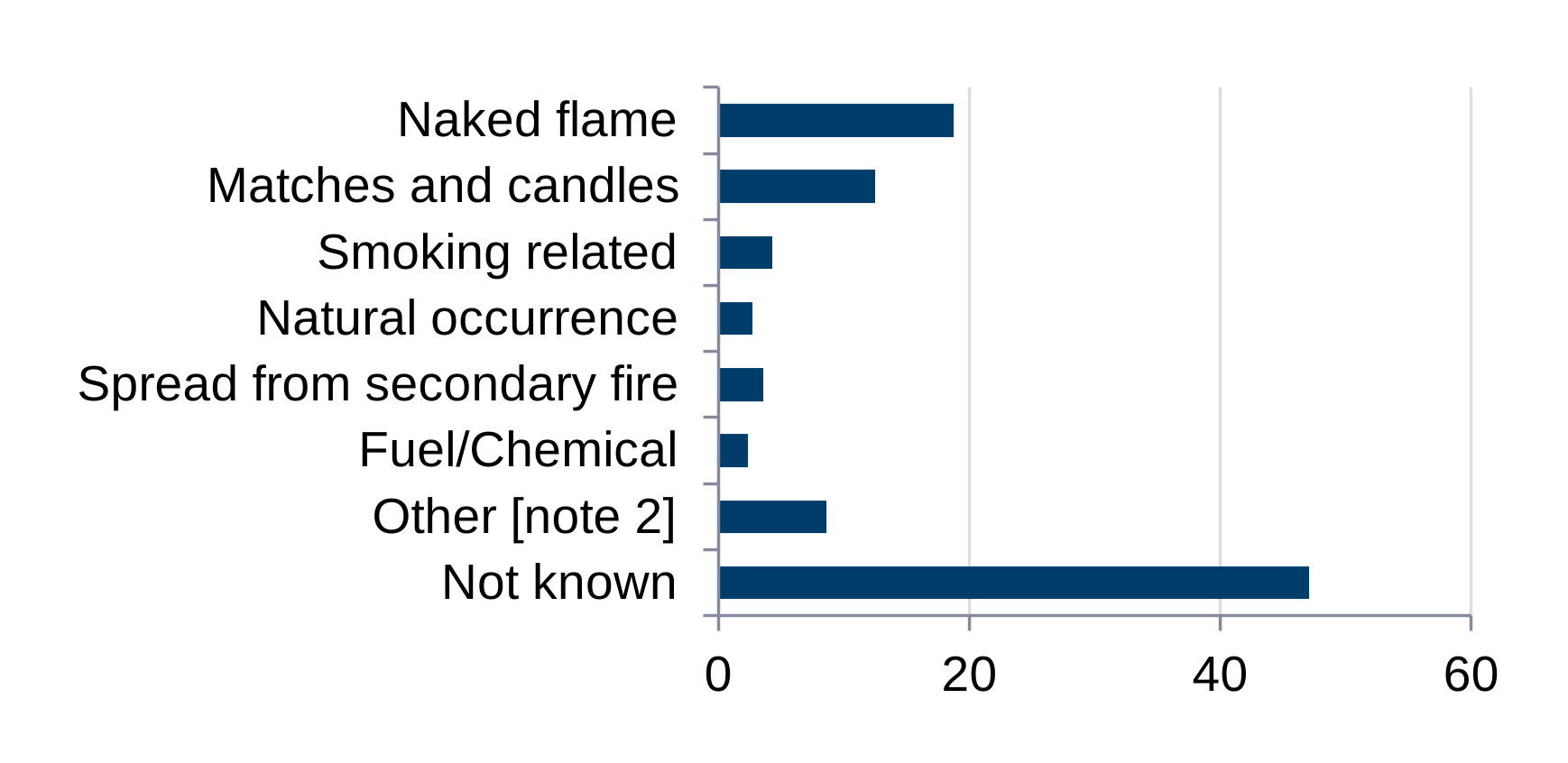
Description of figure 8: bar chart showing the source of ignition of primary grassland, woodland and crop fires over the five year period from FYE 2021 to FYE 2025. Most fires in this time period (for which the source is known) were started with a naked flame or matches/candles.
[Note 1] Accidental and deliberate grassland fires.
[Note 2] Includes bombs and explosives, fireworks, fuel/chemical, other, wet hay, cooking appliance, vehicles and other domestic style appliance.
Over a third of primary fires over the last 5 years were caused accidentally. The largest single category of known causes of accidental fires was from natural occurrence (18%). The next largest causes of accidental fires were from a bonfire going out of control and ‘Other intentional burning, going out of control’ each accounting for 14%.
Casualties and rescues from fires
Within the last decade there have been 6 or fewer casualties each year resulting from grassland, woodland and crop fires. Since FYE 2016 there have been no fatalities and 37 non fatal casualties; 30% of the injuries incurred were burns and 43% were sent for precautionary checks.
Over the last 10 years there has been one rescue of an uninjured person from a grassland, woodland or crop fire, in FYE 2016.
Numbers of non-fatal casualties in a grassland, woodland and crop fires tend to be small and are prone to fluctuation. There were 4 such casualties in FYE 2025, 2 more than in FYE 2024. These 4 casualties equate around 1% of all non-fatal fire casualties in Wales in FYE 2025.
Fire false alarms attended by FRAs
In FYE 2025 FRAs attended a total of 871 fire false alarms which were related to grassland, woodland and crop locations in Wales, up from 723 in FYE 2024 (an increase of 20%). Both North Wales and Mid and West Wales saw increases in numbers, of 69% and 42% respectively. In South Wales there was a fall of 12%.
Only 2% of these fire false alarms in FYE 2025 were due to malicious calls, with the remaining 98% due to good intent. Most malicious calls relating to grassland, woodland and crops occurred in South Wales (76%), which in turn equated to 4% of the grassland, woodland and crop fire false alarms attended in the region.
Glossary
Accidental fires
Includes those where the fire was ignited by accident or the cause was not known or unspecified.
Cause of fire
The defect, act or omission leading to ignition of the fire.
Deliberate
Include those where deliberate ignition is merely suspected.
Fire false alarms
Events in which the FRA was called to a reported fire which turned out not to exist. This bulletin does not include data on Special Service Incident False Alarms. False alarms are categorised as follows.
Malicious Fire False Alarms
Calls made with the intention of getting the fire and rescue service to attend a non-existent fire-related event, including deliberate and suspected malicious intentions.
Good Intent Fire False Alarms
Calls made in good faith in the belief that the fire and rescue service really would attend a fire.
Fatal casualty (fire related)
A person whose death is attributed to a fire even if the death occurred weeks or months later. There are also occasional cases where it becomes apparent subsequently that fire was not the cause of death. The figures for fatalities are thus subject to revision.
Fire and Rescue Authorities (FRAs)
The statutory bodies which oversee the policy and service delivery of a fire and rescue service. The three authorities in Wales are North Wales, Mid and West Wales and South Wales.
Grassland, woodland and crop fires
From FYE 2010 grassland, woodland and crop fires include fires in gardens, crops, woods, nurseries/market gardens, heathland/moorland, grassland/pasture/grazing, scrub land, railway trackside vegetation, roadside vegetation and roadside vegetation. Prior to this date grassland fires referred to primary fires in allotments, gardens, crops, woods and other agricultural locations and secondary fires on grassland, heathland and as a result of intentional straw and stubble burning. This is a broader definition than the land use definition in agricultural publications.
Incident Recording System (IRS)
The electronic based system for recording fires, false alarms and Special Service Incidents. IRS replaced the FDR1 and FDR3 paper forms in April 2009.
Location
The type of premises, property or countryside in which the fire started. This is not necessarily the type of premises in which most casualties or damage occurred as a result of the fire.
Non-fatal casualties
Recorded as being in one of four classes of severity as follows:
- Victim went to hospital, injuries appear to be serious
- Victim went to hospital, injuries appear to be slight
- First aid given at scene
- Precautionary check recommended – this is when an individual is sent to hospital or advised to see a doctor as a precaution, having no obvious injury or distress.
Non-fatal casualties marked as 'not fire-related' have not been excluded due to widespread inappropriate use of this field.
Primary fires
All reportable fires in non-derelict buildings, vehicles and outdoor structures or any fire involving casualties, rescues, or fires attended by five or more appliances.
Reportable fire
An event of uncontrolled burning involving flames, heat or smoke and which the FRA attended.
Secondary fires
The majority of outdoor fires including grassland and refuse fires unless they involve casualties or rescues, property loss or five or more appliances attend. They include fires in single derelict buildings. They are reported in less detail than other fires and consequently less information concerning them is available.
Source of ignition
The source of the flame, spark or heat that started the fire.
Quality and methodology information
General information relating to data quality for fire and rescue incidents, operational fire data and FRA performance data can be found in the quality report.
Background
The analysis in this bulletin relates to fire and rescue service incidents between April 2024 and end March 2025 (FYE 2025) whilst making comparisons with April 2023 to March 2024 (FYE 2024) and earlier years.
On 10 November 2004 the Fire and Rescue Services Act 2004, which devolved fire and rescue services to the National Assembly for Wales (now the responsibility of the Welsh Government), was brought into effect. In Wales, these services are provided by three Fire and Rescue Authorities (FRAs). The three FRAs cover varied geographical areas with a wide variety of risks including: fires in homes; outdoor fires; fires in business premises; road traffic collisions; rail or air crashes; chemical spills; building collapses; and trapped people or animals.
North Wales Fire and Rescue Authority provides cover for a population of almost 700,000 across a geographical area of 2,400 square miles. It employs over 900 operational and non-operational support staff from its headquarters and its 44 fire stations.
Mid and West Wales Fire and Rescue Authority covers over half the area of Wales and a population of over 900,000. There are 58 fire stations and almost 1,400 employees.
South Wales Fire and Rescue Authority serves a population of almost 1.6 million people covering 1,085 square miles. It employs more than 1,700 staff including over 1,400 fire-fighters who operate from 47 fire stations throughout South Wales.
Prevention
Following the exceptional forest fires in Easter 2003 caused by weather conditions, Forest Research used geospatial mapping and qualitative techniques (interviews, observation, and surveys) to characterise and understand the problem of wildfires, focusing on the social factors behind the issue. Their information paper includes details of measures put in place to avoid similar occurrences (Forest Research).
The Welsh Government has issued guidance on heather and grass burning. Currently, burning is only allowed during:
- 1 October to 31 March in uplands
- 1 November to 15 March elsewhere
A license is required at all other times and can only be obtained in very specific circumstances. Application for burning during restricted periods can be made through the Welsh Government Website at the above link. It is also illegal to burn between sunset and sunrise. In addition, a Burning Management Plan has to be completed for all proposed burnings.
Burning in Wales is controlled by The Heather and Grass Burning (Wales) Regulations 2008 (UK legislation) and The Heather and Grass Burning Code, which gives advice on burning best practice.
Fire safety initiatives
The FRAs in Wales have a number of ongoing fire safety campaigns and community fire safety work (such as home safety checks and school visits – some of which relate directly to grassland fire prevention) as detailed on their respective webpages.
North Wales Fire and Rescue Service
Mid and West Wales Fire and Rescue Service
South Wales Fire and Rescue Service
These may be a contributory factor in the overall falling numbers of fires although no all-Wales evidence is currently available.
Over the years there have been a number of national programmes for dealing with deliberate fires. The Wales Arson Reduction Strategy (WARS) first reported in 2007, with a review in 2009, and updated strategies for 2012 to 2015 and most recently 2019. A delivery plan from WARS III resulted in a multi-agency taskforce ‘Operation Dawns Glaw’ being established in 2015 and aiming to reduce the number of deliberate grassland fires.
GB comparisons
Whilst England and Scotland do not publish specific grassland fires bulletins, data by location are available in their annual publications.
Data for England (published by the Home Office from April 2016 until March 2025 and the Ministry for Housing, Communities and Local Government from April 2025):
- Detailed analysis of fires attended by fire and rescue services in England - GOV.UK
- Fire and rescue incident statistics - GOV.UK
Data for Scotland (published by Scottish Fire and Rescue Service since 2015)
- Fire and Rescue Incident Statistics 2024-25 (Scottish Fire and Rescue Service)
- Pre 2014-15 data (Scottish Government)
Official statistics status
All official statistics should show the standards of the Code of Practice for Statistic (UK Statistics Authority).
These are accredited official statistics. They were independently reviewed by the Office for Statistics Regulation (OSR) in June 2012. They comply with the standards of trustworthiness, quality and value in the Code of Practice for Statistics.
It is Welsh Government’s responsibility to maintain compliance with the standards expected of accreditation. If we become concerned about whether these statistics are still meeting the appropriate standards, we will discuss any concerns with OSR promptly. Accreditation can be cancelled or suspended at any point when the highest standards are not maintained, and reinstated when standards are restored.
Accredited official statistics are called National Statistics in the Statistics and Registration Service Act 2007.
Statement of compliance with the Code of Practice for Statistics
Our statistical practice is regulated by the Office for Statistics Regulation (OSR). OSR sets the standards of trustworthiness, quality and value in the Code of Practice for Statistics that all producers of official statistics should adhere to.
All of our statistics are produced and published in accordance with a number of statements and protocols to enhance trustworthiness, quality and value. These are set out in the Welsh Government’s Statement of Compliance.
These accredited official statistics (OSR) demonstrate the standards expected around trustworthiness, quality and public value in the following ways.
Trustworthiness
These statistics are compiled from administrative data systems in use in the Fire and Rescue Services in Wales.
These statistics are published in an accessible, orderly, pre-announced manner on the Welsh Government website at 9:30am on the day of publication. Access to the data during processing is restricted to those involved in the production of the statistics, quality assurance and for operational purposes. Pre-release access is restricted to eligible recipients in line with the Code of Practice (UK Statistics Authority).
Quality
Statistics published by Welsh Government adhere to the Statistical Quality Management Strategy which supplements the Quality pillar of the Code of Practice for Statistics and the European Statistical System principles of quality for statistical outputs.
Data collection and revisions
Since April 2009 incident data (relating to fires, false alarms and Special Service Incidents) have been submitted by the FRAs via the Incident Recording System (IRS).
On 5 January 2016 responsibility for fire and rescue policy in England transferred from the Department for Communities and Local Government (CLG) to the Home Office, this resulted in IRS also being held by the Home Office. IRS records data submitted by FRAs in England, Scotland and Wales but does not currently collect data from FRAs in Northern Ireland.
It should be noted that throughout this time since 2009 there has been no change to the data collection.
The incident data are extracted from IRS annually (usually around July/August) and marked provisional at first publication. All bulletins and StatsWales tables excluding the 6 month data published in February/March are based on this dataset. Due to the nature of the live system, whilst accurate at the time of extraction, totals may change and therefore be revised due to updated information.
Data submitted to IRS are automatically checked in the following ways:
- Only the applicable questions are asked.
- All dates and or times are complete and in the correct format.
- Dates and or times are in a valid order.
- Only appropriate options are displayed.
Due to the potential complexity of incidents recorded it is not possible for IRS/FaRDaP to check that all data submitted is logical; unusual circumstances can be checked by having a process for quality control and assurance by the FRAs. The FRAs complete records in IRS in accordance with guidance available from the Home Office.
Upon receipt of data at Welsh Government some general sense checks are carried out and queried as necessary.
A key piece of information that the IRS collects for all incidents is the accurate incident location. For all incidents it is mandatory to have the grid location (easting and northing co-ordinates), in addition for addressable locations the address details can be recorded.
Within the IRS forms system, for addressable locations the user locates the address using a gazetteer and this determines the co-ordinates. For non-addressable locations the user will either select the location on a map or use a mobile data terminal to determine the location. These grid references submitted by the FRAs are used to determine the local authority in which the incident occurred.
In September 2025 a new system FaRDaP was introduced to replace the IRS. On the 1st April 2025 responsibility for administrating fire data collection transferred to the Ministry for Housing, Communities and Local Government (MHCLG).
Value
The Welsh Government uses the information in this bulletin to monitor the trends in fires occurring in Wales and provides information on FRA performance and activities to citizens and communities in Wales. This helps to monitor the effectiveness of current policy, and for future policy development. The data are also used as evidence for national fire safety initiatives and campaigns. The data are used by the fire and rescue services for comparisons and benchmarking. The data aids the allocation of resources and the provision of community safety projects.
We regularly review our data collections and outputs to ensure that they are relevant, collect reliable data and meet user needs. We also consult our users on a number of fire data collections issues. This is part of an ongoing exercise covering all fire and rescue statistics in order to better understand user requirements and priorities for the future. As part of this, Welsh Government policy colleagues, fire and rescue services and others have provided information on how they use fire statistics.
Views from the public were sought on the Grassland, woodland and crop fires statistical bulletin in a recent Welsh Government Statistics Consultation; as a result a decision was taken to produce a more accessible, shortened HTML version instead of the previous pdf. A summary of responses to the consultation will be published at the end of April.
You are welcome to contact us directly with any comments about how we meet these standards. Alternatively, you can contact OSR by emailing regulation@statistics.gov.uk or via the OSR website.
Well-being of Future Generations Act (WFG)
The Well-being of Future Generations Act 2015 is about improving the social, economic, environmental and cultural wellbeing of Wales. The Act puts in place seven wellbeing goals for Wales. These are for a more equal, prosperous, resilient, healthier and globally responsible Wales, with cohesive communities and a vibrant culture and thriving Welsh language. Under section (10)(1) of the Act, the Welsh Ministers must (a) publish indicators (“national indicators”) that must be applied for the purpose of measuring progress towards the achievement of the wellbeing goals, and (b) lay a copy of the national indicators before Senedd Cymru. Under section 10(8) of the Well-being of Future Generations Act, where the Welsh Ministers revise the national indicators, they must as soon as reasonably practicable (a) publish the indicators as revised and (b) lay a copy of them before the Senedd. These national indicators were laid before the Senedd in 2021. The indicators laid on 14 December 2021 replace the set laid on 16 March 2016.
Information on the indicators, along with narratives for each of the wellbeing goals and associated technical information is available in the Wellbeing of Wales report.
Further information on the Well-being of Future Generations (Wales) Act 2015.
The statistics included in this release could also provide supporting narrative to the national indicators and be used by public services boards in relation to their local wellbeing assessments and local wellbeing plans.
