
Amcangyfrifon o’r angen am dai (sail-2025): adroddiad ansawdd
Mae'r adroddiad hwn yn crynhoi'r ffynonellau a'r dulliau a ddefnyddiwyd i gynhyrchu'r amcangyfrifon o'r angen am dai ychwanegol. Saesneg yn unig.
Ar y dudalen hon
An overview of the estimates
These statistics provide estimates of the additional housing units needed in Wales over the next 20 years. The estimates use the 2022‑based household projections to estimate newly arising need, alongside an estimate of existing unmet need. The previous set of estimates was published in 2020.
These figures are based on several assumptions and are intended to support understanding of potential future housing need. They should not be interpreted or used as housing targets for Wales.
A Chief Statistician’s blog published 12 February, alongside the estimates, explains more about the estimates and what they tell us.
Users and uses
The main requirements of these estimates are to inform ongoing housing policy decision making.
The data in this release forms part of the evidence base for future planning in Wales and is used by the Welsh Government and housing organisations to produce a picture of the overall need for additional housing units in Wales. The data will be used to inform any future review of the National Development Framework, future policy development as well as informing Future Trends reporting (as required by the Well-being of Future Generations (Wales) Act 2015.
The data will be used for answering Senedd questions, ministerial correspondence, Freedom of Information Act cases and queries from the public. A variety of users will use these statistics including national and local government, researchers, academics and students.
Strengths and limitations of the estimates
Strengths
The statistics are processed and published in a planned and structured way, ensuring users can access them when they are most current and relevant.
Outputs are designed specifically to reflect the Welsh context and have been developed in response to the needs of Welsh Government and wider users.
The estimates are produced using an established and transparent methodology, developed with input from a dedicated technical advisory group, and draw on the most up‑to‑date official data available.
The estimates take account of several forward‑looking factors, including expected changes in household formation, income, rent levels and other elements that shape future additional housing need.
The estimates and associated data tables are made available through the StatsWales platform, supporting easy access, reuse, and analysis
Limitations
Dependence on household projections
The estimates are based on the 2022‑based household projections, which themselves rely on past trends in population and household formation. As with all projections, uncertainty increases the further into the future they extend, and they do not account for the impact of future policies or unforeseen events.
Not a housing target
The figures indicate the estimated number of households in need of an additional housing unit over the period but should not be interpreted or used as housing targets. They are based on assumptions and do not represent policy commitments or planning requirements.
Scope limited to need for additional units
The methodology considers only households requiring an additional housing unit. It does not account for households currently living in unsuitable accommodation who may need a different type or size of unit, nor for household aspirations to move.
Likely incomplete measurement of existing unmet need
Estimates of existing unmet need are based on the best available data but are likely to underestimate the true level of unmet need in Wales. This is because some households in need will not be included in administrative data. For example, data on households in temporary accommodation will not include households in need but who haven’t approached their local authority for help, rough sleepers or those who are staying temporarily with friends or relatives. In Census data, a single person living with others are not counted as a concealed household.
Household formation influenced by housing supply
Household projections are based on past trends that may themselves be affected by housing availability. For example, increased housing supply may allow more households to form, while constrained supply may suppress formation.
Geographical variation
The estimates are presented at the Wales level. There is likely to be considerable variation between regions and within individual local authorities.
Illustrating uncertainty
Higher and lower variant household projections are included to show the uncertainty inherent in projecting future housing need.
Contextual information
While these estimates are not a housing target, this section contains links to published information around new house provision in Wales, to provide context to the housing need estimates presented in this article.
New build dwellings
Information on new house building in Wales is based on the reports of local authority building inspectors and the National House Building Council (NHBC). It does not include information from other private approved inspectors, likely resulting in an undercount of new dwellings started and completed.
It is sometimes difficult for building control officers and NHBC to identify the intended final tenure of the property (the basis for the tenure information). This may lead to an undercount for the social sector and an overcount for the private sector. Therefore, the tenure data should be treated with caution.
In the most recent ten-year period, there has been a general decline in the number of new dwellings started and completed. In 2024-25, 3,798 new dwellings were started, whilst 4,631 new dwellings were completed.
Affordable housing provision
The affordable housing provision figures published by Welsh Government cover all additional affordable housing units, whether through new build, purchase, acquisition, leasing or conversion of existing dwellings. They do not take account of any loss of affordable housing stock through demolitions or sales during the year.
Affordable housing applies to housing where secure mechanisms are in place to ensure that it is accessible to those who cannot afford market housing, both on first and subsequent occupation as defined in Technical Advice Note (TAN) 2: Planning and Affordable Housing (2006).
New build affordable housing units and some conversions will be additional housing units. However, the purchase or acquisition by social landlords of existing private sector properties and converting them into affordable housing means an increase in the provision of additional affordable housing units, but a reduction in the number of private sector units.
In 2024 to 2025, 3,643 additional affordable housing units were delivered across Wales, the highest total since data was first recorded in 2007 to 2008.
Definitions
For these estimates, the following terms are defined as follow.
Existing unmet need
The number of households that do not have access to adequate housing and would require an additional housing unit. Those who may be in need of more appropriate housing that would not require an additional unit are excluded from this analysis.
Newly arising need
The projected number of newly forming households that will require additional housing units for a period in the future.
Market housing
Private housing units that are for rent or sale in the open market.
Affordable housing
Housing units that are for sale or rent for those who cannot afford market housing.
Concealed family
The 2021 Census defined a concealed family as a couple or lone parent family, living in a multifamily household, where the Family Reference Person (FRP) is not the Household Reference Person (HRP). Each family living in a household includes a FRP identified on the basis of economic activity and age characteristics (lone parents are automatically the FRP). In a one-family household the FRP is also the HRP. In households where there is more than one family, the HRP is selected from the FRPs based on economic activity, age and then order on the census form.
Concealed families will include:
- young adults living with a partner and/or child/children in the same household as their parents
- older couples living with an adult child and their family
- unrelated families sharing a household
A single person cannot be a concealed family; therefore one elderly parent living with their adult child and family or an adult child returning to the parental home is not a concealed family.
Overcrowded households (bedroom standard)
The Occupancy rating provides a measure of whether a household's accommodation is overcrowded or under occupied (based on the number of bedrooms). The ages of the household members and their relationships to each other are used to derive the number of bedrooms they require, based on a standard formula. The number of bedrooms required is subtracted from the number of bedrooms in the household's accommodation to obtain the occupancy rating. An occupancy rating of -1 implies that a household has one fewer bedroom than required, whereas +1 implies that they have one more bedroom than the standard requirement.
An occupancy rating of -1 or lower indicates an overcrowded household.
Data inputs
Newly arising need
Newly arising need is calculated as the difference in household projections from one year to the next. For this work, it is taken from the 2022-based household projections.
The principal projection is based on recent past trends in births, deaths, and migration.
The higher population variant is based on assumptions of high fertility, life expectancy and migration assumptions
The lower population variant is based on assumptions of low fertility, life expectancy and migration assumptions
Existing unmet need
For this work, existing unmet need is estimated from two components.
- Homeless households in temporary accommodation (March 2025 snapshot)
- The number of households that were both overcrowded and concealed (ONS) (2021 Census)
Household income distribution
Households Below Average Income (HBAI) datasets (DWP), which are based on the Family Resource Survey (DWP) are used for household income estimates.
The FRS is an accredited official survey with a well‑established methodology, comprehensive documentation and published quality information (Gov.UK).
To increase sample size and improve the robustness of the figures, we pooled 3 years (financial years ending 2021, 2022 and 2023). Pooling three years of FRS data increases the number of Welsh households captured, helping to produce more stable income estimates. Because this set of housing need estimates is produced only at the Wales level, rather than broken down regionally as in previous estimates, the FRS provides sufficient sample coverage.
Household incomes are then uplifted to 2025 prices using UKMOD, ensuring that the income data used in the modelling reflects current economic conditions. UKMOD is maintained, developed and managed by the Centre for Microsimulation and Policy Analysis (CeMPA) at the University of Essex.
Private rental data
Data on private sector rents across Wales is collected by Welsh Government rent officers. The median private rent data has been calculated from private rentals with 2 or 3 bedrooms. While data is available for different sizes of property (by number of bedrooms) those with 2 or 3 bedrooms were chosen as these are the two most common sizes for private rented properties and account for over 70% of all records in the data set.
The data that has been used for this work includes households that are in receipt of housing benefit as well as student households. The data covers the period April 2024 to March 2025.
Assumptions
A number of assumptions are required to split the estimated additional housing units between the two tenure categories. These assumptions have been reviewed by the technical advisory group. Some of the assumptions differ from those used in previous versions of the estimates, reflecting changes in data availability and the sources now considered most robust.
Affordability criteria for market housing
Households that would spend up to 30% of household income on median private rent for a 2/3 bed property would be suitable for market housing. As the household income threshold is increased (e.g. households who spend less than 35% of household income on median rent would be suitable for market housing), so will the number of households that would be suitable for market housing.
Annual growth in median household income
UKMOD (University of Essex), a tax‑benefit microsimulation model, is used to uprate household incomes using official economic forecasts. This approach is widely recognised as an appropriate method for producing forward‑looking income estimates and is more robust than applying a uniform inflation adjustment. In previous versions of these estimates, forecast increases in disposable household income from the Office for Budget Responsibility (OBR) were used. UKMOD is able to provide forecasts of gross household income which is a more appropriate measure to use in this case. The UKMOD forecast of gross household income takes account of various uprating factors, including earnings growth projections and benefits, not just price inflation.
Annual change to distribution of household income
Recent policy changes announced by the UK government are expected to influence household incomes; however, the overall impact on income inequality remains uncertain. While some external forecasts such as by the Resolution Foundation suggest a modest reduction in inequality, these projections are produced at a UK level and do not capture all relevant factors affecting Wales specifically. Given these uncertainties, and the absence of robust evidence on the likely direction and scale of change, the estimates assume no change in the distribution of household income over the projection period.
Annual growth in private rent prices
The Office for Budget Responsibility (OBR) forecasts for private rent inflation within its November 2025 Economic and Fiscal Outlook: detailed forecast tables: economy (Table 1.7) as part of its Consumer Price Index (CPI) inflation forecast. Private rents are assumed to be influenced by average earnings growth and housing supply dynamics. This forecast is considered to be the most appropriate to estimate future growth in private rental prices. In previous versions of the estimates, forecasts of average earnings growth from the OBR were used as a proxy for increases in private rental prices as OBR didn’t produce forecasts for private rental prices.
Quality and methodology information
Differences between 2019-based and 2025-based estimates of additional housing need
In the 2019‑based estimates, we presented overall estimates of additional housing need as the sum of newly arising need and existing unmet need. In our estimates we assumed that existing unmet need would be cleared within five years. We therefore divided the total unmet need by five and added to each year’s newly arising need.
Latest trends in the number of homeless households in temporary accommodation indicate that this assumption is no longer reasonable. As a result, the presentation of results has been revised. We now present these estimates as:
- Annual estimates of newly arising need, supplemented by a market/affordable breakdown for the first five years
- Existing unmet housing need reported as a standalone snapshot, rather than being allocated across future years
We assume that all existing unmet need would be required to be additional affordable housing need.
Methodology
We have not included a worked example here, as the underlying structure of the methodology has not changed. Users who wish to see the calculation process illustrated step‑by‑step can refer to the worked example in the 2019‑based estimates, which remains a useful guide to how the components fit together.
Sensitivity
The estimates are based on several assumptions. Changing these assumptions would change the estimates.
Here we look at the sensitivity to a change in the assumptions used to split the estimates of newly arising need into market and affordable housing. Those in existing unmet need are automatically assumed to be suitable for affordable housing and are not included here.
Newly arising need is based on household projections which are produced based on a range of assumptions. We present estimates based on the principal projection and the upper and lower variant projections in the main report to illustrate the uncertainty around the estimates.
Market housing affordability criteria
There are differing views across literature that suggest the affordability criteria for market housing lies somewhere between 25% and 30% of household income spent on median private rent. For our main estimates, we use the default assumption that households that would spend up to 30% of household income on median private rent for a 2/3 bed property would be suitable for market housing.
Figure 1: sensitivity of the tenure split to market housing affordability criteria, average annual over 5 years from July 2025 to June 2030
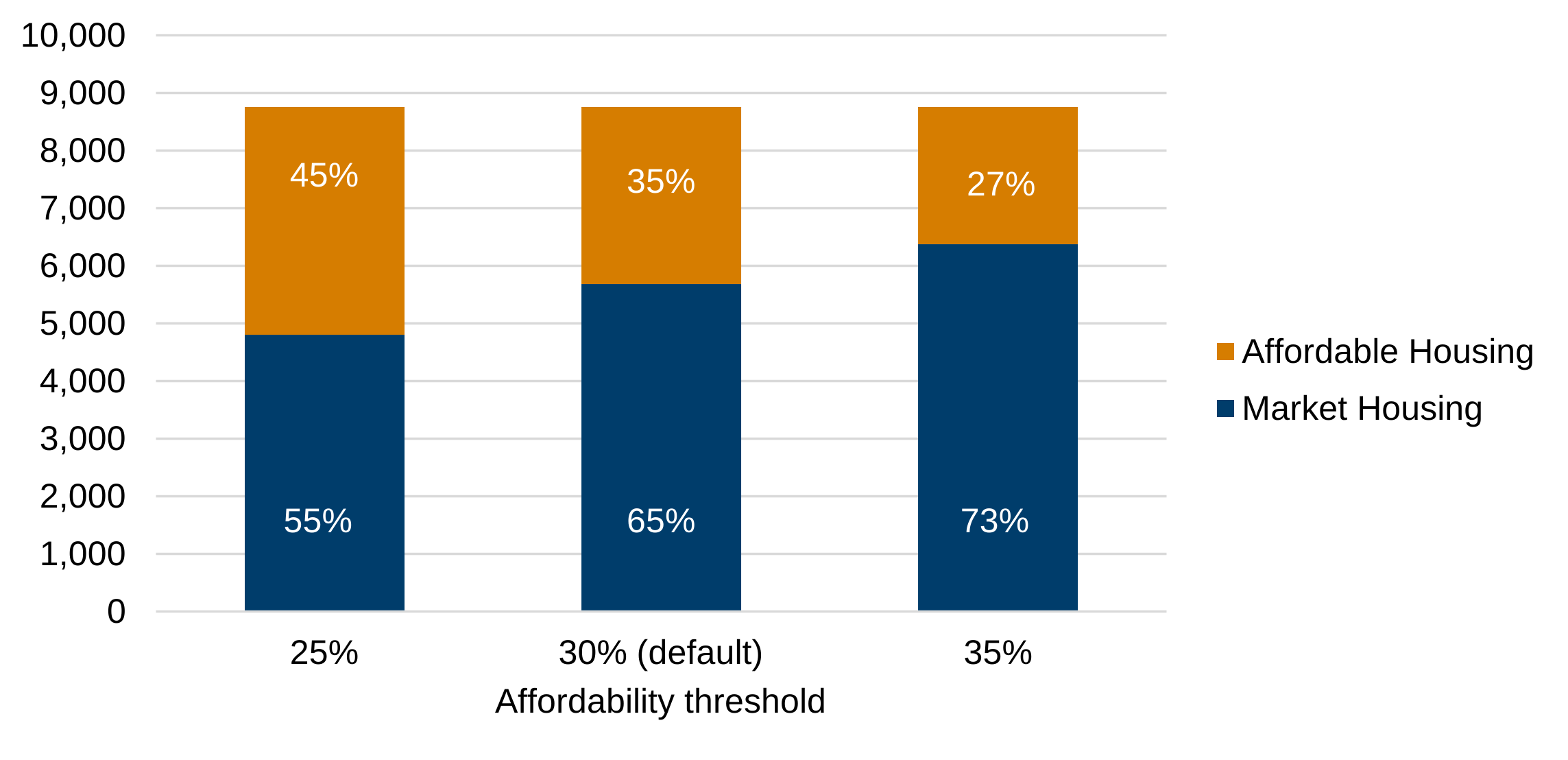
Description of figure 1: The chart shows the impact of changing the affordability criteria. If the threshold was reduced to 25%, 55% of newly arising need would be suitable for market housing. If it was increased to 35%, 73% of newly arising need would be suitable for market housing. This compares to 65% under the default assumption of a 30% threshold.
This assumption is the most sensitive out of the assumptions in splitting the overall estimates by tenure
Household income growth
UKMOD, a tax‑benefit microsimulation model, is used to uprate household incomes using official economic forecasts.
Figure 2: sensitivity of the tenure split to household income growth, average annual over 5 years from July 2025 to June 2030
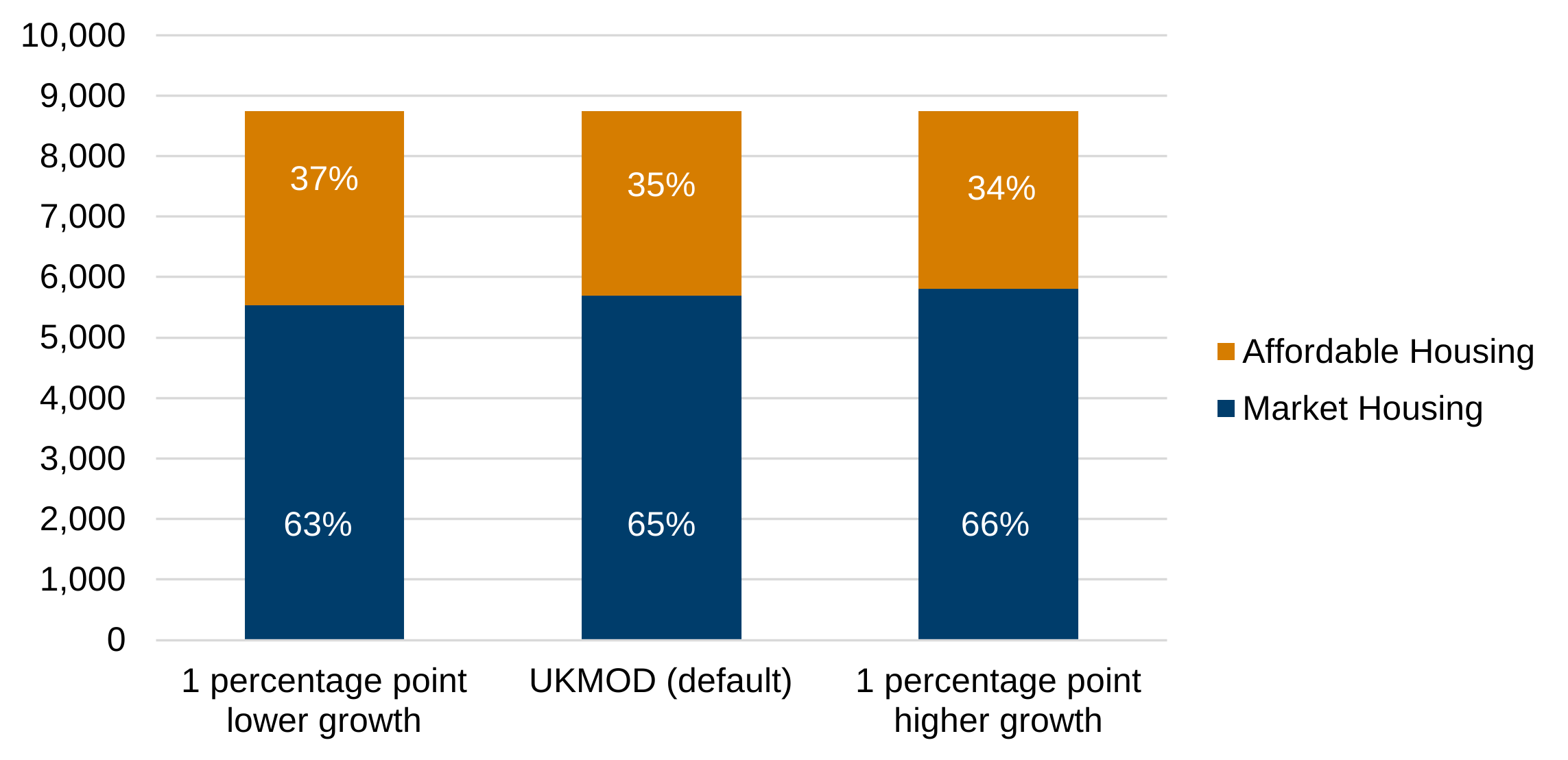
Description of figure 2: The chart shows that if we reduce the UKMOD uplift by 1 percentage point then 63% of newly arising need would be suitable for market housing, if we increase the uplift to 1 percentage point higher than the default then 66% of newly arising need would be suitable for market housing. This compares to 65% under the default assumption.
Private rental growth
Our default assumption is that private rent will increase in line with the OBR forecast for private rentals for housing. In previous years, OBR forecasts of average earnings growth was used as a proxy to estimate private rental growth.
If we were to use the OBR average weekly earnings forecast to estimate future growth in rental prices there would be no change in the tenure split compared to the default assumption (OBR private rental forecast) Under both scenarios, an annual average of 65% of newly arising need would be suitable for market housing over the 5 year period from July 2025 to June 2030.
Cumulative impact of changing all assumptions
Figures 1 to 3 show how the tenure split changes when each assumption is varied on its own. In reality, several assumptions could change at the same time. To show the range this creates, in figure 4 we compare a set of assumptions that leads to a smaller share of market housing with a set that leads to a larger share of market housing.
Figure 3: Combined effect on the tenure split when all assumptions are changed
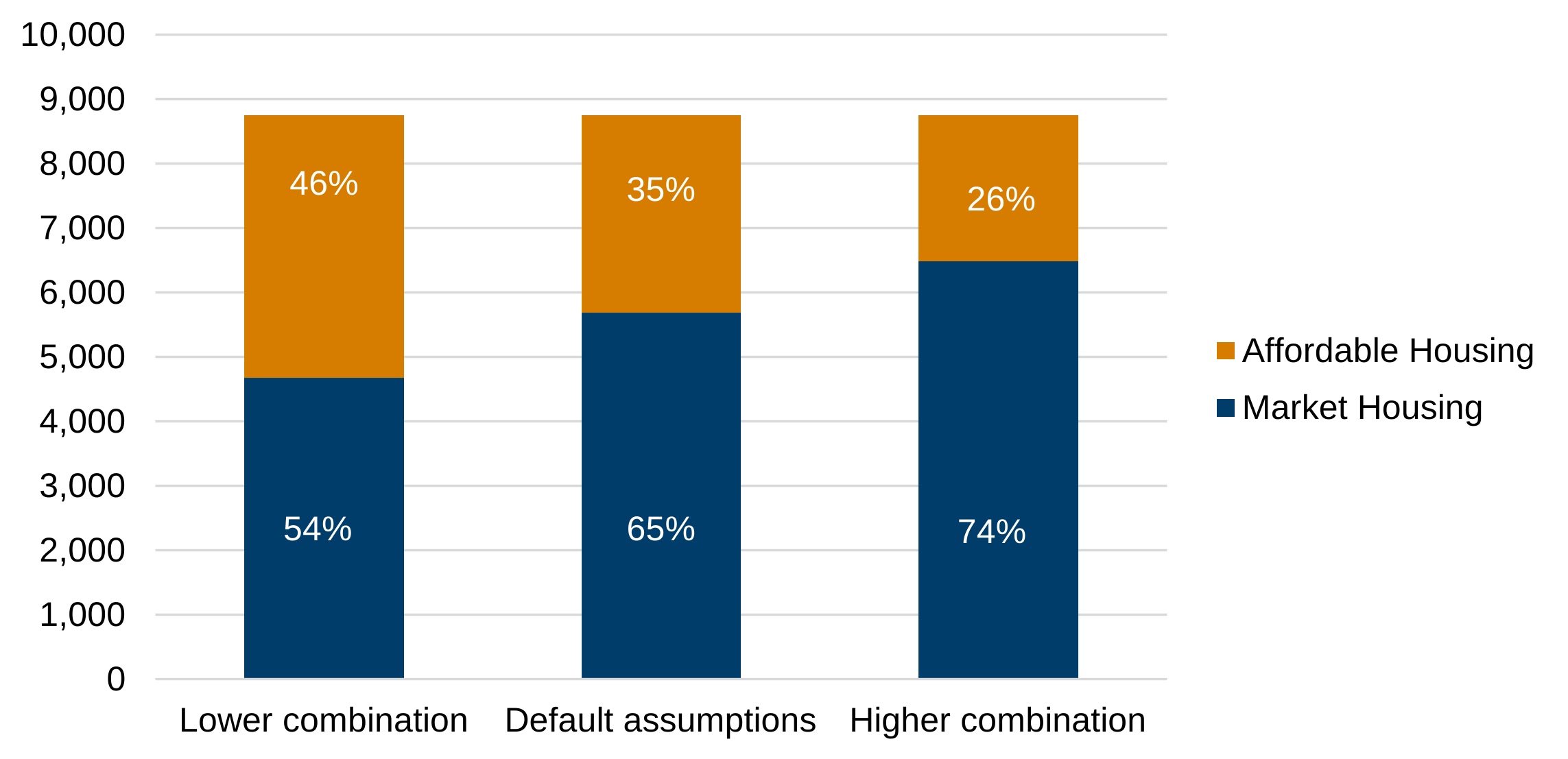
Description of figure 3: the chart shows that under the lower combination 54% of additional housing units are required to be market housing compared with 74% under the higher combination and 65% under the default assumptions. All 3 combinations are based on the principal household projection and the OBR private rental forecast.
The lower combination uses the 25% market housing affordability criteria and 1 percentage point lower than the default household income growth.
The higher combination uses the 35% market housing affordability criteria and 1 percentage point higher than the default household income growth.
This section highlights the limitations of these estimates. While the central estimates (based on principal household projections and default assumptions) presented in this report are based on assumptions that have been agreed with a number of internal and external stakeholders, they will not replicate exactly the real world environment. They provide an indication of a suitable tenure split of additional housing units based on a set of assumptions.
Quality assurance
The adopted approach to calculating estimates for additional housing need has previously been peer reviewed by the Chief Analysts and other senior officials in Welsh Government.
All input data has been quality assured by analysts in Welsh Government. All output data has been checked against manually calculated figures. The release was independently checked and a final sense check carried out by the relevant statistician prior to publication on the website.
Relevance
User needs
The estimates of additional housing need will be used by both Welsh Government and Local Government. The estimates will be used to inform any future review of the National Development Framework, and provide context for future policy development as well as informing Future Trends reporting (as required by the Well-being of Future Generations (Wales) Act 2015. We actively review all our outputs and welcome feedback.
Accuracy
It is not possible to predict future additional housing need. The estimates presented here are based on carefully considered assumptions, but they will never precisely reflect what will happen in the future. They rely on trend‑based inputs and cannot account for unexpected changes in behaviour, policy, or external conditions.
Each component of the estimates (existing unmet need and newly arising need) has been assessed in detail to ensure that the most appropriate assumptions are applied. Nevertheless, all estimates of future housing need carry an inherent degree of uncertainty. To illustrate this, a range of estimates is presented in the accompanying release.
A key component of the model is the household projections, which estimate the future number and composition of households. These projections assume that past trends in births, deaths, and migration continue. They do not make allowances for potential changes arising from local or central government policies, economic shifts, lifestyle changes, or other external influences. Events outside the UK, changes in the economy, or evolving individual and household behaviours may all affect the future trajectory of household formation in ways that cannot be predicted.
We also recognise the challenges in measuring existing unmet need for housing. The technical group reviewed potential data sources and concluded that, while not always up to date, the sources used are robust and suitable for the purpose of this work. However, the available data are likely to represent an undercount.
Timeliness and punctuality
All outputs adhere to the Code of Practice for Statistics by pre-announcing the date of publication through the upcoming pages on the Statistics for Wales website.
Furthermore, should the need arise to postpone an output this would follow the Welsh Government’s revisions, errors and postponements arrangements. Welsh Government publish releases as soon as practical after the relevant time period.
Accessibility and clarity
Estimates of additional housing need in Wales are published in an accessible, orderly, pre-announced manner on the Welsh Government website at 9:30am on the day of publication. We aim to inform known key users of the publication of the statistics when they are published. An e-mail is circulated to the housing information group.
All releases are available to download for free. More detailed data are also available at the same time on the StatsWales website and this can be manipulated online or downloaded into spreadsheets for use offline. In our outputs, we aim to provide a balance of commentary, summary tables, charts and maps where relevant.
The aim is to ‘tell the story’ in the output, without the bulletin or report becoming overly long. We aim to use Plain English in our outputs and all outputs adhere to the Welsh Government accessibility policy. We regularly peer review our outputs internally. Further information regarding the statistics can be obtained by contacting the relevant staff detailed on the release or via stats.housing@gov.wales.
Comparability
The current estimates should not be viewed as directly comparable with previous publications. Each update replaces earlier estimates, drawing on improved data, refreshed assumptions, and updated evidence. Although the same overall methodology has been followed, the use of new base data and revised assumptions means that differences over time largely reflect methodological and data updates.
Coherence
Local Housing Market Assessments
Although both Local Housing Market Assessments (LHMAs) and estimates of additional housing need aim to understand how many additional housing units are required, they are produced differently and serve different purposes.
Local authorities carry out LHMAs to identify the specific housing need of their communities and use them to inform their Local Development Plans, local housing strategies and capital funding requirements.
While all use the Welsh Government LHMA tool, each can incorporate local data and adjust assumptions. Because LHMAs are produced at different times and use varying data sources and assumptions, their results cannot be combined into a Wales level estimate of housing need.
England
Guidance on housing need assessment in England has been updated several times since the National Planning Policy Framework (GOV.UK) (NPPF) was first revised in July 2018. The NPPF has undergone further revisions, most recently in December 2024, with amendments published in February 2025.
Scotland
In Scotland, no official estimates of housing need and demand are published by the Scottish Government at a national or local level. However, estimates of the future number of additional housing units, by tenure, to meet existing and future housing need and demand are set out in Housing Need and Demand Assessments (HNDAs).
These are undertaken by local authorities in Scotland and are supported centrally by the Scottish Government Centre for Housing Market Analysis (CHMA). An excel-based HNDA Tool was created by the Scottish Government to help local authorities produce these strategic, long run estimates. However, HNDAs also captures information on the operation of the housing system to assist local authorities to develop policies on new housing supply, management of existing stock and the provision of specialist housing and housing-related services.
The purpose of the HNDA is to provide a robust, shared and agreed evidence-base for housing policy and land use planning and to ensure that both Local Housing Strategies (LHSs) and Development Plans are based upon a common understanding of existing and future housing requirements. The CHMA formally appraise all HNDAs and where they are satisfied that the HNDA is robust and credible, the approach used will not normally be considered further at a Development Plan examination.
Northern Ireland
The last available Housing Growth Indicators for Northern Ireland were published in 2019 and were based on 2016 Household projections produced by the Northern Ireland Statistics and Research Agency. 2016 based housing growth indicators (NI.gov.uk).
The Department for Communities in Northern Ireland published their Housing Supply Strategy 2024 – 2039 in December 2024
Housing supply strategy 2024 to 2039 (NI.gov.UK) which recognises the need to move away from policy neutral models and look to develop a more nuanced picture of housing supply requirements over the 15-year lifespan of the Strategy.”
Official statistics status
All official statistics should show the standards of the Code of Practice for Statistics (UK Statistics Authority).
These estimates were not previously classed as official statistics because they used a new method and were still being developed. The method is now established, and the statistics have been produced in line with the Code of Practice for Statistics. They are now designated as official statistics. They comply with the standards of trustworthiness, quality and value in the Code of Practice for Statistics.
Statement of compliance with the Code of Practice for Statistics
Our statistical practice is regulated by the Office for Statistics Regulation (OSR). OSR sets the standards of trustworthiness, quality and value in the Code of Practice for Statistics that all producers of official statistics should adhere to.
All our statistics are produced and published in accordance with a number of statements and protocols to enhance trustworthiness, quality and value. These are set out in the Welsh Government’s Statement of Compliance.
These official statistics demonstrate the standards expected around trustworthiness, quality and public value in the following ways.
Trustworthiness
These statistics are produced independently and free from political interference. They follow published Welsh Government policies on revisions, confidentiality, release practices and quality assurance. Publication dates are pre‑announced, and the statistics are released transparently on the Welsh Government website at 9:30am, in line with the Code of Practice.
Quality
The estimates draw on the best available official data sources and use an established methodology that has been reviewed by a technical advisory group. All input data and calculations undergo thorough quality assurance by analysts and independent checks prior to publication. The strengths and limitations of the methods and data are clearly set out to support appropriate use.
Value
These statistics meet a clear user need by providing an evidence base for housing and planning policy in Wales. They inform Welsh Government, local authorities, the Senedd, researchers and the wider public. We aim to ensure the statistics are accessible, timely and presented clearly, with supporting tables available on StatsWales. We welcome user feedback and regularly review our outputs to ensure they continue to meet user needs.
You are welcome to contact us directly with any comments about how we meet these standards. Alternatively, you can contact OSR by emailing regulation@statistics.gov.uk or via the OSR website.
Well-being of Future Generations Act (WFG)
The Well-being of Future Generations Act 2015 is about improving the social, economic, environmental and cultural wellbeing of Wales. The Act puts in place seven wellbeing goals for Wales. These are for a more equal, prosperous, resilient, healthier and globally responsible Wales, with cohesive communities and a vibrant culture and thriving Welsh language. Under section (10)(1) of the Act, the Welsh Ministers must (a) publish indicators (“national indicators”) that must be applied for the purpose of measuring progress towards the achievement of the wellbeing goals, and (b) lay a copy of the national indicators before Senedd Cymru. Under section 10(8) of the Well-being of Future Generations Act, where the Welsh Ministers revise the national indicators, they must as soon as reasonably practicable (a) publish the indicators as revised and (b) lay a copy of them before the Senedd. These national indicators were laid before the Senedd in 2021. The indicators laid on 14 December 2021 replace the set laid on 16 March 2016.
Information on the indicators, along with narratives for each of the wellbeing goals and associated technical information is available in the Wellbeing of Wales report.
Further information on the Well-being of Future Generations (Wales) Act 2015.
The statistics included in this release could also provide supporting narrative to the national indicators and be used by public services boards in relation to their local wellbeing assessments and local wellbeing plans.
Manylion cyswllt
Ystadegau tai
E-bost: ystadegau.tai@llyw.cymru
Cyfryngau: 0300 025 8099