Amcangyfrifon aelwydydd: canol-2024
Adroddiad sy'n cynnwys gwybodaeth yn ôl math o aelwyd, poblogaeth a maint cyfartalog ay gyfer canol-2024. Saesneg yn unig.
Ar y dudalen hon
Introduction
Household estimates provide the estimated number of households, private household population and average household size in Wales.
Household estimates provide the estimated number of households using household formation rates from the latest available censuses and applying them to current population estimates, which are based on the Office for National Statistics’s (ONS) population estimates for mid-2024 (ONS).
Population estimates for mid-2022 and mid-2023 have been revised by the ONS therefore we have revised our household estimates for mid-2022 and mid-2023 as well. Further information on this change can be found in the quality and methodology information section.
These household estimates are similar to household projections but household projections are based on future population projections, whereas these household estimates are based on past population estimates. Household estimates should be used when users need the most up-to-date estimates about the number of households and household composition, as they are based on current trends. Household projections should be used when planning for future provision, and for assessing likely demand, as they provide an indication of what may happen in future if current trends continue.
Main results
- Between mid-2023 and mid-2024, the estimated number of households increased by around 10,200 (0.7%) to 1.39 million, largely due to an increase in one-person and two-person households with no children.
- Since mid-2014, the estimated number of households has increased by 5.4%.
- The estimated number of households increased for all local authorities between mid-2023 and mid-2024.
- The estimated number of people living in private households, that is, the population not living in communal establishments, increased by around 18,900 (0.6%) to 3.13 million between mid-2023 and mid-2024.
- In mid-2024, the estimated average household size for Wales was 2.25 persons per household, compared with 2.52 persons in mid-1991.
Figure 1: estimated number of households in Wales, mid-2004 to mid-2024 [Note 1]
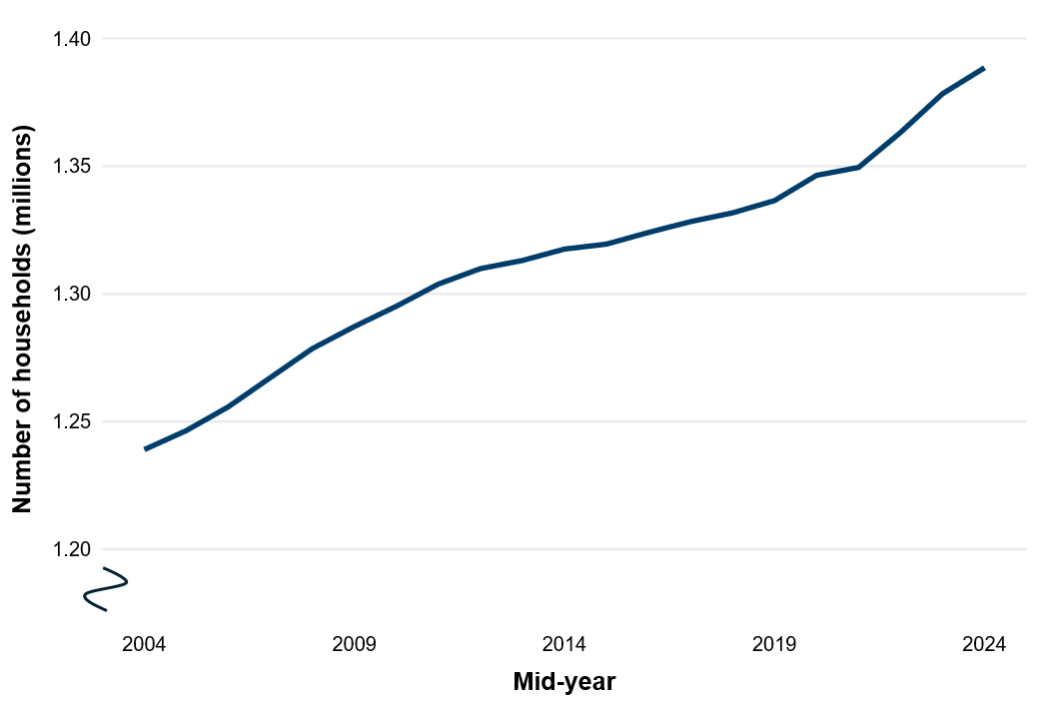
Description of figure 1: a line chart showing that, since mid-2004, the estimated number of households has increased from 1.24 million to 1.39 million in mid-2024.
[Note 1]: The y-axis does not start at zero.
Source: Household estimates, Welsh Government.
Household estimates by local authority and household type on StatsWales
Since mid-2004, the estimated number of households has been increasing steadily. Between mid-2004 and mid-2011, the estimated number of households increased by 5.2%. Between mid-2012 and mid-2019, there was a slower rate of increase of 2.0%. Since mid-2020 the number of households has increased by 3.1%. The higher rate of increase seen recently can be attributed to the increase in the mid-year population estimates, which has been driven by an increase in net international and internal migration to Wales.
Mid-2024 household estimates
Figure 2: percentage change in the estimated number of households between mid-2023 and mid-2024, by local authority
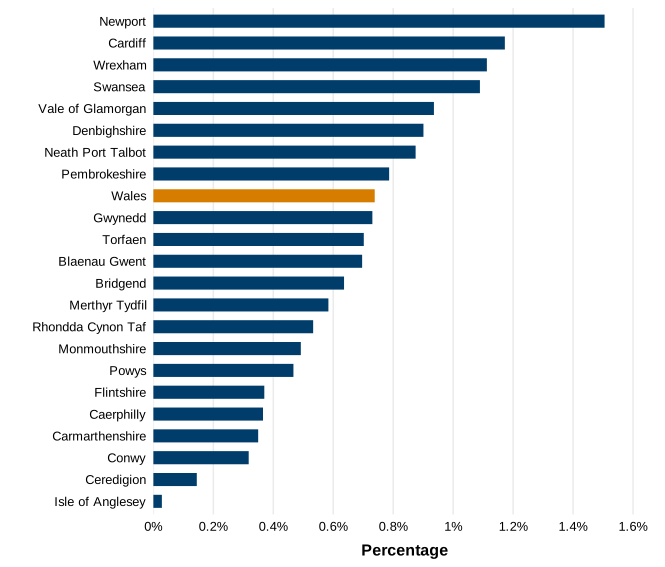
Description of figure 2: a bar chart showing the estimated number of households increased in each local authority between mid-2023 and mid-2024, with the largest percentage increases in areas with major cities, especially Newport and Cardiff. Newport and Cardiff also saw the greatest percentage increases in the ONS’ mid-year estimates of the population during this period.
Source: Household estimates, Welsh Government.
Household estimates by local authority and household type on StatsWales
Over the past 10 years, Newport has seen the largest percentage increase, with the estimated number of households increasing by 12.0% when compared with mid-2014.
The smallest percentage increases were generally in rural areas. Since mid-2014, Ceredigion is the only local authority to see a decrease in the estimated number of households, down 0.7%.
Figure 3: estimated number of households in mid-2024, by local authority
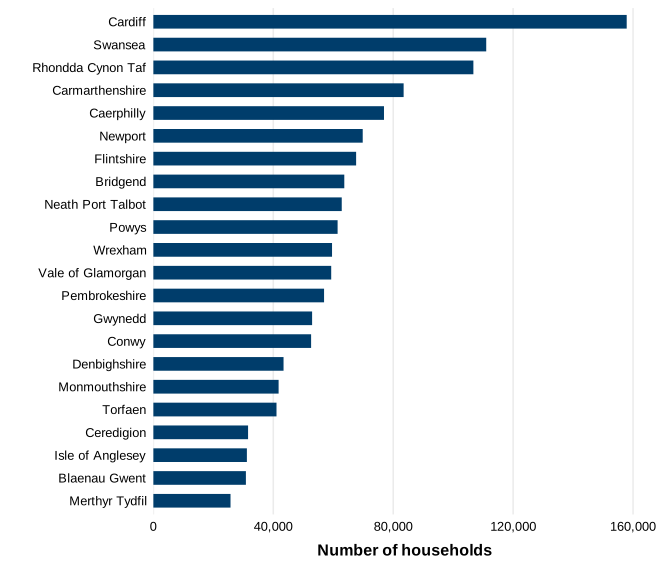
Description of figure 3: a bar chart showing the estimated number of households for each local authority in mid-2024. Cardiff is estimated to have the largest number of households, at around 158,000. The estimated number of households in Cardiff accounts for 11.4% of all households in Wales in mid-2024.
Source: Household estimates, Welsh Government.
Household estimates by local authority and household type on StatsWales
Generally, the local authorities that have the largest estimated number of households are urban local authorities in south-east Wales. Cardiff, Swansea and Rhondda Cynon Taf are the only local authorities that are estimated to have over 100,000 households in mid-2024. These three local authorities account for over a quarter of the total estimated number of households in Wales.
The local authorities estimated to have the fewest number of households are either in north and mid Wales or are south Wales Valleys local authorities. These include Merthyr Tydfil (around 25,700), Blaenau Gwent (around 30,900) and the Isle of Anglesey (around 31,200).
Household estimates by type of household
Figure 4: estimated number of households by household type in Wales, mid-2024
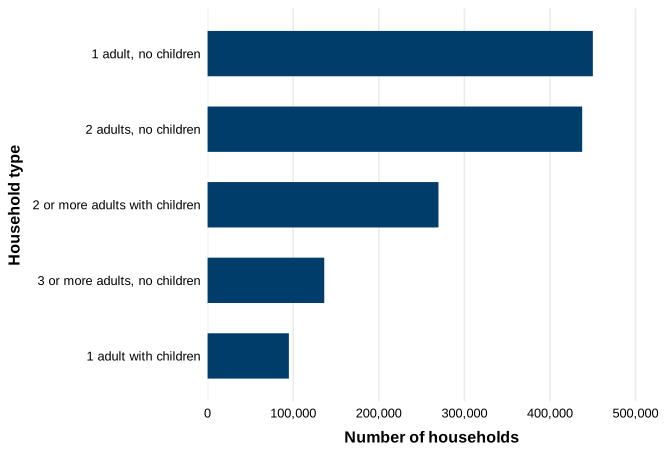
Description of figure 4: a bar chart showing that, in mid-2024, one-adult households and two-adult households with no children were estimated to be the most common household types in Wales.
Source: Household estimates, Welsh Government.
Household estimates by local authority and household type on StatsWales
In mid-2024, the number of one-adult households, and two-adult households with no children is estimated to account for almost two-thirds of all households, accounting for 32.4% and 31.5% respectively.
The number of households with children was estimated to be around 364,700, accounting for just over a quarter (26.3%) of all households. The number of households without children was estimated to be just over 1.02 million.
Figure 5: percentage change in the estimated number of households, by household type, between mid-2023 and mid-2024
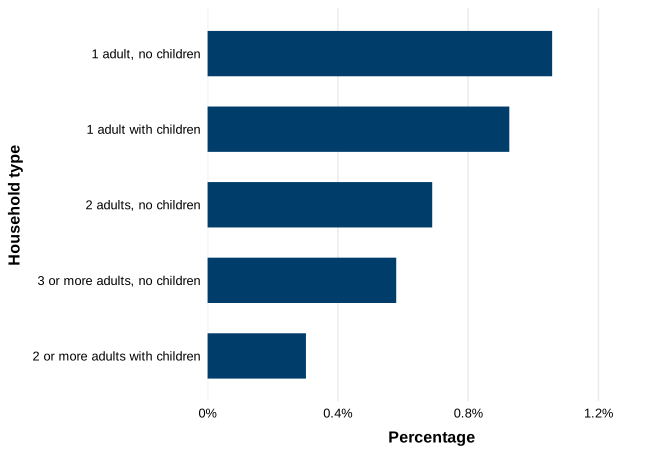
Description of figure 5: a bar chart showing that the estimated number of households increased between mid-2023 and mid-2024 for each household type.
Source: Household estimates, Welsh Government.
Household estimates by local authority and household type on StatsWales
The estimated number of one-adult households with no children saw the largest percentage increase, increasing by 1.1% between mid-2023 and mid-2024. Since mid-2014, the estimated number of one-adult households with no children has increased by 9.0%, the most out of all household types.
The estimated number of one-adult households with children has increased by 0.9% compared with mid-2023, mainly driven by an increase in the number of one-adult households with two children. This has increased by 7.7% since mid-2014.
The number of households with no children is estimated to have increased by around 8,500 (0.8%) compared with mid-2023, and the number of households containing adults with children is estimated to have increased by around 1,700 (0.5%). Since mid-2014, the number of households without children is estimated to have increased by 7.0% (up 66,700) compared with a small increase of 1.1% for households with children (up 4,100).
One-person households
Figure 6: estimated number of one-person households by age group and sex, mid-2024
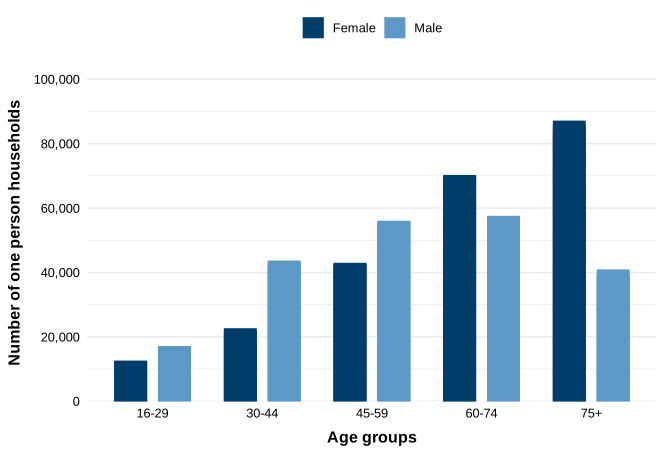
Description of figure 6: a clustered bar chart showing that, in mid-2024, one-person households are more likely to be male households for younger age groups, aged 16 to 59 years old, and more likely to be female households for the older age categories, for people aged 60 years or older.
Source: Household estimates, Welsh Government.
Household estimates for one person households by local authority and age group on StatsWales
In mid-2024, it is estimated that people aged 65 years or older account for 47.0% of one-person households. This is a small increase compared with mid-2014, when people aged 65 years or older accounted for 46.5% of one-person households. The number of people aged 75 years or older account for 28.5% of one-person households in mid-2024, compared with 27.3% in mid-2014.
There has been a large increase in the estimated number of male one-person households aged 60 years or older, which increased by 2,200 (2.3%) since mid-2023. However, in mid-2024, females still account for 61.5% of the total number of one-person households aged 60 years or older.
The areas with the highest percentages of one-person households aged 60 years or older tend to be rural local authorities, with Powys (65.5%) and Monmouthshire (65.2%) having the highest percentages. Local authorities that include major cities typically have the lowest percentages of one-person households aged 60 years or older, such as Cardiff and Swansea at 44.0% and 51.4% respectively.
Private household population
The private household population is the estimated number of people living in private households. This is calculated by subtracting the population living in communal establishments from the total population estimate.
Communal establishments include residential care homes, university halls of residence, boarding schools and prisons, for example. As communal establishment population estimates are not available on an annual basis, assumed numbers are calculated based on census data.
Figure 7: percentage change in the estimated private household population between mid-2023 and mid-2024, by local authority
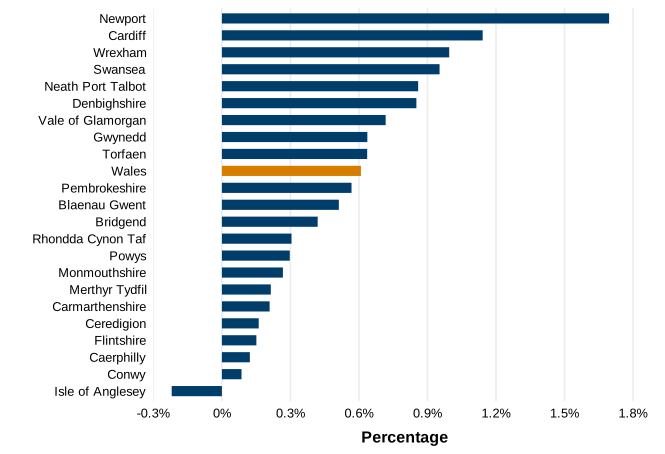
Description of figure 7: a bar chart showing that the estimated private household population increased in each local authority between mid-2023 and mid-2024, except for in the Isle of Anglesey, where it declined. This reflects the mid-2024 population estimates from the ONS, which showed that the Isle of Anglesey was the only Welsh local authority to see a decrease in its population estimate between mid-2023 and mid-2024.
Source: Household estimates, Welsh Government.
Household estimates by local authority and household type on StatsWales
Between mid-2023 and mid-2024, the estimated private household population increased by around 18,900 (0.6%) in Wales, compared with an increase of around 32,800 (1.1%) between mid-2022 and mid-2023. Between mid-2012 and mid-2022, the increase was under 2.0%.
The change in estimated private household population between mid-2023 and mid-2024 (up 0.6%) is slightly lower than the change in the estimated number of households (up 0.7%), indicating decreasing average household sizes. The largest percentage increases in the estimated private household population were in Newport (up 1.7%) and Cardiff (up 1.1%).
Average household size
Average household size is the average number of persons per household. It provides a measure of household composition and is useful for comparing different local authorities and time periods. It is calculated by dividing the estimates of the private household population by the estimated number of households. Average household size does not change much year on year but has changed substantially since 1991.
The estimated average household size in Wales has been decreasing since 1991, reflecting the recent increases in one-person households. In mid-2024, the estimated average household size was 2.25 persons per household, slightly lower than in mid-2023 when it was 2.26 persons per household. The estimated average household size was 2.52 in mid-1991 and 2.31 in mid-2011.
Figure 8: estimated average household size by local authority, mid-2024 [Note 1]
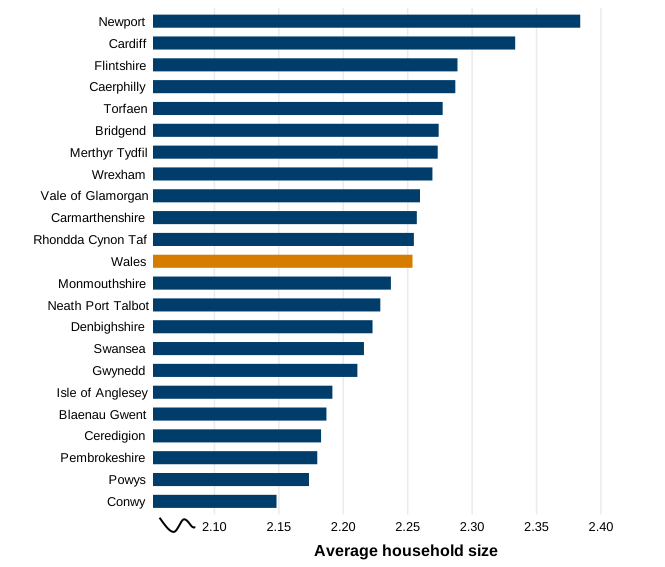
Description of figure 8: a bar chart showing that, in mid-2024, the estimated average household size was highest for Newport and lowest for Conwy.
Source: Household estimates, Welsh Government.
[Note 1]: The average household size axis does not start at zero.
Household estimates by local authority and household type on StatsWales
The estimated average household size continues to be lowest in rural areas. In mid-2024, it was lowest in Conwy (2.15 persons per household), Powys (2.17 persons per household) and Pembrokeshire (2.18 persons per household). Conwy has had the lowest estimated household size of all local authorities since mid-2001. These areas also tend to have the highest proportions of people aged 65 years or older and the highest proportions of one-person and two-person households with no children, resulting in lower average household sizes.
Estimated average household size is the highest for Newport (2.38 persons per household). Newport has had the highest estimated household size of all local authorities since mid-2015. Newport had the highest proportion of people aged 0 to 15 years old in Wales (20.2%) according to ONS’ mid-year population estimates, resulting in higher average household sizes.
Comparison with the 2022-based household projections
The 2022-based local authority household projections for Wales were published on 20 November 2025 for the years from mid-2022 to mid-2047. Here we compare these household estimates for mid-2024 with the projected number of households for mid-2024 from the household projections. This is to aid users’ understanding of the differences between both data sets.
We recommend using the most recent household estimates for all years where they are available.
Figure 9: percentage difference between the 2022-based local authority household projections and the household estimates, by local authority in mid-2024 [Note 1]
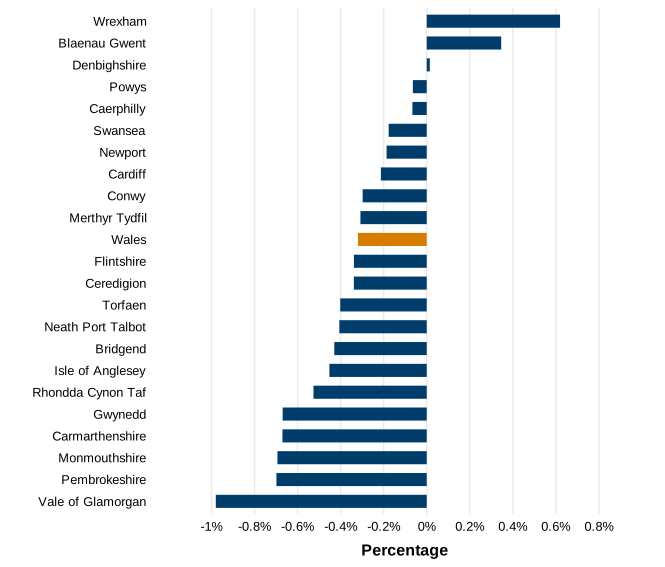
Description of figure 9: a bar chart showing that the estimated number of households in Wales is 0.3% lower in the household estimates for mid-2024 than in the 2022-based household projections. For mid-2024, the household estimates were lower than the 2022-based local authority household projections for 19 out of 22 local authorities.
Source: Household estimates, Welsh Government, and 2022-based local authority household projections, Welsh Government.
[Note 1] A negative percentage difference means that the household estimates are lower than the 2022-based local authority household projections. A positive percentage difference means that the household estimates are higher than the 2022-based local authority household projections.
Household estimates by local authority and household type on StatsWales
The percentage difference between the household estimates for mid-2024 and the 2022-based household projection for mid-2024 is greatest in the Vale of Glamorgan (1.0% lower), Pembrokeshire (0.7% lower) and Monmouthsire (0.7% lower). The number of households in each of these areas is lower in the household estimates compared with the 2022-based household projections for mid-2024.
Wrexham, Blaenau Gwent and Denbighshire are the only local authorities where the estimated number of households for mid-2024 is higher in the household estimates compared with the 2022-based household projections.
The differences seen here can be explained by the differences between our 2022-based local authority population projections and the ONS’s mid-year estimates of the population. Further information can be found in our local authority population projections: 2022-based publication.
Quality and methodology information
Full quality and methodology information for the household estimates will be published in 2026. This will contain technical details about how these household estimates have been calculated, as well as for the household and population projections for local authorities and national parks, including variant projections.
These household estimates are not a count of the exact number of households in Wales, as there is some uncertainty inherent in the estimate of the population as well as household formation rates. Both population estimates and household formation rates become more uncertain the further away from the most recent census, with the current set of population and household estimates being based on Census 2021.
The mid-2022 and mid-2023 household estimates have been revised to be based on the latest local authority population estimates published on 30 July 2025.
The household estimates for Wales for this period have been revised upwards to:
1,363,200 in mid-2022, an increase of nearly 600 (0.04%) from the previously published estimate.
1,378,400 in mid-2023, an increase of nearly 1,300 (0.1%) from the previously published estimate.
Comparability and coherence
Comparison with other estimates of households
The ONS’s Labour Force Survey (LFS) also provides an estimate for the number of households in Wales by household type. The estimates from the LFS are subject to sampling variability as they are based on a sample of household responses in Wales each year.
The response rates of the LFS have been lower in recent years than previously, resulting in a higher level of uncertainty in the estimates produced using this data source. Measures of quality, such as confidence intervals, to show the levels of uncertainty associated with survey estimates, are presented in the datasets. Users are advised to consult the quality measures when interpreting the estimates.
The household definitions used are broadly comparable with the Welsh Government household estimates. For further information, see the methodology and quality information for the Labour Force Survey (ONS). The latest estimates from the LFS are broadly comparable with our household estimates, varying by local authority and household type. However, we consider these household estimates to be the headline estimates for the number of households in Wales.
The ONS has also published research on the number of households based on administrative data sources compared with Census 2021 and other official statistics. These admin-based household estimates (ONS) are official statistics in development, so users should continue to our household estimates. The ONS’s research explores some of the differences seen between their admin-based household estimates and our household estimates for Wales, including comparisons with Census 2021.
Household estimates across the UK
Household estimates for England, Scotland and Northern Ireland are published by the Office for National Statistics, the National Records of Scotland (NRS) and the Northern Ireland Statistics and Research Agency (NISRA) respectively.
England
Families and households in the UK (ONS)
Scotland
National Records of Scotland: Household estimate (NRS)
Northern Ireland
Northern Ireland Statistics and Research Agency: Population and household estimate (NISRA)
The household estimates for Wales are calculated using a different approach to that used to produce household estimates for England, Scotland and Northern Ireland. Guidance on the differences between household estimates for the four countries of the UK is contained in the Household and dwelling estimates across the UK (ONS) report.
Related data for Wales
Household estimates and projections for Wales can be found on StatsWales.
Population estimates for Wales and England are published by the ONS.
Population estimates and projections for Wales at a local authority and national park level can be found on StatsWales.
Other housing statistics for Wales, including dwelling stock estimates and estimates of additional housing need can be found on the Statistics and Research website.
Official statistics status
All official statistics should comply with all aspects of the Code of Practice for Statistics (UK Statistics Authority).
These are accredited official statistics. They were independently reviewed by the Office for Statistics Regulation in August 2020. They comply with the standards of trustworthiness, quality and value in the Code of Practice for Statistics.
It is the Welsh Government’s responsibility to maintain compliance with the standards expected of accreditation. If we become concerned about whether these statistics are still meeting the appropriate standards, we will discuss any concerns with the OSR promptly. Accreditation can be cancelled or suspended at any point when the highest standards are not maintained and reinstated when standards are restored.
Accredited official statistics are called National Statistics in the Statistics and Registration Service Act 2007.
Statement of compliance with the Code of Practice for Statistics
Our statistical practice is regulated by the Office for Statistics Regulation (OSR). OSR sets the standards of trustworthiness, quality and value in the Code of Practice for Statistics that all producers of official statistics should adhere to.
All of our statistics are produced and published in accordance with a number of statements and protocols to enhance trustworthiness, quality and value. These are set out in the Welsh Government’s Statement of Compliance.
These accredited official statistics (OSR) demonstrate the standards expected around trustworthiness, quality and public value in the following ways.
Trustworthiness
Household estimates are based on historical trends and provide estimates of past numbers of households. They are based on population estimates and historical information about household composition and characteristics. These household estimates are produced by applying assumptions about household formation to estimated population figures, by age and sex. The household estimates therefore reflect changes in household formation as well as trends in the underlying population estimates. The relative impacts of the migration, mortality, fertility and household formation assumptions on the growth in household numbers will vary between local authorities.
Specifically, these household estimates are calculated by:
- subtracting the assumed population living in communal establishments from the estimated population by age group and sex to estimate the number of people living in private households
- using historical data to calculate household membership rates for mid-2022 to mid-2024
- multiplying the estimated number of people living in private households by the projected household membership rates
- dividing the results out by household size, then aggregating by age group, sex and household type to give the projected total number of households
This process was carried out using the available population estimates for mid-2011 to mid-2024 for each local authority in Wales.
Quality
The published figures provided are compiled by professional analysts using the latest available data and applying methods using their professional judgement and analytical skillset. Statistics published by the Welsh Government adhere to the Statistical Quality Management Strategy which supplements the Quality pillar of the Code of Practice for Statistics (UK Statistics Authority) and the European Statistical System principles of quality for statistical outputs.
Validation checks are performed by Welsh Government statisticians. The statistical release is then drafted, signed off by senior statisticians and published in line with the statement on confidentiality and data access which is informed by the trustworthiness pillar contained in the Code of Practice for Statistics (UK Statistics Authority).
The methodology for these household estimates was developed in close collaboration with the Wales Sub-national Projections (WaSP) working group, which includes local authority and national park officials in Wales. This group is a forum for technical discussion on the methodology and to agree the assumptions and base data used. Members of WaSP include representatives with knowledge of and/or experience of demographic data and population and household projections.
Further information will be published in the technical report in 2026.
Value
The purpose of the statistical release is to provide evidence for policy development; to allow local authorities to monitor and benchmark their service provision against all other local authorities in Wales; and to inform for the wider public about provision household estimates.
You are welcome to contact us directly with any comments about how we meet these standards. Alternatively, you can contact OSR by emailing regulation@statistics.gov.uk or via the OSR website.
Well-being of Future Generations Act (WFG)
The Well-being of Future Generations Act 2015 is about improving the social, economic, environmental and cultural wellbeing of Wales. The Act puts in place seven wellbeing goals for Wales. These are for a more equal, prosperous, resilient, healthier and globally responsible Wales, with cohesive communities and a vibrant culture and thriving Welsh language. Under section (10)(1) of the Act, the Welsh Ministers must (a) publish indicators (“national indicators”) that must be applied for the purpose of measuring progress towards the achievement of the Well-being goals, and (b) lay a copy of the national indicators before Senedd Cymru. The 46 national indicators were laid in March 2016. The estimates within this release are used to calculate the rate for indicator 34: Number of households successfully prevented from becoming homeless per 10,000 households.
Information on the indicators, along with narratives for each of the wellbeing goals and associated technical information is available in the Wellbeing of Wales report.
As a national indicator under the Act, they must be referred to in the analyses of local well-being produced by public services boards when they are analysing the state of economic, social, environmental and cultural well-being in their areas.
Further information on the Well-being of Future Generations (Wales) Act 2015.
The statistics included in this release could also provide supporting narrative to the national indicators and be used by public services boards in relation to their local wellbeing assessments and local wellbeing plans.